Continue
conditions are safe
AP Biology · Unit 4 Learning Journey
Cell cycle checkpoints are control points that decide whether a cell can continue dividing. The G1 checkpoint checks whether the cell should copy DNA, the G2 checkpoint checks whether DNA replication is complete, and the M checkpoint checks whether chromosomes are attached correctly before separation. In AP Biology Unit 4, the key skill is explaining how checkpoint failure can lead to damaged cells, apoptosis, or cancer.
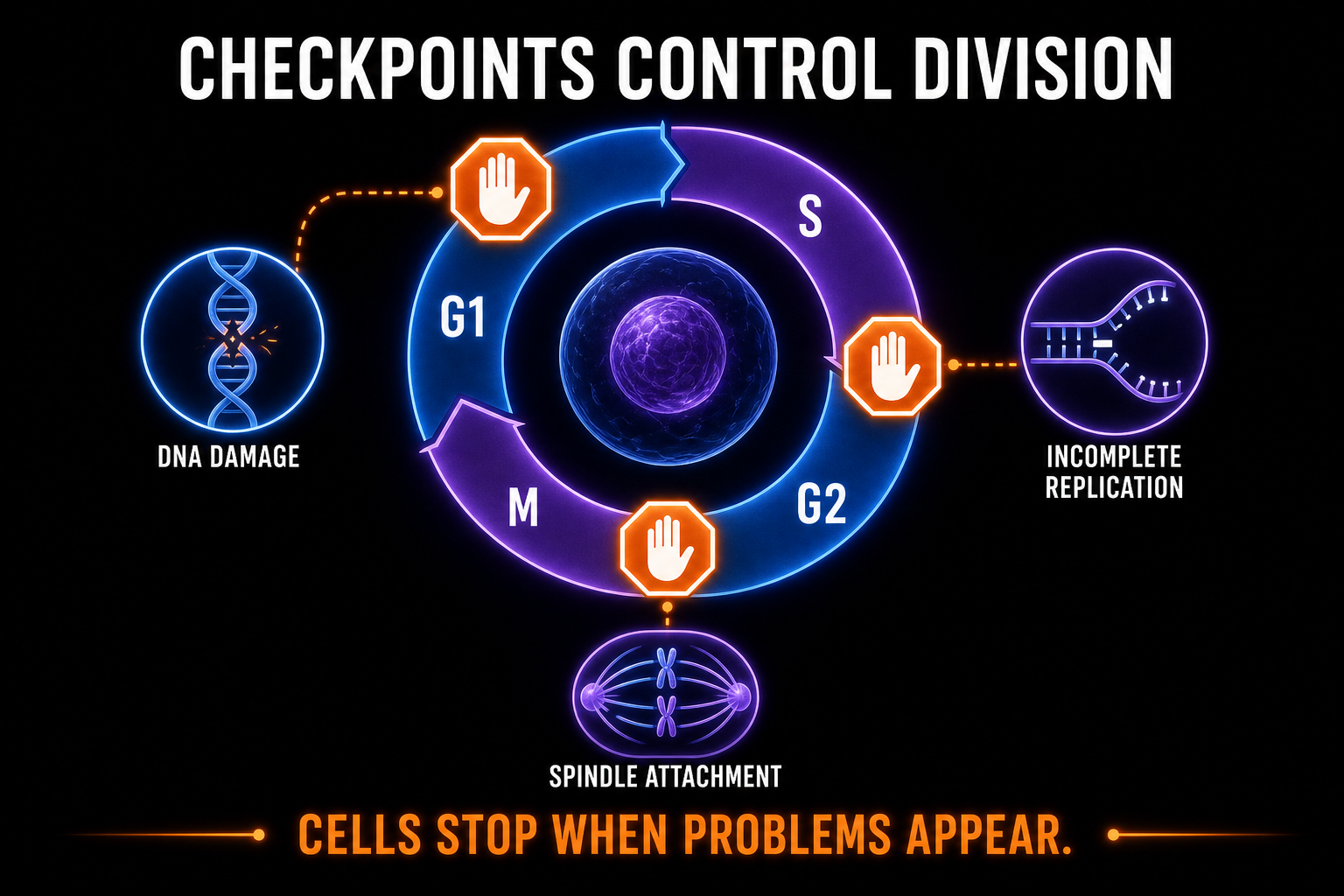
The previous guide, Cell Cycle, explained the order of G1, S phase, G2, mitosis, and cytokinesis. This page focuses on how cells decide whether to continue through that cycle. To understand where checkpoints fit, review the Cell Cycle Phases guide for the full G1, S, G2, M, and cytokinesis sequence. After this page, study Cyclins and CDKs to learn how checkpoint decisions are carried out by regulatory proteins.
Cell Cycle Checkpoints
Stop/go control decisions.
Cell cycle checkpoints are control points that decide whether a cell should continue through the cell cycle. The G1 checkpoint checks conditions before DNA replication, the G2 checkpoint checks replicated DNA before mitosis, and the M checkpoint checks spindle attachment before chromosome separation. AP Biology tests checkpoints by asking what happens when damage is detected or when checkpoint regulation fails.
Checkpoints stop damaged or unready cells from dividing.
The G1 checkpoint checks cell size, nutrients, growth signals, and DNA damage before the cell enters S phase. This is a major decision point for whether the cell commits to division.
The G2 checkpoint checks whether DNA replication is complete and whether DNA damage is present before mitosis begins.
The M checkpoint checks whether chromosomes are correctly attached to spindle fibers before sister chromatids separate.
If a problem is detected, the cell cycle can pause while repair happens. This prevents damaged DNA from being passed to daughter cells.
If damage is too severe, the cell may undergo apoptosis. This protects the organism by removing unsafe cells.
If checkpoints fail, damaged cells may keep dividing. This can contribute to cancer because regulation is lost.
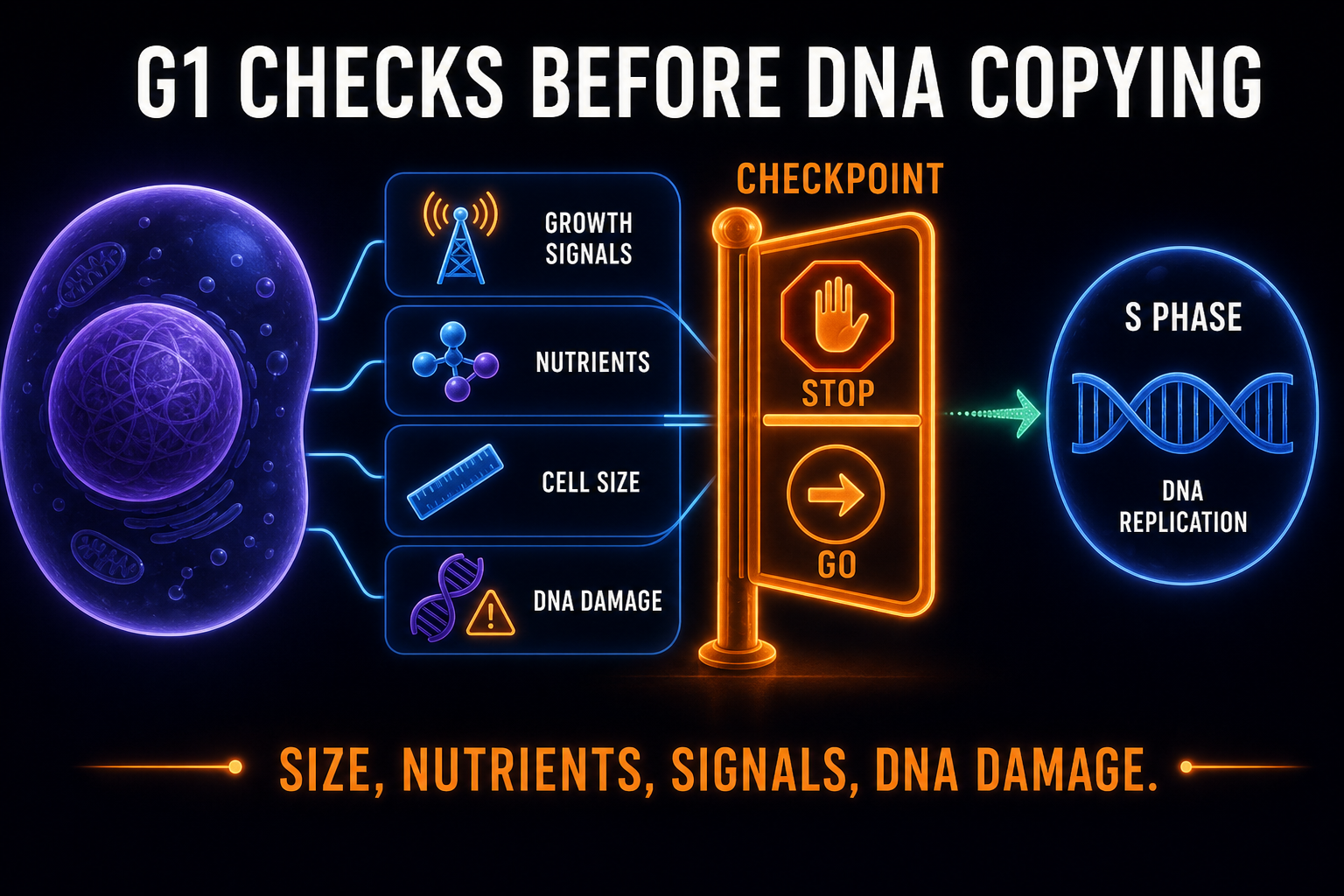
The G1 checkpoint occurs before DNA replication. It checks whether the cell is large enough, has enough nutrients, receives proper growth signals, and has undamaged DNA. If conditions are not safe, the cell can pause, enter a nondividing state, repair damage, or trigger apoptosis.
Connect G1 decisions to the cell cycle phases guide and how growth signals from cell communication influence whether a cell commits to division.
G1 is the major checkpoint before DNA copying.
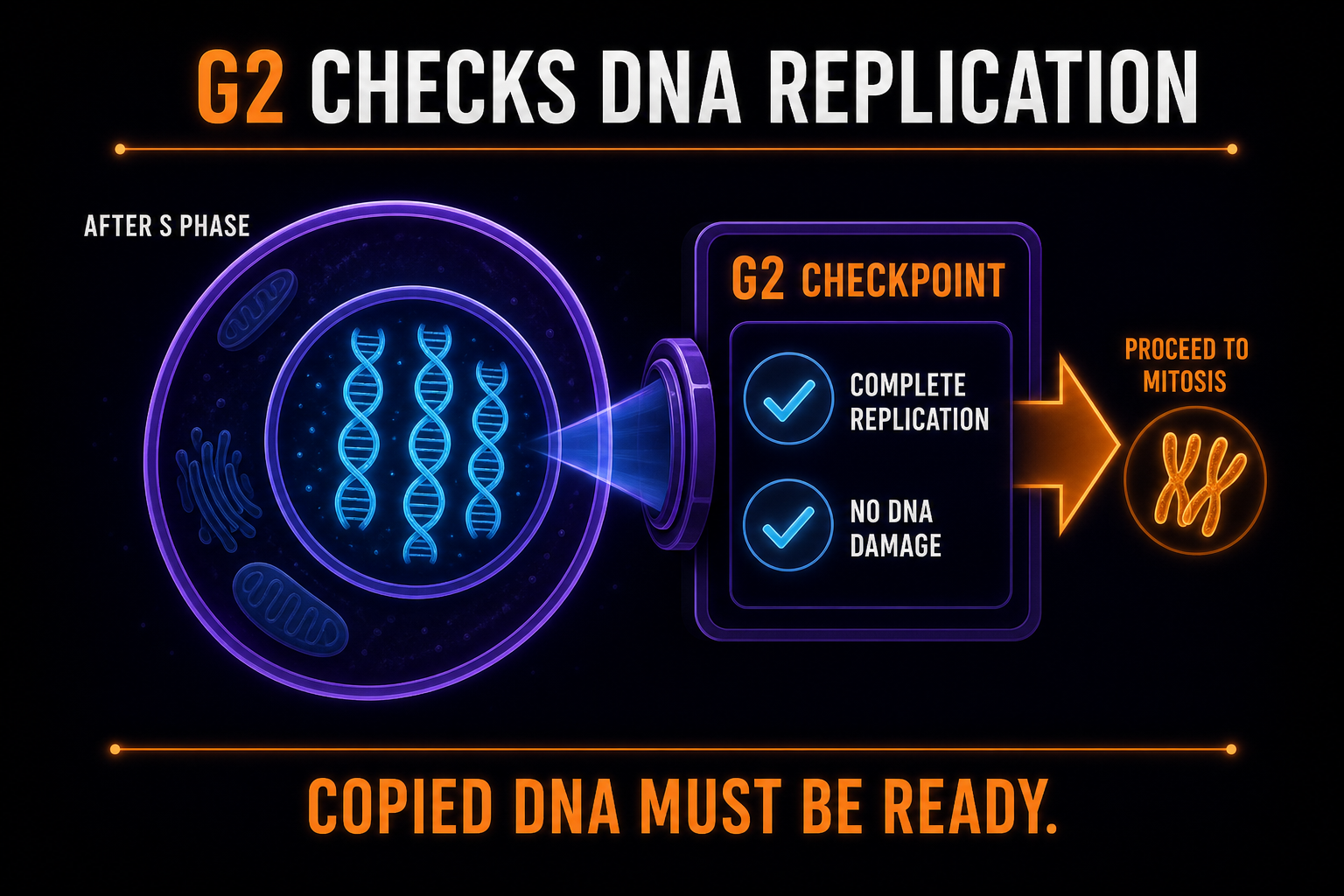
The G2 checkpoint happens after S phase and before mitosis. It checks whether DNA replication is complete and whether DNA damage remains. This checkpoint prevents cells from entering mitosis with incomplete or damaged DNA.
G2 checks whether copied DNA is complete and safe for mitosis.
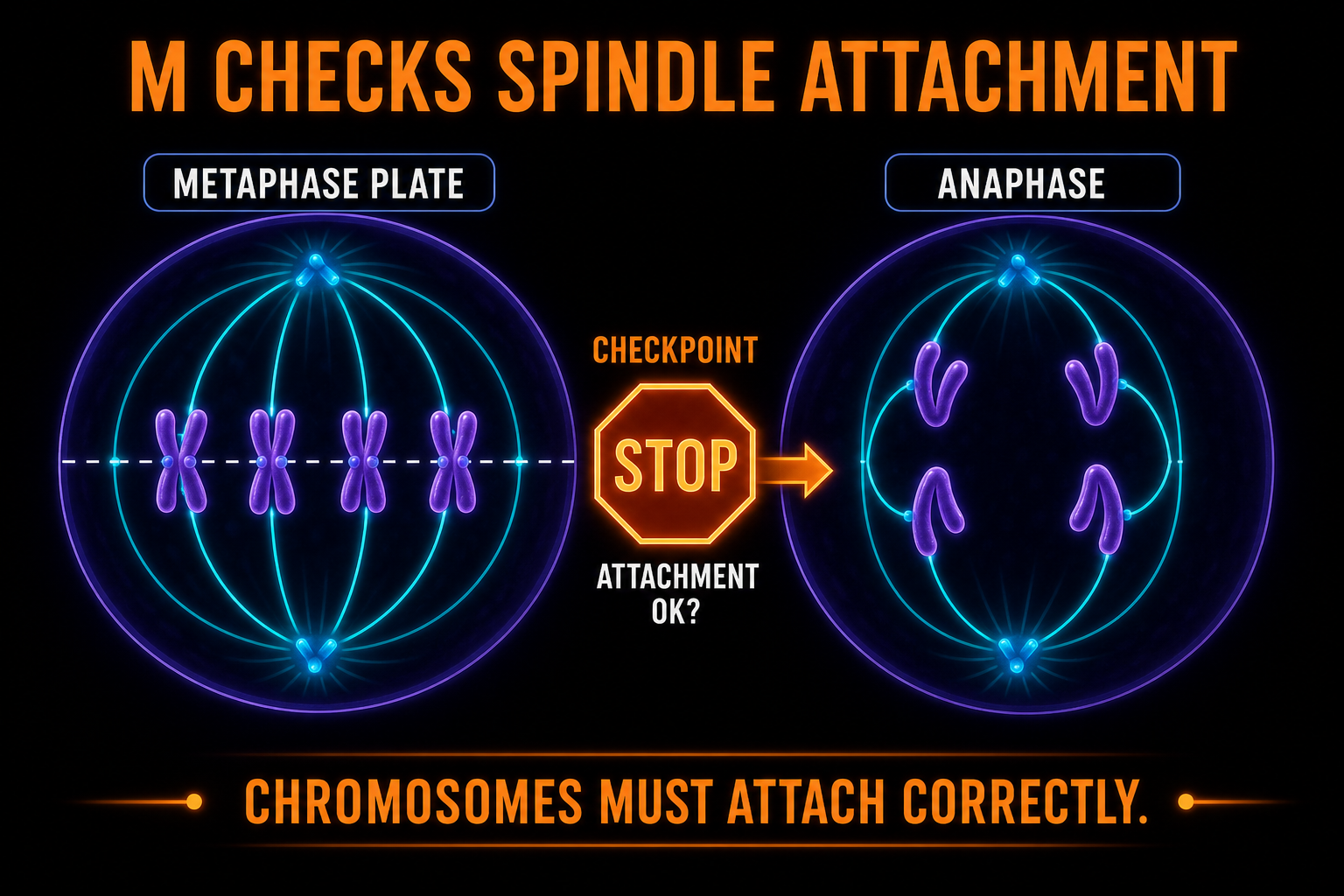
The M checkpoint, also called the spindle checkpoint, occurs during mitosis. It checks whether chromosomes are correctly attached to spindle fibers before sister chromatids separate. If attachment is incorrect, chromosome separation may produce daughter cells with abnormal chromosome numbers.
The M checkpoint protects mitosis by helping ensure chromosomes are properly attached before separation.
M checkpoint protects chromosome distribution.
A checkpoint is not just a vocabulary term; it is a decision point. If conditions are normal, the cell continues. If damage or errors are detected, the cycle can pause for repair. If the problem is severe, apoptosis may remove the cell.
conditions are safe
repair is needed
DNA or spindle problems are corrected
damaged cell is removed
damaged cell continues dividing
DNA damage matters because it can be copied and passed to daughter cells. Checkpoints reduce this risk by stopping the cycle before replication, before mitosis, or before chromosome separation. If damaged DNA is not repaired, mutations can accumulate.
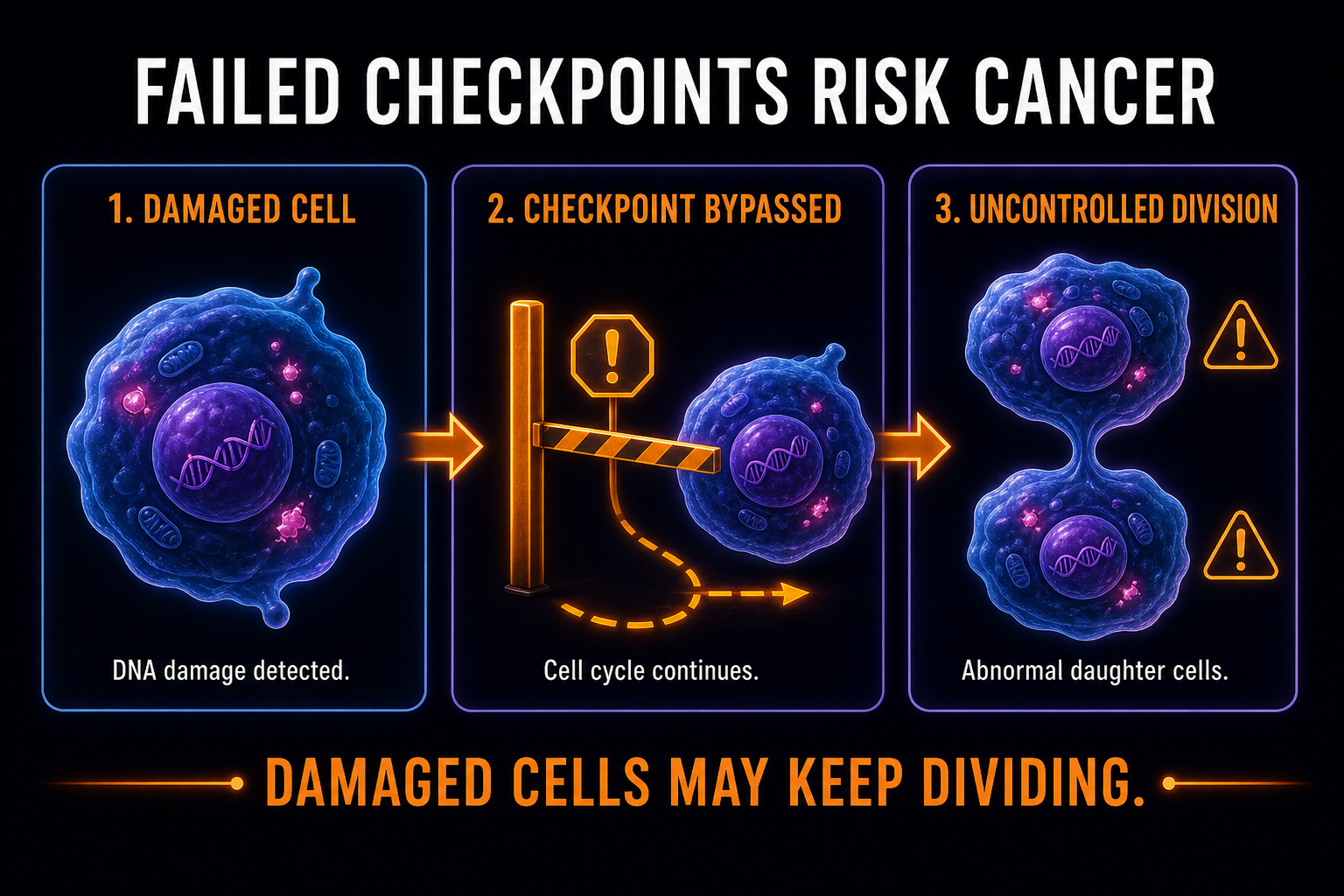
Cancer can result when checkpoint regulation fails. If damaged cells bypass checkpoints, they may continue dividing and pass mutations to daughter cells. AP Biology answers should connect cancer to failed regulation, abnormal signaling, tumor suppressor failure, or apoptosis avoidance.
Study cancer and cell cycle regulation for mutation scenarios, and apoptosis for how programmed cell death removes damaged cells.
Cyclins and CDKs help move the cell cycle forward when conditions are correct. Cyclin levels rise and fall, and CDKs phosphorylate target proteins that push the cell through key transitions. Checkpoints regulate whether these molecular switches should be active.
Next guide: Cyclins and CDKs.
G1 checkpoint is likely.
G2 checkpoint is likely.
M checkpoint is being tested.
Cell cycle may pause for repair.
Checkpoint failure or cancer connection.
Apoptosis may occur.
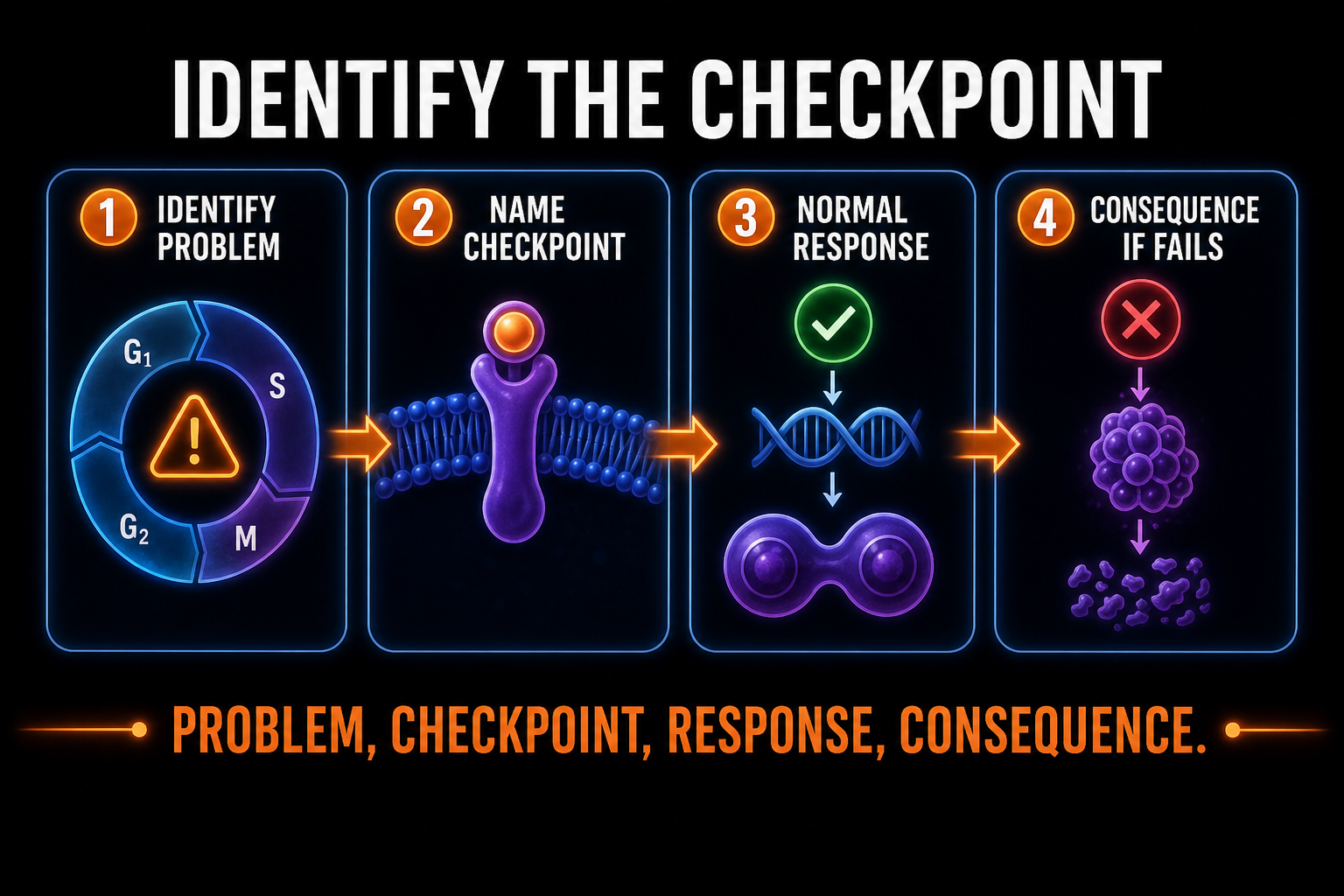
Name where the problem occurs.
Describe the normal monitoring role.
Pause, repair, or apoptosis.
Connect to daughter cells or disease.
The ___ checkpoint normally checks ___. If ___ is detected, the cell should ___. If this checkpoint fails, ___ may happen because ___.
Fix: Know what each checkpoint checks.
Fix: Checkpoints can pause, repair, continue, or trigger apoptosis.
Fix: G1 checks before DNA copying; G2 checks after DNA copying.
Fix: M checkpoint checks spindle attachment before chromatid separation.
Fix: Cancer involves failed regulation of the cell cycle.
Fix: Severely damaged cells may be removed by programmed cell death.
Revealed: 0 of 4 scenarios
A cell checks whether DNA is damaged before entering S phase.
Answer: This is the G1 checkpoint.
A cell checks whether DNA replication is complete before mitosis.
Answer: This is the G2 checkpoint.
A cell checks whether chromosomes are attached to spindle fibers.
Answer: This is the M checkpoint.
A damaged cell bypasses checkpoint control and continues dividing.
Answer: This can contribute to cancer because damaged DNA may be passed to daughter cells.
Answer all eight questions. Choices shuffle on reload—focus on checkpoint logic, not letter memorization.
More drills: Unit 4 practice questions, practice by topic, or daily AP Biology practice.
Open each card, draft your response, then reveal the rubric and sample. For more free-response practice, open the Unit 4 FRQ guide.
A cell has DNA damage before entering S phase. A checkpoint protein detects the damage.
The G1 checkpoint is most likely involved because it checks DNA damage before S phase. The cell should not enter S phase with damaged DNA because replication would copy errors into sister chromatids passed to daughter cells. If the damage cannot be repaired, the cell may pause longer, enter a nondividing state, or undergo apoptosis to remove the unsafe cell.
Status: Draft your answer first—then open the rubric or sample.
A mutation prevents the M checkpoint from functioning. Sister chromatids separate even when some chromosomes are not attached correctly to spindle fibers.
The M checkpoint normally checks whether chromosomes are correctly attached to spindle fibers before sister chromatids separate. If this checkpoint fails, daughter cells may receive too many or too few chromosomes. Over time, checkpoint failure can contribute to disease such as cancer because cells lose proper control over chromosome distribution and division.
Status: Draft your answer first—then open the rubric or sample.
Cell cycle checkpoints are control points that decide whether a cell can continue through the cell cycle. They check for problems such as DNA damage, incomplete DNA replication, or incorrect spindle attachment. AP Biology often tests what happens when checkpoints work or fail.
The G1 checkpoint happens before DNA replication. It checks cell size, nutrients, growth signals, and DNA damage. If conditions are not safe, the cell may pause instead of entering S phase.
The G2 checkpoint happens after DNA replication and before mitosis. It checks whether DNA was copied completely and whether DNA damage remains. This prevents cells from entering mitosis with unsafe DNA.
The M checkpoint checks whether chromosomes are correctly attached to spindle fibers. It happens before sister chromatids separate. If this checkpoint fails, daughter cells may receive abnormal chromosome numbers.
Checkpoints protect cells from dividing when something is wrong. They help prevent damaged DNA or chromosome errors from being passed to daughter cells. This regulation supports healthy growth and tissue repair.
The cell cycle may pause so repair can occur. If the damage is too severe, the cell may undergo apoptosis. This prevents dangerous cells from continuing to divide.
Cancer can develop when checkpoint regulation fails. Cells with damaged DNA may keep dividing instead of stopping, repairing, or dying. AP Biology answers should explain the failed control mechanism.
No. Checkpoints are decision points, while cyclins and CDKs are molecular regulators that help move the cell cycle forward. Checkpoints influence whether those regulators should allow progression.
The M checkpoint checks spindle attachment. It helps ensure chromosomes are properly connected before sister chromatids separate. This protects daughter cells from chromosome-number errors.
Name the checkpoint first, then state what it normally checks. Explain what the cell should do if a problem is detected. Finish by predicting the consequence if the checkpoint fails.