“More causes more”
Likely positive feedback.
AP Biology · Unit 4 Learning Journey
Positive feedback is a biological control mechanism where the response increases or amplifies the original change. Unlike negative feedback, which usually stabilizes a system, positive feedback pushes a process forward until a clear endpoint stops the loop. In AP Biology, the key skill is proving that the response strengthens the original stimulus.
The previous guide, Negative Feedback, explained stabilizing loops that reduce change. This page focuses on positive feedback: loops that amplify a process until an endpoint is reached. After this page, move into the Cell Cycle section to see how cells regulate growth and division.
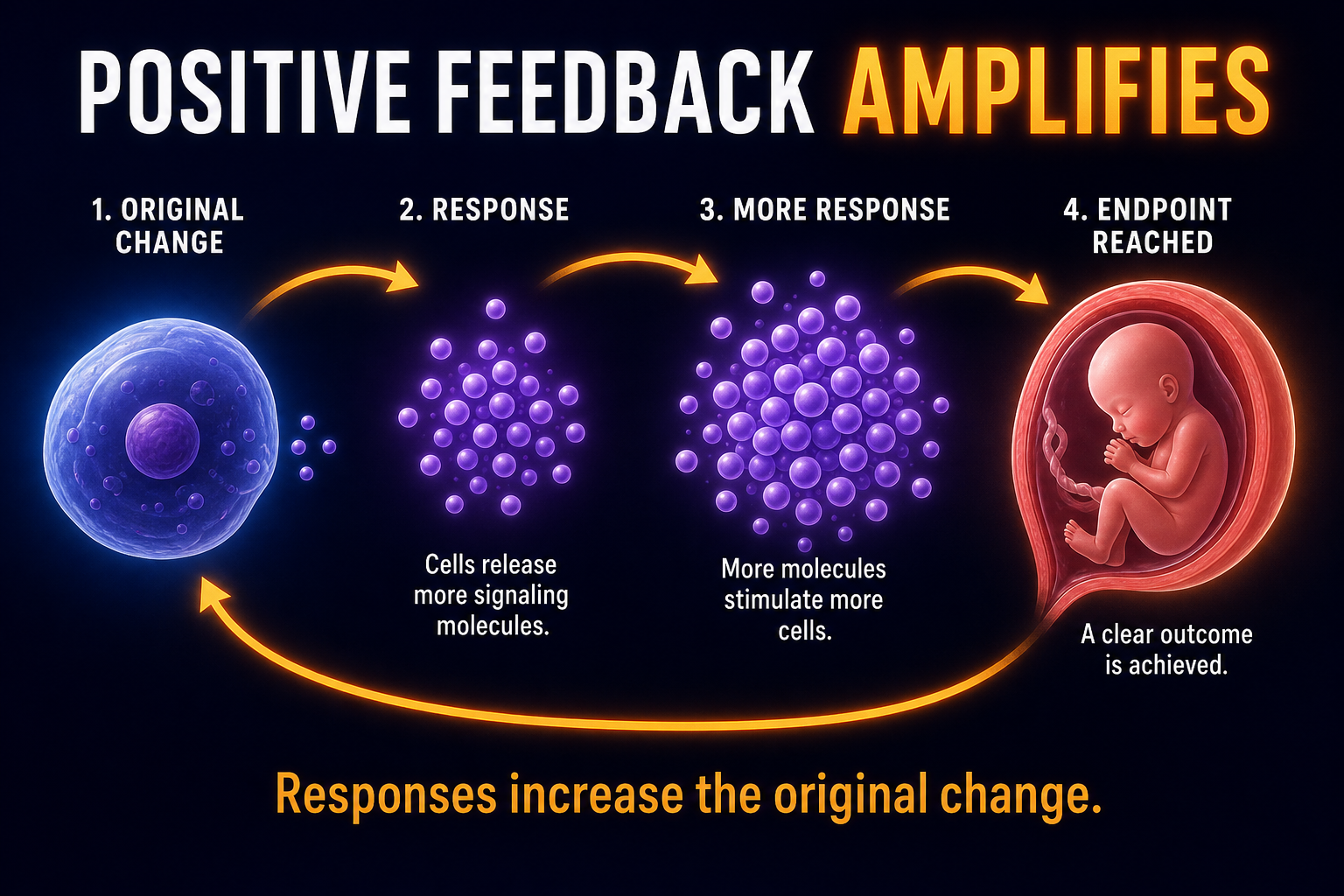
Positive Feedback
Responses increase the original change.
Positive feedback is a control loop where the response increases or amplifies the original change. The loop usually continues until a specific endpoint is reached. This makes positive feedback useful for completing processes such as childbirth contractions or blood clot formation.
Positive feedback amplifies change until an endpoint.
The stimulus is the original change that begins the loop. In positive feedback, the response makes that change stronger instead of reducing it.
The response reinforces the original stimulus. This is the key feature that makes the loop positive feedback.
Amplification means each loop cycle increases the effect. More response leads to even more response.
Positive feedback usually stops when a process is completed. The endpoint prevents the loop from continuing forever.
Childbirth and blood clotting are common AP Biology examples because each process builds until completion.
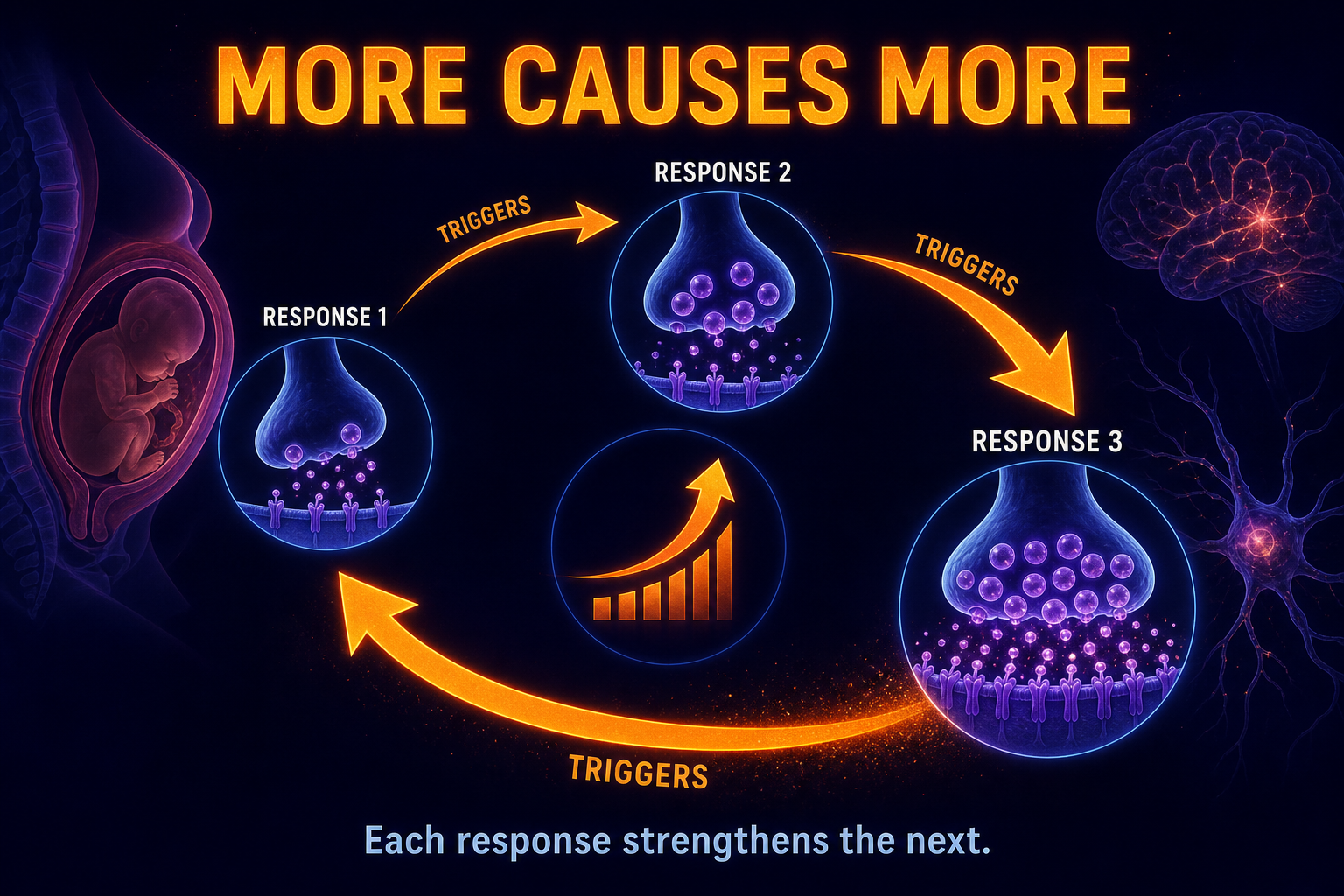
Positive feedback occurs when the response increases the original change. This creates an amplifying loop where each cycle pushes the process farther in the same direction. AP Biology questions often use wording like “more causes more” or “the response reinforces the stimulus.”
Signal direction builds on reception, transduction, and response and on cell signaling pathways when hormones or factors carry the amplifying message.
On free-response questions, draw a simple loop with arrows showing the stimulus, the response, and a second arrow showing that the response feeds back to strengthen the same change. Label whether each step increases or decreases the effect. If every arrow in the reinforcing path points toward “more of the same process,” you are describing positive feedback—not a return toward normal.
If the response increases the original change, the loop is positive feedback.
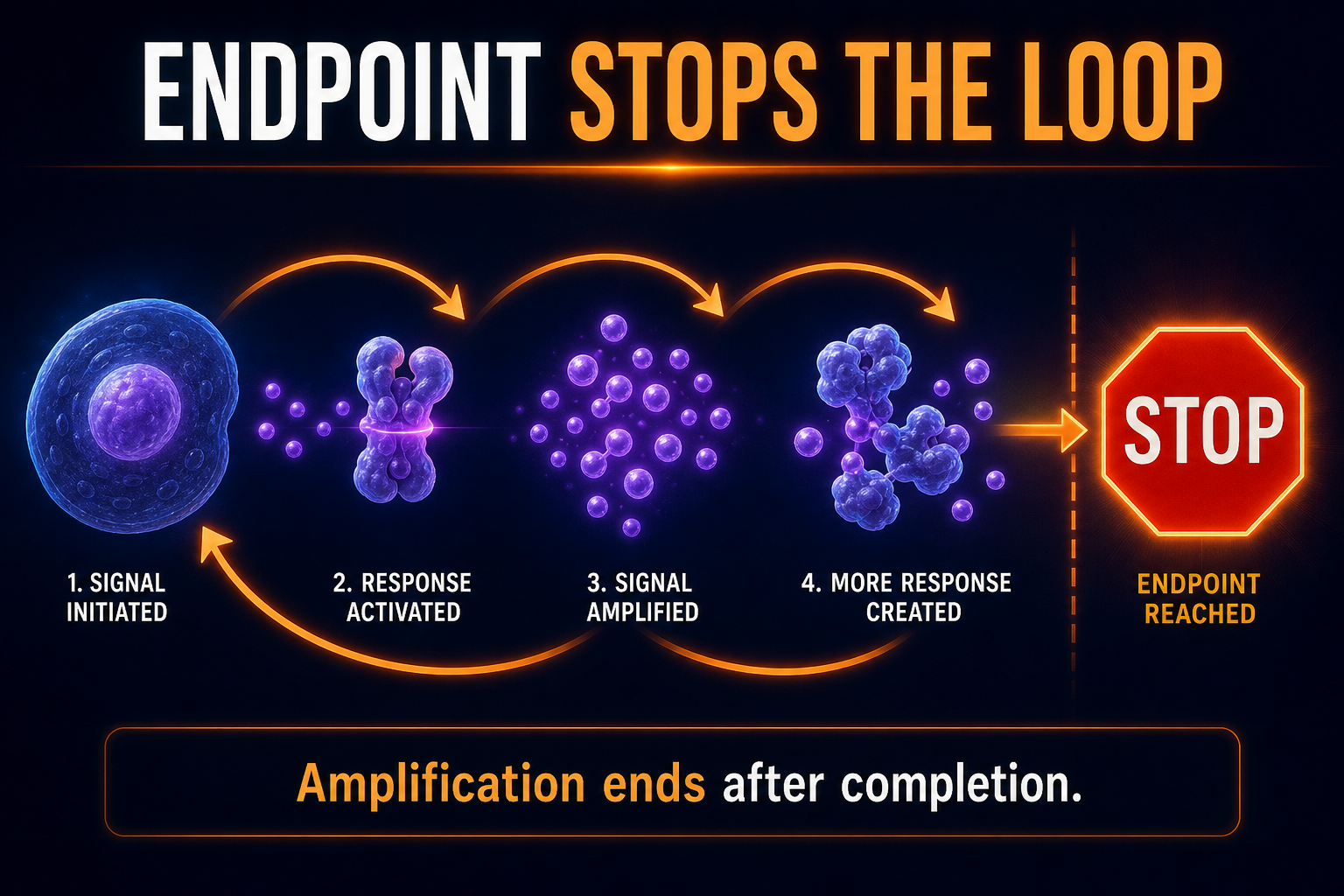
Because positive feedback amplifies change, it usually needs an endpoint. Without an endpoint, the loop could keep increasing and become unstable. In biology, the endpoint is often a completed event such as birth or clot formation.
Think of the endpoint as the “off switch” for a process that is supposed to finish, not run forever. Childbirth ends when the baby is delivered; clotting ends when the clot seals the vessel. AP prompts may ask what would happen if the endpoint never occurred—predict continued amplification or harm, depending on the scenario.
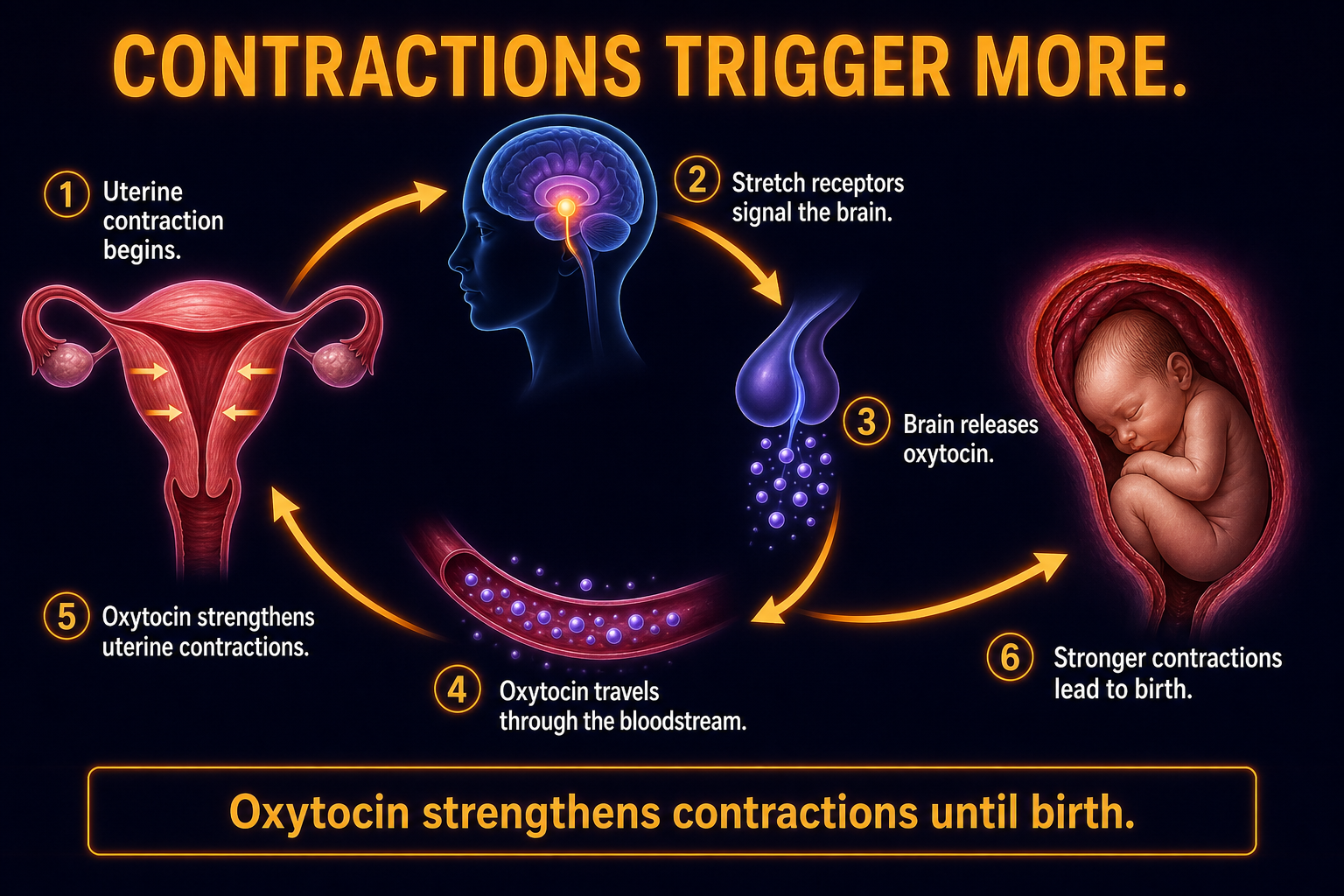
During childbirth, contractions stimulate oxytocin release, and oxytocin causes stronger contractions. Stronger contractions can trigger even more oxytocin release. This is positive feedback because the response amplifies the original change until the baby is born.
The pituitary hormone oxytocin is not “good” or “bad” in this context—it is part of an amplifying control loop. If an exam stem mentions blocked oxytocin receptors or reduced oxytocin release, predict weaker contractions or a slower labor progression because the reinforcing loop cannot build normally.
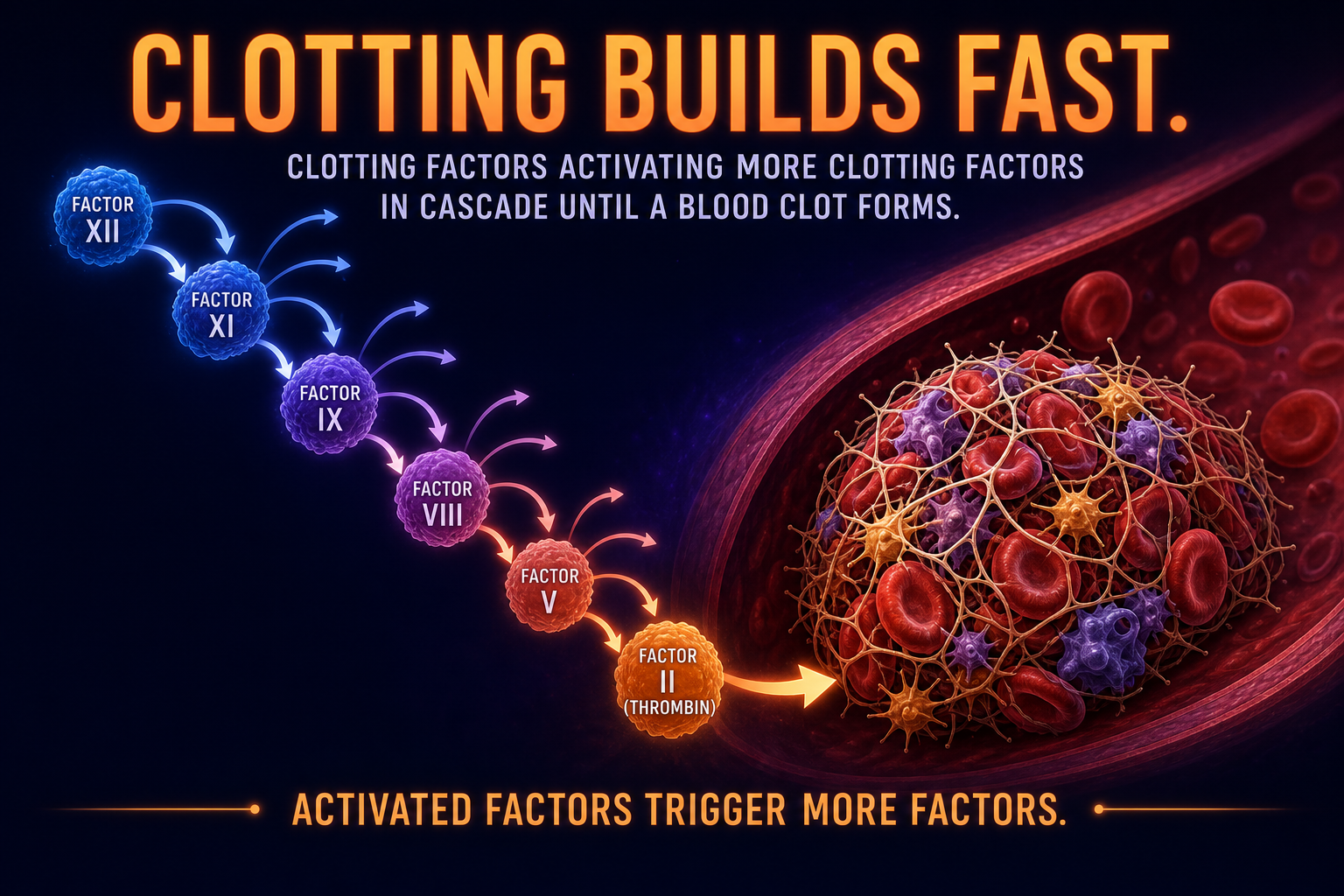
Blood clotting uses positive feedback because activated clotting factors help activate more clotting factors. This rapidly builds a clot at the injury site. The endpoint is clot formation, which helps stop bleeding.
Clotting is time-sensitive: amplification helps the body respond quickly after injury. If a clotting factor is missing or inactive, the cascade may not amplify efficiently, so bleeding may continue longer. That failure pattern is common on AP-style prediction questions.
Compare amplifying loops here with negative feedback on the previous guide when a variable must return toward normal.
| Feature | Positive feedback | Negative feedback |
|---|---|---|
| Main effect | Increases original change | Reduces original change |
| System result | Amplifies | Stabilizes |
| Common purpose | Complete a process | Maintain homeostasis |
| Endpoint or set point | Endpoint | Set point |
| AP clue | More causes more | Returns toward normal |
When a stem describes insulin lowering blood glucose after a meal, classify it as negative feedback even if the word “positive” appears elsewhere in the passage. When a stem describes stronger contractions after oxytocin release, classify it as positive feedback even if the outcome (birth) is desirable. Direction of the response—not the desirability of the outcome—determines the loop type.
Both loop types appear in the feedback mechanisms overview and in cell communication when signaling coordinates regulation.
Positive feedback can fail if the stimulus is not detected, the signal pathway is disrupted, or the amplifying response does not occur. If amplification fails, the process may be weak, delayed, or incomplete. AP Biology may ask you to predict what happens when a hormone, receptor, or effector in the loop is blocked.
A failed endpoint is a separate problem: the loop may continue too long or overshoot. Always state which part of the loop broke—detection, signaling, amplification, or stopping—and link that failure to the observable outcome (slow labor, prolonged bleeding, or an incomplete clot).
| Failed part | What goes wrong | Likely AP prediction |
|---|---|---|
| Stimulus detection | Change is not detected | Loop may not start |
| Signal pathway | Message is not relayed | Amplification may weaken |
| Effector | Response does not occur | Process may not progress |
| Endpoint | Loop does not stop correctly | Response may continue too long |
| Amplification | Response does not build | Completion may be delayed |
Exam prompts often describe a process that builds on itself—contractions during labor, clotting factors at an injury, or a cascade that speeds up. Your job is to name the response, then show that it increases the original change until a clear endpoint stops the loop.
Multiple-choice items may swap examples (lactation let-down, action potentials, or population growth in ecology units) but test the same logic: does the response make more of the original event? Free-response items often award points separately for naming the loop type, describing amplification, and identifying the endpoint—practice all three in every draft.
Likely positive feedback.
The response increases the original change.
Childbirth positive feedback endpoint.
Blood clotting endpoint.
A positive feedback loop may stop after completion.
The loop is positive feedback.
Name the stimulus that starts the loop.
State what the system does after the change.
Prove the response amplifies or reinforces the stimulus.
Name the event that stops the amplifying loop.
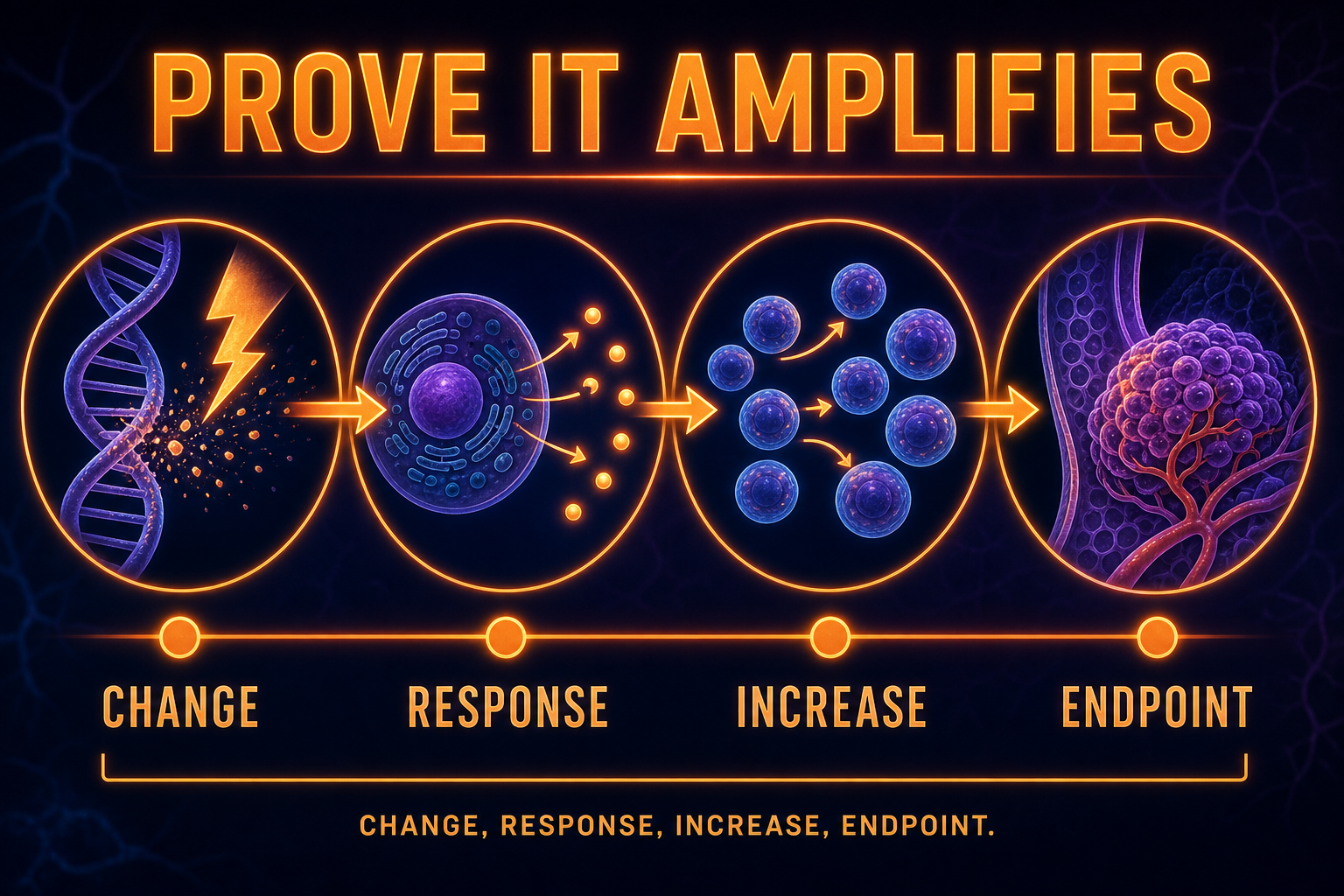
When ___ changes, the system responds by ___. This is positive feedback because the response ___ the original change. The loop continues until ___.
Positive does not mean good; it means the response amplifies the original change.
Positive feedback usually does not maintain a stable set point.
Positive feedback usually stops at an endpoint, while negative feedback returns toward a set point.
Positive feedback amplifies a process; negative feedback corrects a change.
Fix: Positive describes direction, not quality.
Fix: Positive feedback usually stops when the process is completed.
Fix: Contractions increase oxytocin, and oxytocin increases contractions.
Fix: Positive feedback usually amplifies rather than stabilizes.
Fix: Explain how the response increases the original stimulus.
Fix: Amplification means the response strengthens the loop effect.
Revealed: 0 of 4 scenarios
Contractions trigger oxytocin, and oxytocin strengthens contractions.
Answer: This is positive feedback because the response increases the original process until birth.
Clotting factors activate more clotting factors.
Answer: This is positive feedback because the response amplifies clot formation.
A receptor for oxytocin is blocked.
Answer: The amplifying loop may weaken because contractions may not respond normally to oxytocin.
A clotting factor cannot activate downstream factors.
Answer: Amplification may fail, so clot formation may be slower or incomplete.
Answer all eight questions. Choices shuffle on reload—focus on mechanism, not letter memorization.
More drills: Unit 4 practice questions, practice by topic, or daily AP Biology practice.
Open each card, draft your response, then reveal the rubric and sample. For more free-response practice, open the Unit 4 FRQ guide. Compare amplifying loops here with negative feedback on the previous guide.
During childbirth, uterine contractions stimulate oxytocin release, and oxytocin causes stronger contractions.
This is positive feedback because oxytocin strengthens uterine contractions, and stronger contractions can trigger more oxytocin release. The response increases the original change rather than reducing it. The loop continues until birth ends the process, which is the endpoint.
Status: Draft your answer first—then open the rubric or sample.
At an injury site, activated clotting factors help activate more clotting factors until a clot forms.
This is positive feedback because each activated clotting factor helps activate more clotting factors, so the response amplifies clot formation. The loop builds until a clot forms and bleeding is controlled—the endpoint. If one factor could not activate downstream factors, amplification might fail, so clotting could be slower or incomplete.
Status: Draft your answer first—then open the rubric or sample.
Positive feedback is a control loop where the response increases the original change. The loop usually continues until a specific endpoint is reached. AP Biology often tests whether you can show that the response amplifies the stimulus.
No. In biology, "positive" describes the direction of the response, not whether the outcome is beneficial. A positive feedback response increases or reinforces the original change.
Positive feedback amplifies change, so it usually cannot continue forever. An endpoint stops the loop once the process is completed. Childbirth and blood clot formation are common examples because each has a clear stopping point.
Childbirth is a classic positive feedback example. Contractions trigger oxytocin release, and oxytocin causes stronger contractions. The loop continues until birth ends the process.
Yes, blood clotting is often described as positive feedback because activated clotting factors activate more clotting factors. This amplification helps a clot form quickly at an injury site. The loop stops after the clot forms and bleeding is controlled.
Positive feedback increases the original change, while negative feedback reduces it. Positive feedback usually pushes a process toward completion, while negative feedback usually supports homeostasis. On AP Biology questions, focus on whether the response amplifies or counteracts the stimulus.
Positive feedback is less common because it drives change farther in one direction. That is useful for completing certain processes but not ideal for long-term stability. Most biological systems rely more often on negative feedback to maintain stable conditions.
If positive feedback fails, the process may be weak, delayed, or incomplete. A blocked receptor, disrupted signal pathway, or inactive effector can prevent amplification. AP Biology may ask you to predict whether the endpoint is reached.
Find the original change and ask what the response does to it. If the response increases the original change or causes more of the same process, it is positive feedback. Words like “amplifies,” “reinforces,” and “until completion” are strong clues.
Start by naming the original change and the response. Then explain how the response increases or reinforces that original change. Finish by identifying the endpoint that stops the loop.