Where Phosphorylation Cascades Fit in Unit 4
The previous guide, Second Messengers, explained how small intracellular molecules spread signals inside the cell. Phosphorylation cascades explain how protein kinases pass and amplify those signals through phosphate transfer. After this page, study Cancer and Cell Cycle Regulation to see what happens when signaling and cell-cycle control fail.
Current concept
Phosphorylation Cascade
Kinase chains multiply signals.
- 1 Unit 4 Hub
- 2 Cell Communication
- 3 Ligands and Receptors
- 4 Reception, Transduction, Response
- 5 Cell Signaling Pathways
- 6 Feedback Mechanisms
- 7 Negative Feedback
- 8 Positive Feedback
- 9 Cell Cycle
- 10 Cell Cycle Checkpoints
- 11 Cyclins and CDKs
- 12 Signal Amplification
- 13 Second Messengers
- 14 Phosphorylation Cascade You are here
- 15 Cancer and Cell Cycle Regulation
- 16 Apoptosis
- 17 Unit 4 Practice Questions
- 18 Unit 4 FRQ
What is a phosphorylation cascade in AP Biology?
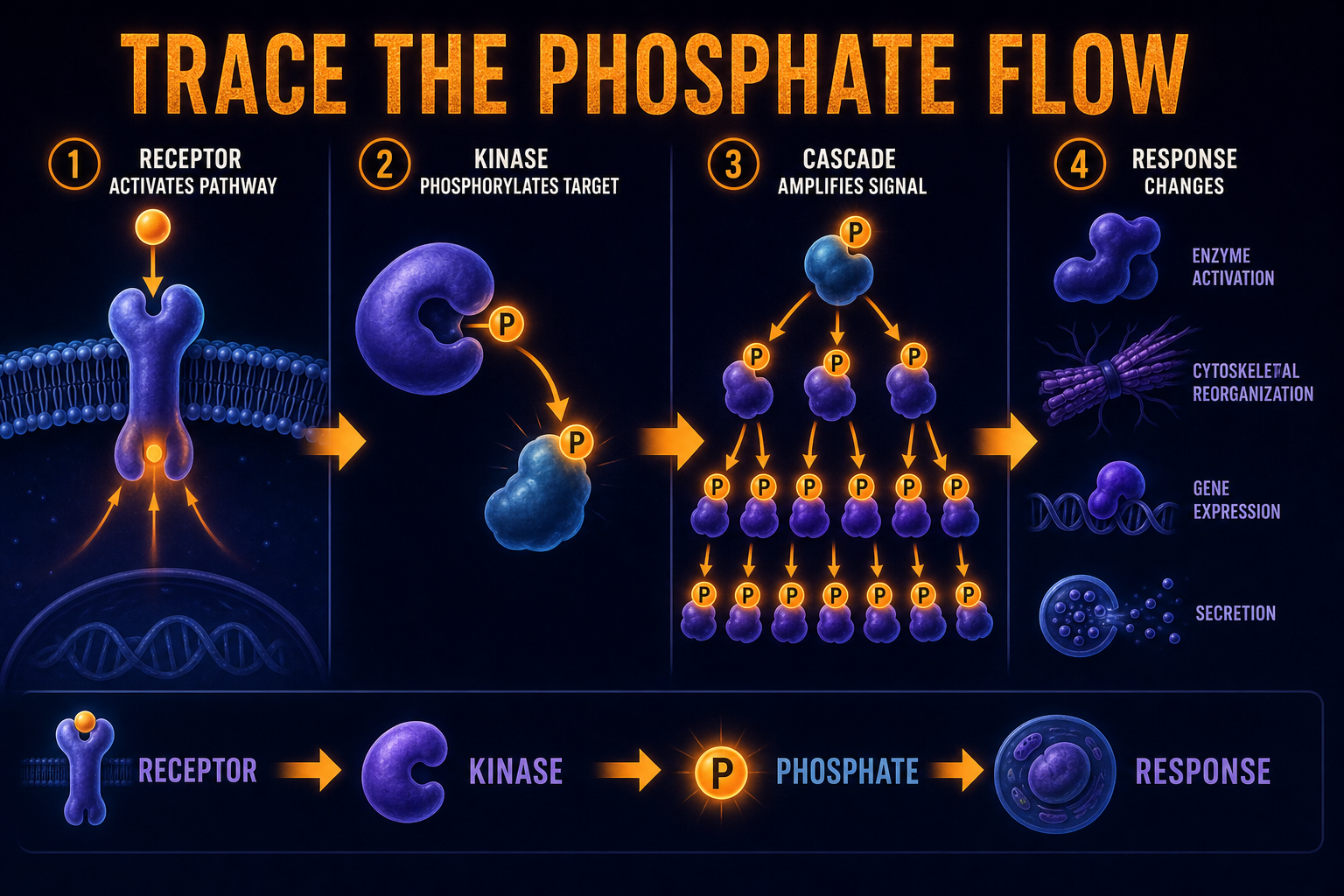
A phosphorylation cascade is a signal transduction pathway where one protein kinase phosphorylates another protein, which then activates the next step in the pathway. This can relay and amplify a signal inside the cell. AP Biology often tests phosphorylation cascades by asking what happens if a kinase, receptor, or phosphatase is blocked. Receptor tyrosine kinases can begin phosphorylation-based signaling by adding phosphate groups to tyrosine residues and recruiting relay proteins.
Say it fast
A phosphorylation cascade passes signals by adding phosphate groups.
Build a Phosphorylation Cascade
Click the steps in the correct order:
Cascade Path
Cascade complete: the signal was received, relayed, amplified, and reset.
What Does Phosphorylation Mean?
Phosphorylation means adding a phosphate group to a molecule, usually a protein. In signal transduction, phosphorylation often changes protein shape or activity. That change can turn a protein on, turn it off, or prepare it to activate another pathway step.
This connects to the broader reception, transduction, response framework in Unit 4.
Phosphorylation changes protein activity by adding a phosphate group.
Kinases Add Phosphate Groups
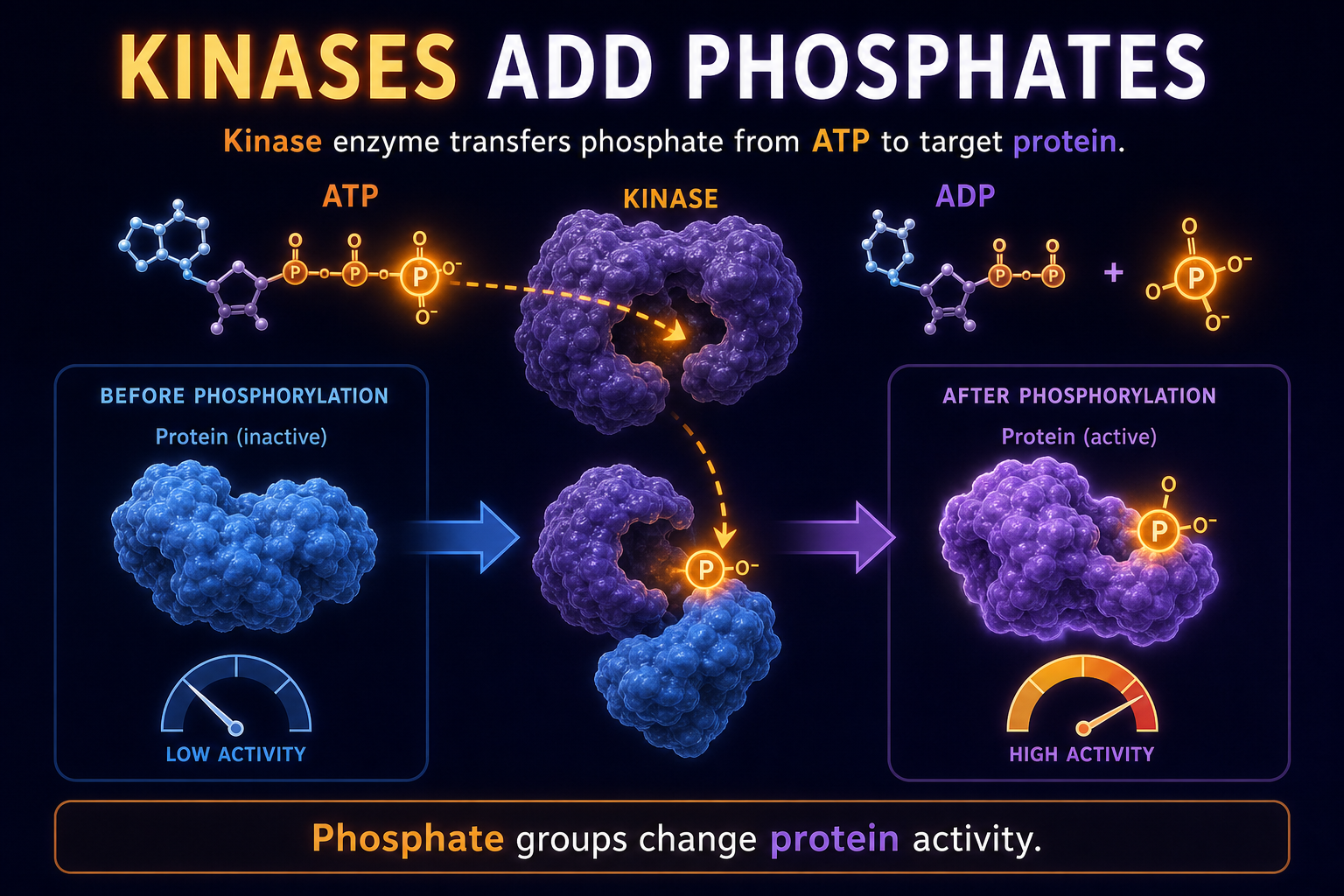
A kinase is an enzyme that adds phosphate groups to target molecules. In many cell signaling pathways, protein kinases phosphorylate other proteins to pass the signal forward. AP Biology often uses the phrase “kinase cascade” to describe a chain of phosphorylation events.
AP callout: If the question mentions a kinase, think phosphate transfer and protein activity change.
How a Phosphorylation Cascade Works
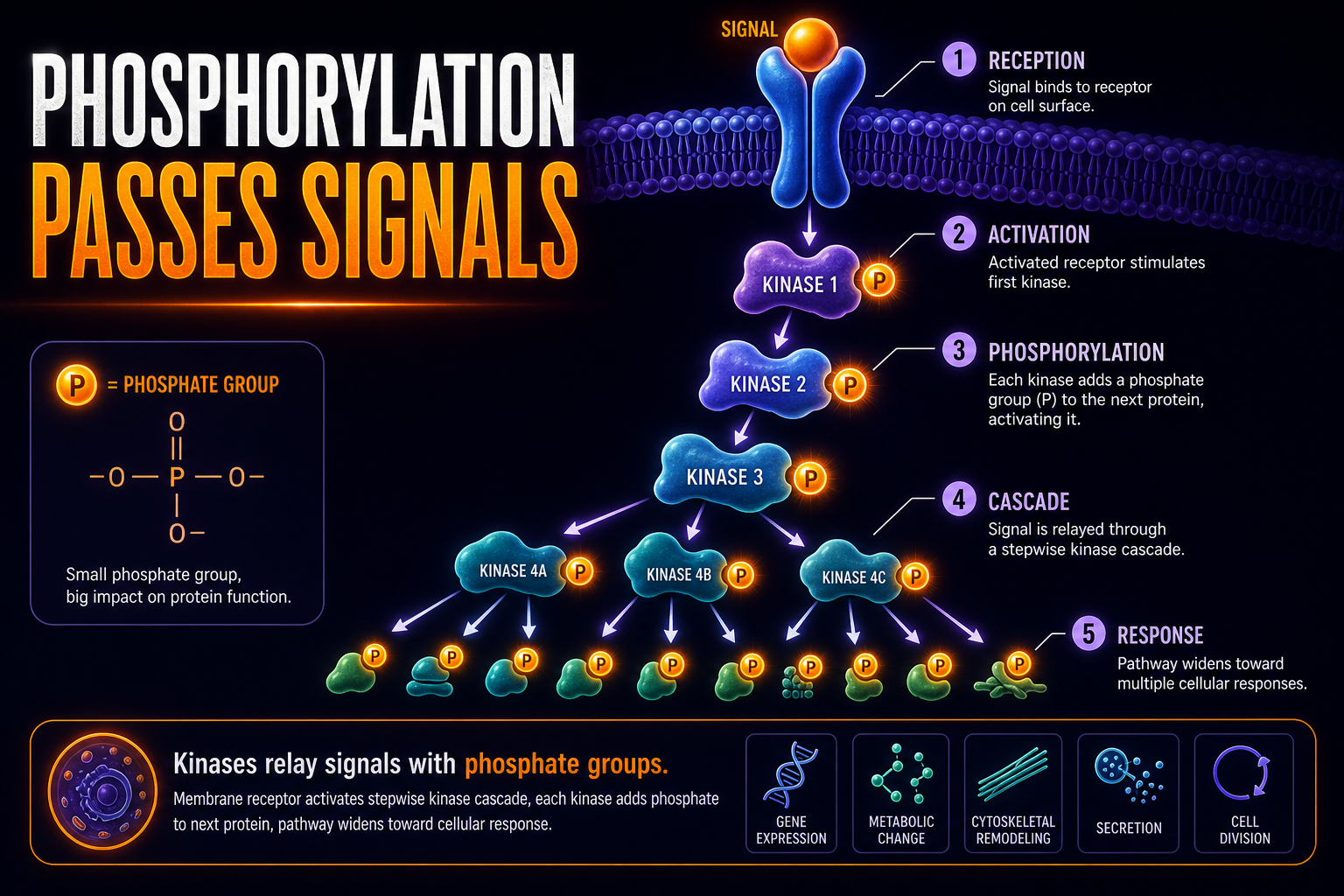
A phosphorylation cascade works like a relay. One activated protein phosphorylates the next protein, which then activates the next step. The signal moves through the pathway until target proteins create a cellular response.
Receptor activates relay protein
Kinase phosphorylates another kinase
Cascade activates target proteins
Cell response changes
How Phosphorylation Cascades Amplify Signals
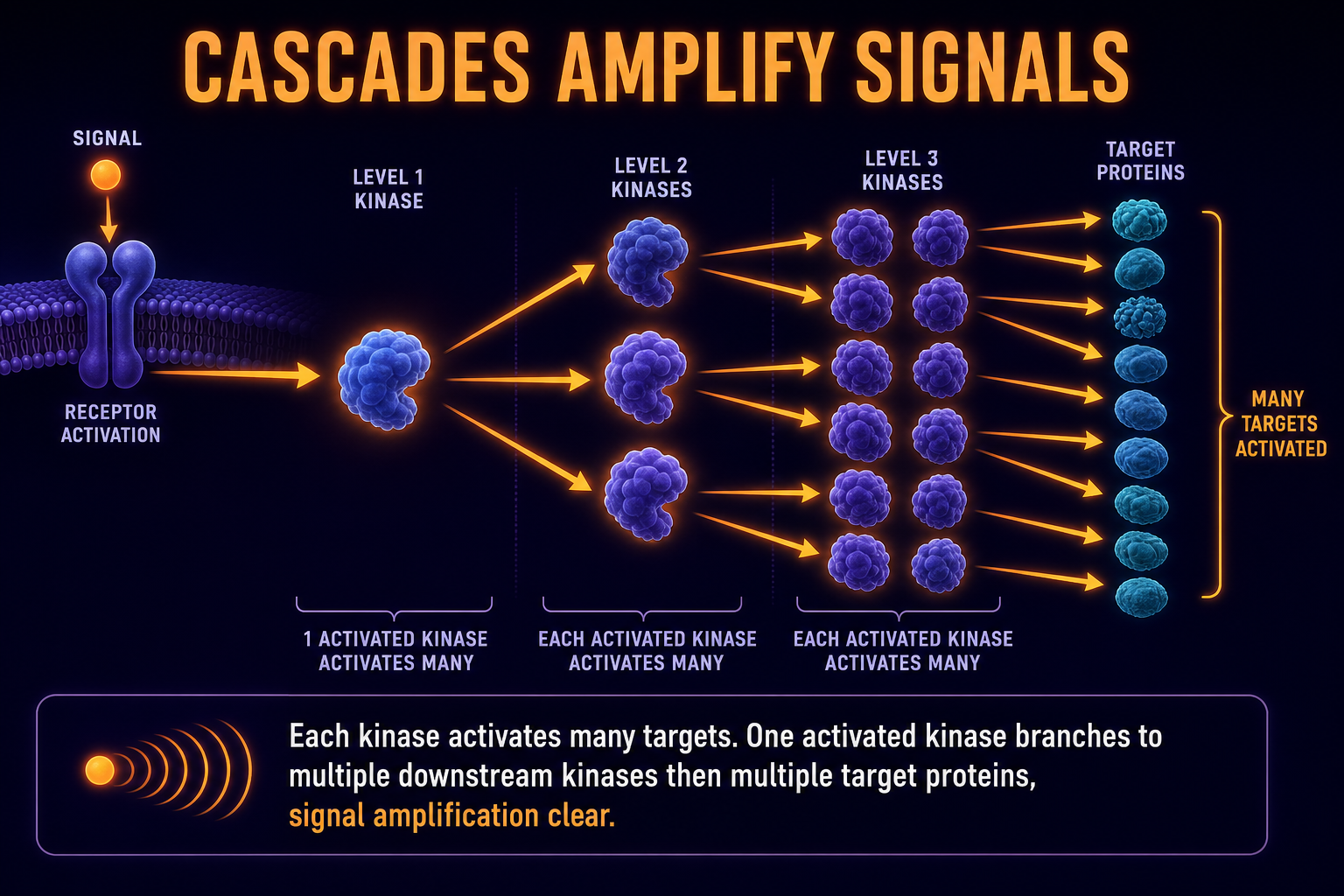
Phosphorylation cascades can amplify signals because one kinase may activate several molecules of the next kinase. Each of those molecules can then activate several more targets. This multiplication allows a small original signal to produce a large cellular response.
This connects directly to signal amplification logic on the AP exam.
Phosphatases Turn Signals Off
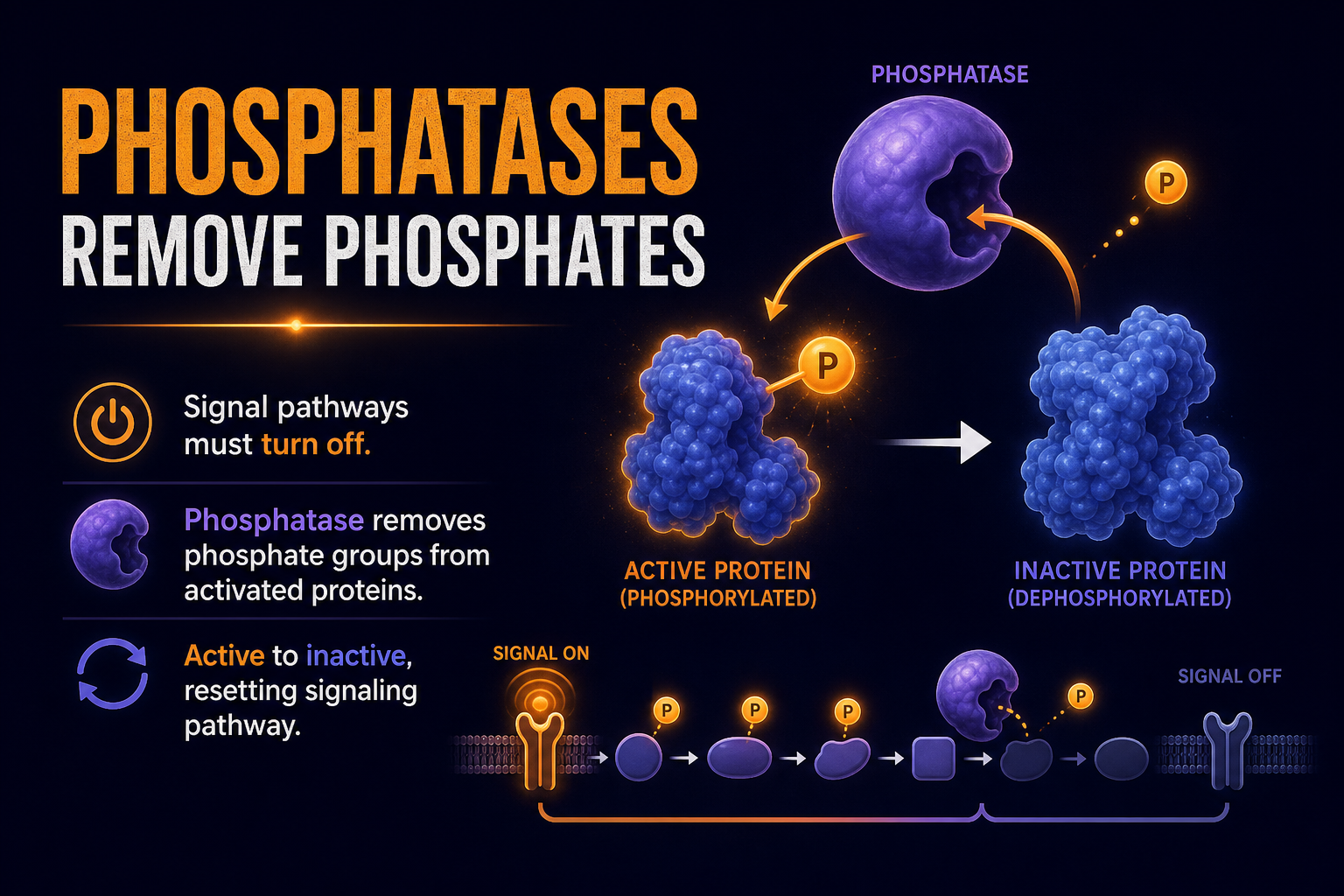
Phosphatases are enzymes that remove phosphate groups. They can turn off activated proteins or reset a signaling pathway after a response. This matters because cells need pathways to stop as well as start. For the enzyme-role details, review Kinases and Phosphatases to see how phosphate groups are added, removed, and used to regulate protein activity.
Kinases add phosphate groups; phosphatases remove phosphate groups.
How Second Messengers Connect to Phosphorylation Cascades
Second messengers can activate kinases, which then begin phosphorylation cascades. For example, an intracellular messenger may activate a protein kinase that phosphorylates downstream targets. This shows how different parts of signal transduction work together.
Review second messengers for cAMP and calcium examples, and cell signaling pathways for full pathway tracing on FRQs.
In the cAMP signaling pathway, cAMP activates protein kinase A, which can phosphorylate target proteins and change the cellular response.
| Pathway part | Main job | AP clue |
|---|---|---|
| Ligand | External signal | First messenger |
| Receptor | Detects signal | Reception |
| Second messenger | Internal relay | cAMP or Ca2+ |
| Kinase | Adds phosphate | Phosphorylation |
| Phosphatase | Removes phosphate | Signal reset |
| Target protein | Produces outcome | Cellular response |
How AP Biology Tests Phosphorylation Cascades
“Kinase activates another protein”
Phosphorylation is likely involved.
“Protein activity changes”
A phosphate group may have been added or removed.
“Cascade”
Multiple relay steps are involved.
“Large response from small signal”
Amplification may occur.
“Phosphatase added”
The pathway may turn off or reset.
“Kinase is blocked”
Downstream pathway steps may not activate.
How to Answer Phosphorylation Cascade FRQs
Identify the receptor or pathway trigger
Name what starts the cascade.
Explain which kinase phosphorylates the next target
Trace phosphate transfer step by step.
Connect phosphorylation to signal relay or amplification
Show how one step activates many targets.
Predict how blocking a kinase or phosphatase changes the response
State downstream consequences clearly.
AP FRQ writing frame
The signal activates ___. This causes ___ to phosphorylate ___. Phosphorylation changes protein activity by ___. If this step is blocked, the final response will ___.
Common AP Bio Phosphorylation Cascade Mistakes
Saying phosphorylation always turns proteins on
Fix: Phosphorylation can activate or inhibit depending on the protein.
Confusing kinase and phosphatase
Fix: Kinases add phosphate groups; phosphatases remove them.
Skipping amplification
Fix: Cascades can amplify signals when one step activates many downstream proteins.
Forgetting ATP
Fix: Phosphate groups often come from ATP in kinase reactions.
Treating cascade steps as random
Fix: The pathway has an order: receptor, relay, kinase activation, response.
Ignoring pathway blockage
Fix: If an early kinase is blocked, downstream steps may not activate.
Phosphorylation Cascade Clue Lab
Revealed: 0 of 4 scenarios
A protein kinase adds a phosphate group to another protein.
Answer: This is phosphorylation, and it may change the target protein's activity.
One active kinase activates several downstream kinases.
Answer: This is signal amplification through a phosphorylation cascade.
A phosphatase removes a phosphate group from an active protein.
Answer: The pathway may be turning off or resetting.
A mutation blocks the first kinase in a cascade.
Answer: Downstream targets may not activate, so the cellular response may decrease or disappear.
Phosphorylation Cascade MCQ Practice
Answer all eight questions. Choices shuffle on reload—focus on cascade logic, not letter memorization.
Question 1 of 8
Start
Correct: 0
Answered: 0
Accuracy: 0%
More drills: Unit 4 practice questions, practice by topic, or daily AP Biology practice.
Phosphorylation Cascade FRQ Practice
Open each card, draft your response, then reveal the rubric and sample. For more free-response practice, open the Unit 4 FRQ guide.
0 of 2 FRQs opened
Prompt
A ligand binds to a membrane receptor and activates a signaling pathway. A protein kinase phosphorylates another kinase, which then phosphorylates a target protein.
- A. Describe the role of phosphorylation in this pathway.
- B. Explain how this cascade can amplify the original signal.
- C. Predict what would happen if the first kinase were inhibited.
Scoring rubric
- 1 pt — States phosphorylation adds phosphate groups to proteins.
- 1 pt — Explains phosphorylation changes protein activity or shape.
- 1 pt — Describes one kinase activating multiple downstream kinases or targets.
- 1 pt — Connects amplification to a larger cellular response.
- 1 pt — Predicts reduced or blocked response if first kinase is inhibited.
- 1 pt — Clear receptor → kinase → target → response chain.
Sample response
Phosphorylation adds phosphate groups to proteins in the pathway, which can change their activity so the signal is passed forward. The first kinase phosphorylates the second kinase, which then phosphorylates the target protein to produce a cellular response. Amplification occurs because one activated kinase can phosphorylate several molecules of the next kinase, multiplying activated targets. If the first kinase were inhibited, the second kinase may not be phosphorylated, downstream targets may stay inactive, and the final response would be weak or absent.
Self-check
Status: Draft your answer first—then open the rubric or sample.
Prompt
A cell uses phosphatases to remove phosphate groups from activated proteins after a response occurs.
- A. Explain the role of phosphatases in signal transduction.
- B. Predict what could happen if phosphatase activity were blocked.
- C. Explain why turning off a pathway is important for normal cell function.
Scoring rubric
- 1 pt — States phosphatases remove phosphate groups from proteins.
- 1 pt — Explains this can turn off or reset activated pathway proteins.
- 1 pt — Predicts phosphorylated proteins stay active longer if phosphatase is blocked.
- 1 pt — Connects blocked phosphatase to prolonged or excessive signaling.
- 1 pt — Explains cells need pathways to stop after the correct response.
- 1 pt — Links failure to reset with abnormal or continuous cell activity.
Sample response
Phosphatases remove phosphate groups from activated proteins, which can turn off signaling proteins and reset the pathway after a response. If phosphatase activity were blocked, phosphorylated proteins might remain active longer than normal, so the pathway could stay on or respond too strongly. Turning off pathways is important because cells must stop signaling once the correct response occurs; continuous activation could cause inappropriate gene expression, metabolism changes, or uncontrolled division.
Self-check
Status: Draft your answer first—then open the rubric or sample.
Phosphorylation Cascade FAQs
What is a phosphorylation cascade in AP Biology?
A phosphorylation cascade is a series of steps where kinases add phosphate groups to proteins in a signaling pathway. Each step can activate the next protein in the pathway. This helps relay and sometimes amplify the signal.
What does phosphorylation mean?
Phosphorylation means adding a phosphate group to a molecule, usually a protein. This can change the protein's shape or activity. In AP Biology, phosphorylation is often part of signal transduction.
What do kinases do?
Kinases add phosphate groups to target molecules. In signaling pathways, protein kinases often phosphorylate other proteins to pass the signal along. A chain of kinase activity can create a phosphorylation cascade.
What do phosphatases do?
Phosphatases remove phosphate groups from proteins. This can turn off or reset a signaling pathway. They are important because cells must stop signals after the correct response occurs.
How do phosphorylation cascades amplify signals?
One activated kinase can activate several molecules of the next kinase. Each of those can activate even more downstream targets. This multiplication can make a small original signal produce a large cellular response.
Does phosphorylation always activate proteins?
No. Phosphorylation can activate or inhibit a protein depending on the protein and pathway. AP Biology answers should say phosphorylation changes activity rather than always turning something on.
How are second messengers related to phosphorylation cascades?
Second messengers can activate protein kinases. Those kinases may then start or continue a phosphorylation cascade. This connects intracellular messengers with protein-based signal relay.
What happens if a kinase is blocked?
If a kinase is blocked, the next step in the cascade may not be phosphorylated. Downstream targets may stay inactive, and the final cellular response may be reduced or absent. The earlier the blocked kinase is, the larger the effect may be.
What happens if a phosphatase is blocked?
If a phosphatase is blocked, phosphorylated proteins may stay active longer than normal. This can cause the pathway to remain on or respond too strongly. Cells need phosphatases to reset signaling pathways.
How should I answer phosphorylation cascade FRQs?
Start by naming the receptor or pathway trigger. Then explain how kinases phosphorylate targets and how that relays or amplifies the signal. Finish by predicting the consequence if a kinase or phosphatase is changed.