💸 AP Exam Cost & Fees
See standard fees, late fees, and fee reductions.
Read more →AP Exam Resources
Most AP students register through their school, but the exact process depends on your campus, timeline, and whether you are in a class or self-studying. This guide gives direct steps you can follow now so you do not miss deadlines.
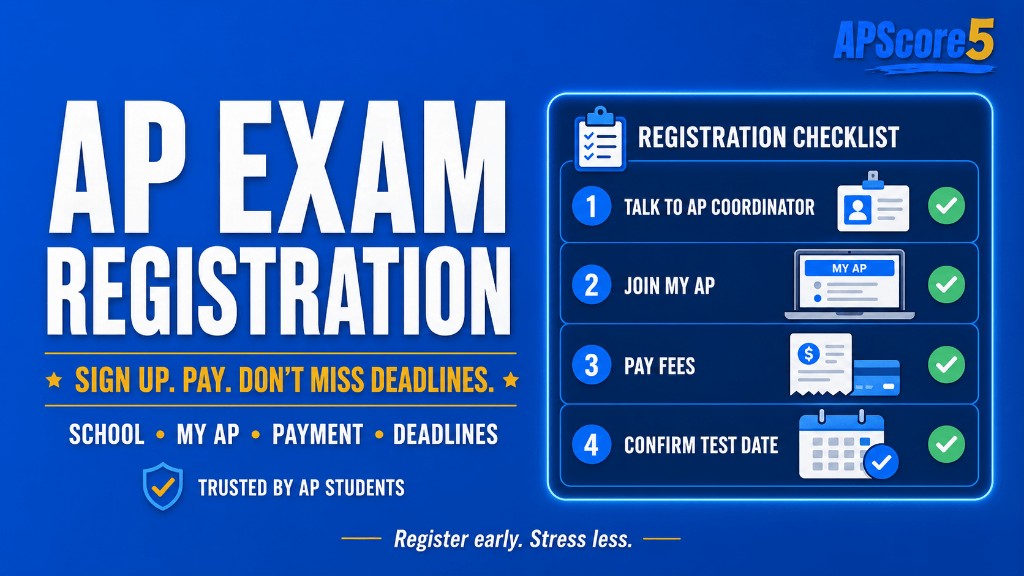
Students enrolled in an AP class usually register through their AP teacher and AP coordinator. The coordinator is the person who manages exam ordering, local deadlines, and school payment rules. Parents can help with paperwork and payment, but students should still confirm their own exam status directly.
Self-studiers and homeschoolers can still take AP exams. They register through a school willing to host external testers. Not every school has seats for external students, so outreach should start early in fall. If you call in October and wait for a reply, you may still be fine. If you wait until January, options shrink quickly.
Best practice: ask your AP coordinator for a written timeline and your school-specific checklist. That one step prevents most registration mistakes.
Most schools open AP registration in August or September and close the standard ordering window by early November. Late ordering often continues from November through March with a late fee. Cancellation and unused exam deadlines can vary by district.
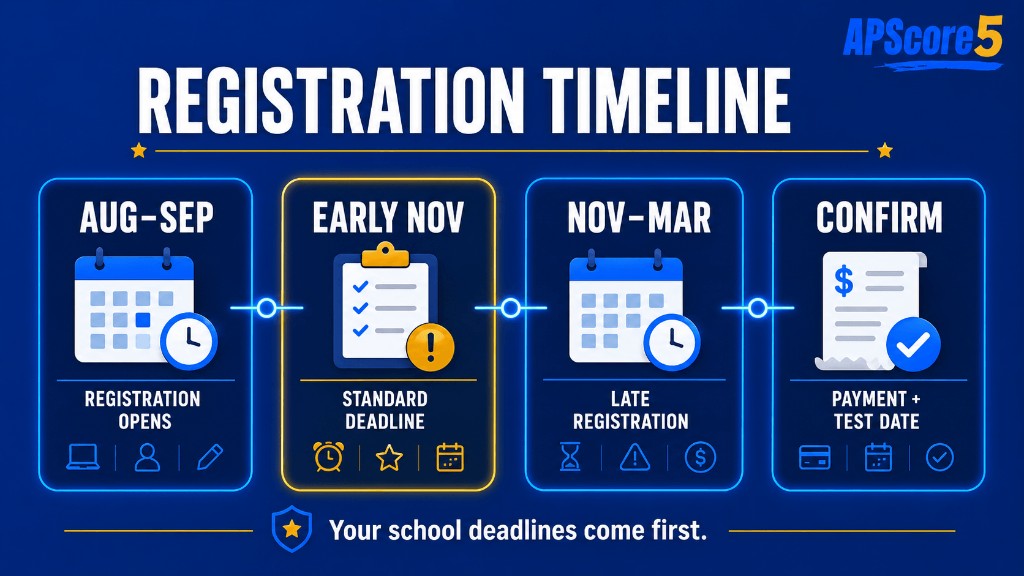
| Deadline Type | Approximate Window | Fee Impact |
|---|---|---|
| Fall registration | August to September | Standard pricing |
| Standard deadline | Early November | No late fee |
| Late registration | November to March | Late fee added |
| Cancellation deadline | School-specific | May include cancellation fee |
Because local policies differ, treat College Board windows as general guidance and your school rules as final. Track the latest exam schedule, review expected registration costs, and remember that after testing scores release in July.
Students often complete steps one to three but forget step four. If payment is missing, your exam may not be finalized. Save proof of payment and order confirmation.
Self-studiers should contact nearby schools in early fall and ask if they accept external testers for your specific AP subject. Be ready with your name, subject, preferred test location, and timeline. Some schools accept only a limited number of external students.
External testing works best when you start early and keep communication written by email for easy follow-up. If you are self-studying for AP Biology, AP Human Geography, or AP Computer Science Principles, add a weekly plan and start daily practice.
Late registration is available at many schools through March, but each late order usually adds a fee. After mid-March, most schools close new exam orders. If you miss a date, contact your AP coordinator immediately. Fast communication gives you the highest chance to still test.
A simple calendar reminder system can prevent almost all of these mistakes. Add reminder dates for registration, payment, and final confirmation, then review what to bring on test day, use practice by topic to target weak areas, and create a free account to track progress.
August and September are typical windows when coordinators flip registration on for fall AP sections. Early November is the usual cutoff before schools pivot to late-order pricing.
You do not need a classroom seat to reserve an exam—what matters is whether a host school orders one for you. External testers line up with campuses that admit outside examinees and still have seats after prioritizing enrolled students.
Nationwide AP fees reset each year when College Board publishes updated pricing. District billing portals show payment deadlines and may add late-order charges when students submit after local cutoffs.
Ordering past November often remains possible through winter into spring, but schools routinely attach a late surcharge when they keep the window open. Some campuses shut ordering entirely after their posted cutoff—call the testing office instead of guessing.
District portals frequently let a guardian submit payments tied to a student ID number. The roster that locks who sits for each exam still flows through school authorization, not a casual note from home.
My AP ties exam selections to the College Board profile linked when your teacher adds you to a section. Write credentials somewhere dull before reminder texts pile up during crunch week.
Confirm deadlines and ordering rules on AP Students; schools layer local dates on top.
Last verified: May 10, 2026 against the pages above.
Daily practice beats last-minute cramming. Try APScore5 free.
Start Free Practice →