Receptor dimerizes
RTK pathway is likely.
AP Biology · Unit 4 Phase 2 Deep Dive
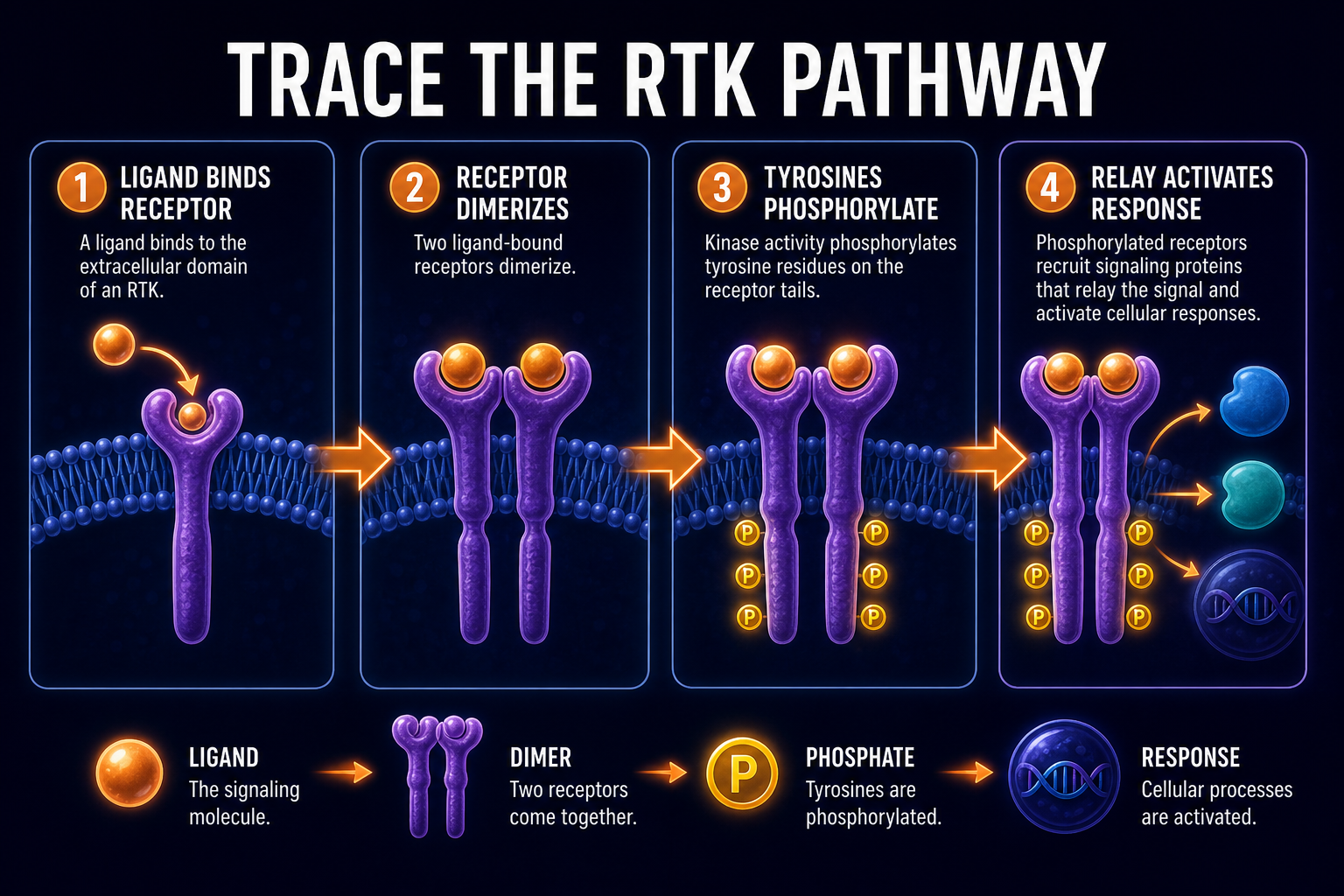
Tyrosine kinase receptors, also called receptor tyrosine kinases or RTKs, are membrane receptors that often respond to growth factors and trigger phosphorylation-based signaling pathways. When a ligand binds, two receptor monomers come together, phosphorylate tyrosine residues, and create docking sites for relay proteins. In AP Biology Unit 4, the key skill is tracing ligand binding, dimerization, phosphorylation, signal amplification, and pathway consequences.
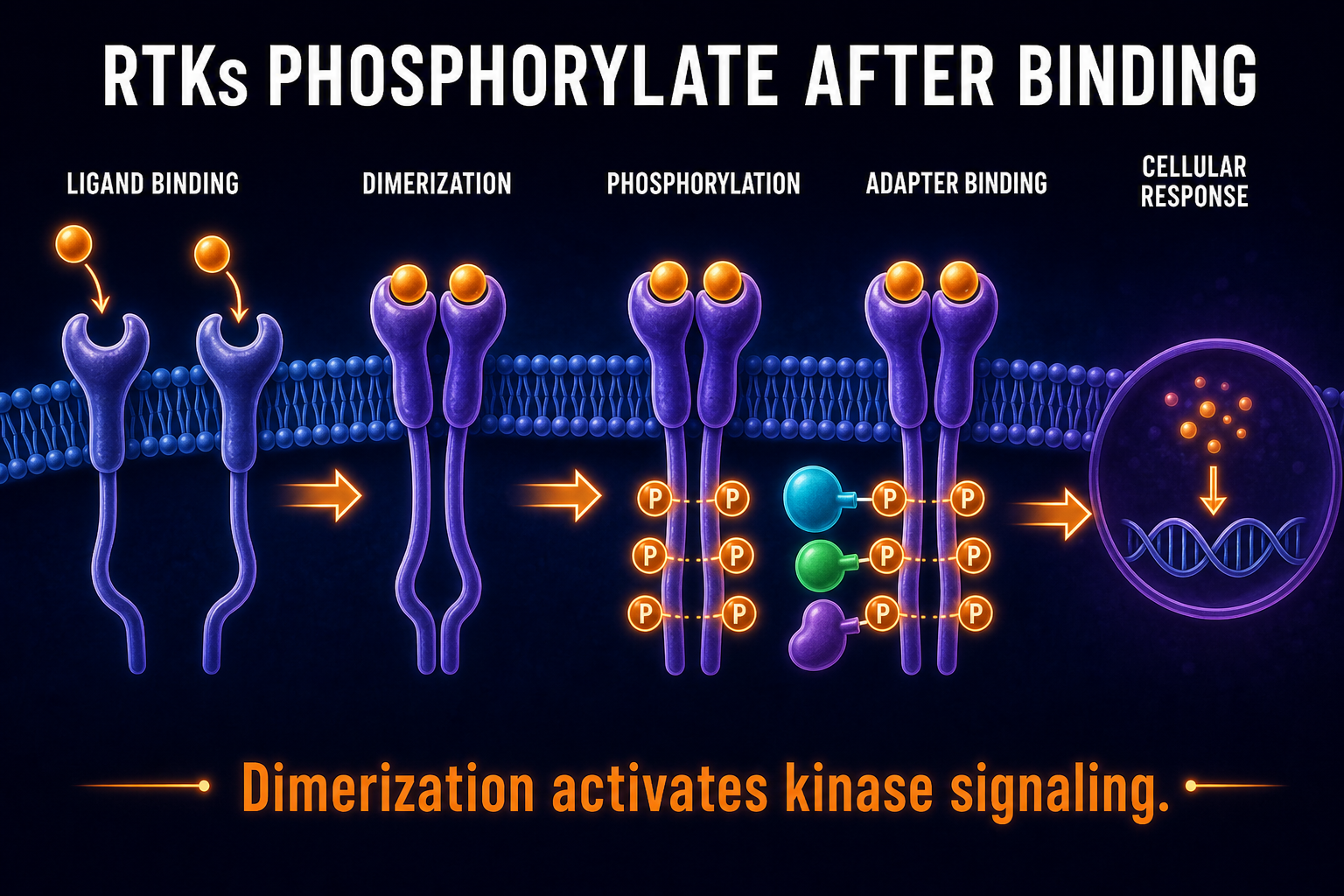
The core Unit 4 pages explain ligands, receptors, and signal transduction. This Phase 2 deep dive focuses on receptor tyrosine kinases, which are especially important for phosphorylation, growth signals, and cancer-related regulation. RTKs pair well with G protein-coupled receptors because both are membrane receptors, but they activate pathways in different ways.
Tyrosine Kinase Receptors
Dimerization and tyrosine phosphorylation.
Core guide: Ligands and Receptors. Related: Phosphorylation Cascade.
Tyrosine kinase receptors are membrane receptors that activate signaling pathways through dimerization and phosphorylation. When a ligand binds, two receptor monomers come together and phosphorylate tyrosine residues on their intracellular tails. These phosphorylated tyrosines act as docking sites for relay proteins that pass the signal into the cell.
RTKs dimerize, phosphorylate tyrosines, and recruit relay proteins.
Click each step in order to activate the RTK pathway:
No response — ligand absent.
Response: No response
Receptor tyrosine kinases are membrane receptors with enzymatic kinase activity on the inside of the cell. They often respond to growth factors and other signals that influence cell growth, division, survival, or differentiation. Their main AP Biology clue is phosphorylation of tyrosine residues after ligand binding.
Connect RTKs to reception, transduction, and response when you map how binding becomes a cellular change.
An RTK is a receptor that phosphorylates tyrosines after ligand-triggered dimerization.
The pathway begins when a ligand binds to the extracellular part of the receptor. Many RTKs exist as separate monomers before ligand binding. The ligand helps bring receptor monomers together, preparing the intracellular kinase domains to activate.
Review ligands and receptors when you explain receptor specificity on MCQs and FRQs.
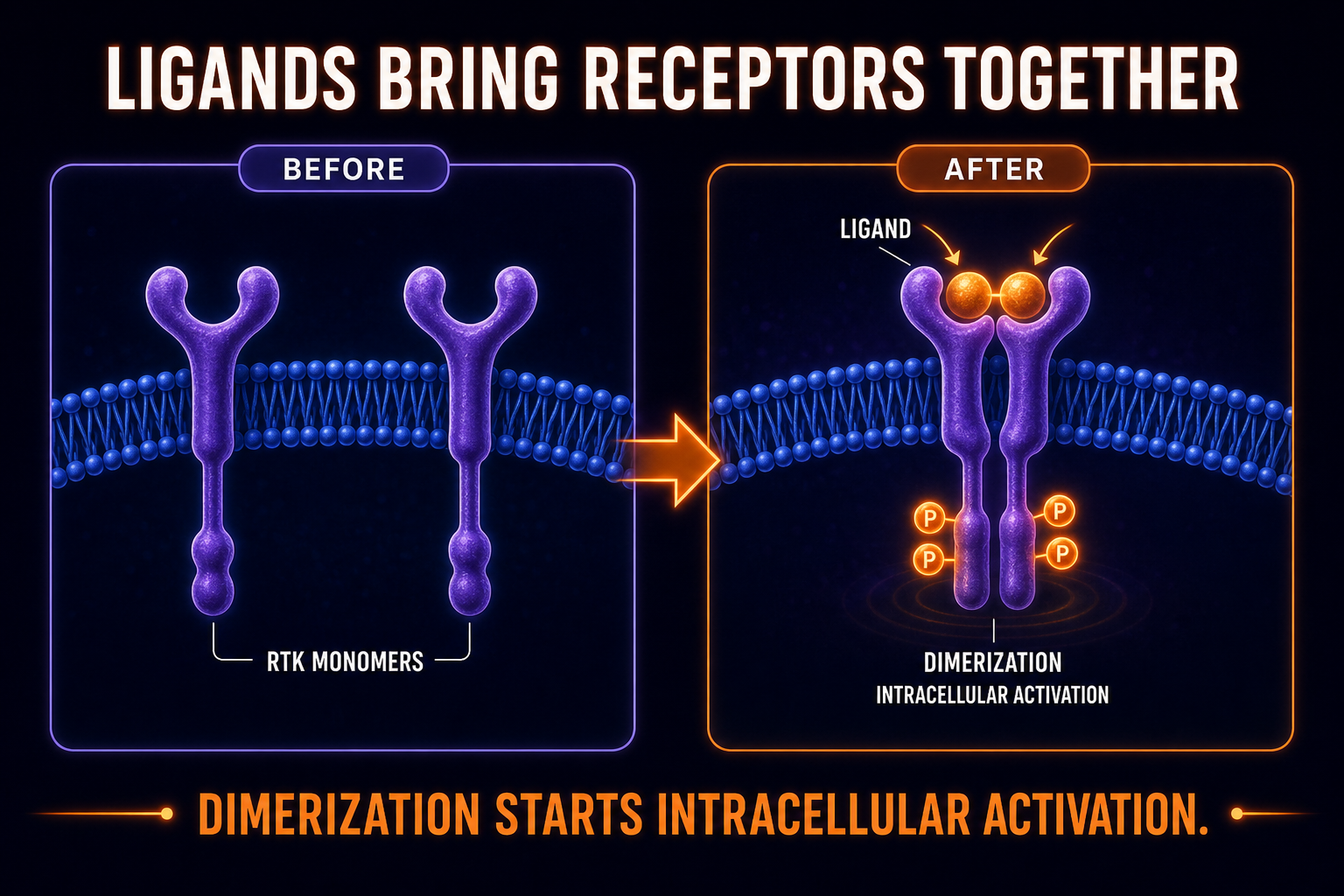
Dimerization means two receptor units come together. For receptor tyrosine kinases, this pairing is important because it allows the intracellular kinase regions to activate each other. Without dimerization, the receptor may not properly phosphorylate tyrosine residues.
Dimerization brings two RTK monomers together so signaling can begin.
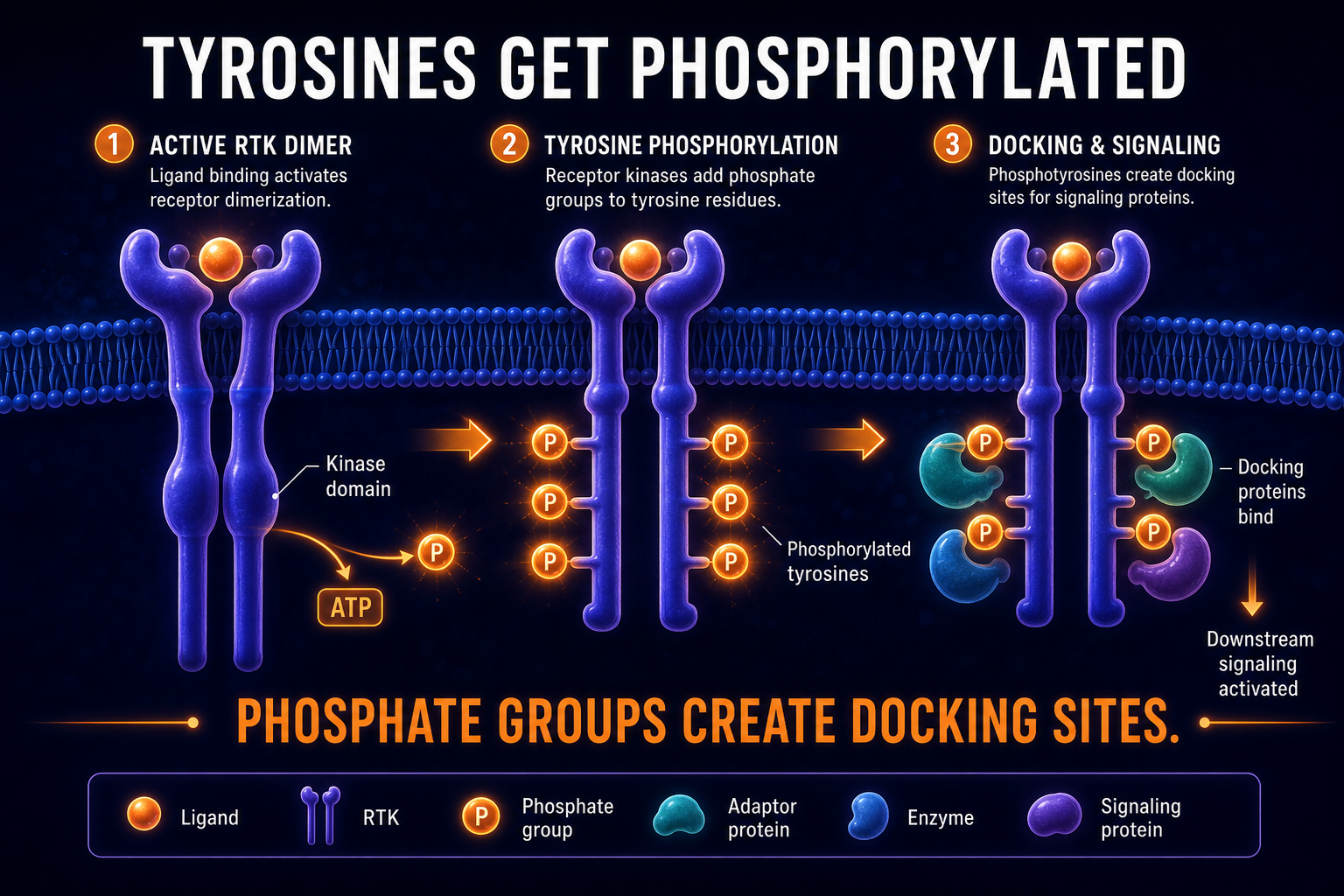
After dimerization, the receptor's kinase domains add phosphate groups to tyrosine residues on the intracellular tails. This is called tyrosine phosphorylation. These phosphate groups create sites where intracellular relay proteins can attach and continue the pathway. Tyrosine kinase receptors rely on kinase activity, and the Kinases and Phosphatases guide explains how phosphate addition and removal regulate pathway activity.
See the phosphorylation cascade guide for how kinases relay signals downstream.
Phosphorylated tyrosines act like molecular landing pads. Relay proteins can bind to these phosphorylated sites and become activated. This helps connect the receptor at the membrane to downstream pathways inside the cell.
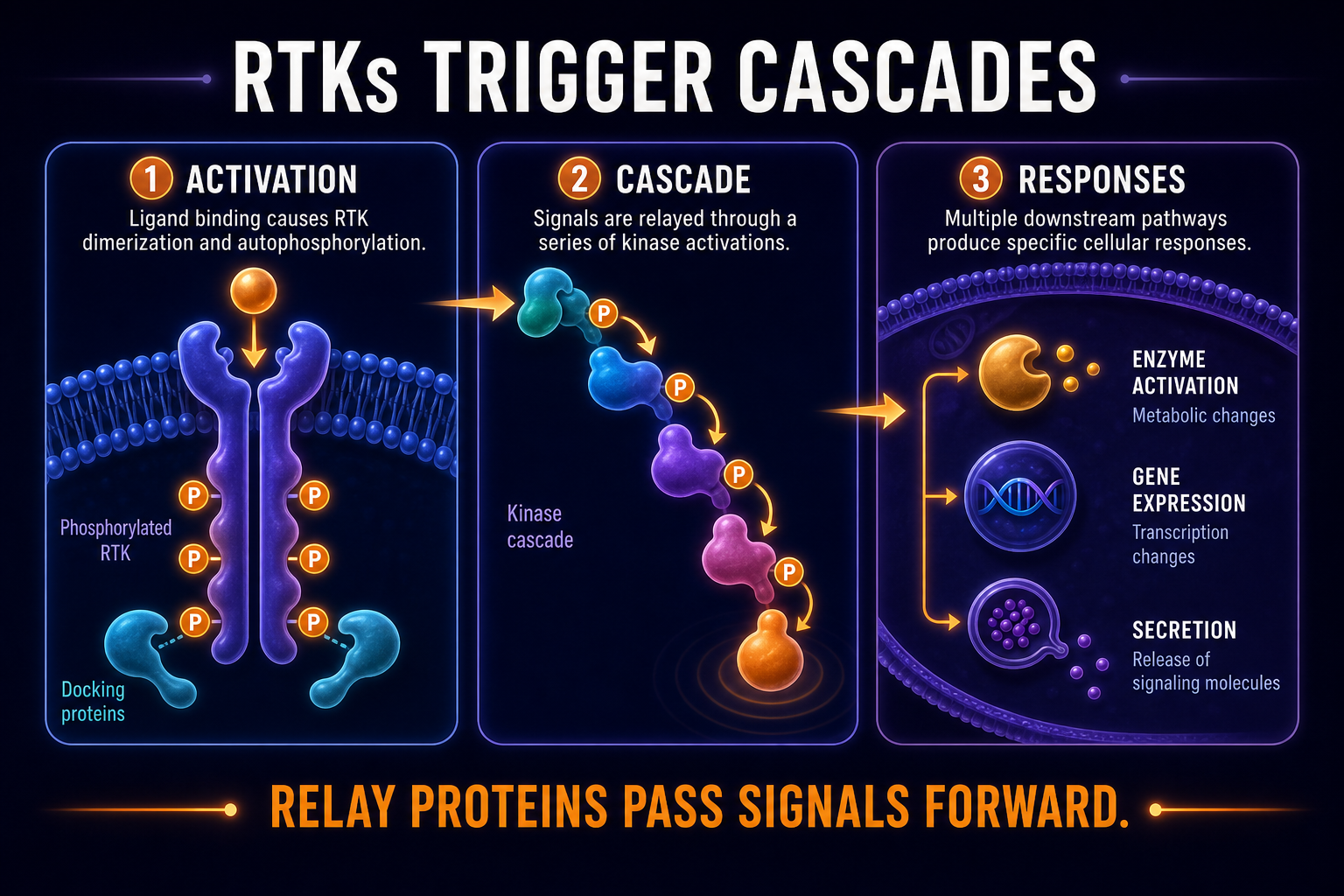
Once relay proteins attach, RTKs can trigger downstream signaling cascades. These cascades may include kinases that phosphorylate other proteins, amplifying the original signal. This helps a signal at the cell membrane produce a larger cellular response.
Read signal amplification for how one RTK event can activate many targets.
Receptor tyrosine kinases often connect to growth factor signaling. If an RTK pathway is overactive, the cell may receive too much growth or survival signaling. AP Biology may connect overactive receptor signaling, excess phosphorylation, failed pathway shutoff, and cancer risk.
Link this to cancer and cell cycle regulation when checkpoints and growth controls also fail.
Both GPCRs and receptor tyrosine kinases detect external signals and start transduction pathways, but their mechanisms differ. GPCRs activate G proteins through GDP-to-GTP exchange. RTKs dimerize and phosphorylate tyrosine residues to recruit relay proteins.
Ion channel receptors create responses by changing ion flow, while receptor tyrosine kinases use dimerization and phosphorylation. See Ion channel receptors for ligand-gated pore opening and membrane potential.
Unlike receptor tyrosine kinases, intracellular receptors do not need a membrane-spanning receptor when the ligand can cross the membrane.
| Feature | GPCR | Receptor tyrosine kinase |
|---|---|---|
| Main activation | G protein activation | Dimerization and phosphorylation |
| Key molecule | GDP/GTP | Phosphate on tyrosine |
| Common clue | cAMP, G protein | kinase, dimer, tyrosine |
| Signal relay | G protein and effectors | docking proteins and cascades |
| AP consequence | GTP/cAMP problems | phosphorylation/dimerization problems |
Compare in depth on the G protein-coupled receptors guide.
RTK pathway is likely.
Receptor tyrosine kinase signaling is being tested.
Phosphorylated receptor sites are recruiting relay proteins.
RTK signaling may be involved.
Downstream phosphorylation and response may decrease.
Growth signaling may become excessive.
Name the signal and receptor type.
Connect binding to pairing of monomers.
Show how phosphate sites form.
Finish with a clear outcome.
When ___ binds the RTK, the receptor ___. This causes tyrosine residues to ___. Relay proteins then ___, leading to ___.
Fix: RTKs dimerize and phosphorylate; GPCRs activate G proteins.
Fix: Ligand binding often brings two receptor monomers together.
Fix: Ligand binding and dimerization come first.
Fix: Phosphorylated tyrosines recruit relay proteins.
Fix: Phosphorylation changes protein activity, but the effect depends on the protein.
Fix: Overactive RTK growth signaling can increase cancer risk.
Answer all eight questions. Choices shuffle on reload—trace the pathway, not the letter.
More drills: Unit 4 practice questions or the Unit 4 FRQ guide.
Open each card, draft your response, then reveal the rubric and sample.
A growth factor binds to a receptor tyrosine kinase on the surface of a target cell. The receptor dimerizes, tyrosine residues are phosphorylated, and relay proteins bind to the receptor.
When the growth factor binds the RTK, reception occurs because the ligand matches the receptor. Dimerization brings two receptor monomers together so the intracellular kinase regions can activate each other. Tyrosine residues are then phosphorylated, creating sites where relay proteins can dock and continue the pathway. If tyrosine phosphorylation is blocked, docking proteins may not attach, downstream kinase cascades may fail to activate, and the final cellular response may be weak or absent.
Status: Draft your answer first—then open the rubric or sample.
A mutation causes a receptor tyrosine kinase to remain active even without ligand binding.
If the RTK stays active without ligand binding, it may dimerize and phosphorylate tyrosines even when no growth factor is present. Relay proteins and kinase cascades may stay on, so the cell keeps receiving growth or survival signals. The cell may divide more often or avoid normal growth limits. If checkpoints and tumor suppressors also fail, this overactive RTK signaling can increase cancer risk.
Status: Draft your answer first—then open the rubric or sample.
Tyrosine kinase receptors are membrane receptors that activate signaling pathways through dimerization and phosphorylation. When a ligand binds, receptor monomers come together and phosphorylate tyrosine residues. These phosphorylated sites help recruit relay proteins inside the cell.
Dimerization means two receptor units come together. In receptor tyrosine kinase signaling, ligand binding often causes this pairing. Dimerization helps activate the intracellular kinase regions.
Tyrosine phosphorylation means adding phosphate groups to tyrosine amino acids on a protein. In RTKs, phosphorylated tyrosines can act as docking sites for relay proteins. This helps pass the signal into the cell.
RTKs usually dimerize and phosphorylate tyrosine residues, while GPCRs activate G proteins. GPCR pathways often involve GDP-to-GTP exchange. RTK pathways often involve kinase activity and docking proteins.
RTKs can connect external signals to intracellular relay pathways. They often activate kinase cascades that affect cell growth, survival, or differentiation. AP Biology uses RTKs to test phosphorylation-based signaling.
One activated RTK can recruit multiple relay proteins and trigger downstream kinase cascades. Those cascades can activate many target proteins. This allows a small signal to produce a larger cellular response.
If phosphorylation is blocked, docking proteins may not attach to the receptor. Downstream signaling may decrease or fail. The final cellular response may be weak or absent.
RTKs often respond to growth signals. If an RTK is overactive or cannot turn off, cells may receive too much growth signaling. This can increase cancer risk if other controls also fail.
Clues include receptor dimerization, tyrosine phosphorylation, docking proteins, kinase activity, or growth factor signaling. These clues point toward receptor tyrosine kinase signaling rather than GPCR signaling. The words “dimer” and “tyrosine” are especially important.
Trace the pathway in order: ligand binding, receptor dimerization, tyrosine phosphorylation, docking protein attachment, and cellular response. Then predict what changes if one step is blocked or overactive. Use mechanism language instead of only naming the receptor.