Kinase active
A phosphate group may be added to a target.
AP Biology · Unit 4 Phase 2 Deep Dive
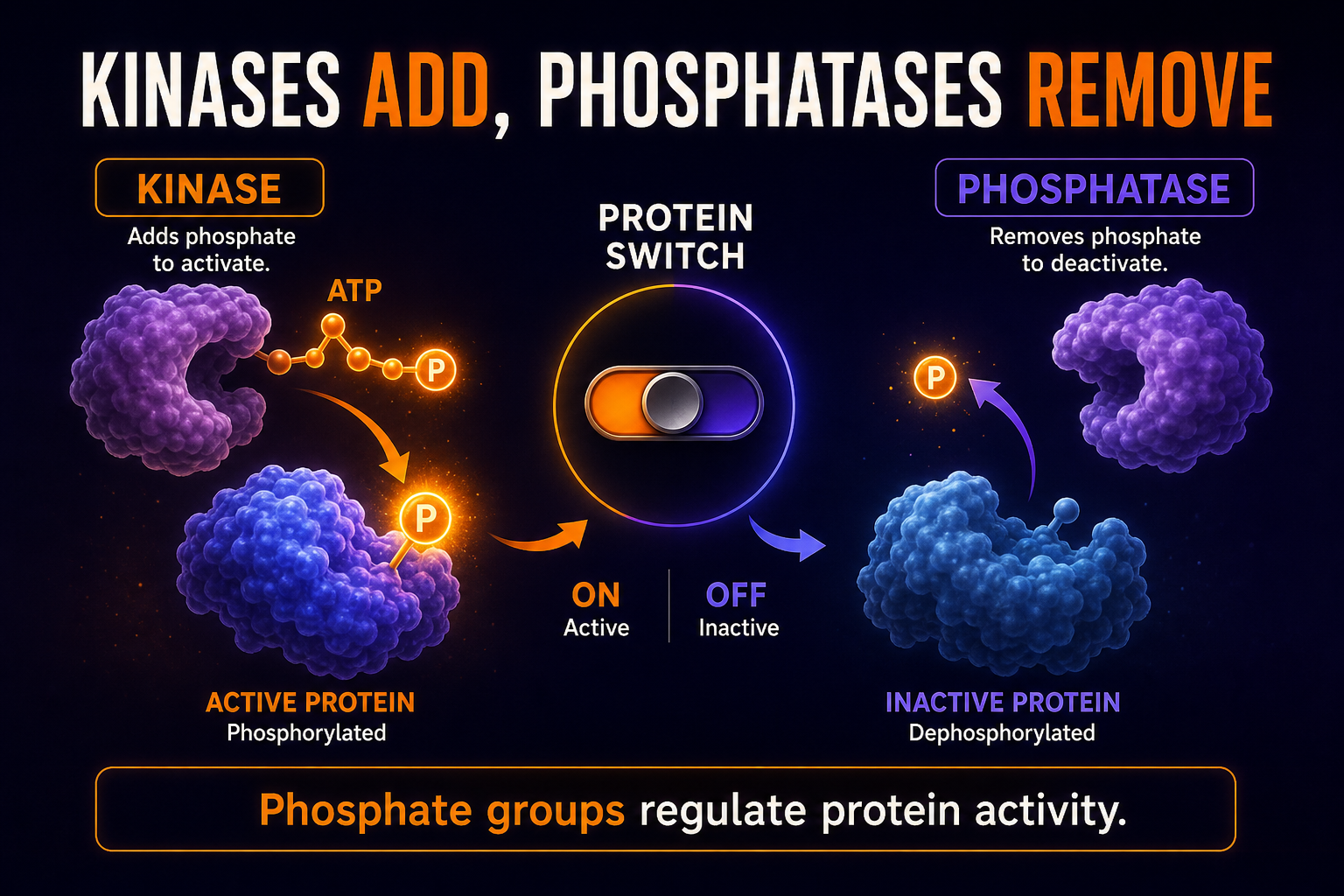
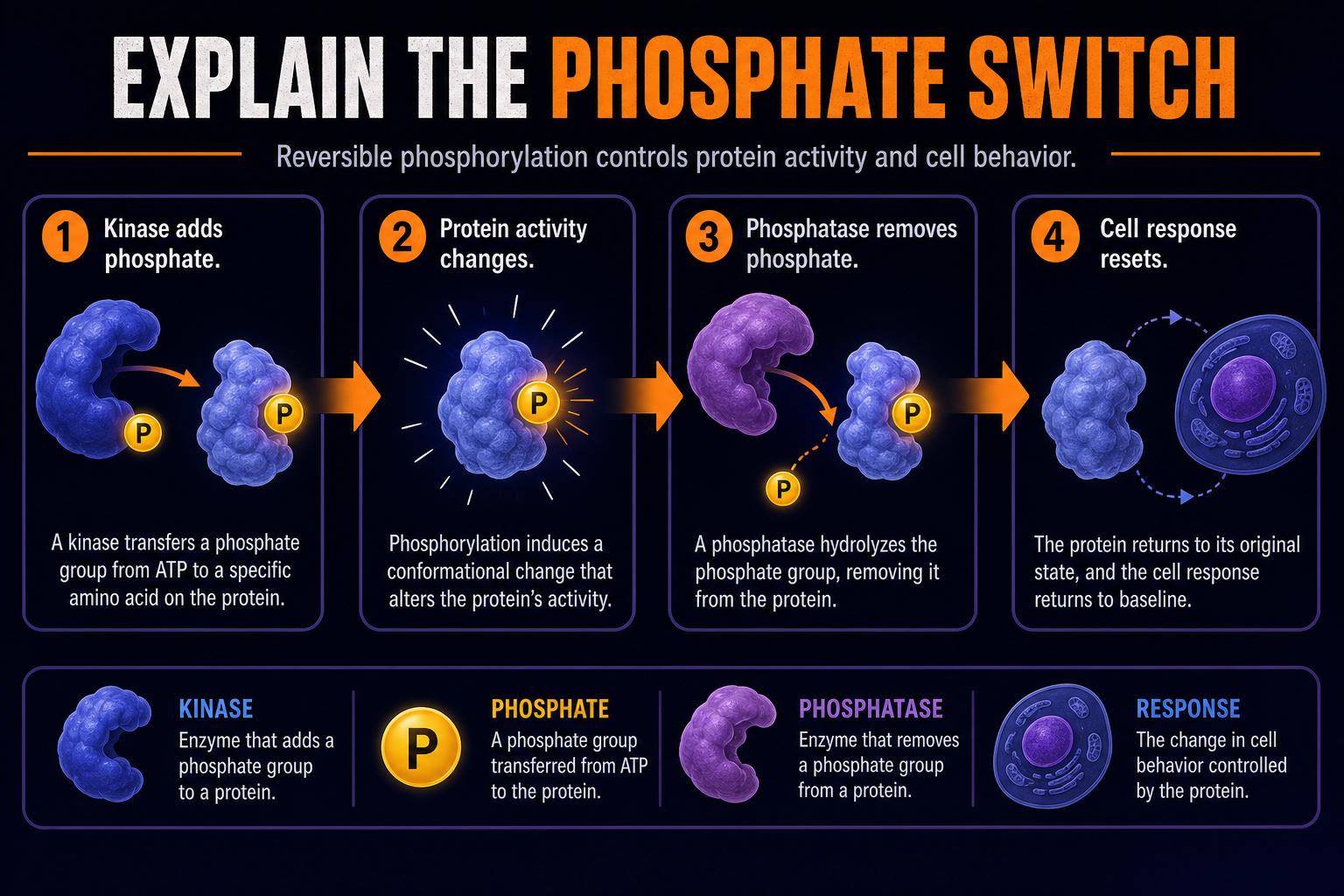
Kinases and phosphatases are enzymes that regulate protein activity by adding or removing phosphate groups. Kinases usually transfer phosphate groups from ATP to target proteins, while phosphatases remove phosphate groups to reset or change signaling pathways. In AP Biology Unit 4, the key skill is explaining how phosphorylation and dephosphorylation change pathway activity and predicting what happens when either enzyme type is blocked.
The core Phosphorylation Cascade page explains how signals move through a sequence of phosphorylation events. This Phase 2 page zooms in on the enzymes behind that control: kinases and phosphatases. Use it when you need to explain how phosphate groups are added, removed, and used to regulate protein activity.
Kinases and Phosphatases
Enzyme roles in phosphate control.
Context: Cell Communication, Reception, Transduction, Response, and Cell Signaling Pathways.
Use the Phosphorylation Cascade guide to learn how a signal is relayed through a sequence of phosphorylation steps. Use this Kinases and Phosphatases guide when you need to understand the enzymes that add and remove phosphate groups, how they change protein activity, and how pathway activation and shutoff are regulated.
| Page | Best for | Link |
|---|---|---|
| Phosphorylation Cascade | Broad pathway: step-by-step signal relay through phosphorylation | Open guide |
| Kinases and Phosphatases | Enzyme roles: adding/removing phosphates and regulating protein activity | You are here |
Kinases and phosphatases regulate protein activity by adding or removing phosphate groups. Kinases add phosphate groups to target proteins, often using ATP as the phosphate source. Phosphatases remove phosphate groups from proteins. Together, they regulate signaling pathways by changing protein activity, turning responses on, turning responses off, or resetting proteins for another round of signaling.
Kinases add phosphate groups; phosphatases remove them.
Toggle kinase and phosphatase controls, then choose a mutation scenario to predict protein state.
Protein state: Unphosphorylated.
Response: Inactive or baseline
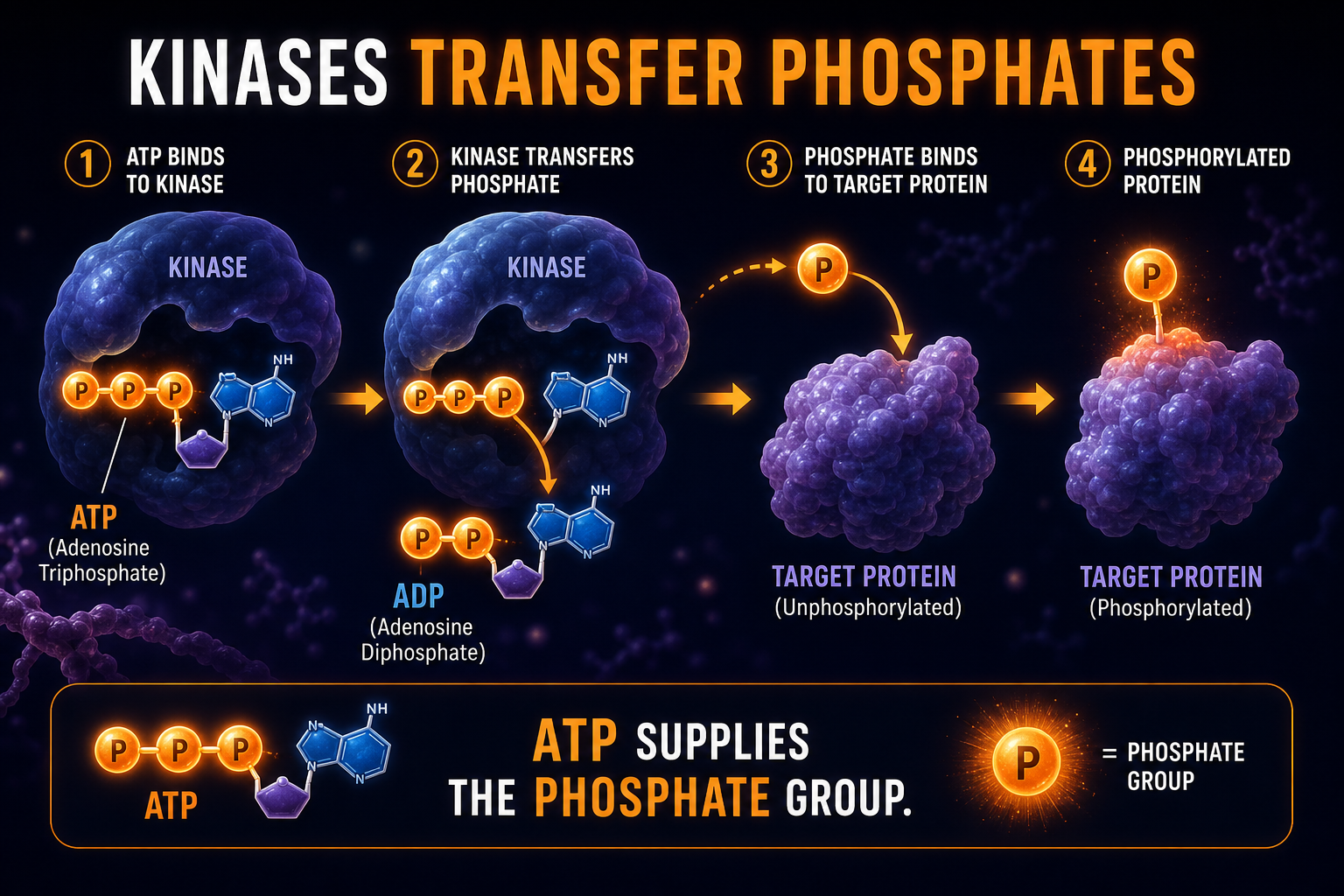
A kinase is an enzyme that adds a phosphate group to another molecule, often a protein. In cell signaling, protein kinases phosphorylate target proteins to change their shape or activity. This helps relay information inside the cell.
Receptor examples include tyrosine kinase receptors and PKA in the cAMP signaling pathway.
A kinase adds phosphate groups to target proteins.
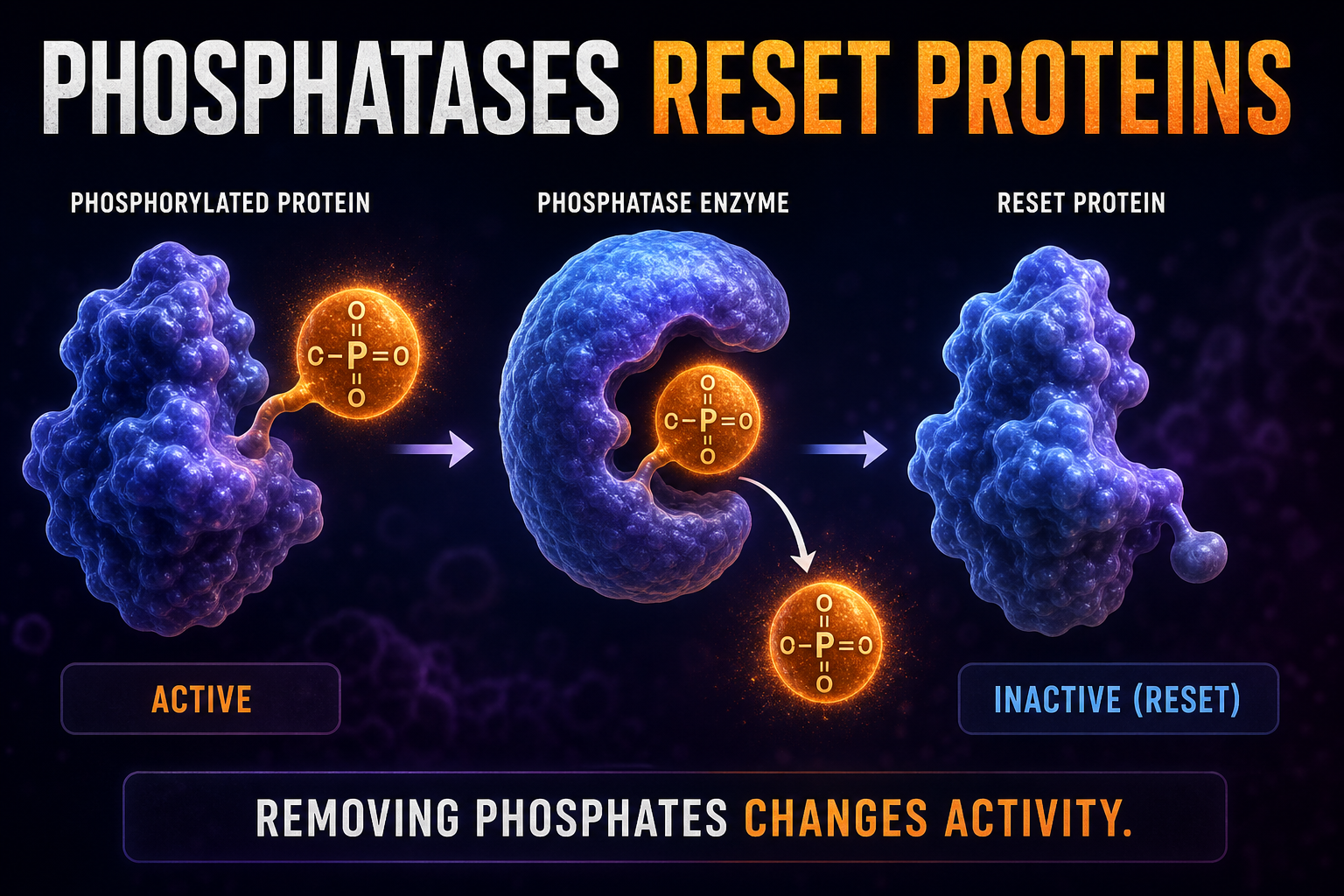
A phosphatase is an enzyme that removes phosphate groups from molecules. In signaling pathways, phosphatases can turn proteins off, turn proteins on, or reset proteins depending on the pathway. This prevents signaling pathways from staying active forever.
A phosphatase removes phosphate groups from target proteins.
Kinases often use ATP as the source of the phosphate group. ATP loses a phosphate and becomes ADP, while the target protein becomes phosphorylated. AP Biology may ask students to explain why ATP is needed for phosphorylation.
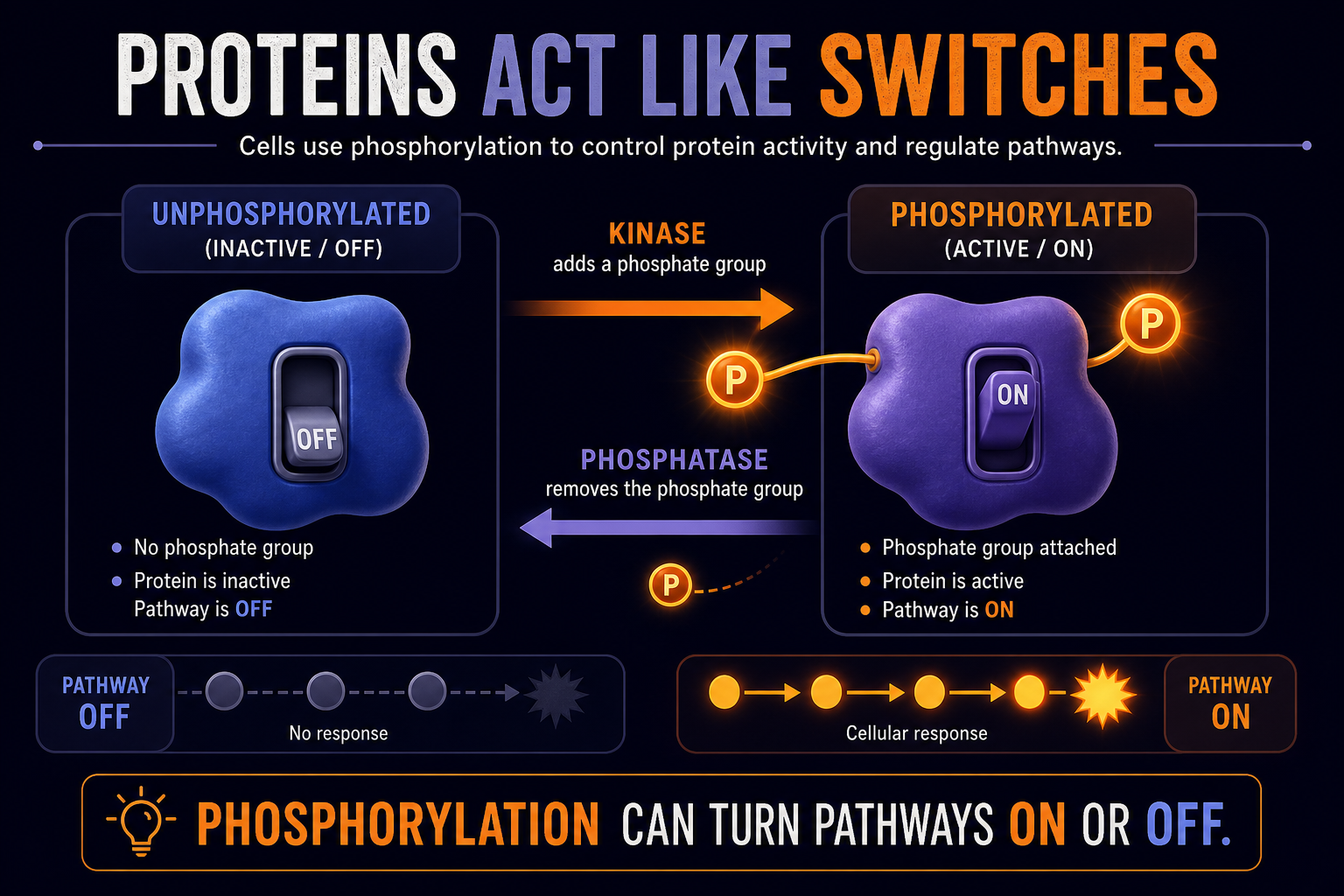
Adding a phosphate group can change a protein's shape, binding ability, location, or activity. Sometimes phosphorylation activates a protein, but sometimes it inhibits the protein. A strong AP Biology answer says phosphorylation changes activity rather than always turning a protein on.
Cells need signaling pathways to stop after the correct response occurs. Phosphatases help shut off or reset pathways by removing phosphate groups. If phosphatases are blocked, phosphorylated proteins may stay active longer than normal.
Compare pathway order on the parent Phosphorylation Cascade guide.
Cyclin-CDK complexes are kinase-based regulators of the cell cycle. Active CDKs phosphorylate target proteins that help move the cell cycle forward. Phosphatases and other regulators help control when those phosphorylation signals should stop or change.
See Cyclins and CDKs for cyclin timing and checkpoint control.
Cell growth pathways often depend on kinase activity. If kinases are overactive or phosphatases fail to reset signaling, growth signals may last too long. AP Biology may connect abnormal phosphorylation control to cancer risk when checkpoints, apoptosis, or growth regulation also fail.
Review Cancer and Cell Cycle Regulation for failed growth control.
A phosphorylation cascade is the larger pathway where phosphorylation events occur in sequence. Kinases and phosphatases are the enzyme tools that add and remove phosphate groups. This page focuses on enzyme function, while the cascade page focuses on pathway order and signal relay.
| Concept | Main idea | AP clue |
|---|---|---|
| Kinase | Adds phosphate group | ATP, phosphorylation |
| Phosphatase | Removes phosphate group | dephosphorylation, reset |
| Phosphorylation cascade | Ordered pathway of phosphorylation steps | relay, amplification, downstream targets |
| Protein activity | Changes after phosphate addition/removal | active, inactive, shape change |
A phosphate group may be added to a target.
Kinase phosphorylation may decrease.
A phosphate group may be removed.
Phosphorylated proteins may stay active longer.
Phosphorylation or dephosphorylation may be involved.
Cell-cycle kinase regulation is being tested.
Name the enzyme type from the prompt.
Connect kinase to addition and phosphatase to removal.
Activity may increase, decrease, or reset.
Use cause-effect reasoning for blocked enzymes.
A kinase ___, while a phosphatase ___. If ___ is blocked, the target protein will ___. This changes the cellular response because ___.
Fix: Kinases add phosphate groups.
Fix: Phosphatases remove phosphate groups.
Fix: Phosphorylation changes activity; it may activate or inhibit.
Fix: Kinases often transfer phosphate groups from ATP.
Fix: Phosphatases help reset pathways after signaling.
Fix: The cascade page explains pathway order; this page explains enzyme roles.
Answer all eight questions. Choices shuffle on reload—trace the pathway, not the letter.
More drills: Unit 4 practice questions or the Unit 4 FRQ guide.
Open each card, draft your response, then reveal the rubric and sample.
A signaling pathway activates a protein kinase. The kinase uses ATP to phosphorylate a target protein, which changes the target protein's activity.
The kinase adds a phosphate group to the target protein, which can change the protein's shape or activity. ATP is needed because the kinase transfers a phosphate group from ATP to the target, and ATP becomes ADP in the process. If the kinase is blocked, the target protein may not be phosphorylated, downstream steps may not activate normally, and the cellular response may be reduced or absent.
Status: Draft your answer first—then open the rubric or sample.
After a cell response occurs, a phosphatase removes phosphate groups from activated proteins in the pathway.
The phosphatase removes phosphate groups from activated proteins in the pathway. Dephosphorylation can change protein activity back toward an inactive or baseline state, which helps reset the pathway after the response. If the phosphatase is blocked, phosphorylated proteins may stay active longer than normal, the response may last too long, and the pathway may not reset correctly.
Status: Draft your answer first—then open the rubric or sample.
Kinases add phosphate groups to target molecules, often proteins. In many signaling pathways, they use ATP as the phosphate source. This phosphorylation can change the target protein's activity.
Phosphatases remove phosphate groups from target molecules. In signaling pathways, they often help reset proteins after a response. Removing a phosphate can turn a protein on, turn it off, or change its activity depending on the pathway.
A kinase adds a phosphate group, while a phosphatase removes a phosphate group. These enzymes often work in opposite directions. Together, they help regulate protein activity and pathway timing.
No. Phosphorylation changes protein activity, but the effect depends on the protein and pathway. AP Biology answers should say phosphorylation can activate or inhibit instead of always saying it turns proteins on.
ATP often supplies the phosphate group that a kinase transfers to a target protein. When the phosphate is transferred, ATP becomes ADP. If ATP is unavailable, phosphorylation by kinases may decrease.
Phosphatases can remove phosphate groups from activated proteins. This can reset the proteins or reduce pathway activity. Without phosphatases, some pathways may stay active too long.
Kinases drive many phosphorylation cascade steps by phosphorylating downstream proteins. The cascade page explains the pathway order, while this page explains the enzyme roles. Both ideas work together in signal transduction.
CDKs are cyclin-dependent kinases. When activated by cyclins, CDKs phosphorylate target proteins that help regulate cell-cycle progression. This connects kinase activity to cell-cycle control.
If a kinase is blocked, its target protein may not be phosphorylated. Downstream pathway steps may fail to activate or may change less than normal. The final cellular response may be reduced or absent.
If a phosphatase is blocked, phosphorylated proteins may stay phosphorylated longer than normal. This can prolong or overactivate a signaling response. It can also prevent a pathway from resetting correctly.