Shared brands, media, language
Signal cultural convergence when the same traits appear across many places.
AP Human Geography · Unit 3
Cultural convergence happens when cultures become more similar. Cultural divergence happens when groups maintain or strengthen cultural differences. Learn how globalization, migration, identity, religion, language, and landscapes shape both processes.
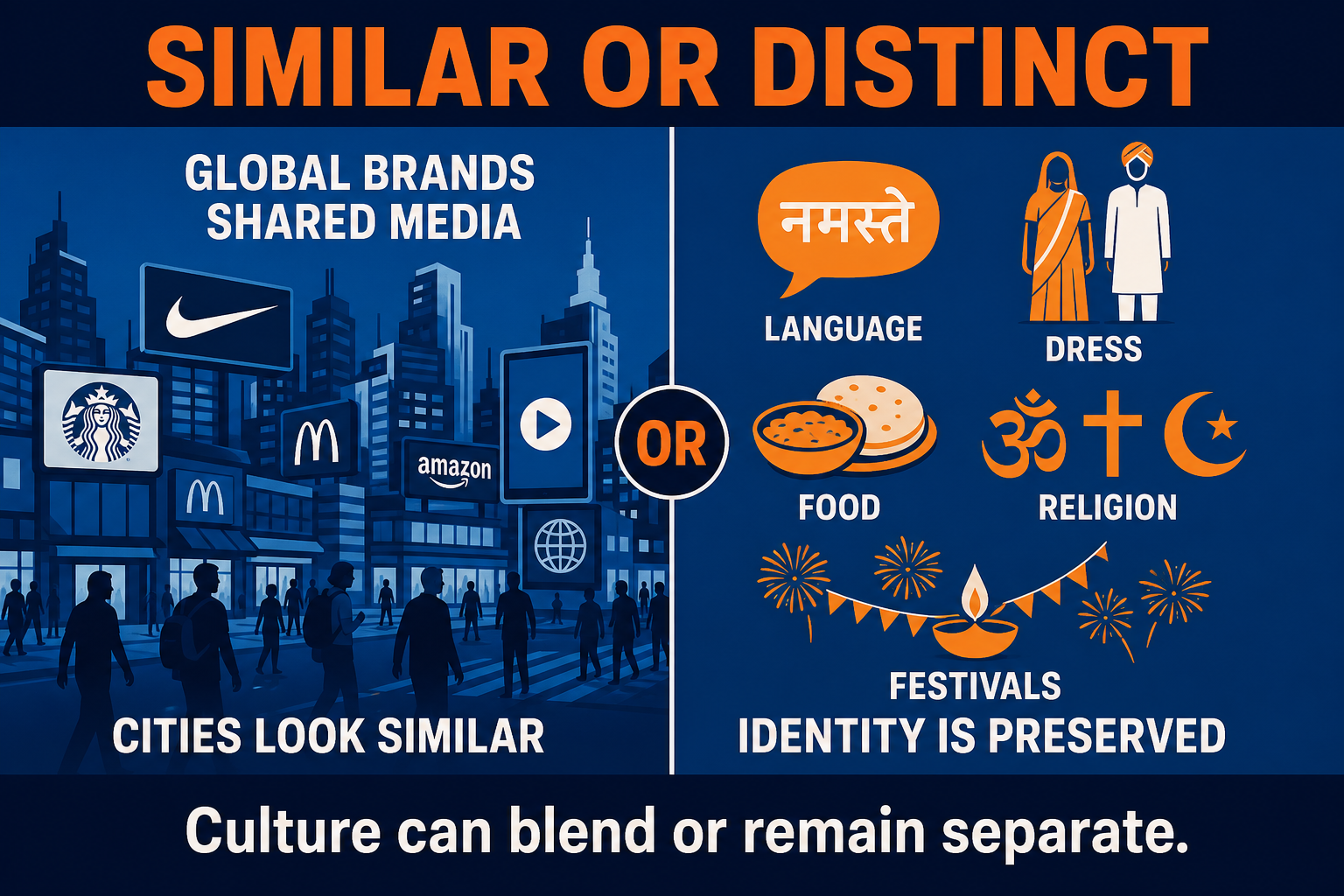
Cultural convergence is the process where cultures become more similar because of globalization, media, migration, trade, technology, or shared institutions. Cultural divergence is the process where cultures remain different or become more distinct because of identity, religion, language, political boundaries, local traditions, or resistance to outside influence.
Convergence means cultures come together. Divergence means cultures stay apart.
This page compares cultural convergence and cultural divergence. For the full Unit 3 roadmap, visit the AP Human Geography Unit 3 Cultural Patterns and Processes hub.
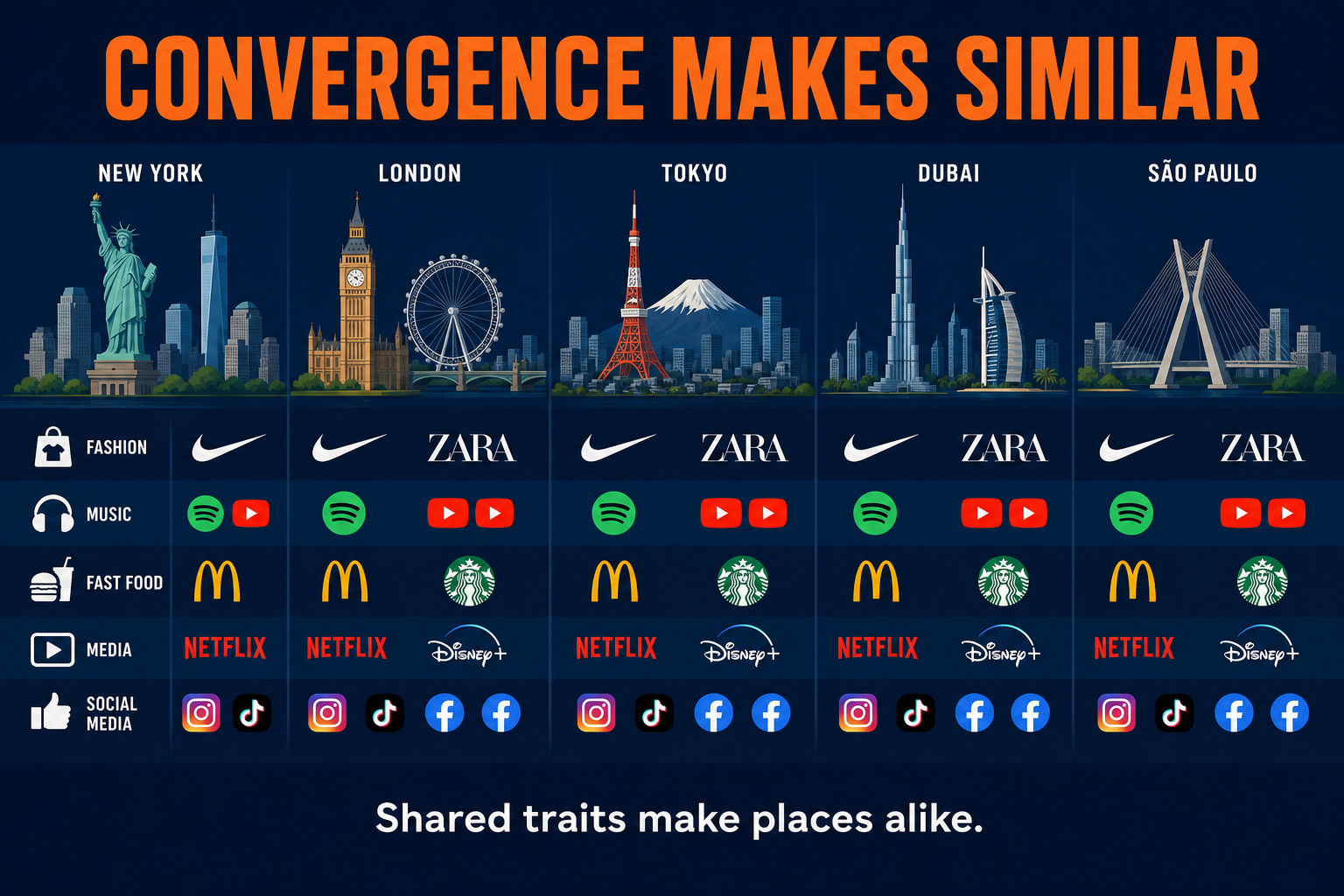
Cultural convergence is the process where cultures become more similar over time. It is often caused by globalization, trade, media, migration, technology, tourism, education, corporations, and urban networks. Convergence can spread popular culture, brands, language, music, fashion, food, sports, and consumer habits.
Convergence can create cultural homogenization or placelessness when landscapes begin to look alike. Convergence does not always mean local culture disappears—local adaptation can still occur through stimulus diffusion.
Connect convergence to globalization and popular culture, folk vs popular culture, and the broader Unit 3 framework on the AP Human Geography course page.
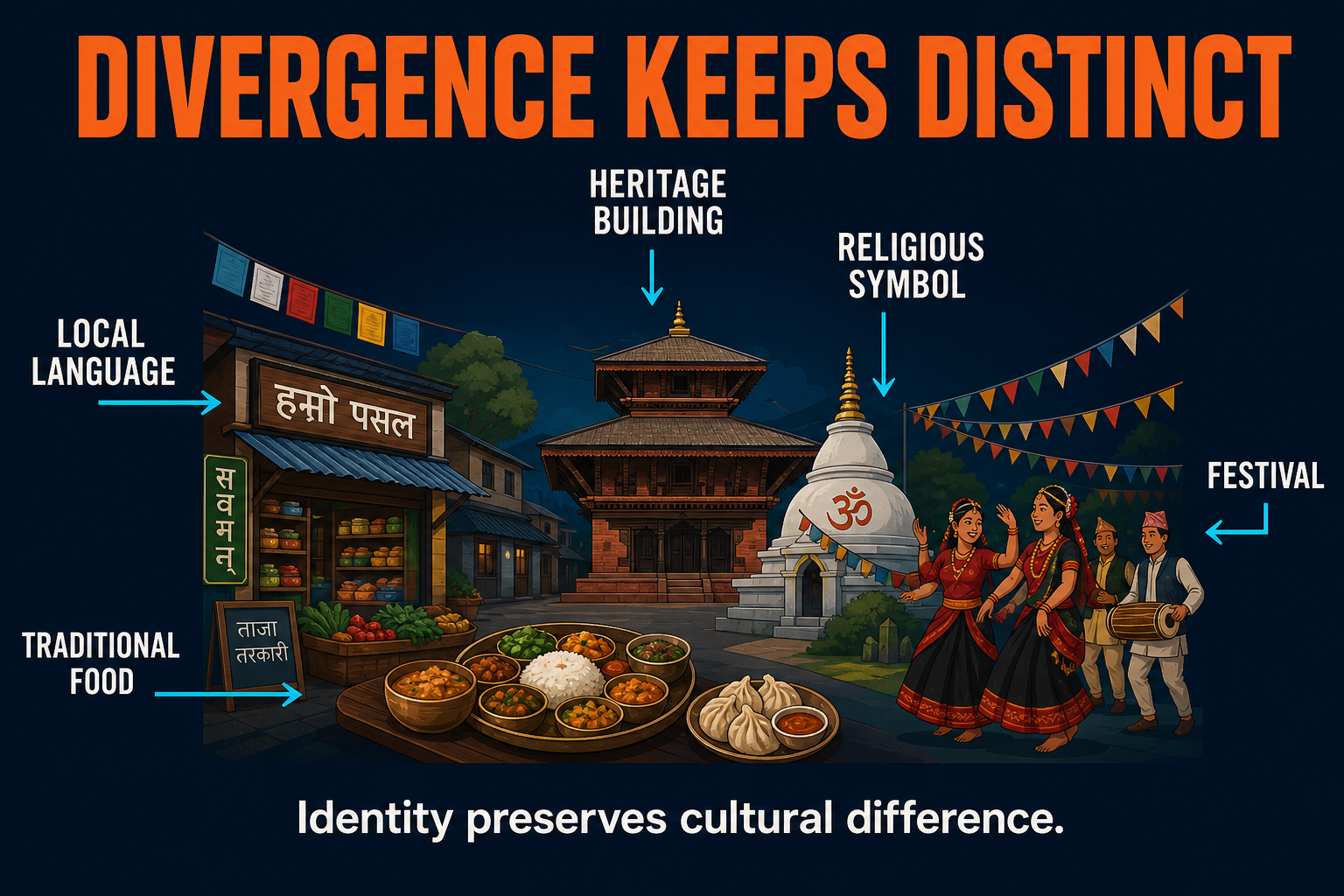
Cultural divergence is the process where cultures stay different or become more distinct over time. It is often caused by local identity, religion, language, ethnicity, nationalism, political boundaries, isolation, cultural preservation, or resistance to globalization.
Divergence can preserve language, foodways, dress, rituals, religious practices, architecture, and community traditions. Divergence may appear in cultural landscapes through local signs, sacred sites, ethnic neighborhoods, traditional housing, festivals, or protected heritage districts.
Divergence does not mean cultures never interact—it means difference remains important. Review ethnicity and cultural identity, language extinction and preservation, and cultural imperialism when explaining preservation and resistance.
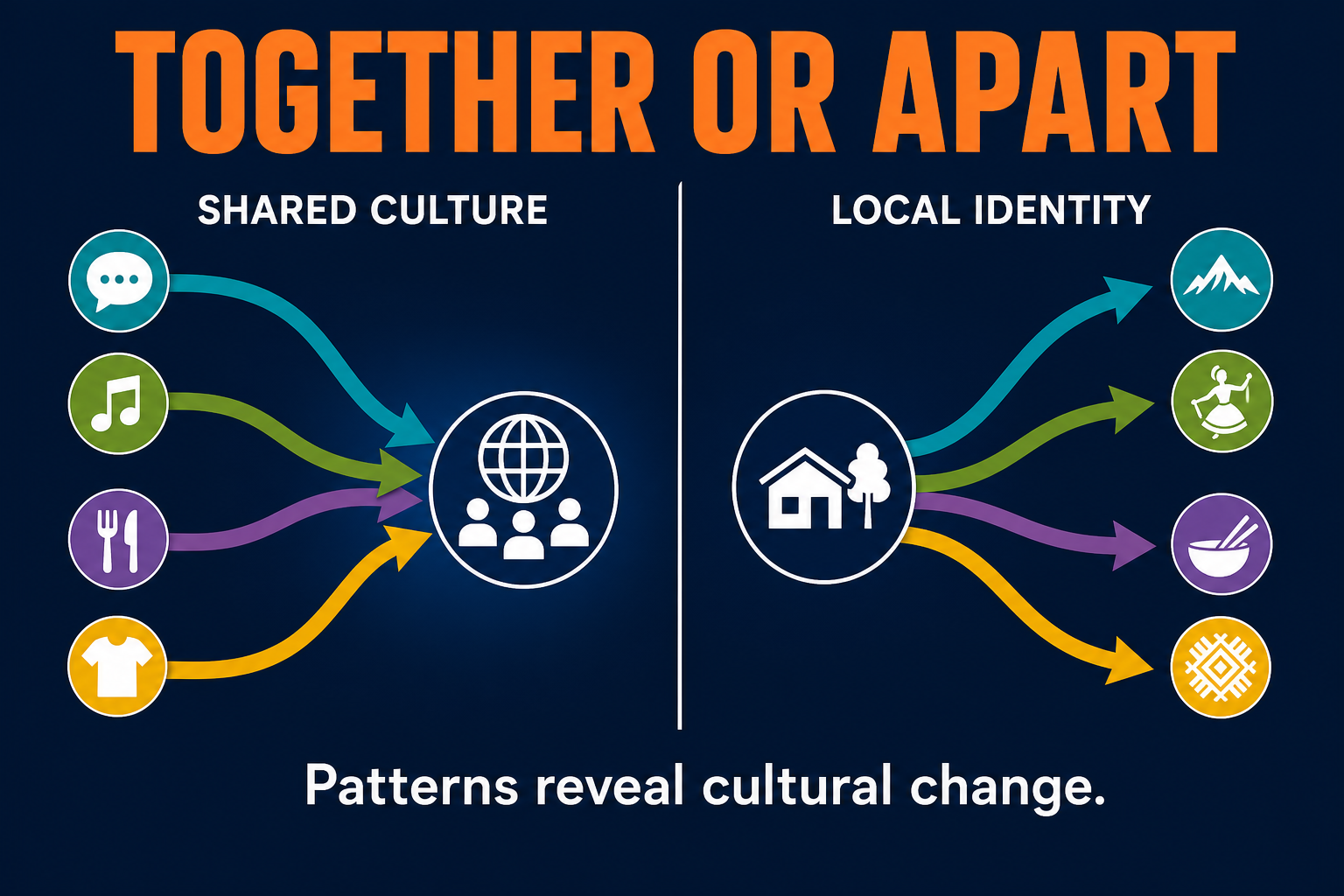
Core comparison: Cultural convergence makes places or groups more similar. Cultural divergence maintains or strengthens cultural difference.
Cultural convergence often connects to globalization, popular culture, media, trade, brands, and placelessness. Cultural divergence often connects to language, religion, ethnicity, local identity, preservation, and resistance.
| Feature | Cultural Convergence | Cultural Divergence | AP Exam Clue |
|---|---|---|---|
| Main meaning | Cultures become more similar over time | Cultures stay different or become more distinct | Decide whether traits are shared or preserved |
| Common causes | Globalization, media, trade, migration, technology, tourism, corporations | Local identity, religion, language, ethnicity, nationalism, preservation, resistance | Match the cause to the direction of cultural change |
| Relationship to globalization | Globalization often increases convergence through networks and markets | Groups may resist global culture to protect identity and traditions | Shared global brands vs local preservation signals direction |
| Relationship to identity | Shared consumer culture can weaken local distinctiveness | Identity politics, ethnicity, and religion often support divergence | Name the identity being protected or homogenized |
| Cultural landscape clue | Same brands, malls, airports, hotels, and commercial strips | Heritage signs, sacred sites, ethnic neighborhoods, festivals, historic districts | Use visible landscape evidence on maps and photos |
| Diffusion connection | Traits spread widely and are adopted in similar ways | Groups adapt outside traits locally or reject them to preserve identity | Hierarchical or contagious spread vs stimulus diffusion or resistance |
| Examples | Global fast food, streaming trends, lingua franca, malls, sports fandom | Language revival, religious customs, ethnic enclaves, heritage laws | Cite a specific example tied to similarity or difference |
| Possible effects | Homogenization, placelessness, shared consumer habits | Preservation, distinctiveness, cultural resistance, sense of place | Explain the effect on landscape or identity, not just the label |
| FRQ clue | Define convergence and explain how globalization made places similar | Describe divergence evidence such as language, religion, or heritage districts | Same city can show both downtown convergence and neighborhood divergence |
Strong AP answers first decide the direction of cultural change. If traits become more alike, explain convergence. If groups preserve difference, explain divergence.
Signal cultural convergence when the same traits appear across many places.
Signal cultural divergence when groups preserve local identity on the landscape.
May show stimulus diffusion or a mixed pattern of convergence and divergence.
Globalization creates convergence by connecting places through trade, media, digital platforms, brands, tourism, migration, education, sports, and entertainment. Popular culture can spread quickly, making distant cities share similar consumer habits, language use, architecture, and cultural symbols.
Films, streaming, and news spread shared symbols and habits that make distant audiences more alike.
Chain stores and logos repeat across cities, standardizing consumer landscapes.
Viral trends jump peer-to-peer and homogenize youth culture across regions.
Leagues, tournaments, and franchises create shared fan rituals worldwide.
Travel hubs use English signs and international hotels that look similar everywhere.
Corporate expansion copies storefronts, menus, and architecture in new markets.
Shared business and media language reduces linguistic difference in global districts.
Migrants and city connections spread popular culture through dense urban nodes.
Drill related guides: globalization and popular culture, lingua franca and global language, folk vs popular culture, and hierarchical diffusion.

Cultural divergence often happens when groups preserve language, religion, traditions, local customs, or political identity to maintain distinctiveness. Groups may resist assimilation or global culture to protect identity, memory, sacred spaces, foodways, or community boundaries.
Revival programs and bilingual signs keep minority languages visible against global media pressure.
Sacred rituals and dress codes maintain distinct belief communities in shared space.
Ethnic neighborhoods preserve foodways, signs, and traditions that resist homogenization.
Patriotic symbols and regional pride reinforce difference from global culture.
Borders separate legal cultures and can block or slow outside cultural influence.
Heritage laws protect architecture, languages, and districts from replacement.
Temples, mosques, and shrines anchor nonmaterial identity visible on the landscape.
Traditional festivals celebrate local history and keep customs active.
Groups reject dominant media or brands to protect memory and autonomy.
Connect identity to ethnicity and cultural identity, language extinction and preservation, sacred space and sacred sites, and cultural imperialism. Also review cultural appropriation and commodification when traditions are commercialized.
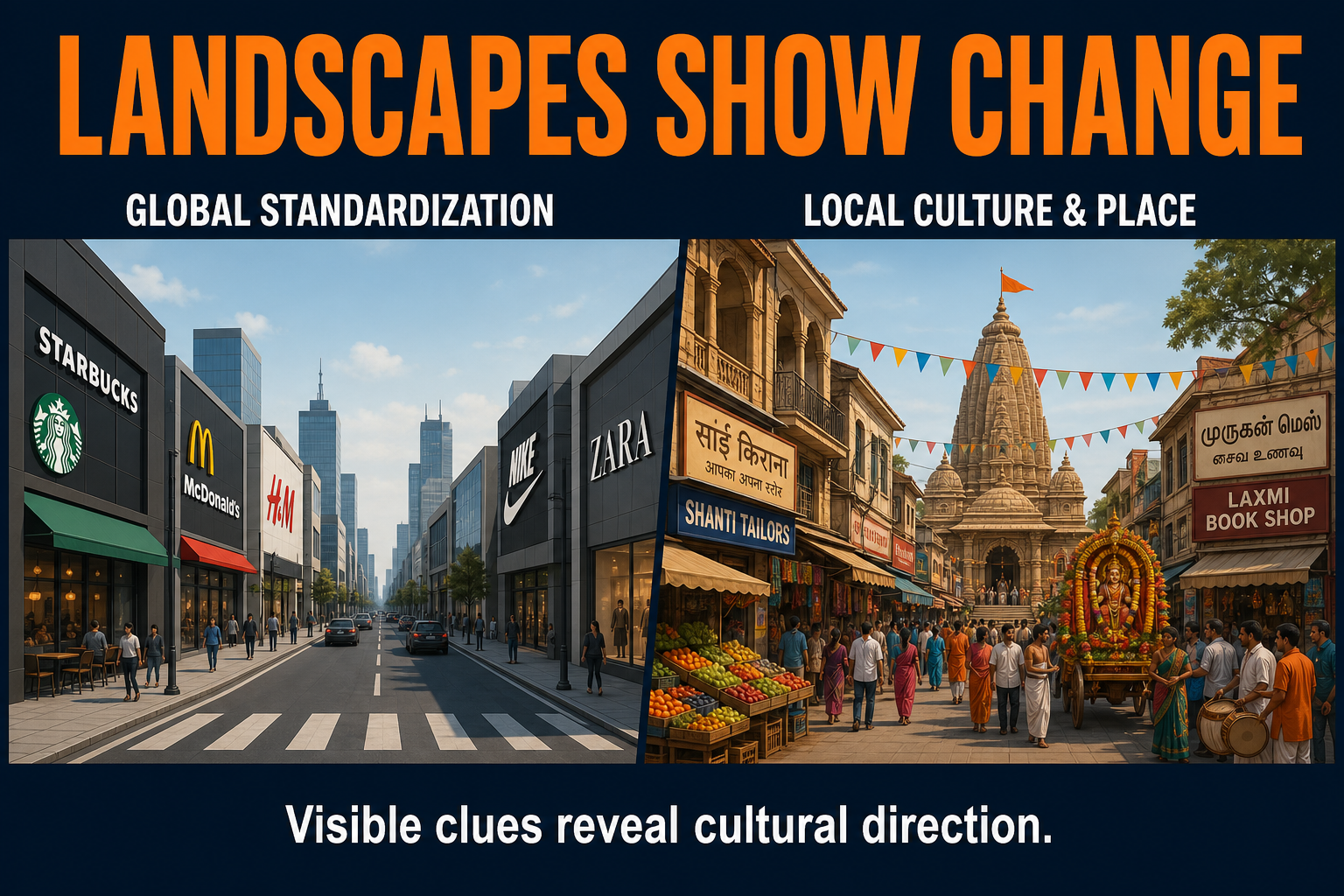
Cultural convergence and divergence become visible in the cultural landscape. Convergence appears when places share similar brands, malls, airports, restaurants, hotels, signs, stadiums, and entertainment districts. Divergence appears when places preserve unique signs, architecture, sacred sites, festivals, local markets, language, and heritage districts.
Read sense of place and placelessness and material vs nonmaterial culture to practice naming visible clues on maps and photos.
Diffusion can create convergence when cultural traits spread widely and are adopted in similar ways. Diffusion can also create divergence when groups adapt outside traits locally or resist them to preserve identity.
Pattern: Global trends spread from cities or elites
AP clue: Major cities and corporations often lead convergence
Pattern: Ideas spread quickly through peer networks
AP clue: Viral trends can homogenize youth culture across regions
Pattern: Migrants carry culture and create diaspora communities
AP clue: Diaspora can preserve divergence in new places
Pattern: Global ideas are adapted locally
AP clue: Local remix can blend convergence and divergence
Pattern: Outside influence is rejected to preserve identity
AP clue: Preservation laws and cultural movements support divergence
Review types of diffusion, relocation diffusion, hierarchical diffusion, contagious diffusion, and stimulus diffusion.
Cultural convergence is the process of cultures becoming more similar. Placelessness is one possible result, where places lose unique local character and begin to look or feel the same.
Similarity process — cultures share more traits over time
Loss of uniqueness — places look or feel interchangeable
Broad standardization — distinct local traits fade under global culture
Local identity and distinctiveness — emotional attachment to unique character
Review sense of place and placelessness and globalization and popular culture when explaining homogenization and standardized landscapes.
Name the brand, sign, festival, language, architecture, or built form shown.
Ask if places or groups are becoming more alike or preserving distinctiveness.
Choose globalization, diffusion, preservation, resistance, or local adaptation.
Connect the process to convergence, divergence, placelessness, or preservation.
Feature → Direction → Cause → Effect
Strong AP answers identify the feature, decide whether culture is becoming more similar or more distinct, and explain the process causing that change.
For more Unit 3 practice questions and Unit 3 FRQ practice, use the full drills on the hub.
Explain what trait spread and how it made places or groups more alike.
Name the identity or tradition being preserved.
Tie examples to media, brands, trade, and urban networks.
Do not assume divergence always means conflict.
Cite brands, signs, architecture, markets, sacred sites, or festivals.
Convergence is the process; placelessness is a possible landscape outcome.
Stimulus diffusion shows global traits changing form locally.
Fix: Convergence means increased similarity, not total sameness.
Fix: Divergence can mean preservation, identity, or local distinctiveness.
Fix: Convergence is the process. Placelessness is a possible landscape result.
Fix: Use visible clues like brands, architecture, language signs, markets, sacred sites, or festivals.
Fix: A global trait can spread and still be adapted locally through stimulus diffusion.
Practice questions require JavaScript. Enable JavaScript to use the interactive quiz.
A city’s downtown has global fast food chains, international clothing brands, standardized hotel architecture, and English-language airport signs. A nearby neighborhood has heritage-language signs, traditional restaurants, a religious festival, and protected historic buildings.
“The city has global culture and local culture.” This answer does not define convergence, names no specific divergence example, and does not explain how both patterns appear in the landscape.
Fix: identify the cultural feature, decide whether it shows similarity or difference, and explain the visible landscape effect.
Cultural convergence is the process where cultures become more similar over time because of shared cultural traits spread through globalization, media, migration, trade, technology, or shared institutions.
Cultural divergence is the process where cultures remain different or become more distinct because groups preserve language, religion, ethnicity, local traditions, political identity, or resist outside cultural influence.
Cultural convergence makes places or groups more similar by sharing traits such as global brands, media, and consumer habits. Cultural divergence maintains or strengthens cultural difference through identity, preservation, and local distinctiveness.
Examples include global fast food chains, shared streaming music trends, English as a global lingua franca, similar shopping malls and airports, global sports fandom, and international fashion trends.
Examples include minority language preservation, local religious customs, ethnic neighborhoods with distinct foodways, traditional clothing and festivals, protected heritage sites, and regional identity movements.
Globalization connects places through trade, media, digital platforms, brands, tourism, migration, education, sports, and entertainment, allowing popular culture and shared consumer habits to spread quickly and make distant places more similar.
Convergence appears when landscapes share global brands, malls, hotels, airports, and standardized commercial strips. Divergence appears through heritage language signs, traditional architecture, sacred sites, ethnic neighborhoods, local markets, and protected historic districts.