Bilingual street signs
Visible clue: Bilingual street signs
May reveal: Language diversity and immigrant or diffusion patterns
AP Human Geography · Unit 3
A cultural landscape is the visible imprint of culture on a place. Learn how buildings, signs, sacred sites, fields, roads, and neighborhoods reveal cultural identity, history, and diffusion.
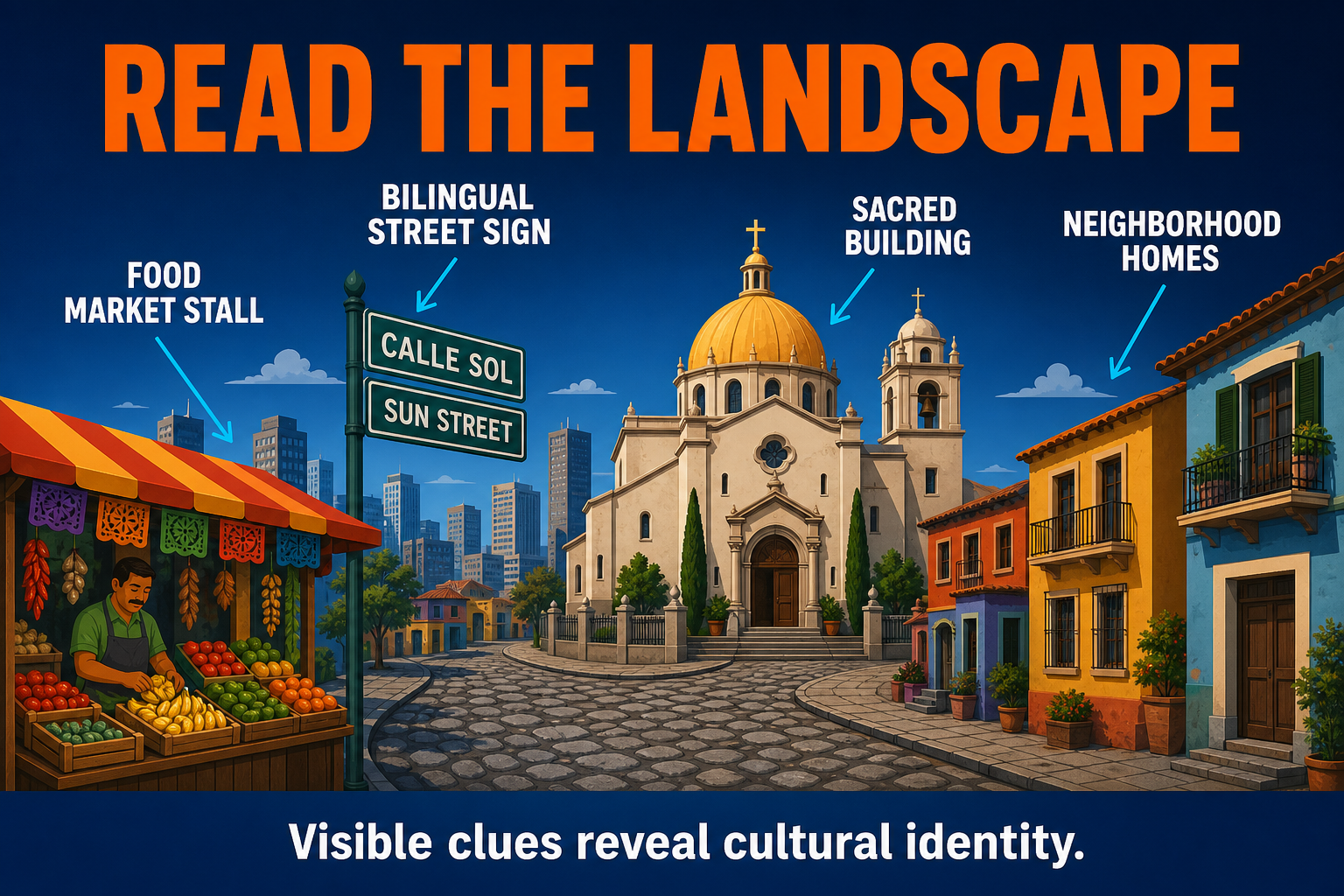
A cultural landscape is the visible imprint of culture on the physical environment. In AP Human Geography, students use cultural landscapes to identify how language, religion, ethnicity and cultural identity, economy, history, and power shape places.
If you can see culture on the land, you are looking at a cultural landscape.
A cultural landscape is the visible imprint of human culture on land. It includes material culture and the built environment, and it shows beliefs, values, identity, history, technology, economy, and political power.
It is not just pretty scenery. On the AP exam, you must explain what a visible clue means, not only that it exists.
Cultural landscapes often appear after relocation diffusion or expansion diffusion reshapes a neighborhood. Review types of diffusion when you connect landscape clues to spread mechanisms. Compare how folk and popular culture leave different visible clues on the same street.
On the AP exam, examples are strongest when you identify the visible clue and explain the cultural process behind it. Religious buildings and dietary businesses often signal universalizing versus ethnic religions on the landscape.
For pilgrimage routes, holy cities, and contested holy places, read the sacred space and sacred sites study guide.
Airport and business-district English signs often mark a lingua franca layer on the landscape alongside local languages.
Heritage language schools and bilingual public signs can also signal language extinction and preservation efforts in a community.
Visible clue: Bilingual street signs
May reveal: Language diversity and immigrant or diffusion patterns
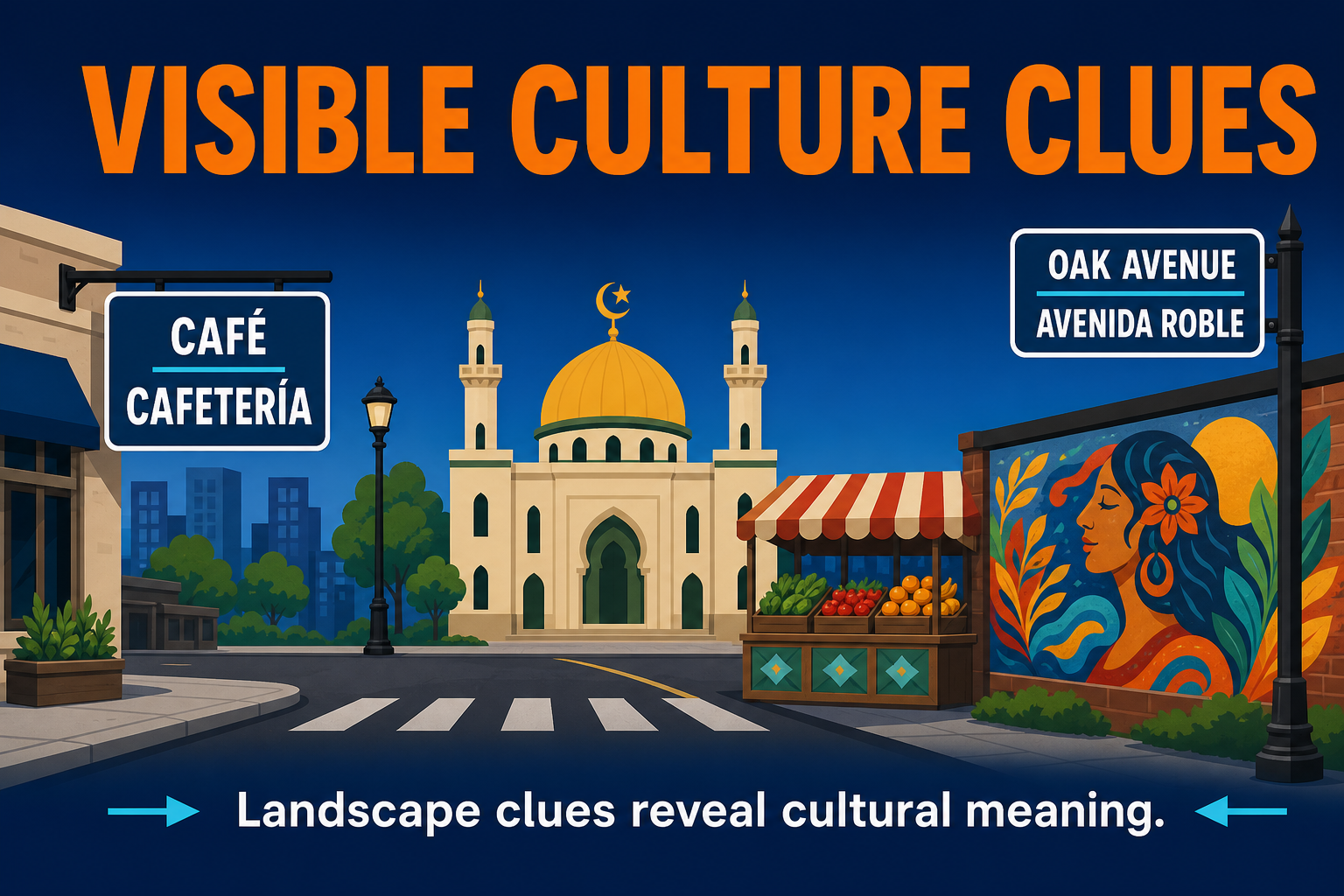
Visible clue: Churches, mosques, temples, synagogues
May reveal: Religious beliefs and community identity
Visible clue: Ethnic neighborhoods
May reveal: Migration and cultural clustering
Visible clue: Agricultural field patterns
May reveal: Farming traditions and land-use culture
Visible clue: Colonial architecture
May reveal: Past political power and settlement history
Visible clue: Food markets and restaurants
May reveal: Cuisine and ethnic identity
Visible clue: Cemeteries and memorials
May reveal: Beliefs about death, memory, and identity
Visible clue: Place names / toponyms
May reveal: Historical settlement and language layers
Visible clue: Urban murals and public art
May reveal: Identity, politics, and local expression
Visible clue: Sacred pilgrimage sites
May reveal: Religious devotion and spatial organization
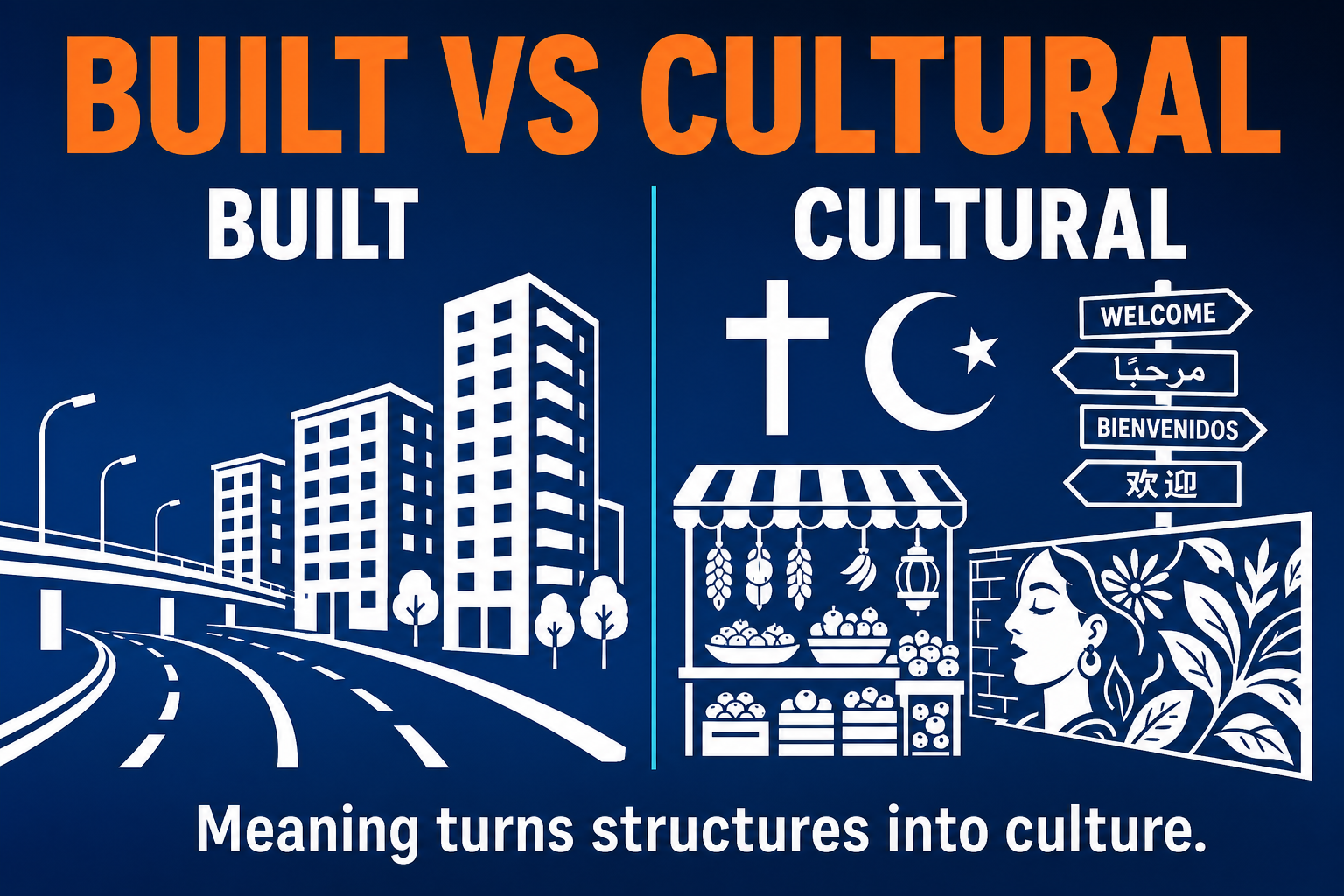
Key distinction: The built environment is the human-made physical part of a place. The cultural landscape includes the broader cultural meaning shown through buildings, signs, land use, symbols, and spatial patterns.
| Term | Meaning | AP Example | Exam Tip |
|---|---|---|---|
| Cultural landscape | Visible imprint of culture on the physical environment | Bilingual signs plus ethnic restaurants in a migrant neighborhood | Name the clue and explain the cultural process it reveals |
| Built environment | Human-made physical structures and infrastructure | Apartment blocks, roads, bridges, and shopping centers | Built environment is one part of the broader cultural landscape |
| Natural landscape | Physical environment with little or no human modification | Mountain range, river, or forest without cultural meaning assigned | Ask whether humans modified or assigned cultural meaning |
| Sequent occupancy | Successive cultural groups occupy and modify the same place over time | Colonial street grid under modern national monuments | Look for older layers that remain after new groups arrive |
Built environment is what humans physically construct. Cultural landscape is what those structures, signs, symbols, and spatial patterns reveal about culture.
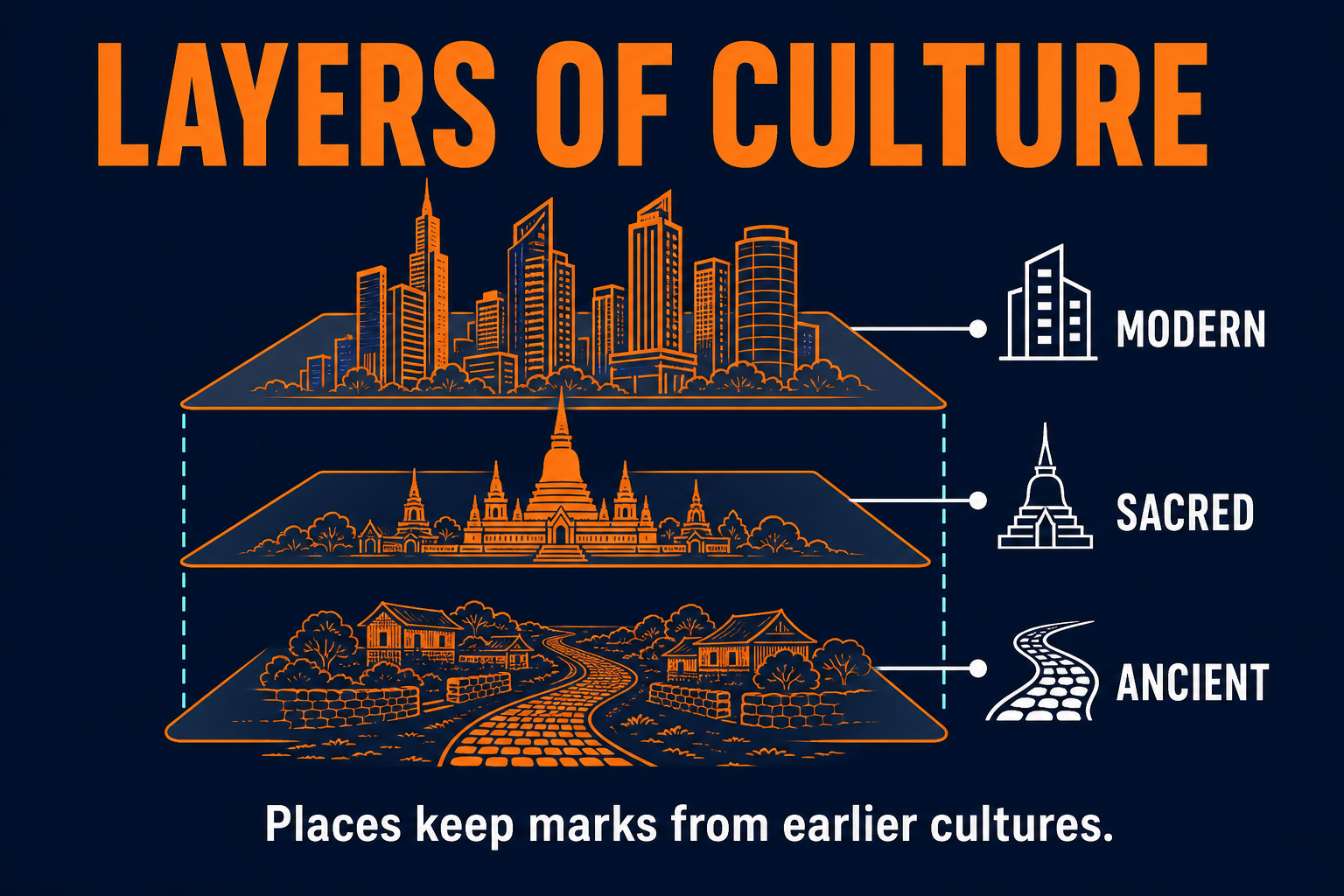
Sequent occupancy means different cultural groups occupy and modify the same place over time, leaving layered evidence on the landscape.
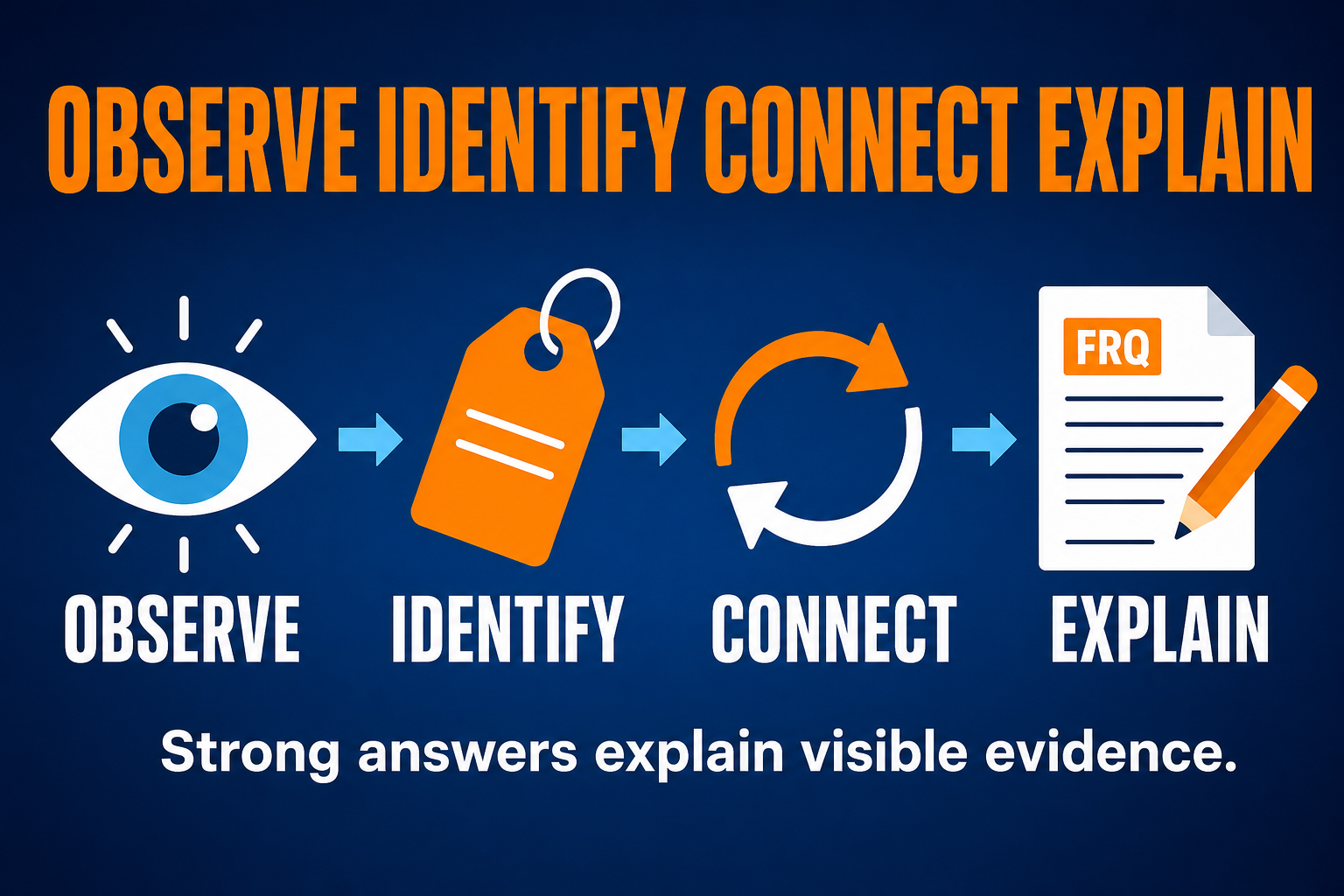
Name visible clues such as signs, buildings, land use, or art.
Match the clue to a cultural trait or pattern.
Link the trait to diffusion, migration, religion, language, or globalization.
State geographic significance using scale and place.
Prompt clue: A neighborhood has bilingual signs, ethnic grocery stores, and a place of worship used by recent migrants.
Strong AP answer: These features show relocation diffusion because migrants brought cultural traits with them and reshaped the local cultural landscape through language, food, and religion.
Point to a specific clue—sign, building, field pattern, or place name.
Climate shapes vegetation; culture shapes how humans use and label land.
Tie evidence to diffusion, migration, religion, language, or identity.
State whether the clue reflects local, regional, national, or global culture.
Relocation, expansion, globalization, and sequent occupancy often explain landscape change.
Do not stop at appearance—explain what the clue reveals about culture.
Fix: Name the clue and explain the cultural meaning.
Fix: Ask whether humans modified or assigned meaning to the place.
Fix: State whether the clue reflects local, regional, national, or global culture.
Fix: Look for older layers that remain after new groups arrive.
Fix: Always connect evidence to a process.
A city neighborhood contains bilingual signs, religious buildings, ethnic restaurants, and older colonial-era street names.
“The neighborhood shows culture because it is diverse.” This answer lists no visible evidence and does not connect features to migration or sequent occupancy.
A cultural landscape is the visible imprint of culture on the physical environment. It includes buildings, signs, land-use patterns, sacred sites, and other features that reveal beliefs, identity, history, and power.
Three strong examples are bilingual street signs (language), religious buildings (sacred space), and ethnic restaurants in an immigrant neighborhood (material culture and relocation diffusion).
The built environment is the human-made physical part of a place. The cultural landscape is broader—it interprets what buildings, signs, land use, and spatial patterns reveal about culture.
Language appears through signage, place names, business names, school language policy, and public media. Bilingual signs often signal migration, diffusion, or official multilingual policy.
Religion shapes landscapes through churches, mosques, temples, cemeteries, pilgrimage routes, dietary businesses, holiday decorations, and zoning around sacred sites.
Sequent occupancy means different cultural groups occupy and modify the same place over time, leaving layered evidence such as old street grids, sacred sites, and modern skylines in one city.
Cultural landscapes connect visible place evidence to Unit 3 processes like diffusion, migration, religion, language, identity, and globalization. FRQs often reward specific clues plus geographic reasoning.
Use O-I-C-E: observe a visible clue, identify the cultural trait, connect it to a process such as migration or diffusion, and explain geographic significance using scale and place.