Globalization and global media
Dominant languages spread through business, entertainment, and online platforms.
AP Human Geography · Unit 3
Languages can disappear when fewer people speak them across generations. Learn how globalization, migration, schools, media, and power can threaten languages—and how communities preserve cultural identity.
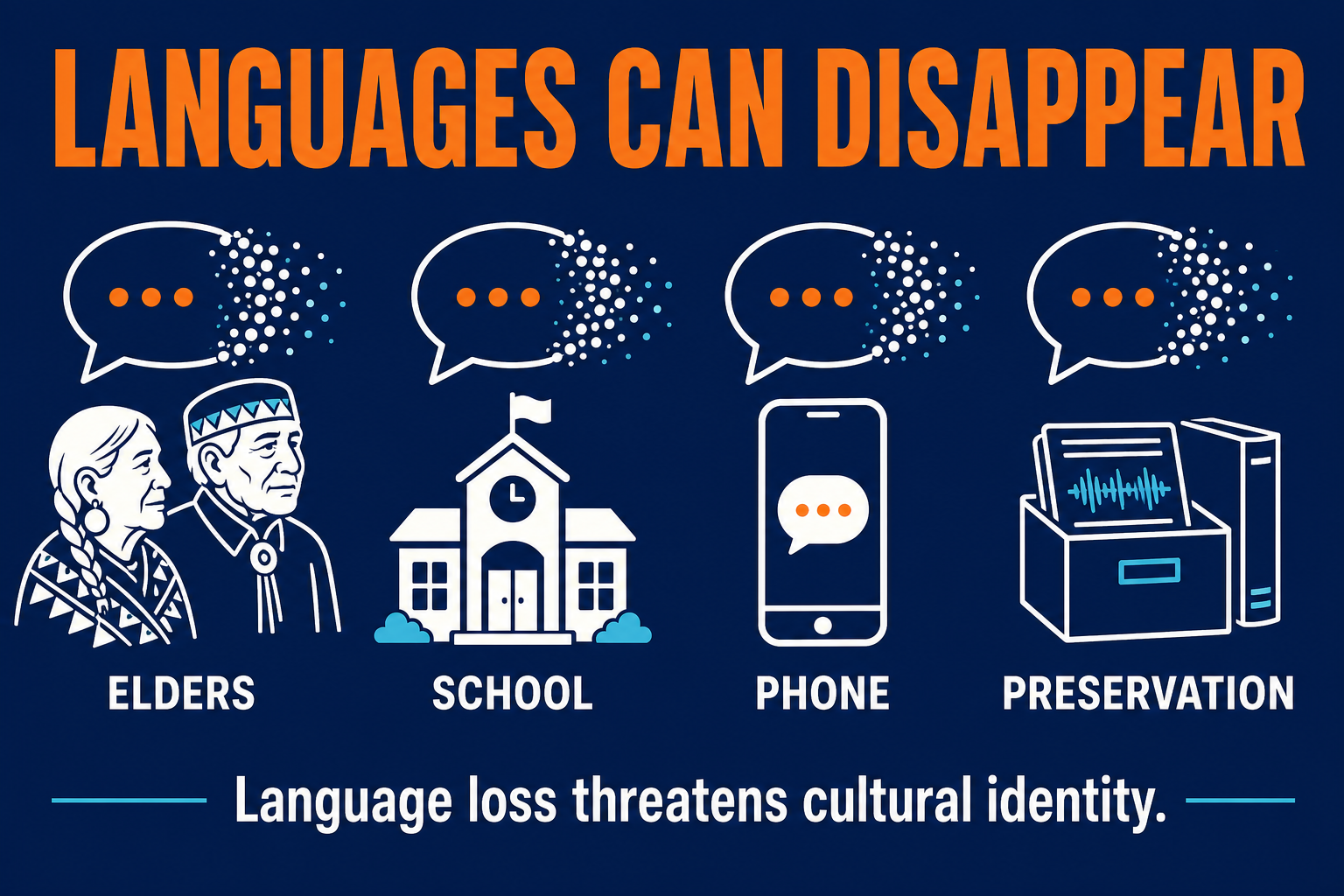
Language extinction happens when a language no longer has living speakers or is no longer passed to the next generation. In AP Human Geography, language extinction matters because language carries cultural identity, history, place names, oral traditions, and local knowledge. On the AP exam, the key clue is whether the language is still being passed from older speakers to younger generations.
When a language dies, a culture loses a voice.
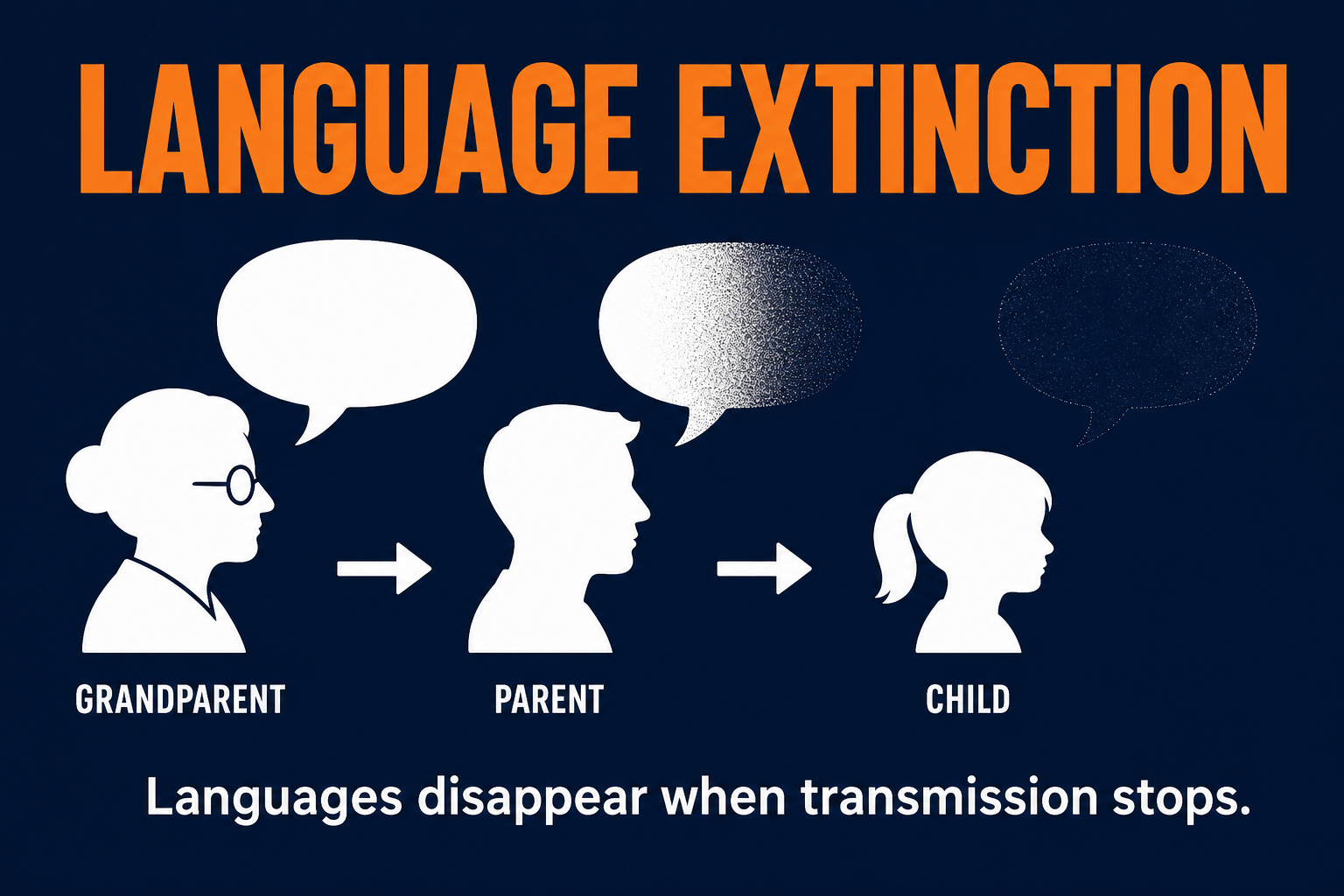
Language extinction occurs when a language has no living speakers or stops being used in daily life. Language death can happen gradually across generations. A language may be endangered before it becomes extinct. Language extinction connects to cultural identity, minority groups, assimilation, migration, and state policy.
Extinction is not only about vocabulary. It affects stories, place names, rituals, and cultural memory. Review how languages relate in language families and branches and how regional variation appears in dialects and isoglosses before analyzing loss patterns on the AP Human Geography exam.
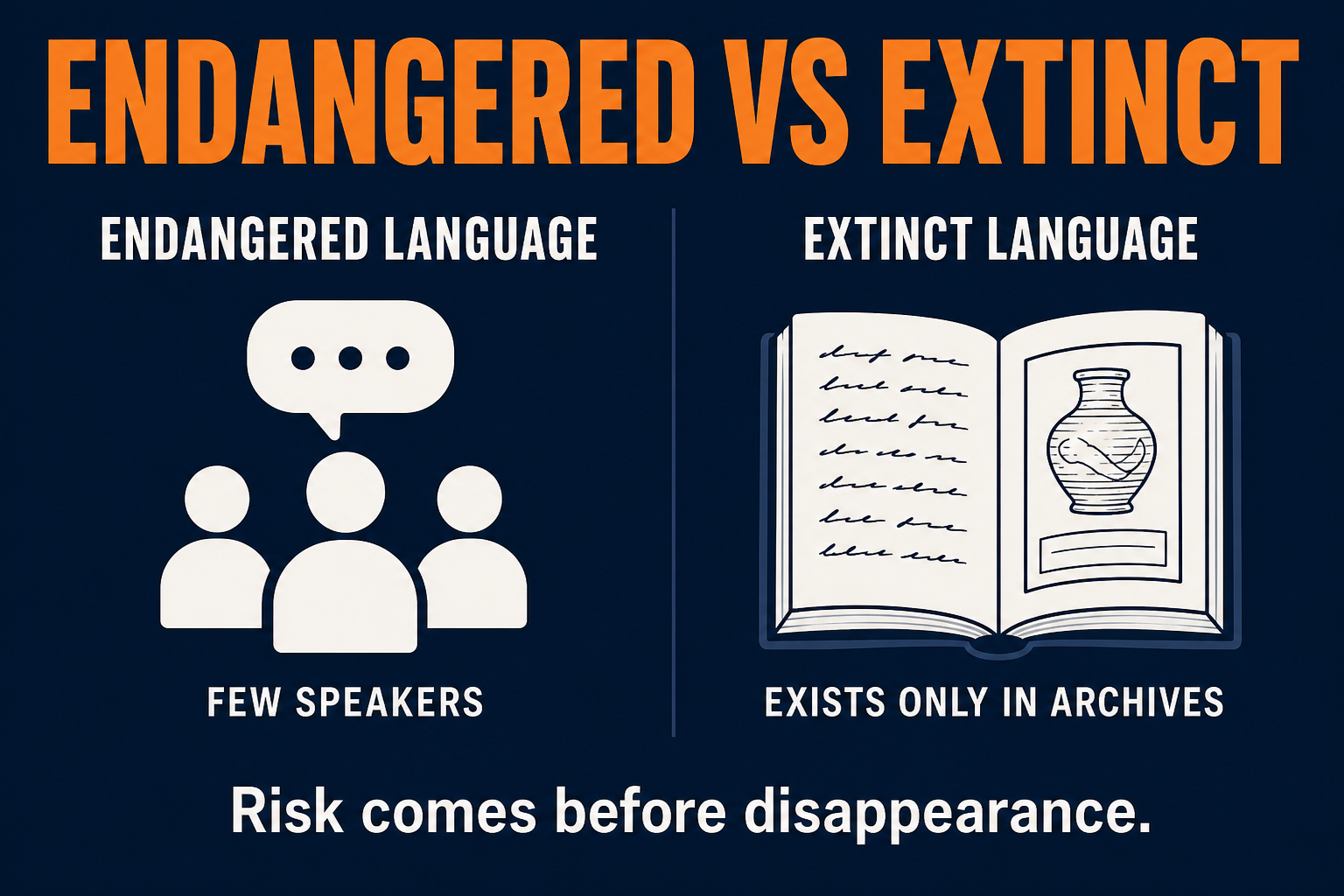
Core comparison: An endangered language still has speakers but is at risk. An extinct language no longer has living speakers in daily use.
| Term | Meaning | AP Example Clue | Why It Matters |
|---|---|---|---|
| Dominant language | Widely used language with social, economic, or political power in a region or country | National language in schools and government | Sets the language most people shift toward for jobs and public life |
| Minority language | Language spoken by a smaller group within a larger society | Indigenous language in a multilingual state | Often at risk when dominant languages dominate schools and media |
| Endangered language | Still has speakers but is at risk of disappearing | Elders speak it but children use the national language | Transmission to the next generation is weakening |
| Extinct language | No living speakers use it in daily life | Language known only from archives or records | Cultural memory may survive but the living language is gone |
| Revived language | Language brought back into daily use after decline or near extinction | Hebrew revival; community-led language programs | Shows preservation can restore identity and public use |
Transmission matters most: if children are not learning the language, the language is at risk even if older speakers still use it.
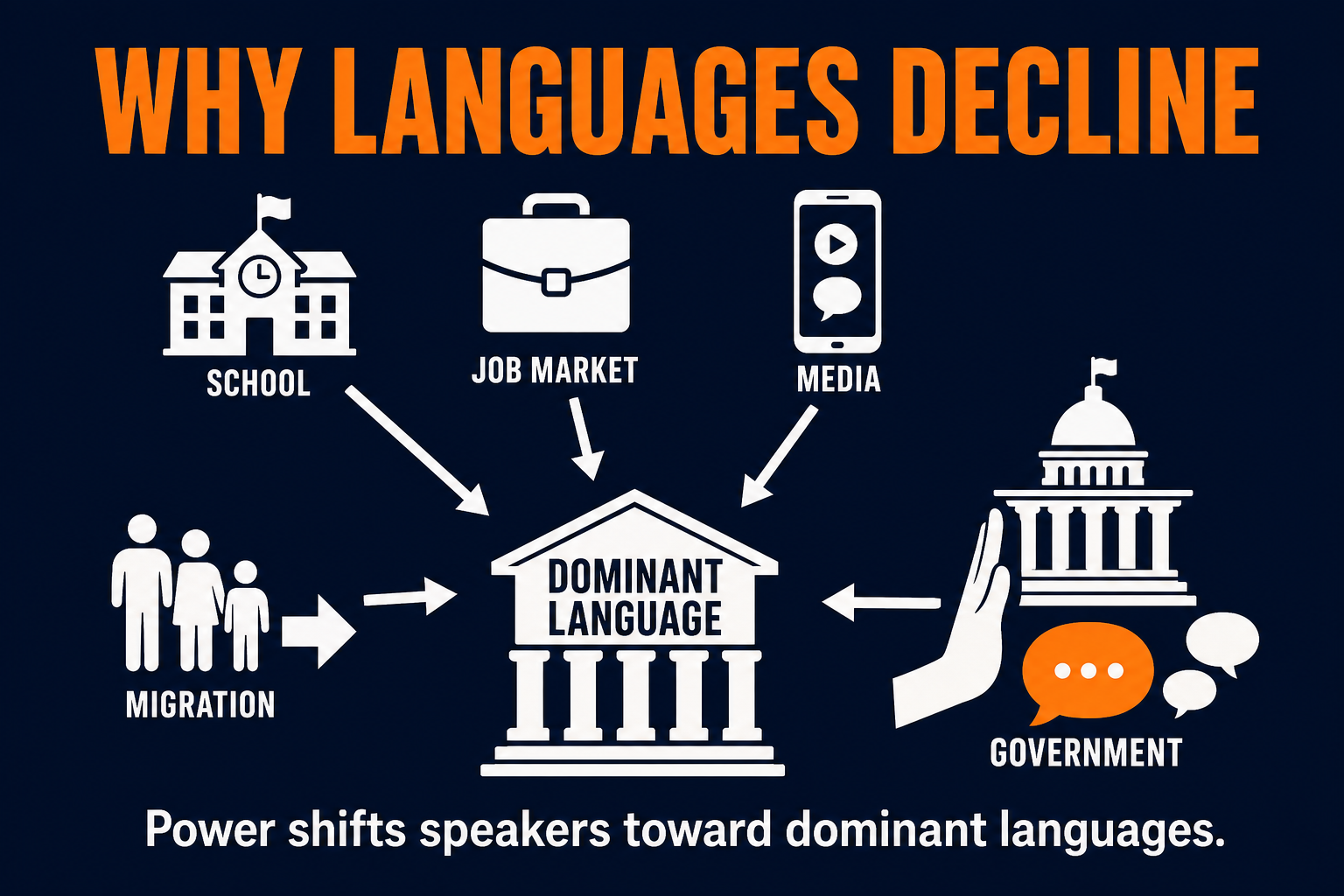
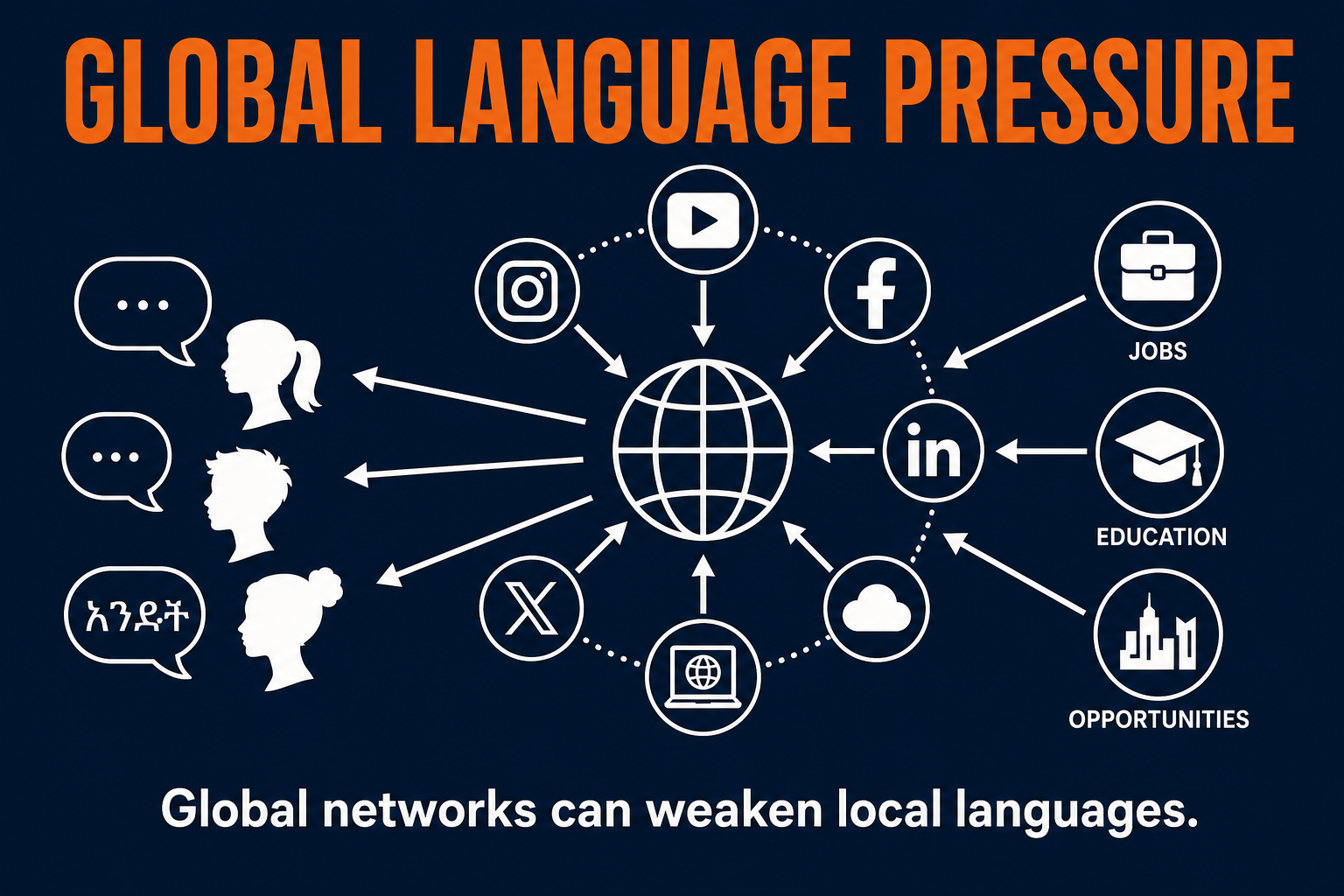
Languages become endangered when speakers shift toward a more dominant language for school, jobs, media, government, migration, or social status. This shift can happen voluntarily, through pressure, or through direct language policy.
Dominant languages spread through business, entertainment, and online platforms.
Speakers shift toward languages that improve employment and income.
Education can reduce daily use of home languages.
Moving to cities often means adopting a more widely understood language.
Official-language rules can marginalize minority languages.
Empires and dominant powers promoted one language over local ones.
Social status rewards dominant languages and discourages local speech.
Children stop learning a language when parents use another at home.
Connect endangerment to lingua franca and global language pressure, globalization and popular culture, cultural imperialism, and acculturation, assimilation, and syncretism when explaining why speakers change languages.
Strong AP answers do more than name language loss. Identify the language status, explain the cause of decline, and connect the effect to cultural identity or the cultural landscape.
endangered, extinct, dominant, minority
globalization, policy, migration, school, media, stigma
identity loss, assimilation, preservation, landscape change
Globalization can increase language loss by making dominant languages more useful for education, jobs, media, travel, technology, and global communication. A lingua franca can help people communicate, but it can also reduce daily use of local languages if younger generations shift away from them.
Globalization can also help preservation when communities use apps, online archives, social media, and digital classrooms to teach endangered languages.
Pair this section with lingua franca and global language, cultural convergence and divergence, and sense of place and placelessness on FRQs about identity and homogenization.
Language preservation protects cultural identity, oral history, place names, religious practices, ecological knowledge, family memory, and community belonging. In AP Human Geography, preserving a language can also show resistance to assimilation and cultural homogenization.
Language expresses who people are and how they relate to their community.
Histories, songs, and family memory often live in the local language.
Place names and landscape terms encode local geography and history.
Rituals and sacred texts may depend on a specific language.
Plant names, farming terms, and environmental knowledge can be language-specific.
Preserving language can resist forced cultural homogenization.
Bilingual signs and schools make identity visible on the land.
See how identity appears on the land in the cultural landscape guide, and connect language to ethnicity and cultural identity and cultural convergence and divergence.
Languages can be preserved through schools, bilingual education, language immersion programs, dictionaries, archives, apps, radio, social media, official recognition, cultural festivals, family transmission, and public signage.
Children learn subjects entirely or partly in the endangered language.
Schools teach both the minority and dominant languages.
Elders teach younger speakers through conversation and mentorship.
Record vocabulary, stories, and pronunciation for future learners.
Digital tools can spread daily use among younger speakers.
Legal status can protect education and public use.
Street signs and government buildings show the language on the landscape.
Public events reinforce language through music, speech, and ritual.
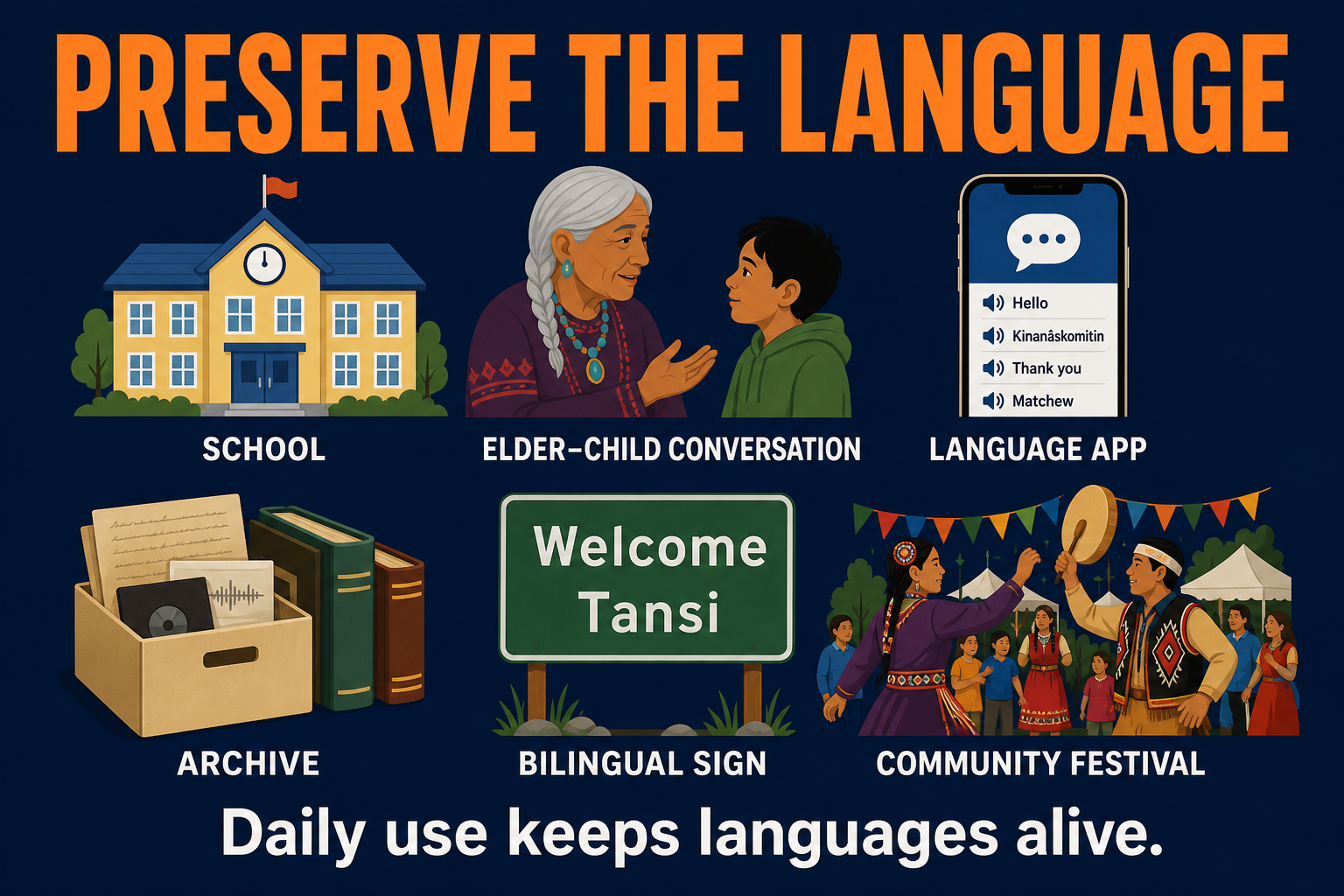
Language preservation becomes visible in the cultural landscape through bilingual signs, school names, street names, murals, cultural centers, community radio, festival banners, religious buildings, and public transportation signs.
Practice reading landscape clues in the cultural landscape study guide. Compare sign patterns with dialects and isoglosses and lingua franca and global language when prompts ask about dominant-language pressure.
Define extinction by loss of speakers or intergenerational transmission—not just bilingualism.
If elders still speak it but children do not, the language is endangered, not extinct.
Connect language loss to globalization, policy, migration, schools, and dominant-language power.
Explain how preservation strengthens cultural identity and resists assimilation.
Use bilingual signs, school names, murals, and place names as cultural landscape evidence.
Dominant languages can help communication but may pressure minority languages.
Analyze local community choices, state policy, and global networks together.
Fix: If people still speak it, it may be endangered, not extinct.
Fix: A language is in danger when children stop learning and using it.
Fix: Globalization can pressure local languages, but digital tools can also help preservation.
Fix: Language carries identity, history, place names, stories, and belonging.
Fix: Archives help, but daily use in homes, schools, signs, and media matters more.
Loading practice questions…
A minority language is still spoken by older adults in a rural region, but most children use the national language at school, on social media, and in urban jobs. Local leaders are creating bilingual signs, school programs, and digital recordings to preserve the language.
"The language is extinct because old people still speak it but kids do not. Preservation means making a dictionary." This answer mislabels the language status, gives no specific decline process, and treats preservation as storage only.
Fix: identify the language status, connect decline to a specific process, and explain how preservation supports identity.
Language extinction occurs when a language no longer has living speakers or is no longer passed to the next generation. In AP Human Geography, it matters because language carries cultural identity, history, place names, oral traditions, and local knowledge.
An endangered language still has speakers but is at risk of disappearing, usually because younger generations use it less in daily life. If children stop learning it, the language may become extinct within a generation or two.
Languages become endangered when speakers shift toward a dominant language for school, jobs, media, government, migration, or social status. Colonialism, assimilation pressure, stigma, and state policy can accelerate the shift.
Globalization increases use of dominant languages in business, social media, education, travel, and technology. A lingua franca can help communication, but it may also reduce daily use of local languages when younger speakers adopt the global language.
Language preservation protects cultural identity, oral history, place names, religious practices, ecological knowledge, and community belonging. It can also show resistance to assimilation and cultural homogenization.
Examples include immersion schools, bilingual education, elder-youth programs, dictionaries, digital archives, language apps, community radio, official recognition, cultural festivals, family transmission, and bilingual public signage.
Preservation appears through bilingual street signs, indigenous place names, heritage language schools, murals, cultural centers, festival banners, community radio, and language on religious or ceremonial buildings.