Local tradition + relocation diffusion
→ folk culture tied to place and community identity
AP Human Geography · Unit 3
Folk culture is local, traditional, and often tied to place. Popular culture spreads widely through media, markets, technology, and globalization. Learn how both shape cultural landscapes, diffusion patterns, and AP exam questions.
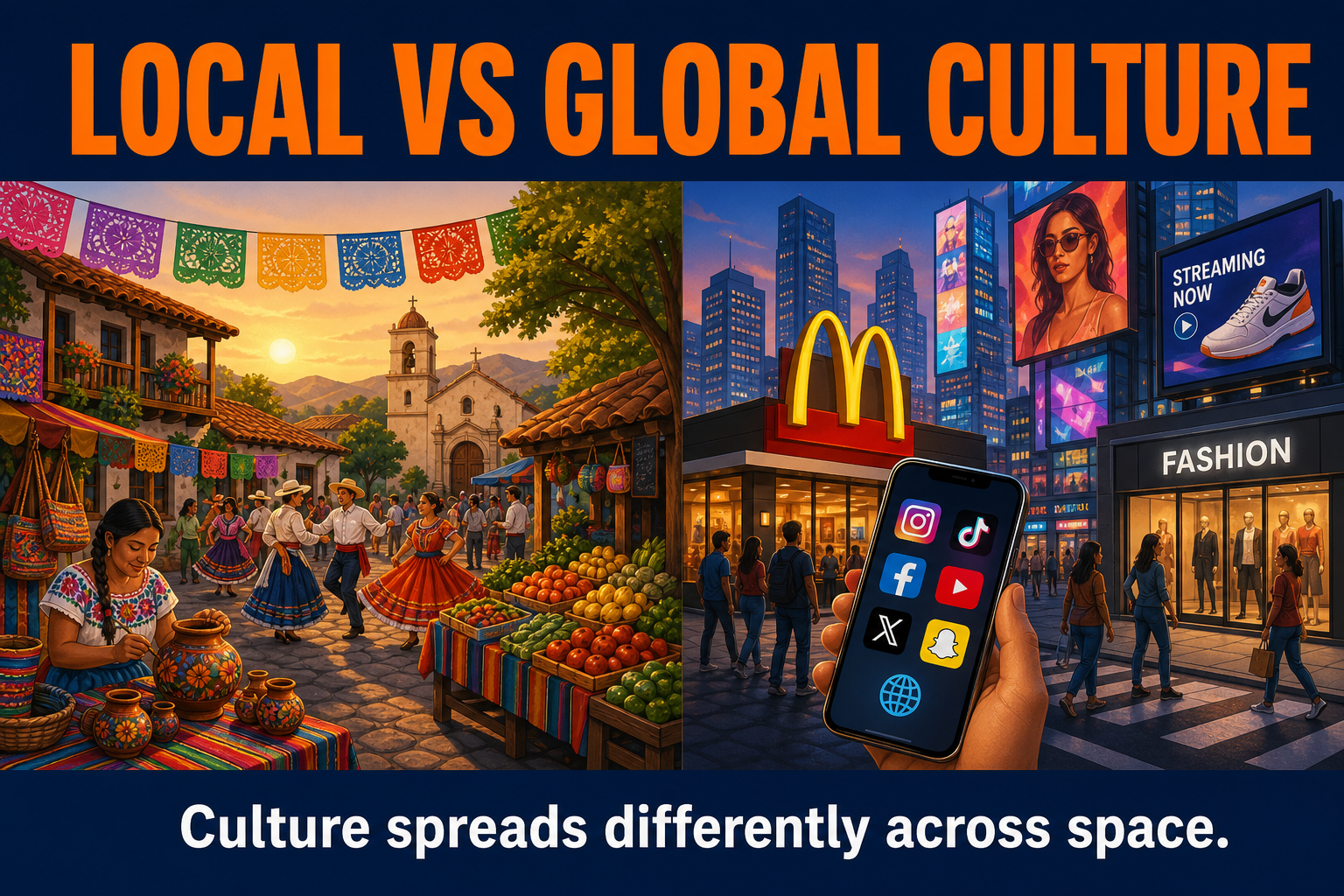
Folk culture is traditionally practiced by small, localized groups and is closely tied to place, history, environment, and community identity. Popular culture is widely practiced across large regions and spreads quickly through media, technology, markets, migration, and globalization. In AP Human Geography, the key difference is scale, speed of diffusion, and connection to place.
Folk culture is local and rooted. Popular culture is widespread and fast-moving.
This page compares folk culture and popular culture. For the full Unit 3 roadmap, visit the AP Human Geography Unit 3 Cultural Patterns and Processes hub.
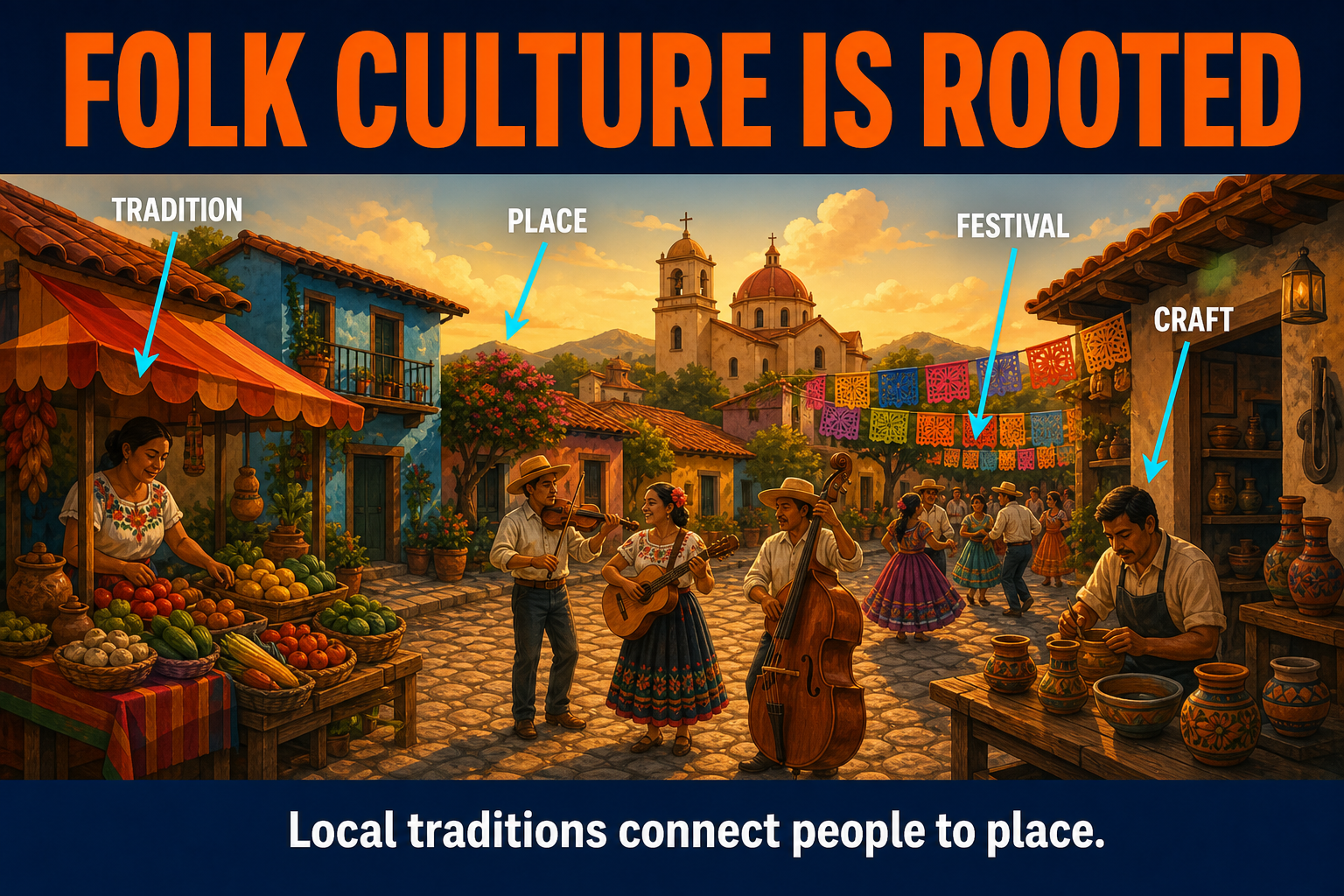
Folk culture is the traditional practices of a small, localized, usually homogeneous group. It is often passed through family, community, oral tradition, apprenticeship, or local custom. Folk culture is strongly shaped by environment, place, religion, history, and community identity, and it changes more slowly than popular culture.
Folk culture is often visible in local architecture, foodways, clothing, crafts, festivals, music, and settlement patterns. On the AP Human Geography exam, connect folk traits to place and slower diffusion patterns on Unit 3.
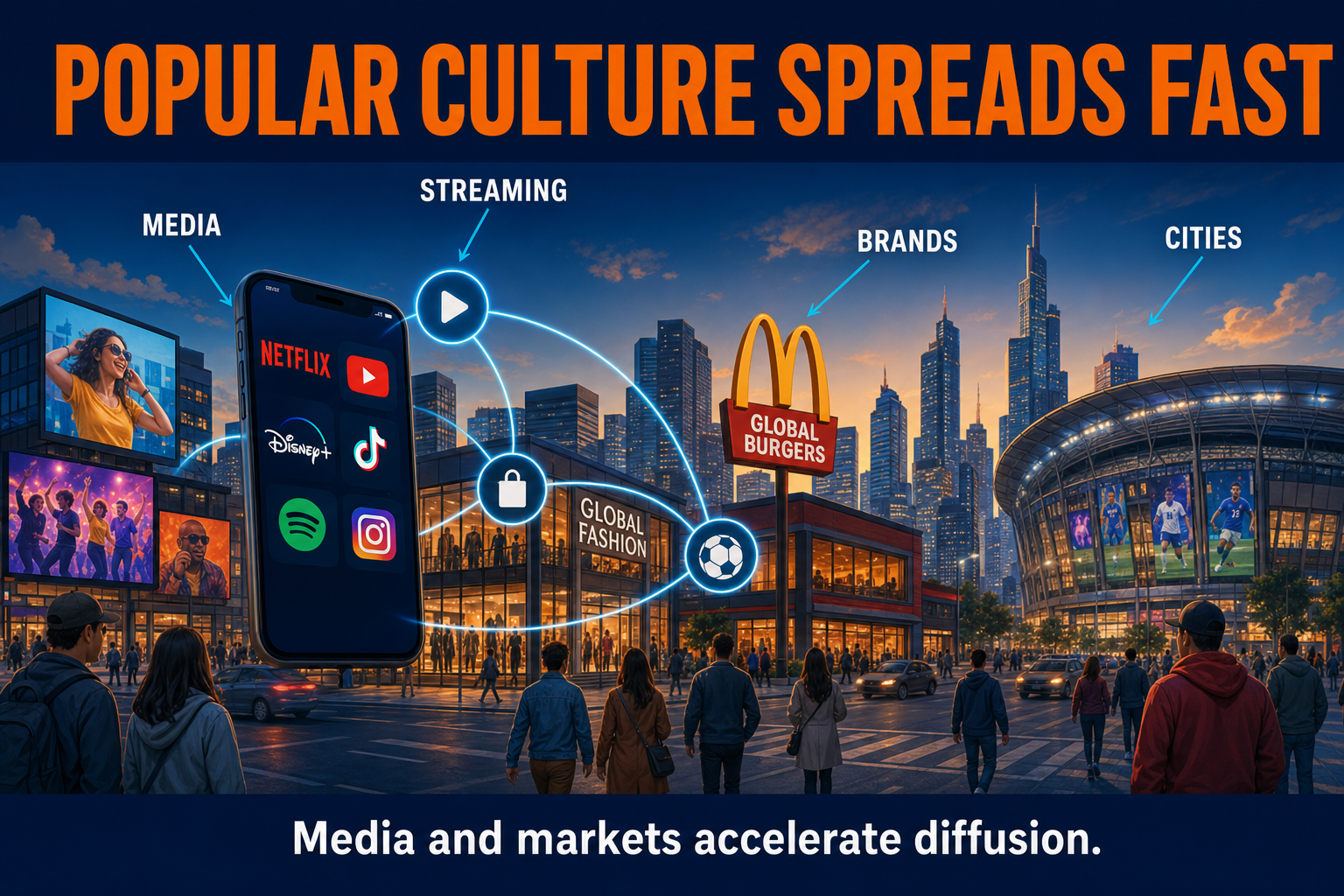
Popular culture includes cultural practices, products, styles, and ideas widely adopted by large groups. It often spreads through media, technology, advertising, celebrities, corporations, cities, and global networks. Popular culture changes quickly because trends can spread rapidly and is often tied to mass consumption and commercial markets.
Popular culture is visible in brands, music, fashion, sports, fast food, entertainment, social media, and global architecture. It can weaken local distinctiveness or create placelessness, but it can also be adapted locally through stimulus diffusion.
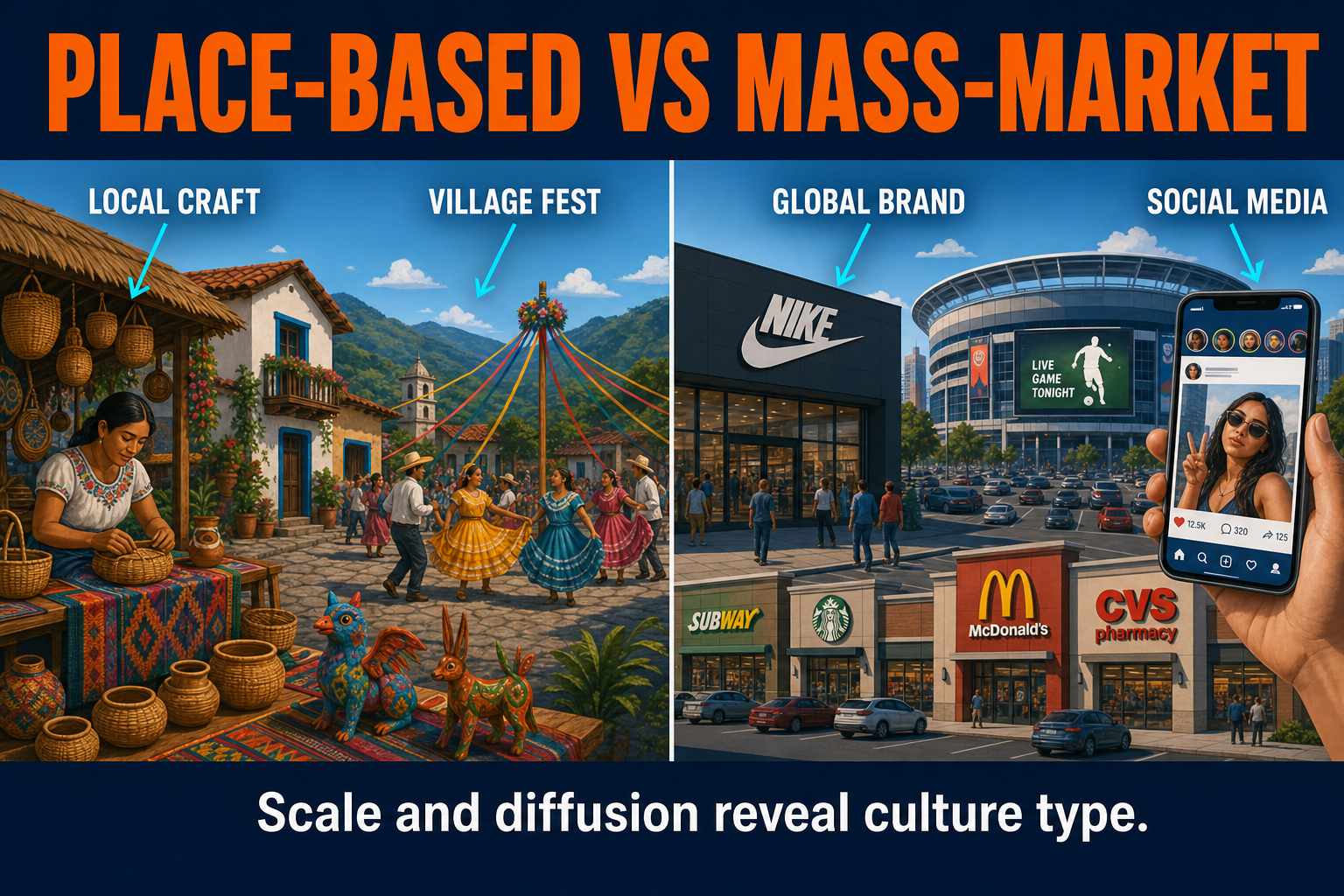
Core comparison: Folk culture is more local, place-based, and traditional. Popular culture is more widespread, fast-changing, and connected to media, markets, and globalization.
| Feature | Folk Culture | Popular Culture | AP Exam Clue |
|---|---|---|---|
| Scale | Small, local, relatively homogeneous groups | Widespread mass audience across regions or globally | Ask whether the example is local or global |
| Speed of change | Slow—often generational | Fast—weeks or months through networks | Match pace to culture type |
| Diffusion pattern | Relocation diffusion, local transmission | Hierarchical, contagious, stimulus, corporate, or media diffusion | Name the diffusion type on MCQs and FRQs |
| Connection to place | Strong—strengthens sense of place and local identity | Weaker—can create placelessness or cultural convergence | Read landscape for local vs uniform clues |
| Method of transmission | Family, oral tradition, apprenticeship, community | Media, celebrities, brands, cities, corporations | Match transmission method to culture type |
| Economic connection | Often non-commercial, local exchange | Mass consumption, corporate markets, advertising | Chain stores and brands signal popular culture |
| Cultural landscape | Traditional houses, local markets, festivals, crafts | Chain stores, billboards, stadiums, global brands | Uniform commercial strips signal popular culture |
| Examples | Amish clothing, folk music, local festivals, regional food | Fast food chains, TikTok trends, Hollywood films, streaming music | Use specific named examples |
| Globalization effect | May resist, adapt, hybridize, or be commodified | Accelerated spread through global media and commercial networks | Mention convergence, preservation, or adaptation |
| FRQ clue | Emphasize local tradition and place identity | Emphasize mass media, brands, celebrities, or rapid spread | Classify culture type, then explain diffusion and landscape |
Strong AP answers do not just label a culture as folk or popular. Identify the scale, name the diffusion process, and explain the visible landscape effect.
→ folk culture tied to place and community identity
→ popular culture spreading quickly through networks
→ stimulus diffusion blending popular culture with local tradition
Folk culture usually spreads more slowly through family transmission, local community practice, migration, and relocation diffusion. Because folk culture is tied to place and identity, it may remain concentrated in specific regions or diaspora communities.
Stories, recipes, songs, and customs pass from elders to younger generations within households.
Festivals, worship, and local rituals reinforce traditions through face-to-face participation.
Skills like crafts and farming transfer through guided teaching within a community.
Migrants carry traditions to new places when people move and establish new settlements.
Enclaves abroad maintain homeland customs through community institutions and identity.
Local food, clothing, and architecture reflect place-specific environmental conditions.
Connect folk diffusion to relocation diffusion, cultural traits, complexes, and regions, and ethnicity and cultural identity when explaining why traditions cluster in homelands or migrant enclaves.
Popular culture usually spreads quickly through hierarchical diffusion, contagious diffusion, stimulus diffusion, media, corporations, influencers, celebrities, cities, advertising, sports, music, and technology platforms.
Trends launch in major media centers and spread downward through status hierarchies.
Viral posts and peer copying spread traits rapidly through digital and social contact.
Global products or trends change form to fit local tastes while the core idea spreads.
Companies standardize products, advertising, and storefronts across regions.
Entertainment platforms distribute culture to mass audiences quickly worldwide.
Drill each mechanism: hierarchical diffusion, contagious diffusion, stimulus diffusion, and globalization and popular culture.

Folk culture and popular culture both become visible in the cultural landscape. Folk culture may appear in traditional houses, local markets, religious practices, folk festivals, farming patterns, and handmade crafts. Popular culture may appear in chain stores, stadiums, billboards, fast food, global brands, entertainment districts, and tourist spaces.
Read the cultural landscape guide, material vs nonmaterial culture study guide, and sense of place and placelessness page to practice naming visible clues.
Culture type + diffusion process + landscape evidence = strong AP explanation.
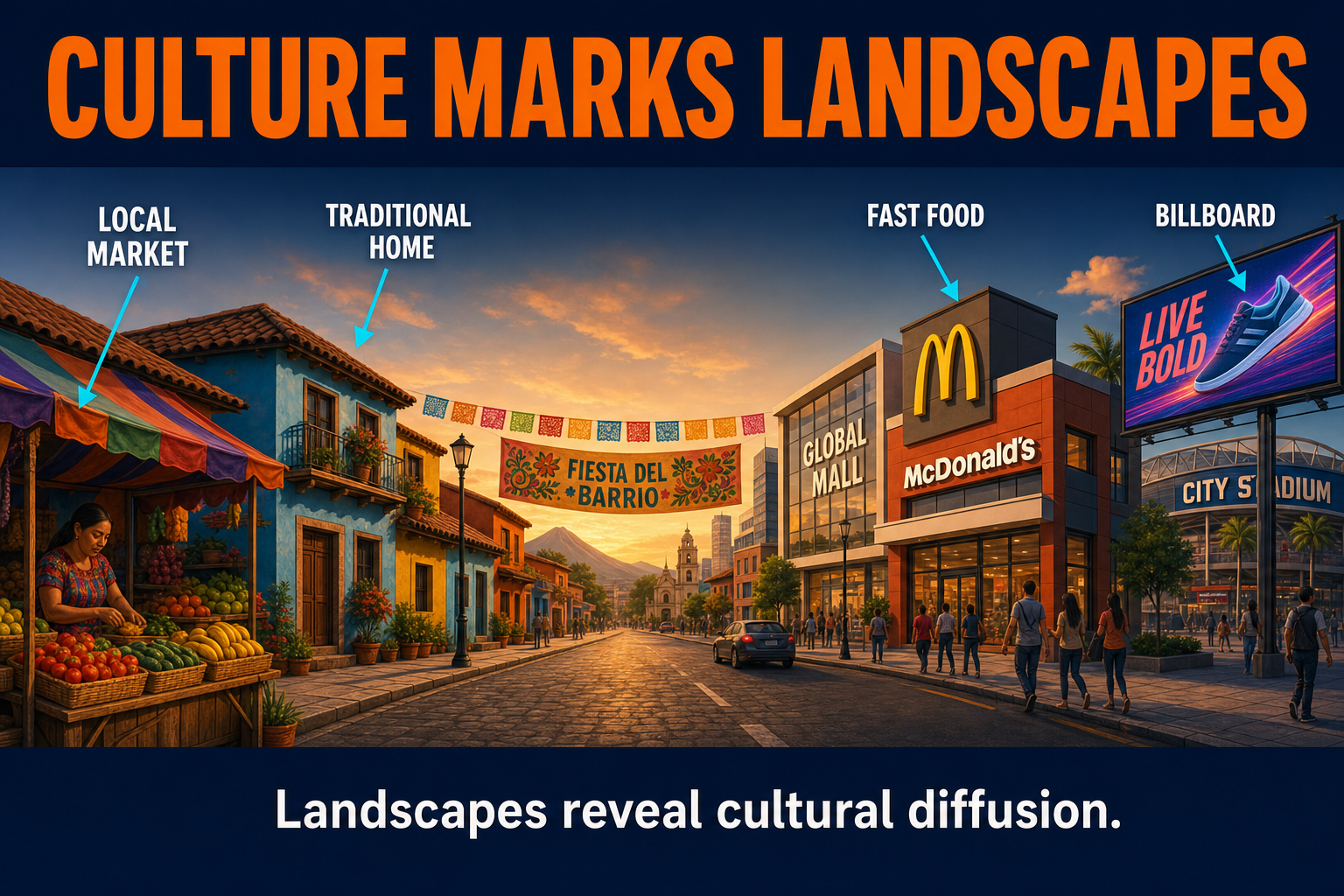
Globalization helps popular culture spread quickly across borders. This can create cultural convergence and placelessness when different places begin to look similar because of shared brands, architecture, media, and consumer habits. At the same time, local groups may adapt popular culture into new forms through stimulus diffusion.
Review globalization and popular culture, sense of place and placelessness, cultural convergence and divergence, and cultural imperialism when explaining how global networks reshape local places.
Folk culture can strengthen local identity, ethnic identity, regional belonging, and sense of place. Communities may preserve folk culture through festivals, museums, schools, language programs, craft markets, local food traditions, oral history, and heritage tourism.
Connect preservation to ethnicity and cultural identity, language extinction and preservation, and cultural appropriation and commodification on Unit 3 FRQs.
Name the trait, building, sign, festival, brand, or behavior visible in the map or photo.
Ask whether the feature is place-based and traditional or mass-produced and network-based.
Match relocation, hierarchical, contagious, or stimulus diffusion to how the feature spread.
Connect the feature to place identity, placelessness, convergence, or visible landscape change.
Feature → Culture Type → Diffusion → Landscape Effect
Strong AP answers do not just label folk or popular. Explain how the cultural feature spreads and what it does to place, identity, or landscape.
Always state scale and connection to place before naming examples.
Look for brands, celebrities, social media, and rapid trend cycles.
If migrants carry a local tradition, explain relocation diffusion.
Cities, influencers, and viral networks are common AP clues.
Point to houses, markets, signs, chain stores, festivals, and brands you can see.
Popular culture can make different places look similar through shared brands.
Folk culture is local and traditional; popular culture is widely adopted and fast-changing—not a value judgment.
Fix: Folk culture is local, traditional, and place-based—not inferior.
Fix: Popular culture means widely adopted and rapidly diffused, not automatically bad.
Fix: AP answers should explain how the culture spread: relocation, hierarchical, contagious, or stimulus diffusion.
Fix: Use visible examples like houses, markets, signs, chain stores, festivals, and brands.
Fix: Popular culture can be adapted locally through stimulus diffusion.
Practice questions require JavaScript. Enable JavaScript to use the interactive quiz.
A city neighborhood contains a long-running local food festival, traditional craft shops, and regional house styles. Nearby, a new commercial district includes global fast food chains, branded fashion stores, digital billboards, and entertainment venues promoted on social media.
“The neighborhood has both folk and popular culture.” This answer does not define folk culture, names no specific popular-culture example, and does not explain landscape change.
Fix: classify the cultural feature, name the diffusion process, and explain the visible landscape effect.
Folk culture is local, traditional culture practiced by small, relatively homogeneous groups. It is tied to place through food, clothing, music, architecture, and customs that change slowly and spread mainly through family transmission, community practice, or relocation diffusion.
Popular culture is widespread, often commercial culture that changes quickly. It spreads through cities, media, celebrities, brands, and technology, and it can create similar landscapes across regions through mass consumption and global networks.
Folk culture is local and place-based; popular culture is widespread and network-based. Folk traditions spread slowly through relocation or local transmission; popular trends spread quickly through hierarchical, contagious, and stimulus diffusion.
Folk culture examples include traditional house styles adapted to climate, regional food traditions, local folk music and dance, handmade crafts, oral storytelling, community festivals, local religious customs, and farming practices tied to environment.
Popular culture examples include global fast-food chains, streaming shows and music trends, global fashion brands, professional sports culture, viral social media trends, popular slang, video games, global coffee chains, and music genres spreading online.
Folk culture usually spreads slowly through family, oral tradition, apprenticeship, community practice, and relocation diffusion when migrants carry traditions. Popular culture spreads faster through hierarchical diffusion from cities and influencers, contagious diffusion on social media, stimulus diffusion when trends adapt locally, and corporate or media networks.
Folk culture appears in traditional houses, local markets, folk festivals, farming patterns, and handmade crafts. Popular culture appears in chain stores, stadiums, billboards, fast food, global brands, entertainment districts, and standardized commercial architecture that can reduce local distinctiveness.