Traditional clothing
Why it fits: Physical garment worn to show identity or custom
AP exam clue: If you can wear it
AP Human Geography · Unit 3
Material culture is the physical side of culture. Nonmaterial culture is the ideas, values, beliefs, rules, and meanings behind culture. Learn how to classify examples and explain cultural landscape evidence.
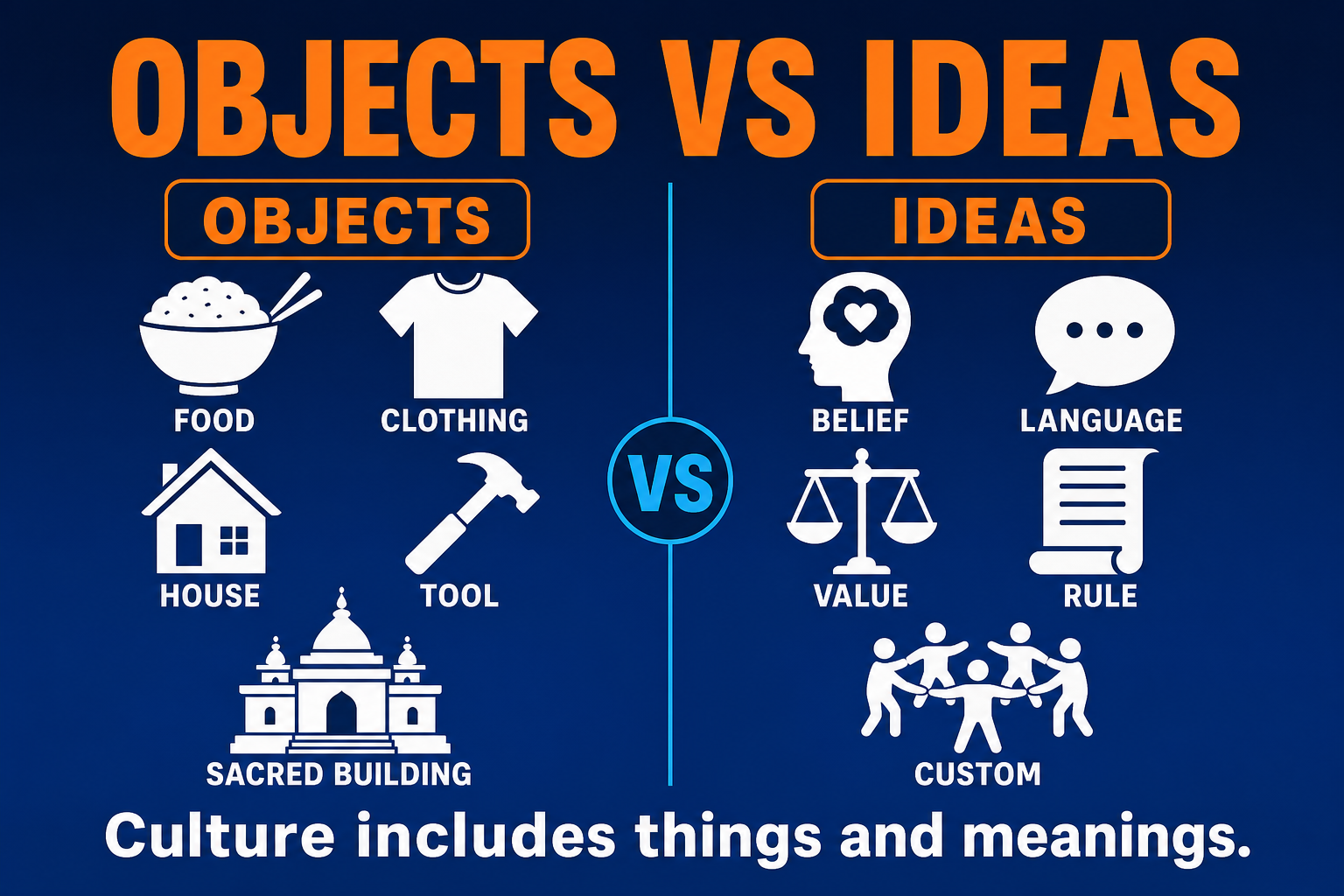
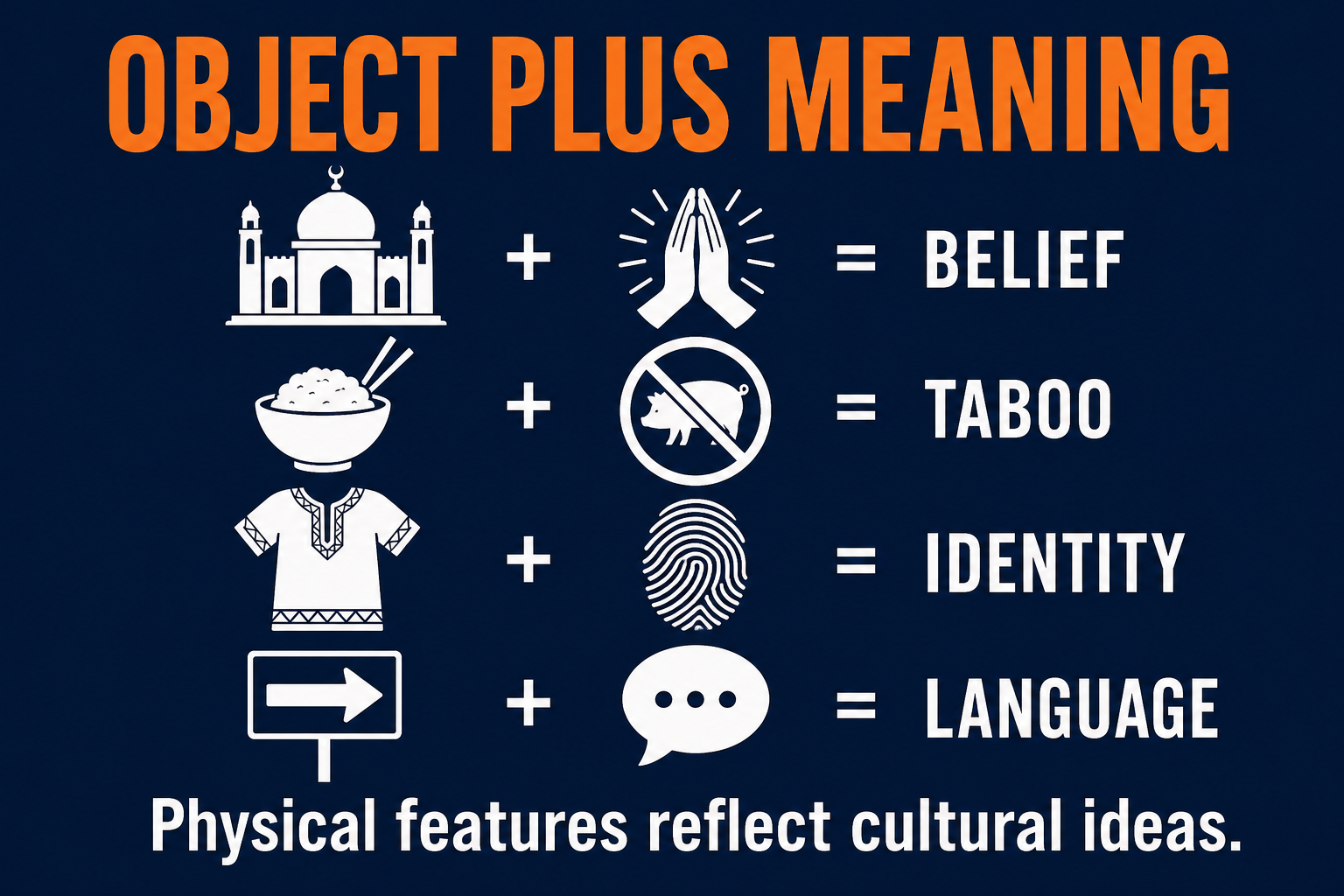
Material culture includes the physical objects people create, use, build, wear, eat, or display. Nonmaterial culture includes beliefs, values, norms, language, religion, customs, rules, and ideas. In AP Human Geography, the best answers often explain how physical objects reflect deeper cultural meanings.
Material culture is what you can see or touch. Nonmaterial culture is what it means.
This page explains how to classify cultural examples. For the full Unit 3 roadmap, visit the AP Human Geography Unit 3 Cultural Patterns and Processes hub.
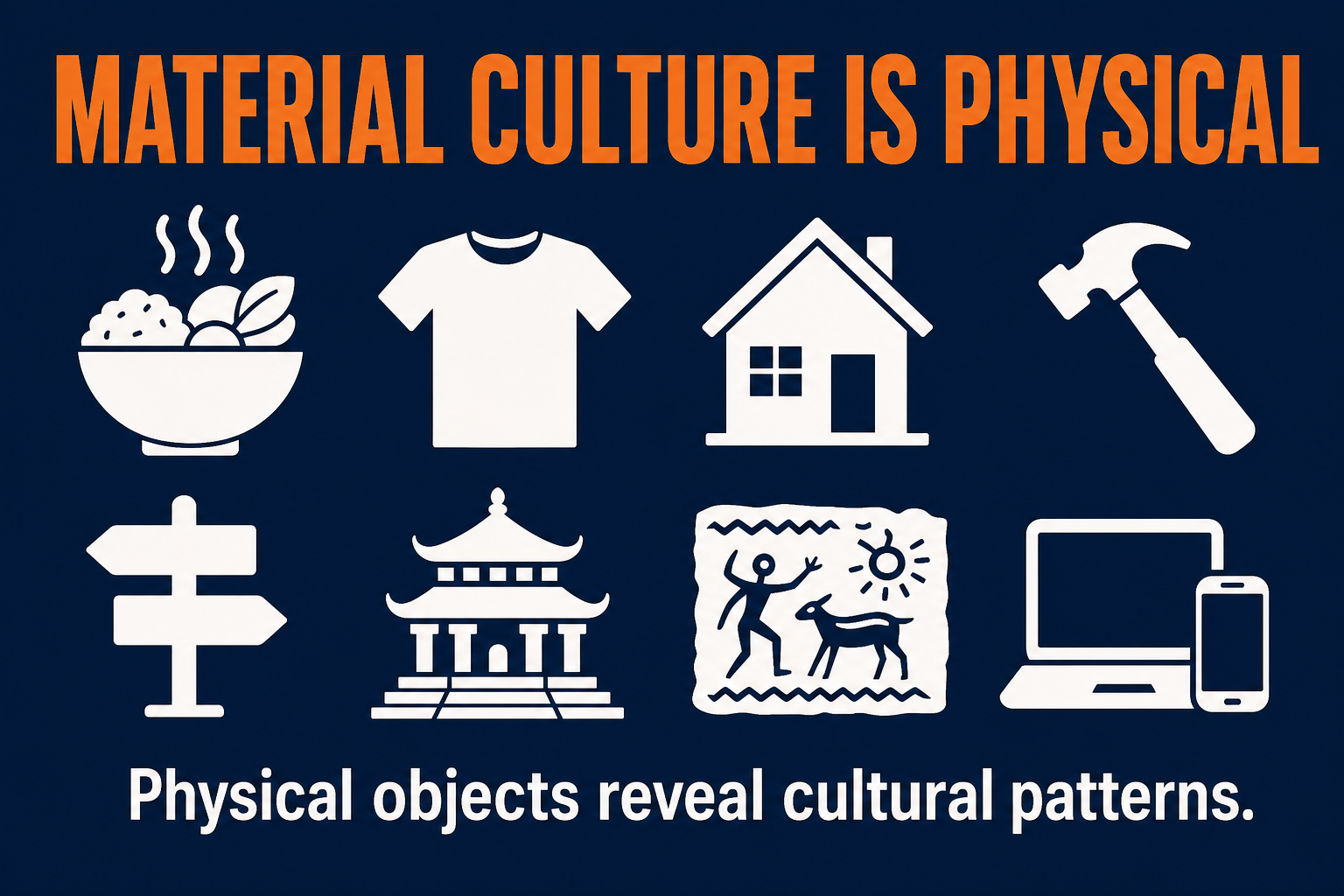
Material culture includes physical objects and built forms created or used by people—food, clothing, houses, tools, art, technology, architecture, roads, signs, and sacred buildings. Material culture is visible on the cultural landscape and can reveal economy, technology, religion, identity, and environment.
Material culture is not automatically more important than nonmaterial culture. Physical objects often gain meaning from the beliefs and rules behind them.
Start with introduction to culture on AP Human Geography for the broader Unit 3 foundation.
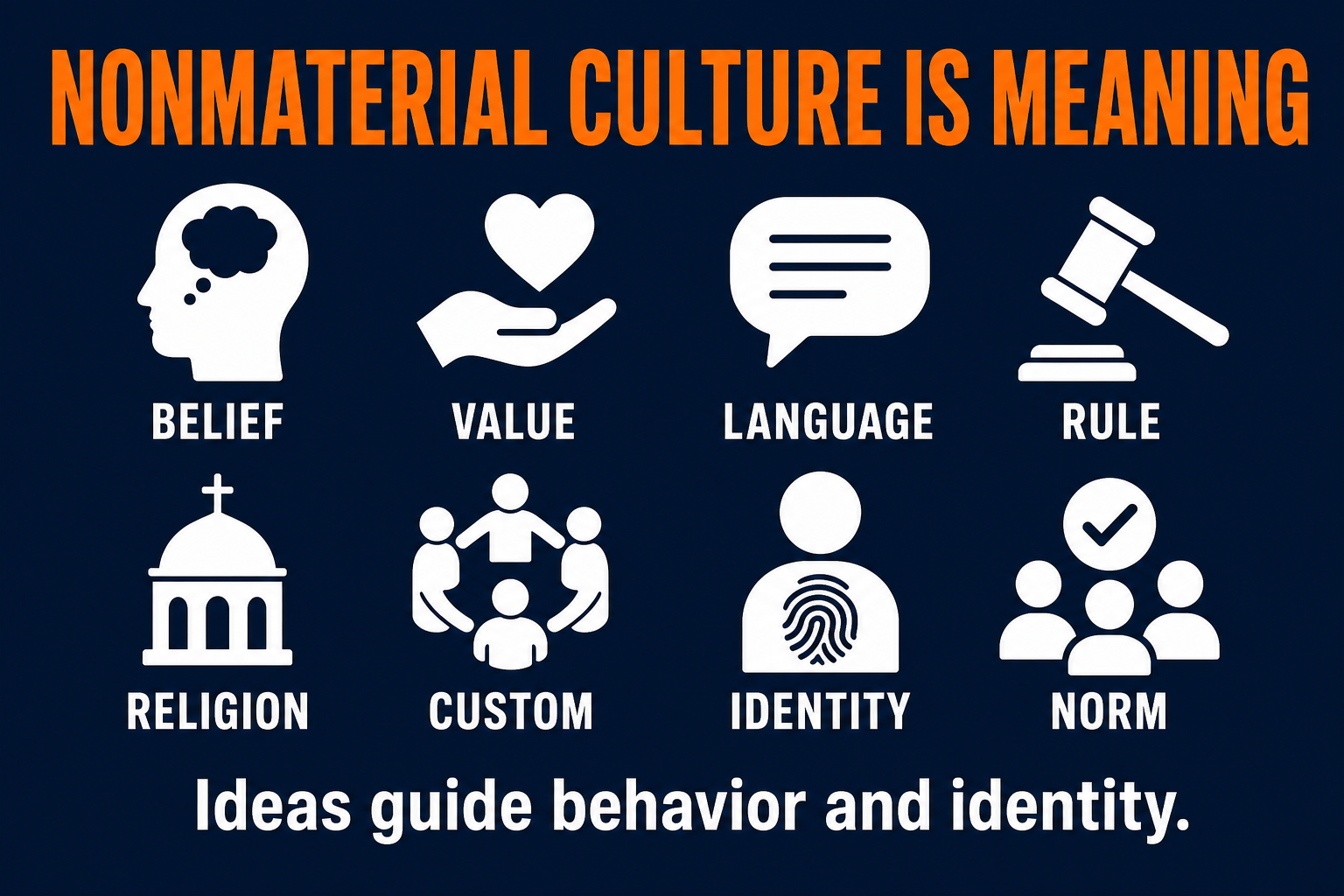
Nonmaterial culture includes ideas, beliefs, values, norms, rules, language, religion, customs, meanings, and social expectations. It explains why physical objects matter and shapes behavior, identity, family life, social roles, ceremonies, and land use.
Nonmaterial culture can be harder to see directly, but it often becomes visible through material culture on the landscape. Language and religion are major nonmaterial culture examples in AP Human Geography.
Core comparison: Material culture is what people make or use. Nonmaterial culture is what people believe, value, practice, or organize around.
Key terms: Artifact = physical object made or modified by humans. Mentifact = belief, value, idea, or worldview. Sociofact = social organization, institution, or relationship pattern. Cultural landscape = visible imprint of culture on place.
| Category | Meaning | AP Example | Exam Clue |
|---|---|---|---|
| Material culture | Physical objects and built forms people create, use, wear, eat, or display | Traditional clothing, ethnic restaurant, religious building, mural | If you can see, touch, build, wear, eat, or display it |
| Nonmaterial culture | Beliefs, values, norms, language, religion, customs, rules, and meanings | Religious belief, dietary rule, greeting custom, language identity | If it is a belief, rule, value, idea, custom, or meaning |
| Artifact | Physical object made or modified by humans | Pottery bowl, religious icon, farming tool | Artifact = material culture object |
| Mentifact | Belief, value, idea, or worldview | Belief in ancestor veneration or sacred place meaning | Mentifact = nonmaterial idea side |
| Sociofact | Social organization, institution, or relationship pattern | Marriage rules, kinship systems, gender role expectations | Sociofact = how groups organize behavior |
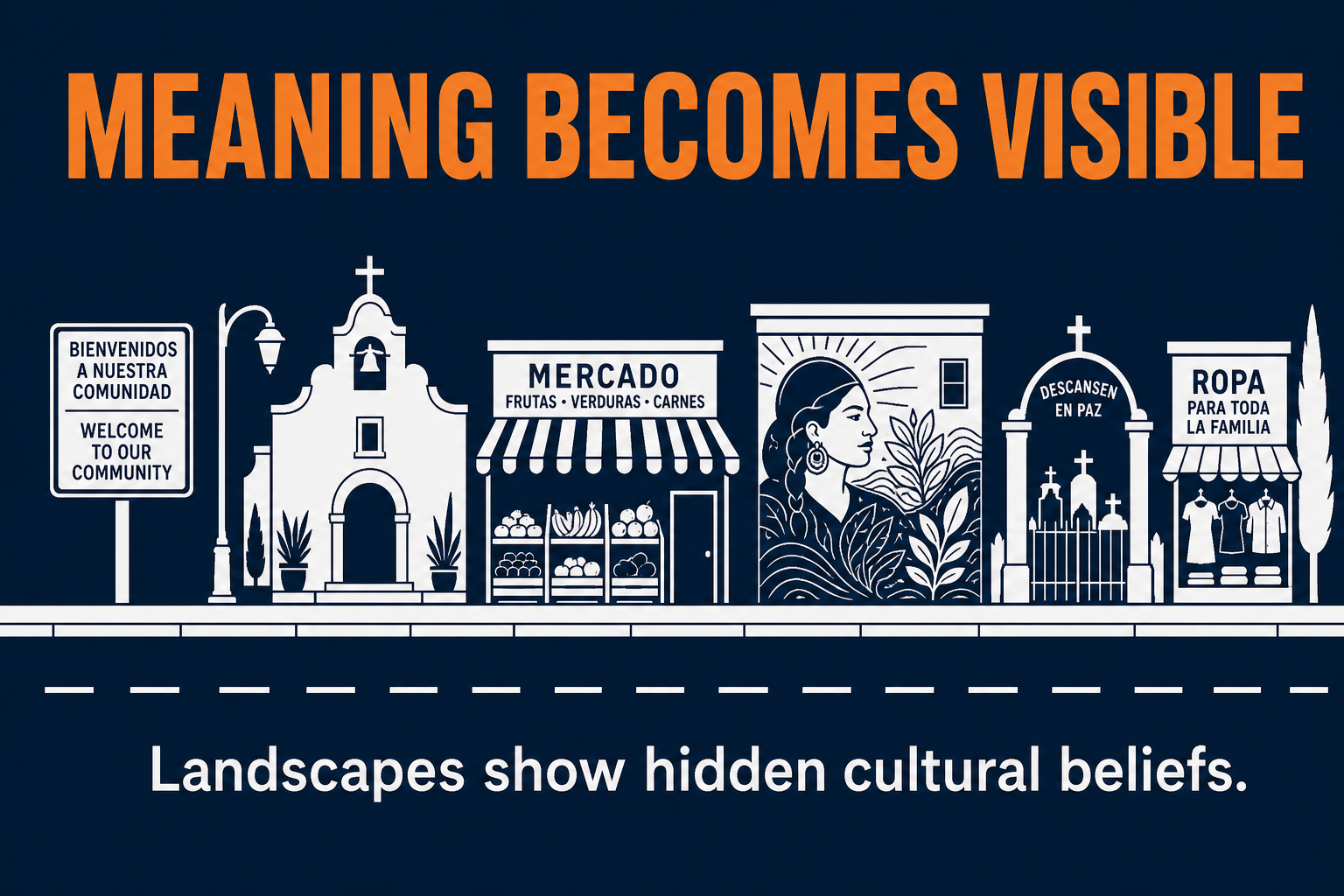
| Cultural landscape | Visible imprint of culture on place | Bilingual signs, sacred buildings, ethnic markets, murals | Material features reveal nonmaterial beliefs and identity |
Important nuance: Some examples can be both. Food is physical, but food rules, taboos, and meanings are nonmaterial. Classify cultural traits carefully before you explain diffusion or landscape evidence.
For AP answers, examples are strongest when you name the feature, classify it, and explain what it reveals.
Why it fits: Physical garment worn to show identity or custom
AP exam clue: If you can wear it
Why it fits: Built sacred structure
AP exam clue: If you can see or enter the building
Why it fits: Physical food business on the street
AP exam clue: If you can visit or eat there
Why it fits: Artifact made or modified by humans
AP exam clue: Artifact = material object
Why it fits: Built form reflecting technology and tradition
AP exam clue: Architecture on the landscape
Why it fits: Physical sign displaying language
AP exam clue: Visible language on the landscape
Why it fits: Public art on a wall
AP exam clue: Visible art in public space
Why it fits: Temporary physical displays
AP exam clue: Seasonal material culture
Why it fits: Technology used in agriculture
AP exam clue: Artifact in rural landscapes
Why it fits: Modern technology object
AP exam clue: Popular culture material trait
Why it fits: Shared system of communication and identity
AP exam clue: Belief, rule, or meaning—not the sign itself
Why it fits: Beliefs, rituals, and sacred meanings
AP exam clue: Building is material; belief is nonmaterial
Why it fits: Shared ideas about right behavior
AP exam clue: If it is an idea or norm
Why it fits: Expected behavior in a group
AP exam clue: Rules about interaction
Why it fits: Rules about what may be eaten
AP exam clue: Physical food vs dietary rule
Why it fits: Sociofact about household roles
AP exam clue: Social organization pattern
Why it fits: Stories and memory passed by speech
AP exam clue: Nonmaterial cultural knowledge
Why it fits: Expected social behavior
AP exam clue: Custom or norm
Why it fits: Expectations about men's and women's roles
AP exam clue: Sociofact / norm
Why it fits: Mentifact about holy places
AP exam clue: Idea that makes a place sacred
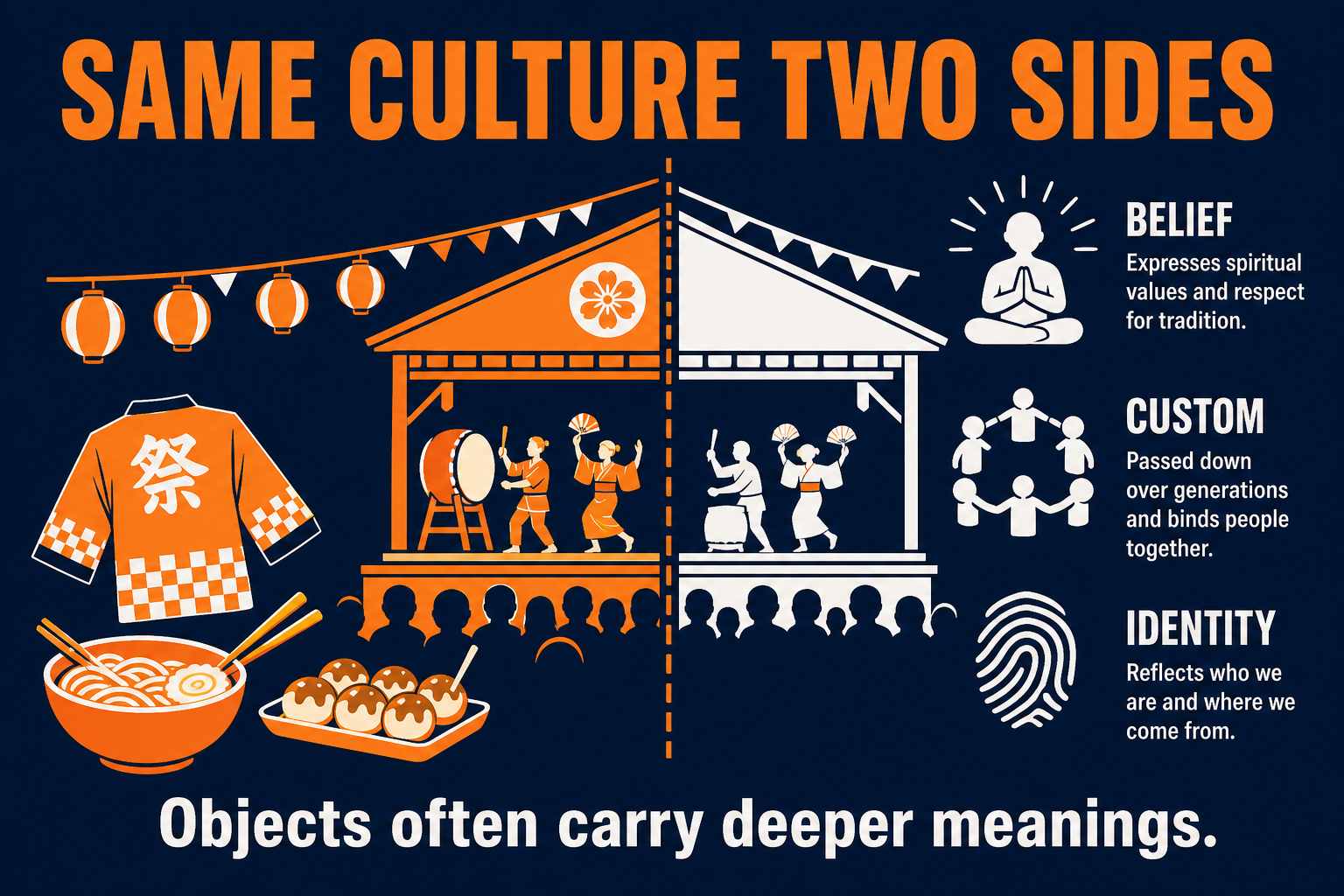
Most cultural features include both physical and meaning-based parts. A sacred building is material culture, but the belief that makes it sacred is nonmaterial culture. A festival banner is material culture, but the celebration, memory, or identity behind it is nonmaterial culture.
The building is material; the belief that makes it sacred is nonmaterial.
Markets are material; halal, kosher, or taboo rules are nonmaterial.
Garments are material; modesty or identity norms are nonmaterial.
The sign is material; language pride or policy is nonmaterial.
Outfits are material; marriage customs are nonmaterial.
Gravestones are material; afterlife or burial beliefs are nonmaterial.
Strong AP answers do not stop at naming an object. Identify the feature, classify it as material or nonmaterial, then explain what belief, value, identity, or rule it reveals.
Name a specific cultural feature—bilingual sign, sacred building, or food market.
Label it as material culture (physical object) or nonmaterial culture (belief, value, rule, or meaning).
Explain what identity, religion, language, taboo, or cultural landscape evidence it reveals.
The cultural landscape is where material culture often makes nonmaterial culture visible. Buildings, signs, murals, monuments, clothing, markets, cemeteries, and public art can reveal religion, language, ethnicity, values, power, and identity.
Read the cultural landscape guide for O-I-C-E exam method. Connect visible features to cultural traits, complexes, and regions and ethnicity and cultural identity on the ground.
When a building or cemetery marks holy space, use the sacred space and sacred sites guide to explain belief, pilgrimage, and religious landscape evidence.
Both material and nonmaterial culture can spread through diffusion. Physical objects may spread faster than the meanings behind them, or a belief may spread while local groups adapt the physical form. This is why AP Human Geography questions often connect culture classification to diffusion.
Review the full types of diffusion guide, then drill each mechanism below. Cultural hearths are origin points where traits begin spreading outward.
Migrants carry objects and beliefs to a new place.
Elites, cities, or media spread cultural styles first.
Trends spread through direct contact in all directions.
People adapt an idea into a new local form.
Decide material, nonmaterial, artifact, mentifact, or sociofact before you explain.
Strong AP answers connect physical features to beliefs or values.
Food, religion, and festivals often include material and nonmaterial parts.
Signs, buildings, markets, murals, and monuments show culture on the ground.
Name relocation, hierarchical, contagious, or stimulus diffusion when traits spread.
Name a mosque, bilingual sign, or ethnic restaurant—not only “religion.”
Invisible beliefs often give physical objects their cultural importance.
Fix: Nonmaterial culture often gives physical objects their meaning.
Fix: The building is material, but beliefs, rituals, and sacred meanings are nonmaterial.
Fix: Food is physical, but dietary rules, taboos, and meanings are nonmaterial.
Fix: Use visible features like signs, buildings, clothing, markets, and monuments.
Fix: Name a specific feature, classify it, and explain what it reveals.
Loading practice questions…
A neighborhood contains bilingual street signs, a religious building, ethnic restaurants, festival banners, and murals showing community history.
“The neighborhood is diverse so it has culture.” This answer does not name a material example, describe nonmaterial meaning, or explain landscape evidence.
Fix: name a physical feature, connect it to a belief or value, and explain how it appears on the landscape.
Material culture includes the physical objects people create, use, build, wear, eat, or display, such as food, clothing, houses, tools, art, technology, architecture, and sacred buildings. It is visible on the cultural landscape and can reveal economy, religion, identity, and technology.
Nonmaterial culture includes beliefs, values, norms, language, religion, customs, rules, meanings, and social expectations. It explains why physical objects matter and shapes behavior, identity, ceremonies, and land use.
Material culture is what people make or use—physical objects and built forms. Nonmaterial culture is what people believe, value, practice, or organize around—ideas, rules, and meanings.
Material examples include traditional clothing, religious buildings, ethnic restaurants, murals, and tools. Nonmaterial examples include language, religious beliefs, dietary rules, greeting customs, gender roles, and values about sacred space.
Yes. Food is physical, but food rules and taboos are nonmaterial. A festival banner is material, but the celebration and identity behind it are nonmaterial. AP answers should name both sides when relevant.
Material features such as bilingual signs, sacred buildings, food markets, murals, cemeteries, and monuments make nonmaterial beliefs, language, religion, and identity visible on the landscape.