Sacred symbols used as fashion
Cultural trait: Sacred symbols used as fashion
Clue: Appropriation
Possible cultural effect: Meaning may be erased or stereotyped
Landscape / context clue: Symbol appears on clothing or ads without community context
AP Human Geography · Unit 3
Cultural appropriation happens when cultural traits are used outside their original context, often without respect, credit, or understanding. Cultural commodification happens when culture is turned into a product for sale, tourism, branding, or entertainment.
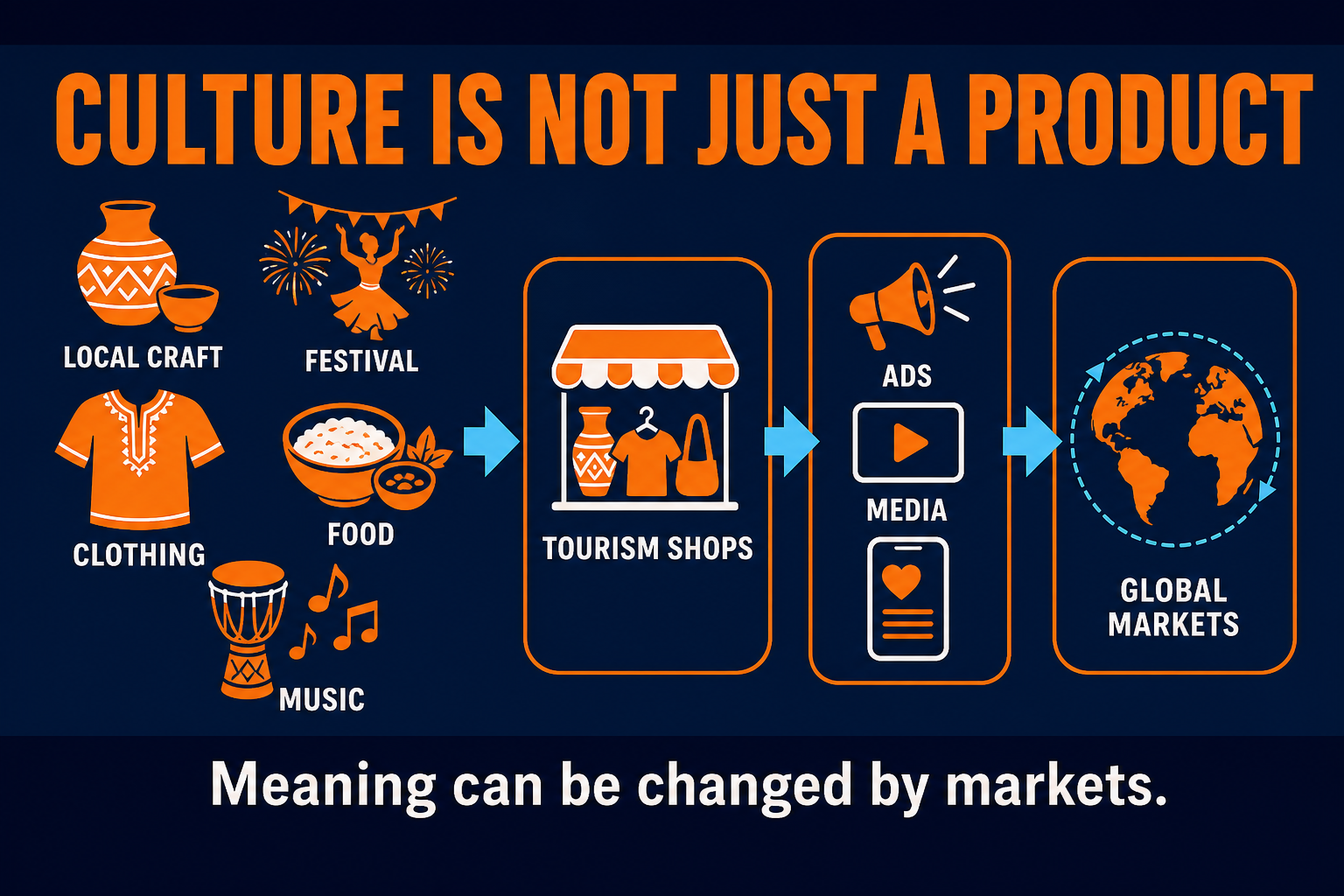
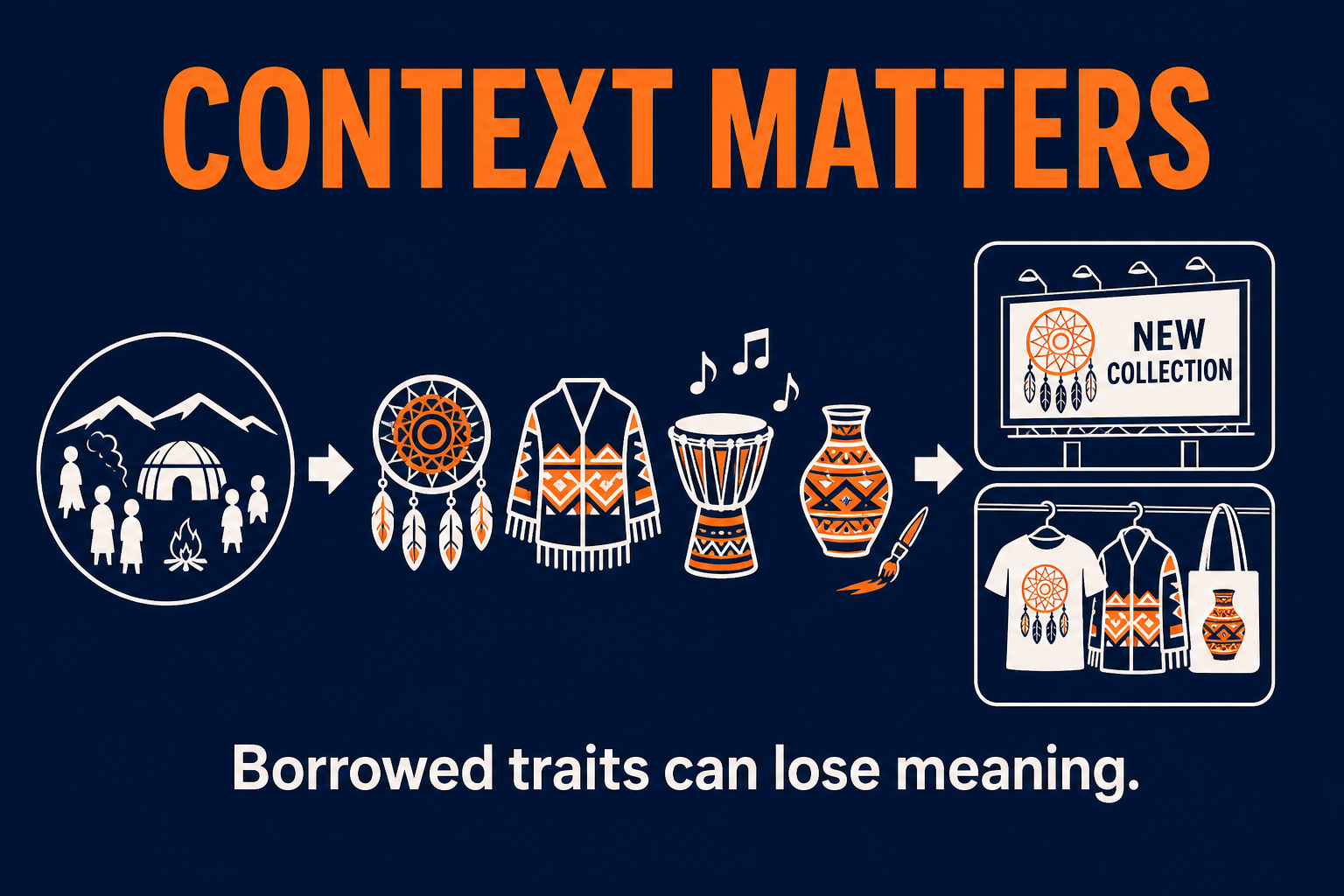
Cultural appropriation is the use of a cultural trait, symbol, clothing, music, food, ritual, or style by outsiders in a way that may remove meaning, ignore context, or benefit a more powerful group. Cultural commodification is the process of turning cultural traits into products, performances, tourist experiences, or brands for sale. In AP Human Geography, both concepts connect culture to power, markets, tourism, identity, and cultural landscapes.
Appropriation removes context. Commodification turns culture into a product.
This page explains cultural appropriation and commodification. For the full Unit 3 roadmap, visit the AP Human Geography Unit 3 Cultural Patterns and Processes hub.
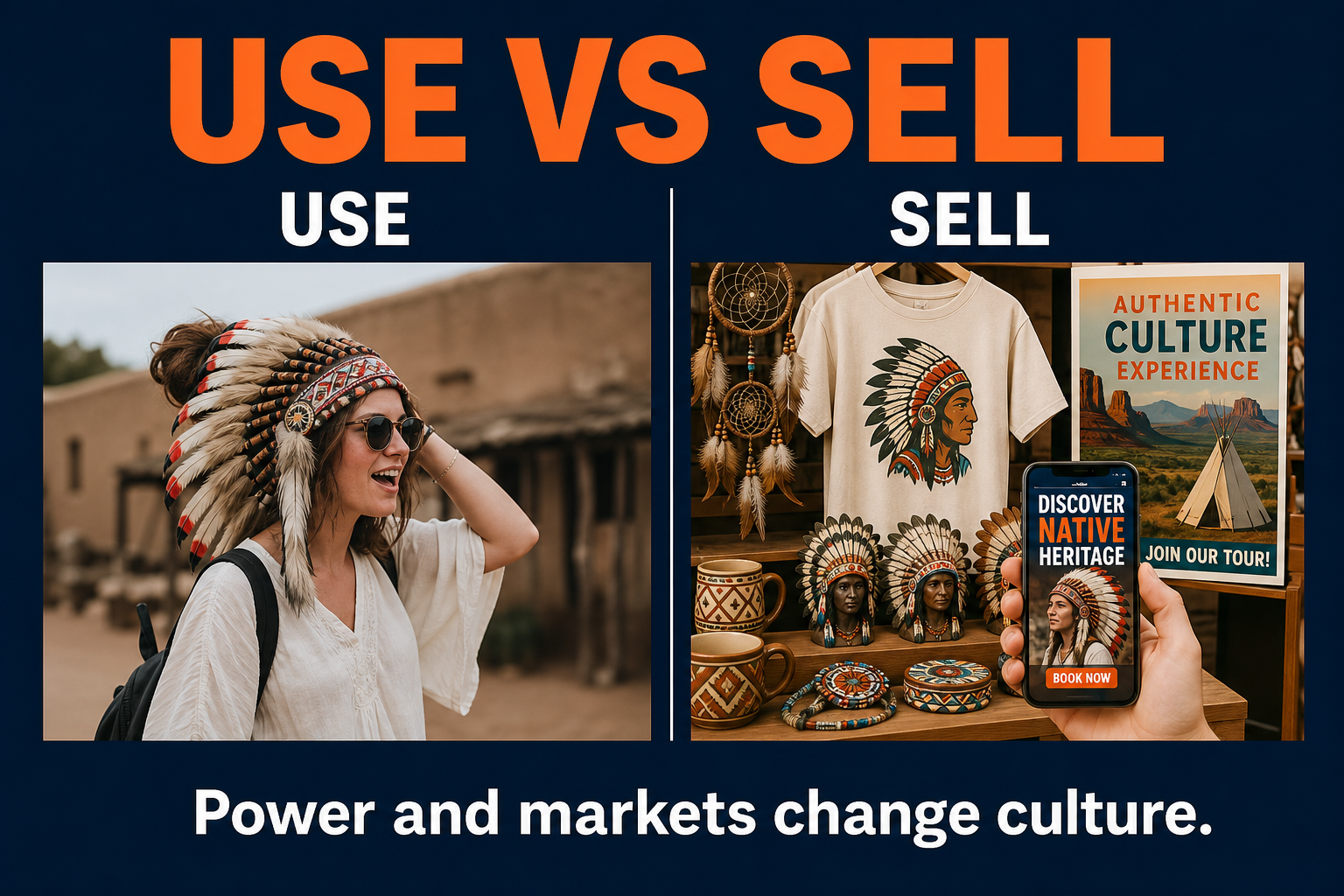
Cultural appropriation is the use of cultural traits by outsiders in ways that may remove meaning, ignore context, stereotype a group, or benefit a more powerful group. It often involves unequal power between the source culture and the group using the trait.
It can involve clothing, hairstyles, symbols, sacred objects, music, language, dance, art, food, or rituals. AP answers should avoid emotional claims alone and focus on geographic concepts: power, diffusion, identity, context, and cultural landscape. Distinguish appropriation from respectful exchange or appreciation.
Connect to folk vs popular culture, material vs nonmaterial culture, and cultural imperialism on the AP Human Geography course page and Unit 3 hub.
Important balanced tone: Do not say every borrowing of culture is appropriation. AP reasoning should consider power, context, consent, credit, benefit, and whether meaning is respected.
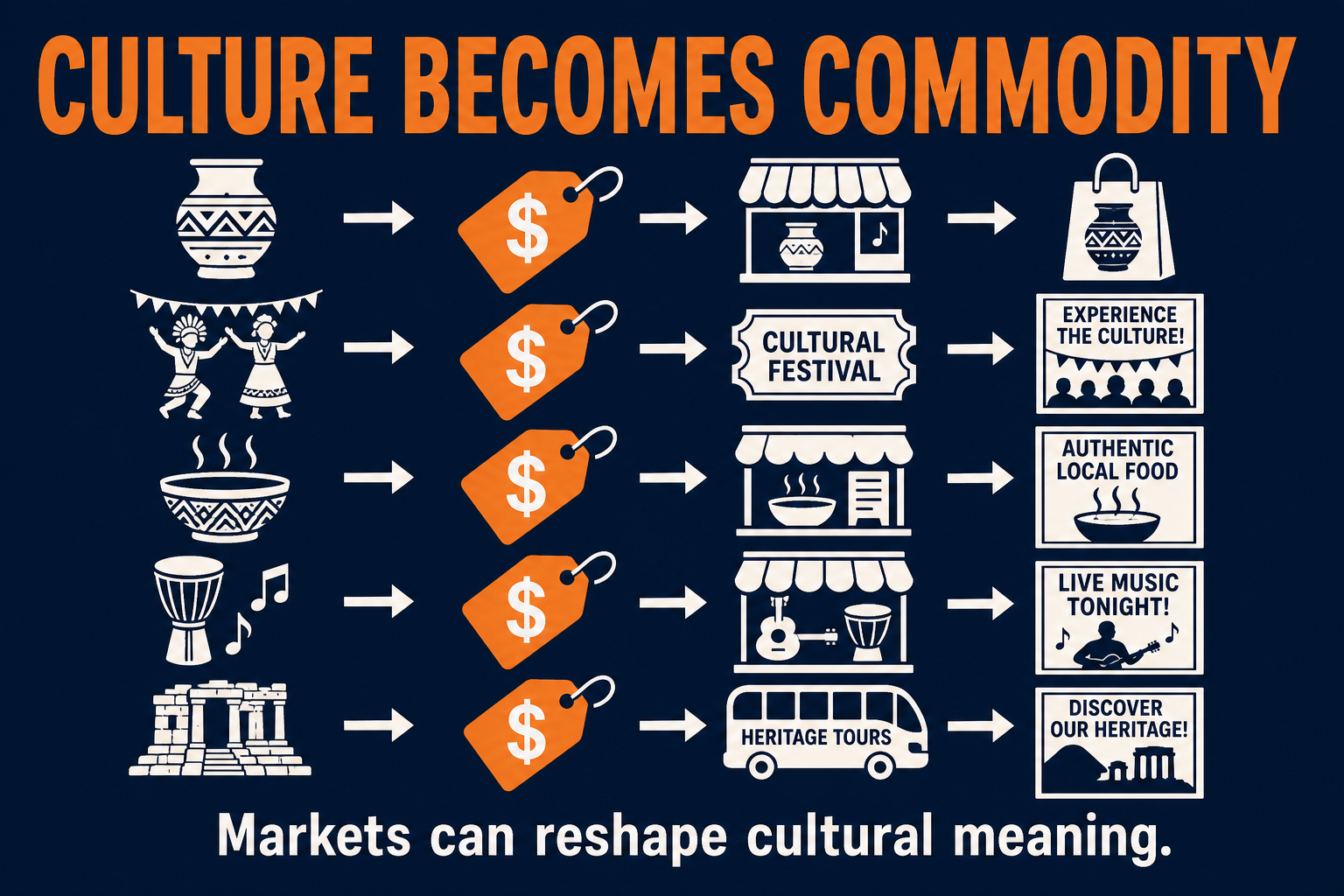
Cultural commodification is turning culture into something bought, sold, packaged, performed, marketed, or consumed. It can involve food, clothing, music, dance, festivals, crafts, rituals, architecture, neighborhoods, or heritage.
It is often linked to tourism, branding, entertainment, heritage districts, social media, and global markets. It can generate income and visibility for communities, but may also simplify, stage, stereotype, or commercialize culture. AP answers should explain both possible benefits and costs.
Core comparison: Appropriation focuses on outsider use, context, respect, and power. Commodification focuses on culture becoming a product or market experience.
| Concept | Meaning | AP Example | Key Question | Exam Clue |
|---|---|---|---|---|
| Cultural appropriation | Outsiders use a cultural trait in ways that may remove meaning, ignore context, or benefit a more powerful group | Sacred symbol used as fashion trend without community permission | Who is using the trait and is power or context missing? | Outsider use, lost context, unequal power |
| Cultural commodification | Culture is turned into a product, performance, tourist experience, or brand for sale | Traditional crafts sold as mass-produced souvenirs | Is the trait being sold, packaged, or performed for consumption? | Price tags, tours, souvenir shops, staged festivals |
| Cultural appreciation | Respectful learning with credit, consent, context, and support for the source community | Museum exhibit developed with community partners and explained context | Is meaning understood and is the source community recognized? | Credit, consent, education, community benefit |
| Cultural diffusion | Spread of cultural traits through contact or exchange | Recipe shared between neighboring communities | Is this exchange without dominance or market packaging? | Contact and exchange—not always appropriation |
| Cultural imperialism | Dominant culture spreads through unequal political, economic, media, or technological power | Global media industries dominating local entertainment markets | Is a powerful culture pressuring or replacing local culture? | Power imbalance and dominance |
| Local adaptation | Communities modify outside traits to fit local identity, language, or values | Global food chain adapts menu for local diets and customs | Does the community reshape the trait on its own terms? | Hybrid culture, stimulus diffusion |
| Heritage tourism | Tourism focused on historic districts, crafts, food, festivals, or sacred sites | Heritage street with craft markets and festival tickets for visitors | Is culture being packaged for visitors? | Tickets, tours, souvenir markets, staged authenticity |
These examples use respectful, neutral, AP-style language. Focus on geographic reasoning: power, context, markets, identity, landscape, and local response.
Cultural trait: Sacred symbols used as fashion
Clue: Appropriation
Possible cultural effect: Meaning may be erased or stereotyped
Landscape / context clue: Symbol appears on clothing or ads without community context
Cultural trait: Traditional clothing used as costume
Clue: Appropriation
Possible cultural effect: Identity may be simplified or mocked
Landscape / context clue: Ceremonial dress sold as Halloween costume
Cultural trait: Folk music sampled without credit
Clue: Appropriation
Possible cultural effect: Source community may not benefit
Landscape / context clue: Global hit uses traditional melody with no attribution
Cultural trait: Cultural hairstyles used by outsiders
Clue: Appropriation
Possible cultural effect: May ignore history of discrimination
Landscape / context clue: Style trend spreads while source group faces bias
Cultural trait: Local food commercialized without credit
Clue: Commodification
Possible cultural effect: Origin community may lose control or profit
Landscape / context clue: Global brand packages regional recipe
Cultural trait: Traditional crafts mass-produced for tourists
Clue: Commodification
Possible cultural effect: Authenticity may be staged or simplified
Landscape / context clue: Souvenir shops sell copied crafts
Cultural trait: Festivals staged mainly for visitors
Clue: Commodification
Possible cultural effect: Meaning may shift toward entertainment
Landscape / context clue: Festival route redesigned for ticket sales
Cultural trait: Ethnic neighborhoods marketed as destinations
Clue: Commodification
Possible cultural effect: Everyday community life may be displaced
Landscape / context clue: Heritage street branded for outside audiences
Cultural trait: Ceremonial items sold as decor
Clue: Appropriation / commodification
Possible cultural effect: Sacred meaning may be lost
Landscape / context clue: Religious objects sold in gift shops
Cultural trait: Indigenous art copied by companies
Clue: Appropriation / commodification
Possible cultural effect: Artists may lose income and control
Landscape / context clue: Mass-produced copies without permission
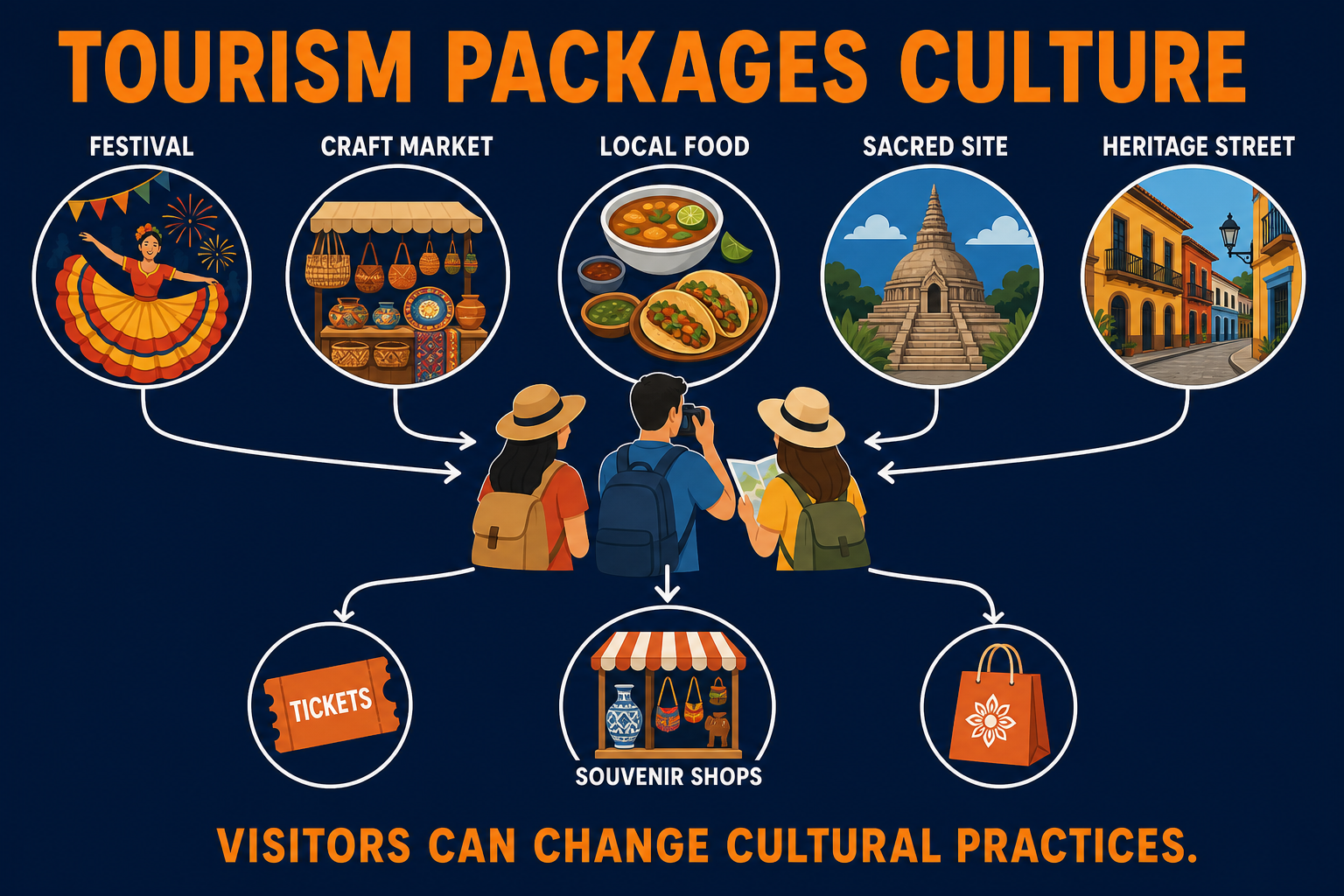
Tourism can commodify culture when local traditions, festivals, foods, crafts, performances, sacred spaces, or neighborhoods are packaged for visitors. This can support local economies and preserve visibility, but it can also simplify culture, stage authenticity, raise prices, or change the meaning of local practices.
Connect to folk vs popular culture, sense of place and placelessness, cultural landscape, and sacred space and sacred sites.
Globalization and digital media make cultural traits easier to see, copy, remix, and sell. Music, fashion, slang, food, symbols, dances, hairstyles, and visual styles can spread rapidly through platforms. When powerful groups profit from these traits without context, credit, or respect, AP Human Geography connects the issue to cultural appropriation, commodification, and cultural imperialism.
Read globalization and popular culture, stimulus diffusion, and cultural convergence and divergence for related spread patterns.
Balanced AP tone: Globalization can spread appreciation, exchange, and visibility. The AP issue is whether power, context, consent, and benefit are unequal.
Appropriation and commodification become visible when cultural districts, markets, festivals, murals, restaurants, shops, architecture, sacred sites, or public performances are redesigned for consumption, tourism, branding, or outside audiences.
Pair with cultural landscape, material vs nonmaterial culture, and ethnicity and cultural identity.
Cultural trait + market/tourism use + identity or landscape effect = strong AP explanation.
Cultural commodification can bring economic income, jobs, visibility, preservation funding, and pride. It can also create stereotyping, loss of meaning, outsider profit, displacement, staged authenticity, or pressure to perform culture for visitors. Local communities may respond by setting rules, claiming ownership, preserving context, creating cooperatives, educating visitors, or adapting outside demand in local-controlled ways.
Craft sales and performances can support livelihoods
Tourism revenue may fund heritage maintenance
Global markets can increase awareness of traditions
Heritage districts can sustain community enterprises
Visitors may learn about local history and culture
Communities may gain status for distinctive traits
Sacred or ceremonial traits may be simplified for sale
Culture may be reduced to marketable symbols
Companies far from the source community may earn most income
Tourism can raise prices or push out residents
Traditions may be performed mainly for visitors
Religious items may appear on commercial products
Local rules over who can sell or perform cultural traits
Programs that explain meaning to visitors and outsiders
Agreements that recognize source communities
Cooperatives keeping income in the community
Zoning or design standards protecting heritage districts
Codes of conduct for visitors at sacred or cultural sites
Cultural appreciation involves respectful learning, credit, consent, context, and support for the source community. Cultural appropriation is more likely when a cultural trait is used without context, without permission, without credit, or in a way that benefits outsiders while harming or stereotyping the source group.
Is the meaning of the cultural trait understood?
Is the source community recognized?
Did the community approve the use?
Who earns money or status from the trait?
Is there unequal power between groups?
Does it stereotype or erase meaning?
Name clothing, symbols, food, music, ritual, or landscape feature.
Is it borrowed, sold, packaged, performed, or marketed?
Ask who gains and whether meaning is respected.
Connect use to identity change or landscape evidence.
Trait → Use → Power → Effect
Focus on geographic concepts—not personal blame or emotional claims alone.
Name the symbol, food, clothing, festival, or landscape feature.
Outsider use, lost meaning, and unequal benefit are key clues.
Look for souvenirs, tours, ads, and staged performances.
Balanced answers explain economic and cultural effects.
Souvenir shops, festival routes, branded districts, and commercial signs.
Community control, cooperatives, and education programs.
Fix: Appropriation depends on context, power, consent, credit, and harm.
Fix: Commodification can create income and visibility, but it may also simplify or exploit culture.
Fix: AP answers should ask who gains money, status, or power from the cultural trait.
Fix: Look for tourist districts, souvenir shops, festivals, markets, branding, signs, and staged performances.
Fix: Use geographic concepts: power, diffusion, markets, identity, tourism, landscape, and local response.
Practice questions require JavaScript. Enable JavaScript to use the interactive quiz.
A historic cultural district has traditional craft shops, a local food market, religious murals, and an annual festival. After tourism increases, outside companies begin selling mass-produced versions of the crafts, the festival is redesigned for visitors, and some sacred symbols appear in commercial advertisements.
"Tourism is bad for culture." This answer does not define commodification, names no landscape feature, and gives no balanced benefit and cost.
Fix: name the cultural trait, explain how it became a product, and describe both economic and cultural effects.
Cultural appropriation is the use of a cultural trait, symbol, clothing, music, food, ritual, or style by outsiders in a way that may remove meaning, ignore context, or benefit a more powerful group. On the AP exam, identify the trait, explain who benefits, and describe how meaning, identity, or landscape changes.
Cultural commodification is the process of turning cultural traits into products, performances, tourist experiences, or brands for sale. AP answers should explain how markets, tourism, or media package culture and how that may change meaning or identity.
Appropriation focuses on outsider use, context, respect, and power. Commodification focuses on culture becoming a product or market experience. A single example may show both—for instance, sacred symbols sold as fashion without community consent.
Examples include sacred symbols used as fashion without meaning, traditional clothing worn as costume by outsiders, folk music sampled without credit, cultural hairstyles used without respect for discrimination history, and ceremonial items treated as trends.
Examples include traditional crafts mass-produced for tourists, festivals redesigned for visitors, ethnic neighborhoods marketed as destinations, local food packaged for global markets, and cultural dances staged for ticket buyers.
Tourism can package festivals, crafts, food, sacred sites, and heritage districts for visitors through souvenir markets, staged performances, ticketed events, and branded streets—creating income but also simplifying or changing local practices.
When culture is sold or staged for outside audiences, communities may gain income and visibility but also face stereotyping, loss of meaning, outsider profit, or pressure to perform culture for visitors—reshaping how people see themselves and their place.