Identify
Name the dominant language family or branch shown on the map.
AP Human Geography · Unit 3
Language families show how languages are related through common origins. Learn how families, branches, and groups reveal migration, diffusion, culture, and regional patterns on AP Human Geography maps.
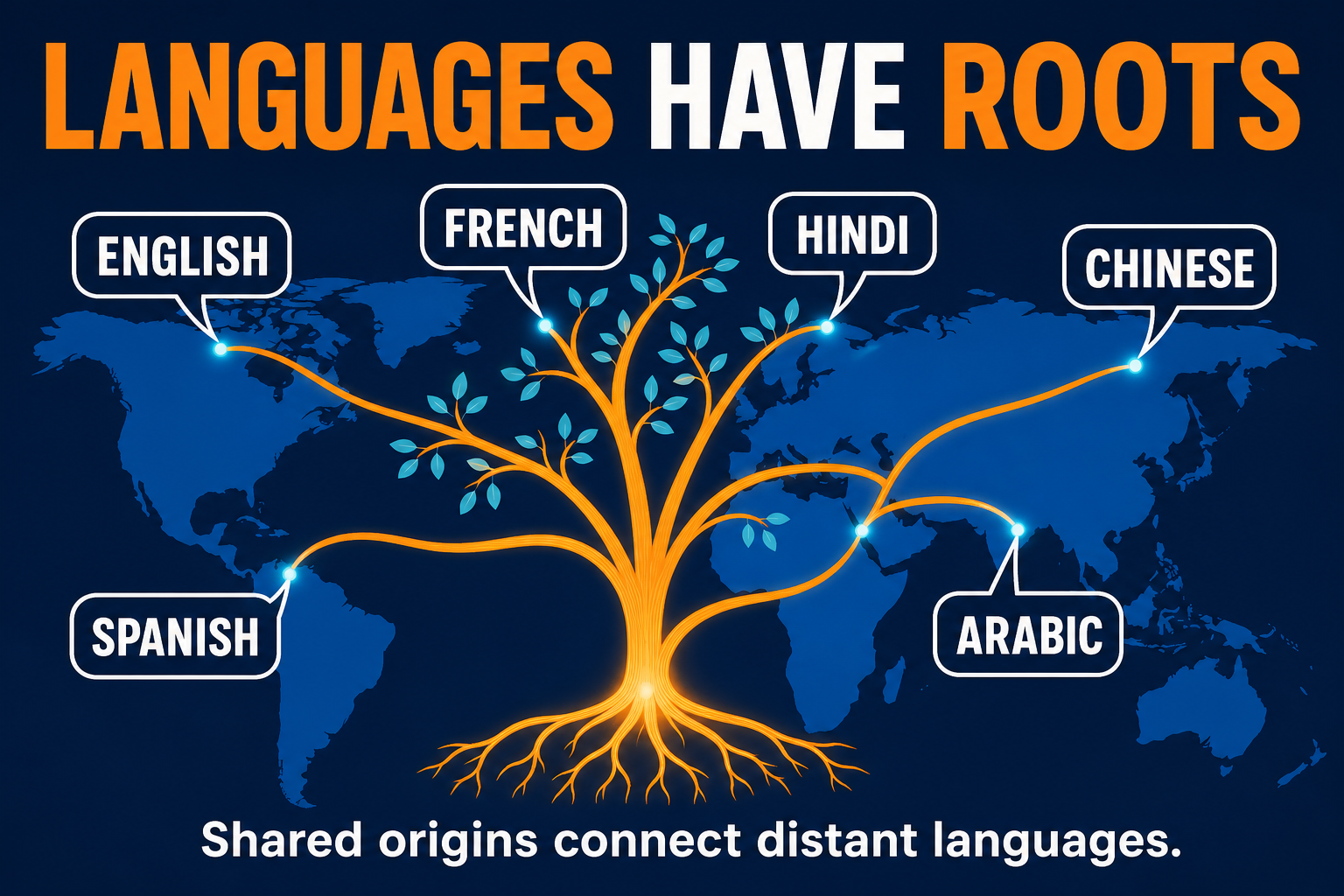
A language family is a group of languages that share a common ancestral origin. In AP Human Geography, language families help students explain cultural hearths, migration, diffusion, regional identity, and language patterns on maps. On AP maps, language families help explain why related languages appear in distant regions or cluster near cultural hearths.
Language family is the big root. Branch and group are smaller divisions.
A language family is a broad group of languages with a shared ancestral language. Language families show long-term cultural connections and often connect to migration, trade, conquest, colonization, and diffusion.
They are useful because languages can preserve evidence of earlier movement and contact. A language family is not the same as a dialect or accent. A language family is based on historical relationship, not current political boundaries.
Language patterns often connect to cultural hearths where traits originate and spread outward across the AP Human Geography course.
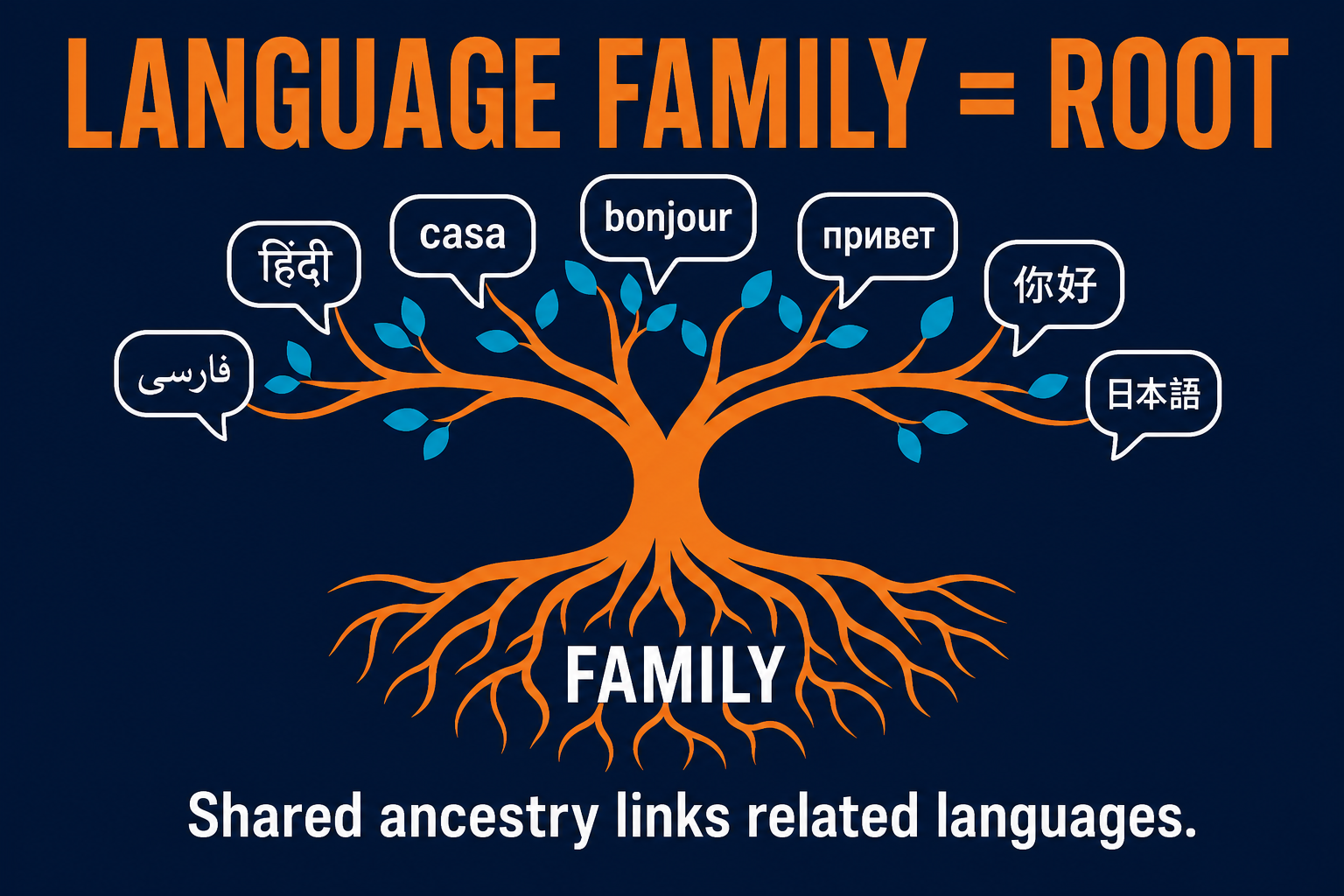
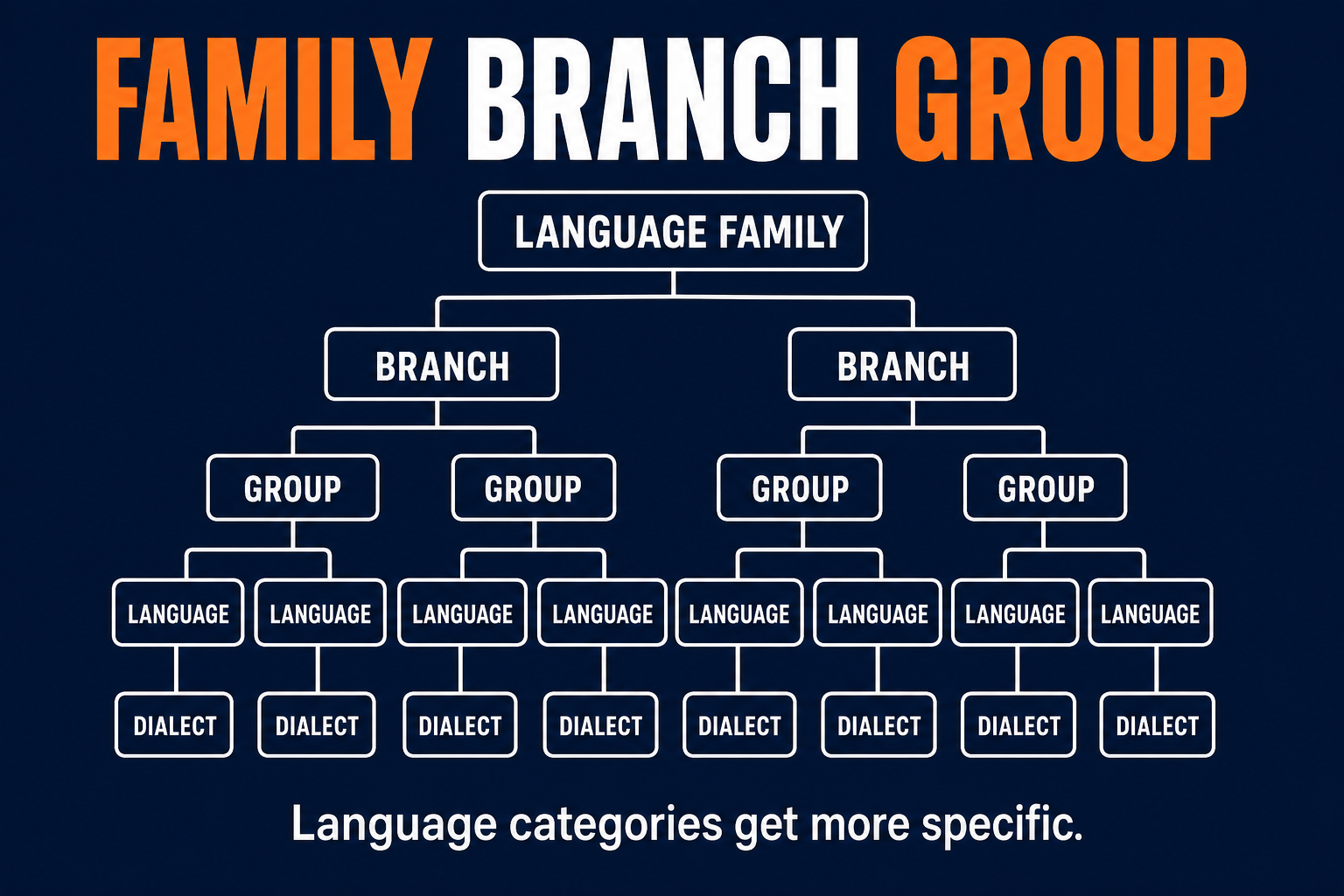
A language family is the broadest category. A branch is a major subdivision of a family. A group is a smaller set of closely related languages inside a branch.
| Level | Meaning | Example | AP Exam Clue |
|---|---|---|---|
| Language family | Broad group of languages with a shared ancestral origin | Indo-European | Choose family when the question asks for the broadest relationship |
| Language branch | Major subdivision inside a language family | Germanic | Narrower than family; sits below family on the language tree |
| Language group | Smaller set of closely related languages inside a branch | West Germanic | More specific than branch; groups similar languages together |
| Individual language | A distinct spoken and written system | English | Not a family—one language within a group or branch |
| Dialect | Regional variation of one language | Southern American English | Regional form; not a separate language family |
The Indo-European language family is one of the most important language families for AP Human Geography because it includes many languages spoken across Europe, South Asia, the Americas, and other regions shaped by migration, colonization, trade, and globalization.
Why it matters: broad geographic spread, evidence of historical migration, colonial diffusion, official languages in many countries, and the global lingua franca role of English through lingua franca networks.
English, Spanish, French, Portuguese, and other Indo-European languages spread globally partly because of colonialism and later economic globalization.
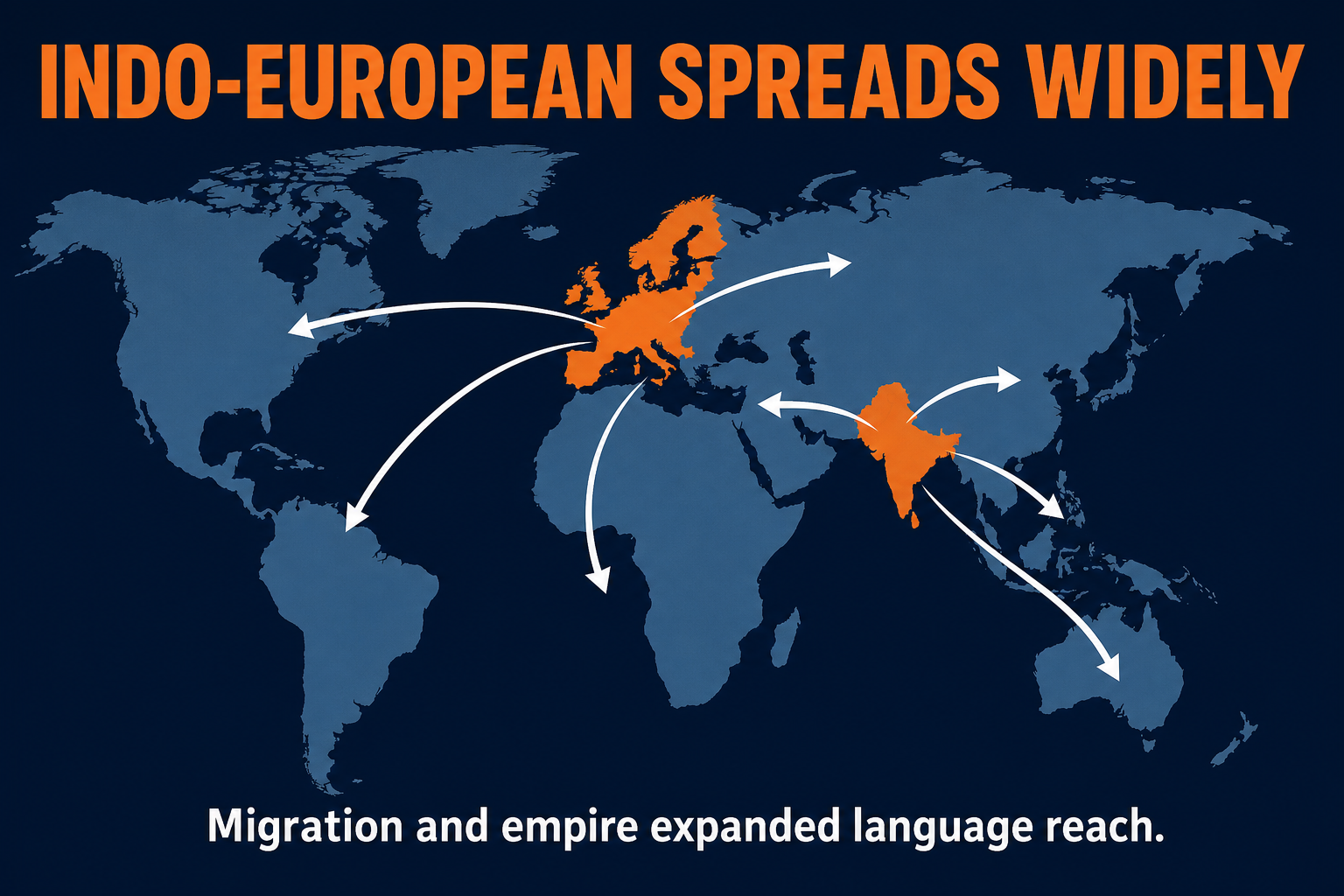
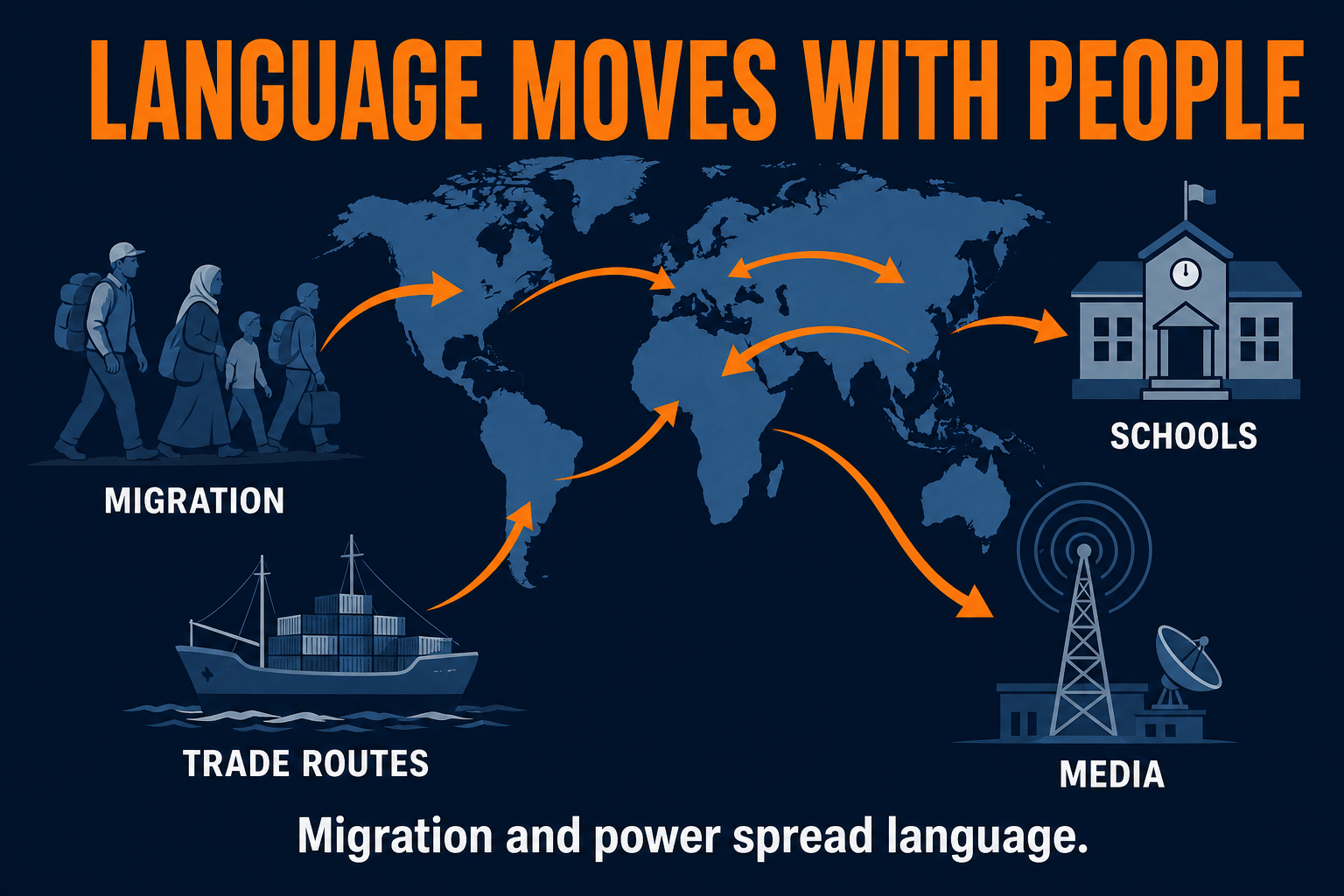
Language families spread through migration, relocation diffusion, conquest, trade, colonization, education policy, media, and globalization. When speakers move, language traits move with them. When powerful states or institutions promote a language, it can spread through hierarchy and policy.
Review the full types of diffusion guide on the Unit 3 hub when you connect language maps to spread mechanisms.
Name the dominant language family or branch shown on the map.
Check for clustering, wide spread, or disconnected regions.
Link the pattern to migration, colonization, trade, or policy.
State cultural meaning using local, regional, or global scale.
AP map questions usually reward process, not just pattern. First identify the language family, then explain why that pattern exists.
Process: Colonization, migration, trade, or empire
AP explanation: Related languages appear far apart because people, states, or institutions spread them.
Process: Cultural hearth, isolation, or limited diffusion
AP explanation: The pattern may show a strong regional identity or historical origin area.
Process: Colonialism, state policy, or education systems
AP explanation: Power can promote one language even where many local languages exist.
Process: Cultural identity, resistance, or language revival
AP explanation: Language can preserve ethnic or regional identity.
Language is a major marker of cultural identity. Shared language can support national identity, ethnic identity, regional identity, religion, education, and political power. Language can also create cultural boundaries when groups speak different languages.
Language questions often connect to identity because language can mark who belongs to a region, nation, ethnic group, or diaspora.
Compare regional speech variation in dialects and isoglosses, threatened languages in language extinction and preservation, and group identity in ethnicity and cultural identity.
A dialect is a regional form of one language. A family is a broad ancestry category.
Language families are defined by shared origin—not by political country boundaries.
Indo-European is not one language. It contains many branches and languages such as English and Hindi.
Connect language map patterns to migration, colonization, trade, or official language policy.
Explain whether a language pattern is local, regional, national, or global.
In free response, explain what the language pattern reveals about culture, power, or identity.
Fix: A language family is based on shared origin, not political borders.
Fix: A dialect is a regional variation of one language. A language family is a broad ancestry category.
Fix: Indo-European is a family containing many languages such as English, Spanish, Hindi, and Russian.
Fix: Language patterns usually reflect migration, colonization, trade, conquest, or policy.
Fix: Language can be studied at local, regional, national, and global scales.
Practice questions require JavaScript. Enable JavaScript to use the interactive quiz.
A map shows several countries in Europe and the Americas using languages from the Indo-European language family, while some regions maintain minority languages through schools, signage, and local policy.
“Indo-European is everywhere because it is popular.” This answer names no migration or colonization process and does not explain how preservation supports identity.
Fix: identify the map pattern, connect it to migration or colonization, and explain how language supports identity.
A language family is a group of languages that share a common ancestral origin. On the AP exam, families help explain long-term cultural connections, migration, and map patterns.
A language family is the broadest category. A branch is a major subdivision of a family. A group is a smaller set of closely related languages inside a branch.
Indo-European is a major language family that includes languages such as English, Spanish, French, German, Russian, Hindi, and Persian. Its wide spread reflects migration, empire, colonization, and globalization.
Language families connect speech patterns to migration, diffusion, cultural identity, colonization, and power. They help students read maps and explain why related languages appear in distant regions.
Language families spread through migration, relocation diffusion, conquest, trade, colonization, education policy, media, and globalization. When speakers or institutions gain influence, language traits spread with them.
Language maps show clustering, regional dominance, disconnected branches, or official-language zones. Students connect those patterns to migration, empire, trade routes, and language policy using scale.