Prophase I
Homologs pair and crossing over can occur
AP Biology · Unit 5 Learning Journey
Meiosis is the cell division process that makes gametes for sexual reproduction. It reduces chromosome number from diploid to haploid and creates genetic variation through crossing over and independent assortment. In AP Biology Unit 5, meiosis is the starting point for understanding heredity, inheritance patterns, and why offspring are genetically unique.
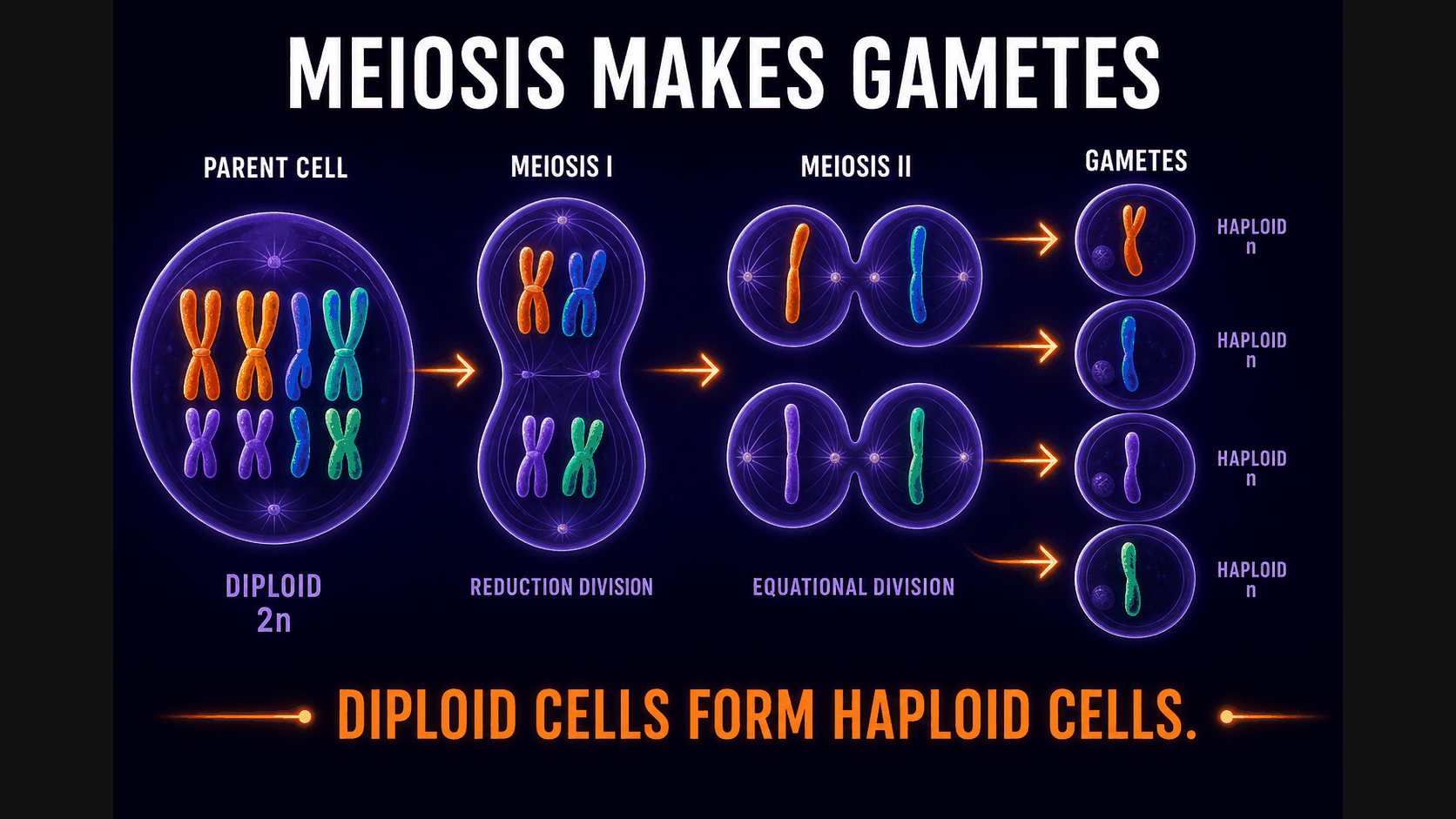
The Unit 5 hub introduced heredity as the study of how traits pass from parents to offspring. Meiosis is the first concept in that journey because it explains how gametes form and why those gametes are genetically different. After this page, study mitosis vs meiosis to avoid the most common AP Bio cell-division confusion.
Meiosis is a type of cell division that produces haploid gametes from a diploid cell. It includes two divisions, meiosis I and meiosis II, and produces four genetically different cells. Meiosis matters in heredity because gametes carry alleles from parents to offspring and create variation through crossing over and independent assortment.
Meiosis makes four unique haploid gametes.
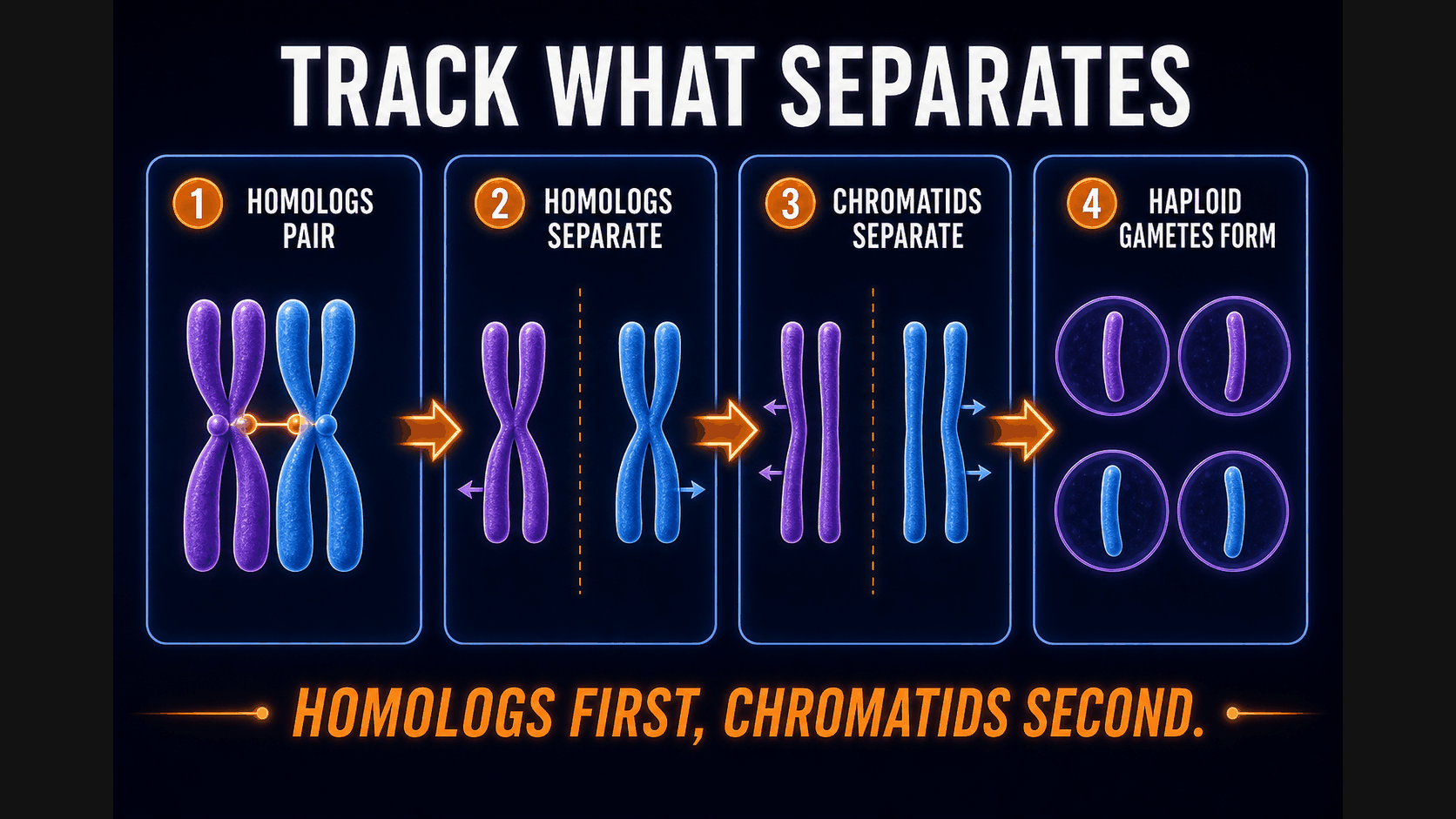
The stages of meiosis happen in two divisions: meiosis I and meiosis II. Meiosis I separates homologous chromosomes and reduces chromosome number. Meiosis II separates sister chromatids and produces four haploid gametes.
Meiosis I separates homologous chromosomes. Meiosis II separates sister chromatids.
Meiosis begins with a diploid cell that has two sets of chromosomes, one from each parent. AP Biology often uses 2n to represent this starting condition.
Meiosis I separates homologous chromosomes. This is the reduction division because chromosome number is reduced from diploid to haploid.
Meiosis II separates sister chromatids. This division is more similar to mitosis, but it starts with haploid cells.
The final result is four haploid gametes. These gametes are genetically different from each other.
Crossing over and independent assortment create new allele combinations. This variation is the reason siblings are not genetically identical.
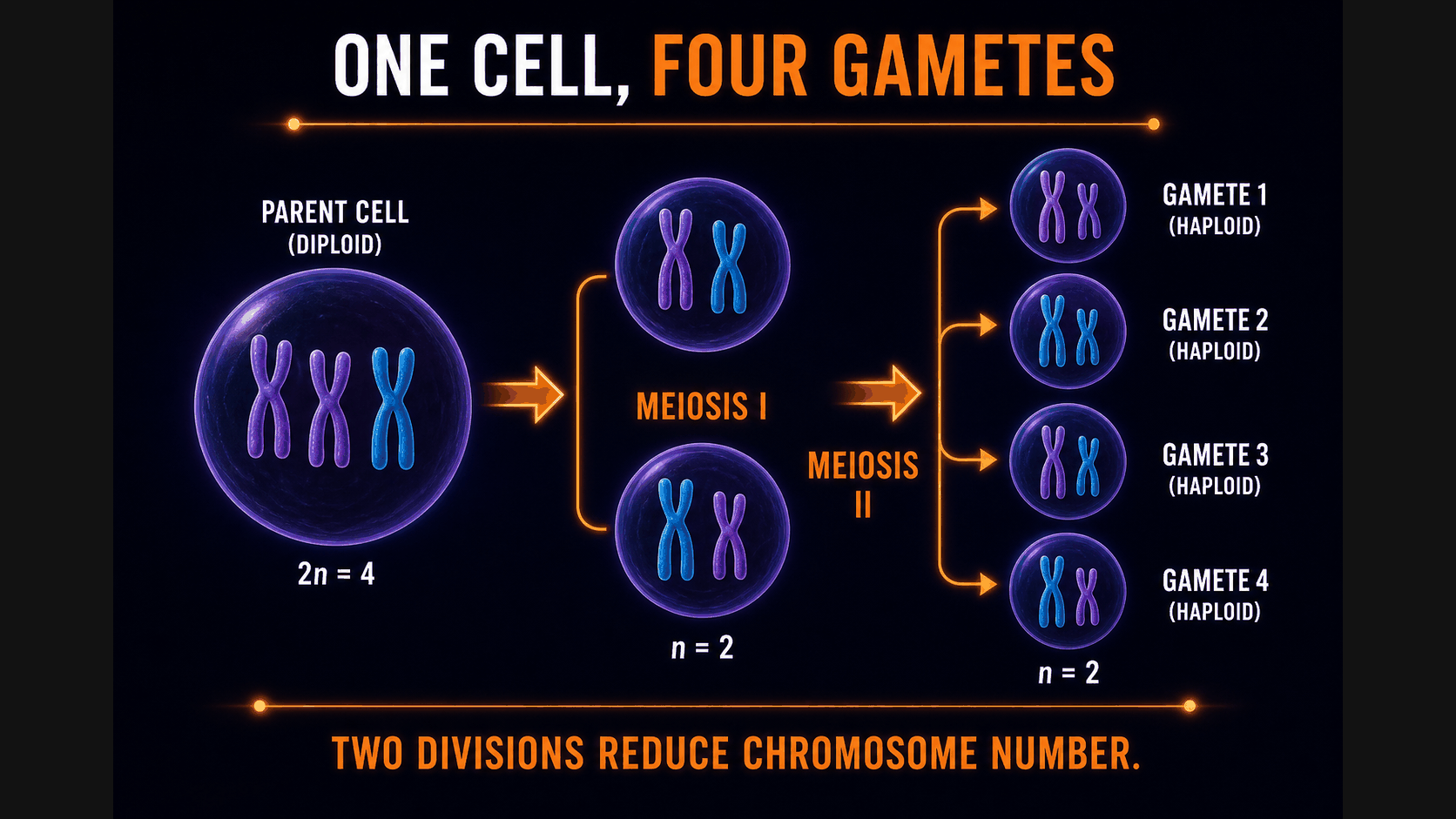
The purpose of meiosis is to produce gametes with half the chromosome number of the original cell. This matters because fertilization combines two haploid gametes to restore the diploid chromosome number in offspring. Meiosis also creates genetic variation, which is important for inheritance and evolution.
Direct answer: Meiosis reduces chromosome number so fertilization can restore the diploid number.
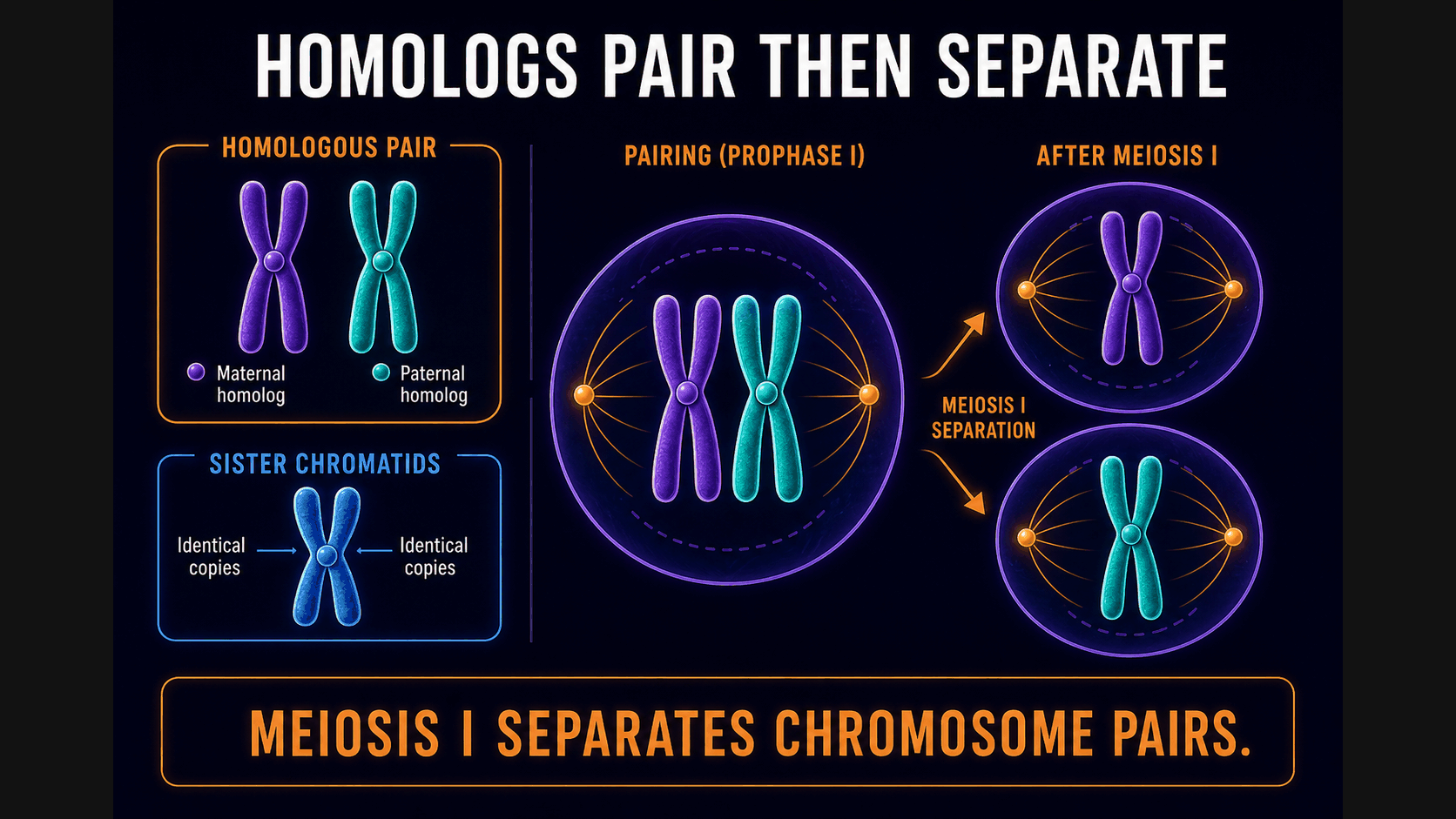
Many meiosis mistakes come from confusing homologous chromosomes with sister chromatids. Homologous chromosomes are a pair of chromosomes with the same genes, one inherited from each parent. Sister chromatids are identical copies of one chromosome made during DNA replication.
| Term | Meaning | AP clue |
|---|---|---|
| Diploid | Two sets of chromosomes | 2n cell |
| Haploid | One set of chromosomes | n gamete |
| Homologous chromosomes | Same genes, one from each parent | Separate in meiosis I |
| Sister chromatids | Identical copies of one chromosome | Separate in meiosis II |
| Gamete | Reproductive cell | Sperm, egg, pollen, ovule |
Meiosis I is the first division and the key reduction step. Homologous chromosomes pair, crossing over can occur, and then homologous chromosomes separate into different cells. After meiosis I, each cell is haploid because it has only one chromosome from each homologous pair.
Homologs pair and crossing over can occur
Homologous pairs line up
Homologous chromosomes separate
Two haploid cells begin to form
Meiosis II separates sister chromatids. It begins with haploid cells, so it does not reduce chromosome number the same way meiosis I does. The final result is four haploid gametes, each with a different combination of genetic information.
Chromosomes prepare for another division
Chromosomes line up individually
Sister chromatids separate
Four haploid gametes form
| Feature | Meiosis I | Meiosis II |
|---|---|---|
| Main separation | Homologous chromosomes | Sister chromatids |
| Chromosome number | Diploid to haploid | Stays haploid |
| Variation role | Crossing over and independent assortment | Separates chromatids into gametes |
| AP exam clue | Reduction division | Similar to mitosis but starts haploid |
For the full comparison with mitosis, use the Mitosis vs Meiosis guide.
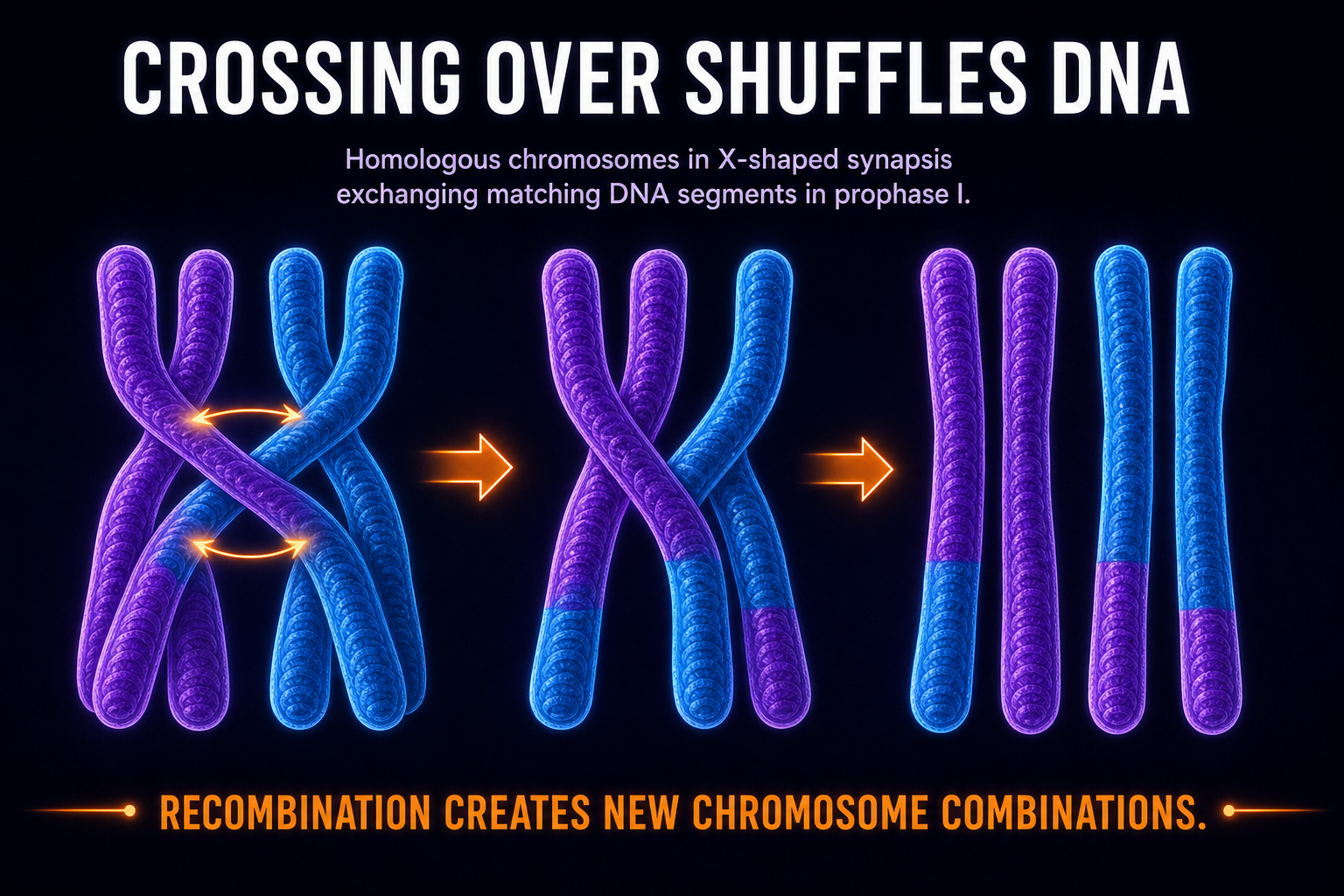
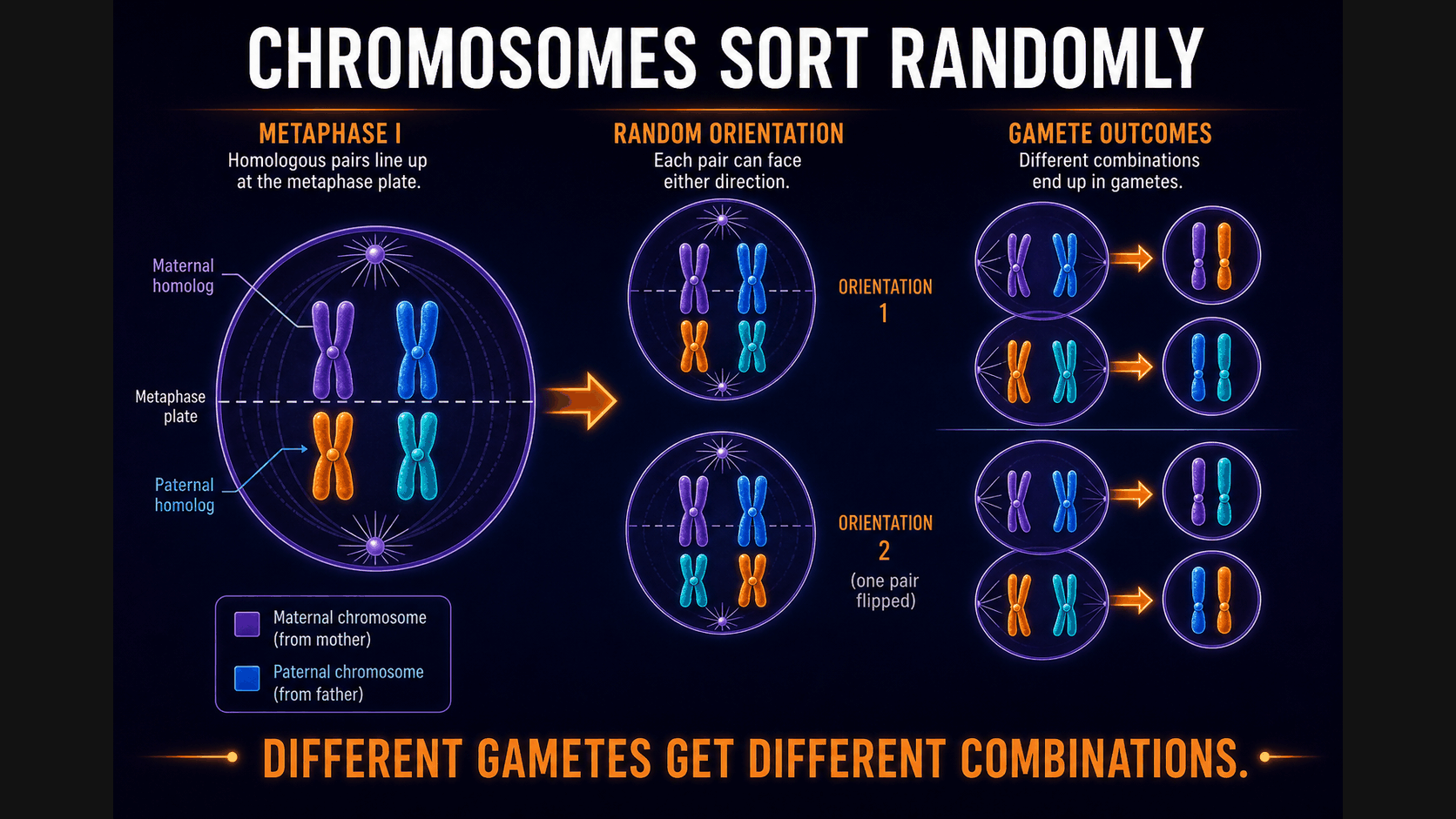
Meiosis creates genetic variation in two major ways. Crossing over exchanges DNA between homologous chromosomes during prophase I, creating recombinant chromosomes. Independent assortment occurs when homologous pairs line up in different orientations, producing different combinations of maternal and paternal chromosomes in gametes.
| Source of variation | When it happens | What it changes | AP clue |
|---|---|---|---|
| Crossing over | Prophase I | DNA segments on homologs | Recombinant chromosomes |
| Independent assortment | Metaphase I | Chromosome combinations | Random orientation |
| Random fertilization | After meiosis | Which gametes combine | Offspring uniqueness |
For deeper practice, see crossing over and independent assortment. Variation in populations also connects to natural selection in Unit 7.
| Feature | Meiosis | Mitosis |
|---|---|---|
| Purpose | Make gametes | Make body cells |
| Divisions | Two | One |
| Final cells | Four | Two |
| Chromosome number | Haploid | Same as parent cell |
| Genetic similarity | Different | Identical |
| Variation source | Crossing over and assortment | Usually none |
Full comparison: mitosis vs meiosis study guide.
Think meiosis I.
Think meiosis II.
Think crossing over.
Think independent assortment.
Think nondisjunction.
Decide whether the question is about meiosis I or meiosis II.
Homologous chromosomes or sister chromatids.
Describe how cells change from diploid to haploid.
Link gametes, variation, or offspring outcomes.
During ___, ___ separate. This changes the cells by ___. As a result, the gametes are ___, which matters because ___.
Fix: Meiosis makes gametes; mitosis makes body cells.
Fix: Homologs separate in meiosis I; sister chromatids separate in meiosis II.
Fix: Meiosis reduces diploid cells to haploid gametes.
Fix: Crossing over usually happens in prophase I.
Fix: Random chromosome orientation helps create unique gametes.
Fix: Meiosis produces genetically different gametes.
Revealed: 0 of 4 scenarios
A cell separates homologous chromosomes.
Answer: This is meiosis I because homologous chromosome pairs are separating.
A cell separates sister chromatids after chromosome number has already been reduced.
Answer: This is meiosis II because sister chromatids separate in haploid cells.
Homologous chromosomes exchange DNA segments.
Answer: This is crossing over during prophase I, which creates recombinant chromosomes.
Chromosome pairs line up randomly at the metaphase plate.
Answer: This is independent assortment, which creates different gamete chromosome combinations.
Answer all ten questions. Choices shuffle on reload—focus on mechanism, not letter memorization.
More drills: Unit 5 practice questions, practice by topic, or daily AP Biology practice.
Open each card, draft your response, then reveal the rubric and sample. For more free-response practice, open the Unit 5 practice questions.
A diploid cell undergoes meiosis to produce gametes.
Meiosis reduces chromosome number so two haploid gametes can fuse at fertilization without doubling the species chromosome number each generation. Homologous chromosomes separate during meiosis I, which is why each daughter cell becomes haploid. Crossing over during prophase I swaps DNA segments between homologous chromosomes, creating recombinant chromosomes with new allele combinations that enter different gametes.
Status: Draft your answer first—then open the rubric or sample.
A mutation prevents homologous chromosomes from separating correctly during meiosis I.
Anaphase I is most directly affected because homologous chromosomes should separate then. If homologs fail to separate, some gametes may receive an extra chromosome (n+1) while others lack one (n−1). After fertilization, a zygote formed from such gametes could be aneuploid, which may disrupt development or cause disorders linked to extra or missing chromosomes.
Status: Draft your answer first—then open the rubric or sample.
A student claims that crossing over and independent assortment create genetic variation in the same way.
Crossing over and independent assortment both increase genetic variation, but they do not work the same way. Crossing over exchanges DNA between homologous chromosomes during prophase I, creating recombinant chromosomes. Independent assortment occurs when homologous chromosome pairs line up randomly during meiosis I, producing gametes with different combinations of maternal and paternal chromosomes.
Status: Draft your answer first—then open the rubric or sample.
Meiosis is a type of cell division that produces haploid gametes from a diploid cell. It includes two divisions, meiosis I and meiosis II, and creates four genetically different cells. AP Biology connects meiosis to heredity because gametes pass alleles from parents to offspring.
The purpose of meiosis is to reduce chromosome number and make gametes for sexual reproduction. This prevents chromosome number from doubling every generation after fertilization. Meiosis also creates genetic variation, which helps explain why offspring are not identical.
Meiosis I separates homologous chromosomes into different cells. It is called reduction division because it reduces chromosome number from diploid to haploid. Crossing over can also occur before homologs separate.
Meiosis II separates sister chromatids. It begins with haploid cells and produces four haploid gametes by the end. This division is similar to mitosis in the way chromatids separate, but the cells are not genetically identical.
Homologous chromosomes are a pair of chromosomes with the same genes, one from each parent. Sister chromatids are identical copies of one chromosome made during DNA replication. AP Biology often tests this difference because homologs separate in meiosis I and sister chromatids separate in meiosis II.
Meiosis creates variation mainly through crossing over and independent assortment. Crossing over exchanges DNA between homologous chromosomes, while independent assortment sorts chromosome pairs into different gametes. Random fertilization adds even more variation after meiosis.
Crossing over usually happens during prophase I of meiosis. Homologous chromosomes pair and exchange matching DNA segments. This creates recombinant chromosomes with new allele combinations.
Independent assortment is the random orientation and separation of homologous chromosome pairs during meiosis I. It creates gametes with different combinations of maternal and paternal chromosomes. This is one reason siblings can inherit different chromosome combinations from the same parents.
Meiosis makes four genetically different haploid gametes, while mitosis makes two genetically identical body cells. Meiosis has two divisions and reduces chromosome number, but mitosis has one division and keeps chromosome number the same. On AP Biology questions, look at purpose, chromosome number, and final cell type.
Start by identifying whether the question is about meiosis I, meiosis II, crossing over, or independent assortment. Then explain what separates or changes and connect that process to chromosome number or genetic variation. Finish by predicting how gametes or offspring would be affected.
The stages of meiosis are prophase I, metaphase I, anaphase I, telophase I, prophase II, metaphase II, anaphase II, and telophase II. Meiosis I separates homologous chromosomes, while meiosis II separates sister chromatids.
Meiosis I separates homologous chromosomes and reduces chromosome number from diploid to haploid. Meiosis II separates sister chromatids and produces four haploid gametes.
Nondisjunction happens when homologous chromosomes or sister chromatids fail to separate correctly during meiosis. It can produce gametes with too many or too few chromosomes.
During prophase I, homologous chromosomes pair through synapsis and may exchange DNA through crossing over. This creates recombinant chromosomes and increases genetic variation.