Prophase I
Crossing over may occur.
AP Biology · Unit 5 Learning Journey
Crossing over is the exchange of DNA segments between homologous chromosomes during prophase I of meiosis. This process creates recombinant chromosomes with new allele combinations. In AP Biology Unit 5, crossing over matters because it explains one major way meiosis creates genetic variation in gametes.
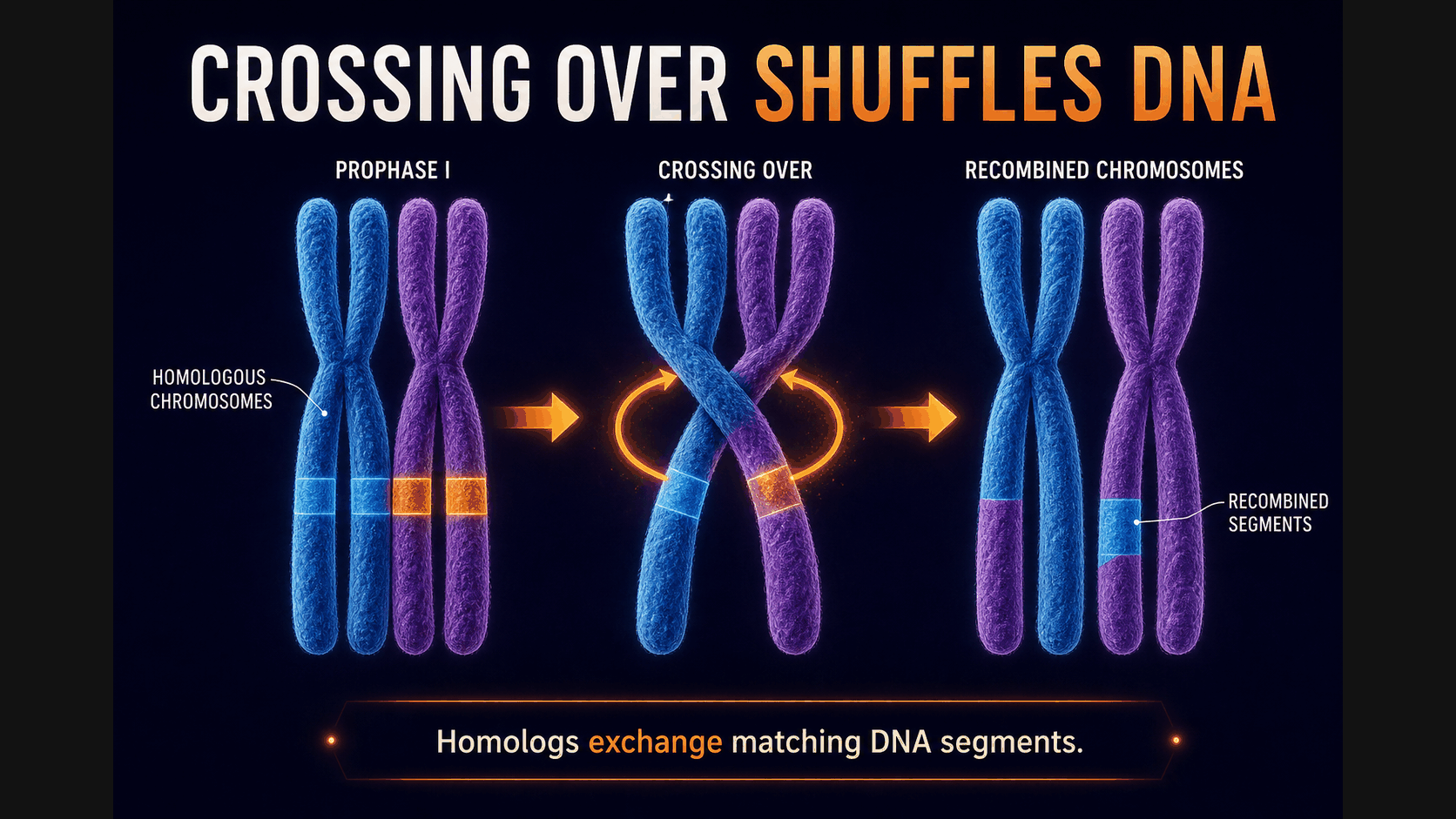
The previous guide compared mitosis and meiosis. This page focuses on one of the most important meiosis events: crossing over during prophase I. After this page, study independent assortment to compare DNA-segment exchange with chromosome-pair sorting.
Crossing over is the exchange of matching DNA segments between homologous chromosomes during prophase I of meiosis. It creates recombinant chromosomes, which carry new combinations of alleles. This increases genetic variation in gametes and helps explain why offspring are genetically unique.
Crossing over swaps DNA between homologous chromosomes.
Crossing over begins when homologous chromosomes pair during prophase I. Homologous chromosomes carry the same genes but may have different alleles.
Matching DNA segments are exchanged between non-sister chromatids of homologous chromosomes. This is not random damage; it is a normal recombination process in meiosis.
After exchange, chromosomes contain DNA from both homologs. These are called recombinant chromosomes.
When meiosis finishes, gametes can carry new allele combinations. This helps increase genetic variation.
If a question mentions prophase I, homologous chromosomes, recombinant chromosomes, or allele shuffling, crossing over is probably involved.
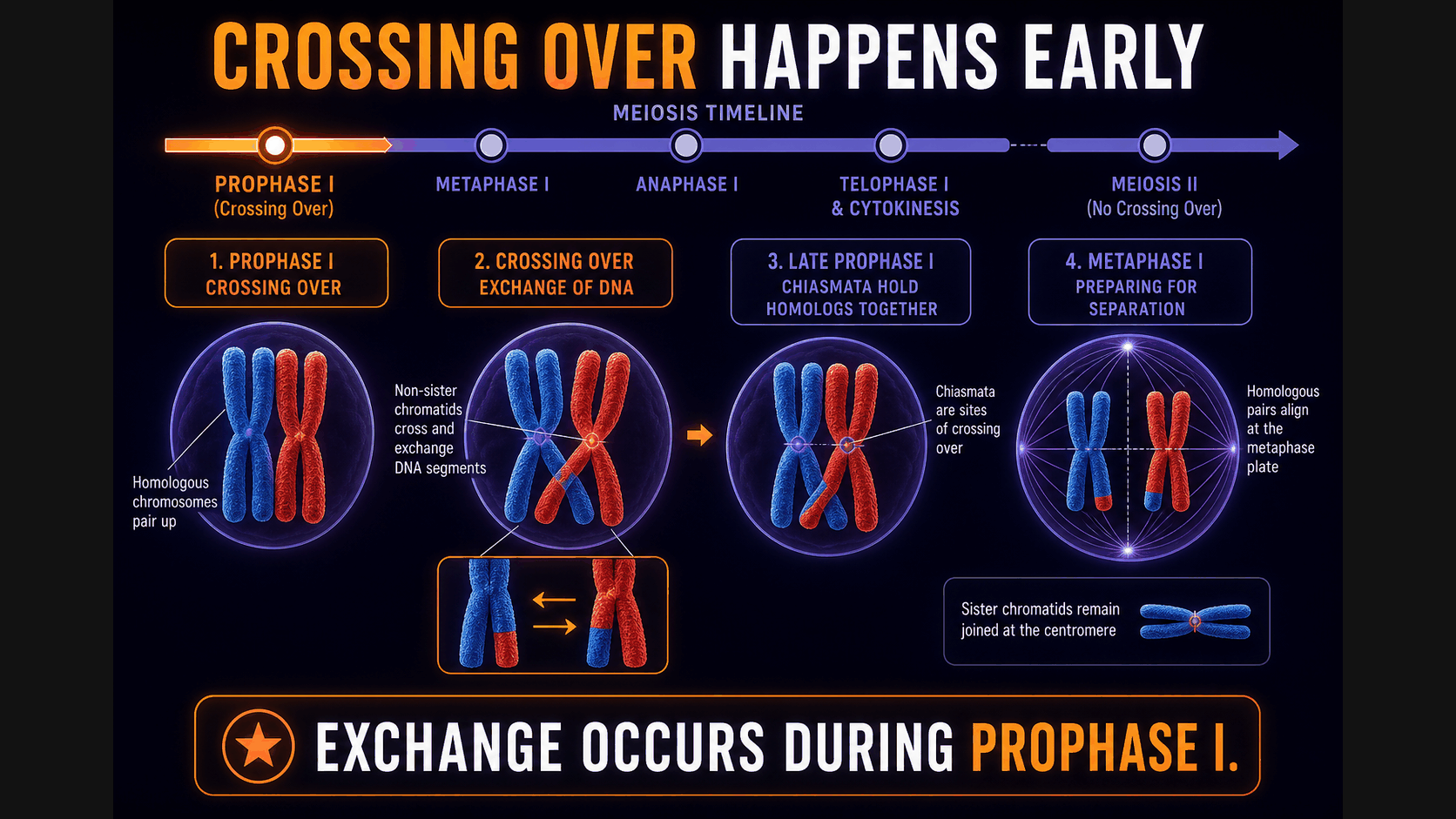
Crossing over happens during prophase I of meiosis, after homologous chromosomes pair and before homologous chromosomes separate in meiosis I. This timing matters because the exchange must happen while homologs are close enough to align. Chiasmata may be visible where homologs stay connected after DNA exchange. AP Biology often tests crossing over by asking when recombination occurs.
Direct answer: Crossing over happens in prophase I of meiosis.
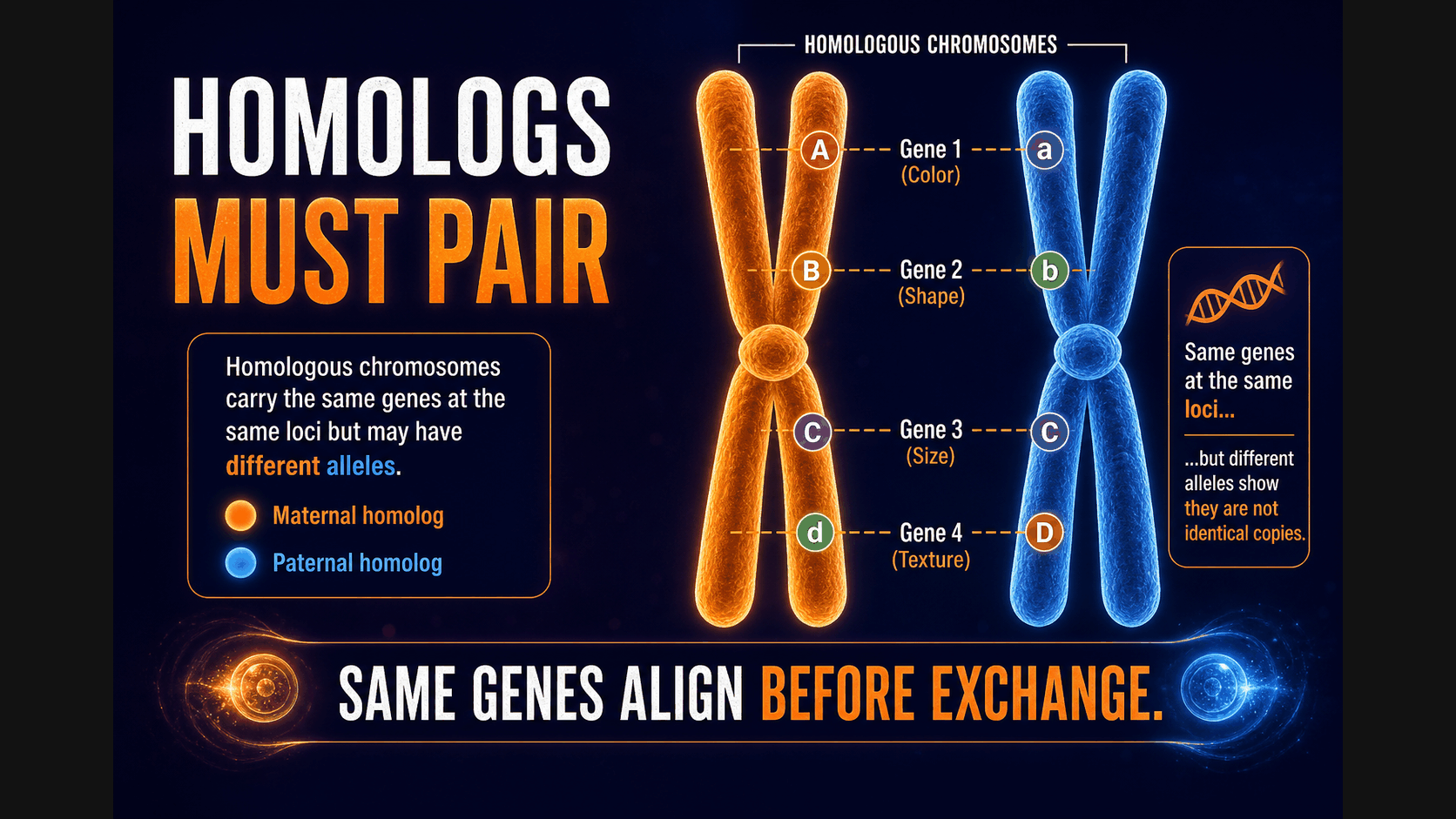
Crossing over requires homologous chromosomes because they contain the same genes in the same order. One homolog comes from one parent and the other homolog comes from the other parent. They may carry different alleles, so exchanging segments between non-sister chromatids can create new allele combinations on recombinant chromosomes.
| Term | Meaning | AP clue |
|---|---|---|
| Homologous chromosomes | Same genes, one from each parent | Pair in prophase I |
| Allele | Version of a gene | Different trait version |
| Sister chromatids | Identical copies of one chromosome | Not the homologous pair |
| Non-sister chromatids | Chromatids on homologous chromosomes | Exchange partners in crossing over |
| Chiasma (chiasmata) | Visible crossover connection point | Site of DNA exchange |
| Recombinant chromosome | Chromosome with mixed segments | New allele combination |
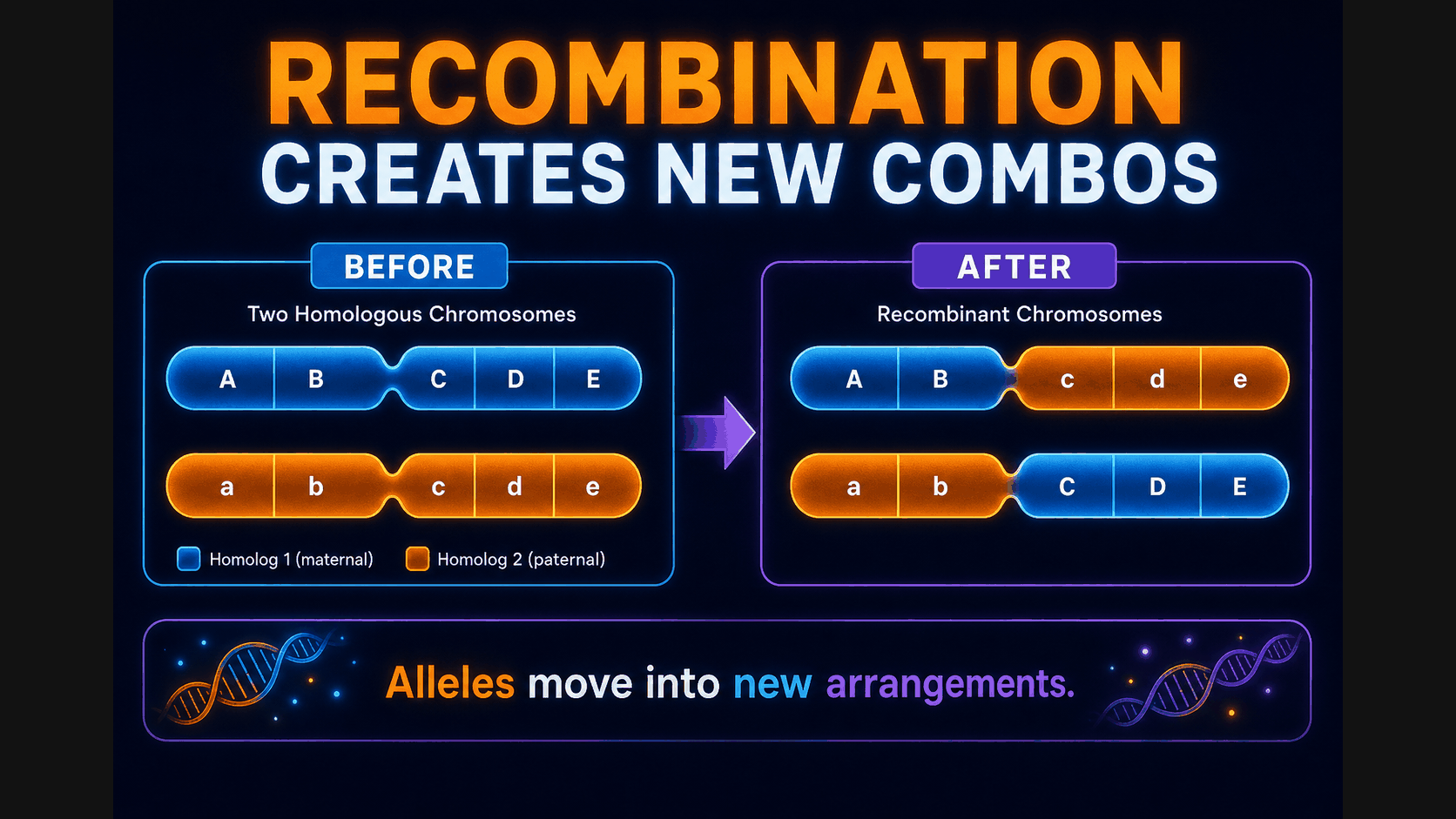
When crossing over occurs, DNA segments are exchanged between non-sister chromatids of homologous chromosomes. After the exchange, each recombinant chromosome contains DNA from both original homologs. This reshuffles allele combinations and can separate alleles that were previously inherited together.
Crossing over is the physical exchange of DNA segments between non-sister chromatids of homologous chromosomes during prophase I. Recombination is the result: recombinant chromosomes with new allele combinations.
Crossing over increases genetic variation by producing gametes with allele combinations that were not present on the original parental chromosomes. This variation matters because offspring inherit combinations of alleles through gametes. More variation gives populations more genetic differences for natural selection to act on.
Direct answer: Crossing over increases variation by creating recombinant chromosomes.
Connect this idea to natural selection in Unit 7 and the genetic variation AP Biology guide.
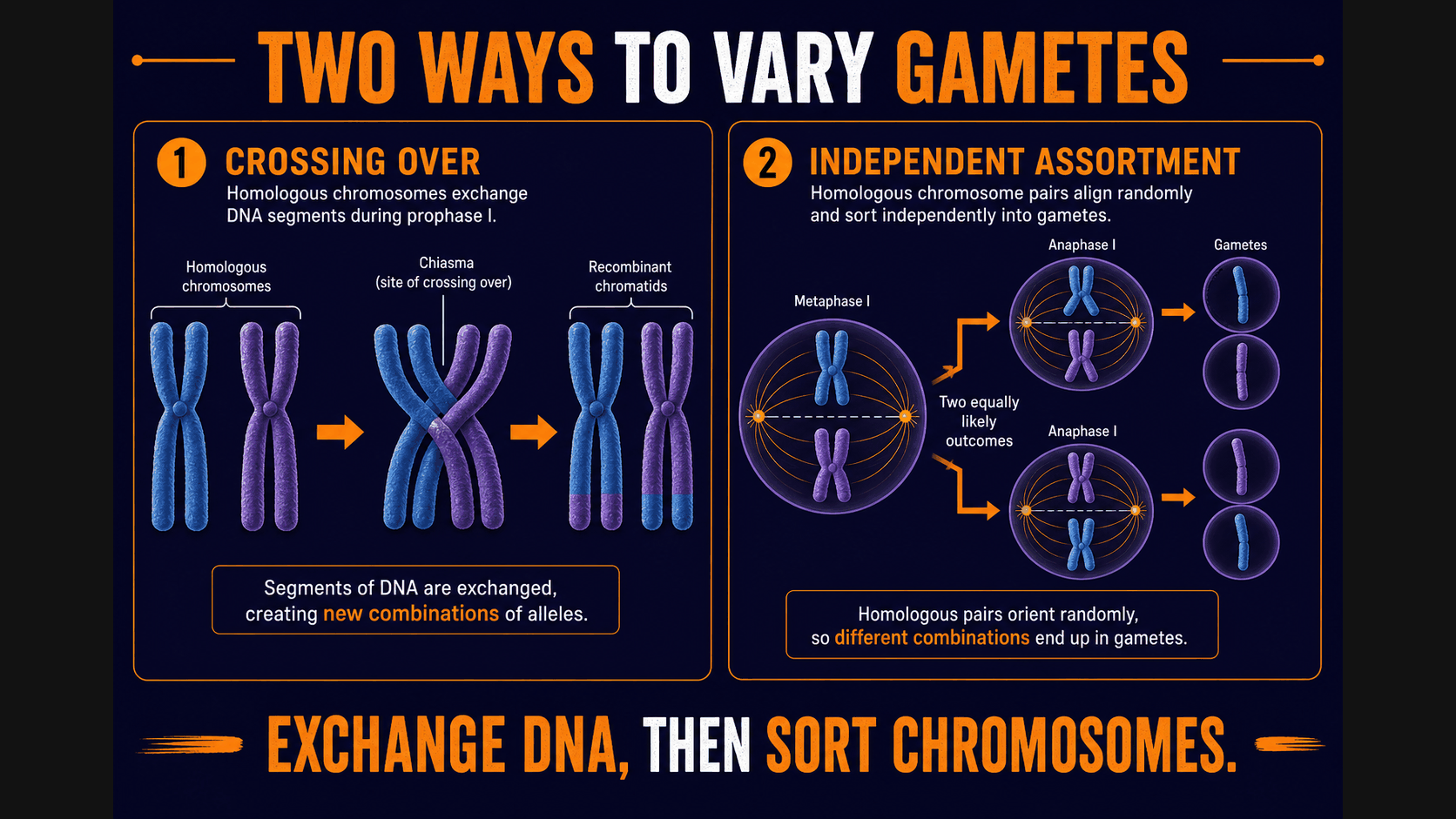
Crossing over and independent assortment both increase genetic variation, but they do it differently. Crossing over exchanges DNA segments between homologous chromosomes. Independent assortment randomly sorts whole homologous chromosome pairs into gametes.
| Feature | Crossing over | Independent assortment |
|---|---|---|
| Main action | Exchanges DNA segments | Sorts chromosome pairs |
| When | Prophase I | Metaphase I / Anaphase I |
| Structure involved | Homologous chromosomes | Homologous chromosome pairs |
| Result | Recombinant chromosomes | Different chromosome combinations |
| AP clue | Recombination, chiasma, DNA exchange | Random orientation, chromosome sorting |
Full guide: independent assortment study guide.
Crossing over may occur.
Crossing over is possible.
DNA segments were exchanged.
Crossing over may explain variation.
This is the crossover point.
Crossing over may separate linked alleles.
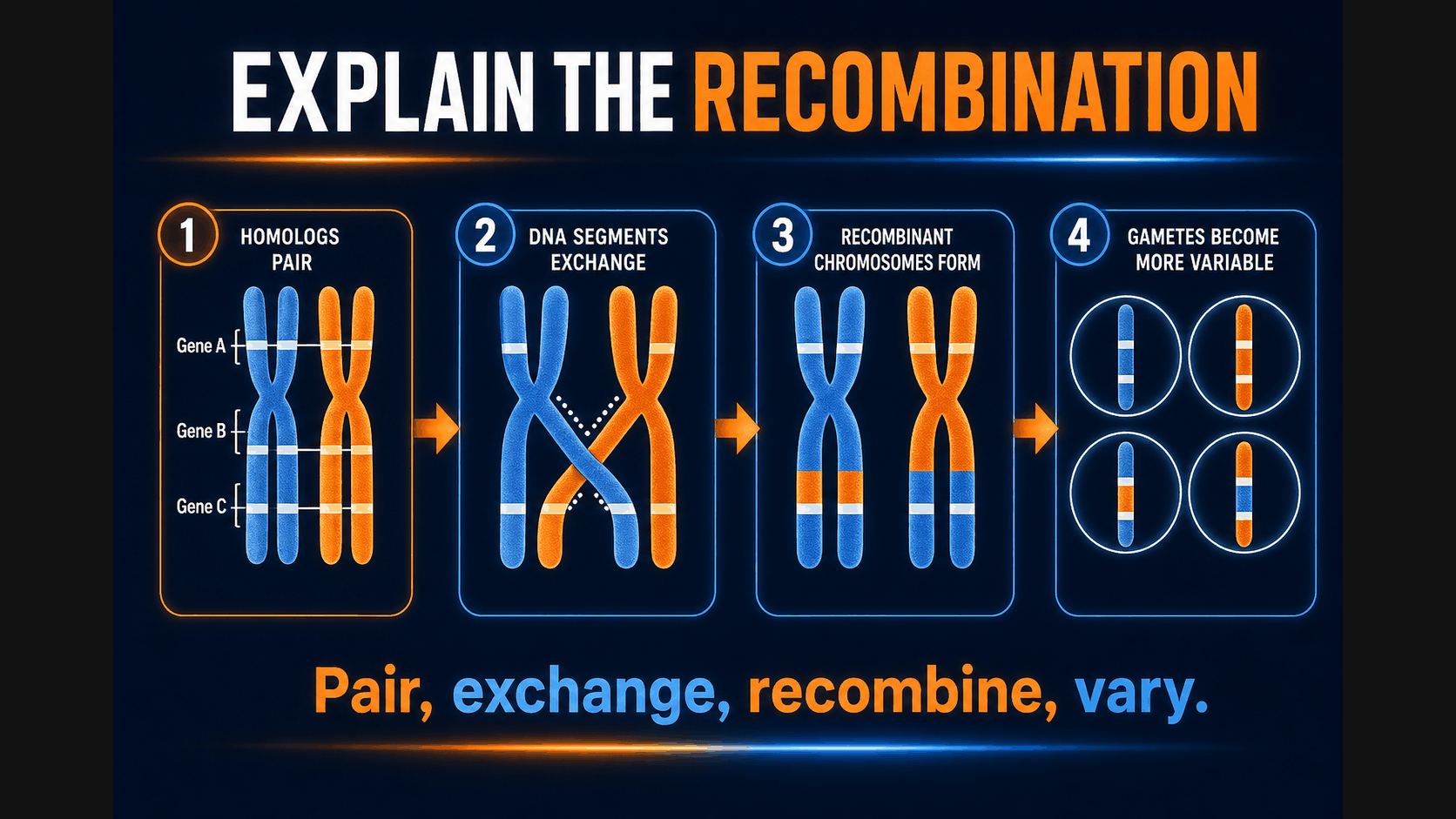
Homologous chromosomes pair during prophase I.
Matching segments are swapped between homologs.
Chromosomes now carry mixed parental segments.
Link recombination to varied gametes and offspring.
During prophase I, homologous chromosomes ___. DNA segments are exchanged, producing ___. This increases genetic variation because ___.
Fix: Crossing over is tested as a meiosis event, usually prophase I.
Fix: It creates new allele combinations, not brand-new genes.
Fix: Crossing over happens between homologous chromosomes.
Fix: Crossing over happens before homologs separate in meiosis I.
Fix: Crossing over exchanges DNA segments; independent assortment sorts chromosomes.
Fix: Always connect crossing over to recombinant chromosomes and varied gametes.
Revealed: 0 of 4 scenarios
Homologous chromosomes exchange matching DNA segments.
Answer: This is crossing over during prophase I.
A chromosome contains one segment from the maternal homolog and one from the paternal homolog.
Answer: This is a recombinant chromosome formed by crossing over.
A question says chromosome pairs line up randomly.
Answer: That clue points more to independent assortment than crossing over.
A student says crossing over creates new genes.
Answer: Fix the statement: crossing over creates new combinations of existing alleles.
Answer all eight questions. Choices shuffle on reload—focus on mechanism, not letter memorization.
More drills: Unit 5 practice questions, practice by topic, or daily AP Biology practice.
Open each card, draft your response, then reveal the rubric and sample. For more free-response practice, open the Unit 5 FRQ guide.
During prophase I, homologous chromosomes align and exchange DNA segments.
The process is crossing over during prophase I of meiosis. Homologous chromosomes pair and exchange matching DNA segments, so each chromosome can contain alleles from both parents. These recombinant chromosomes enter gametes with new allele combinations, increasing genetic variation compared with gametes that would inherit whole parental chromosomes unchanged.
Status: Draft your answer first—then open the rubric or sample.
A student claims that crossing over creates new genes during meiosis.
Crossing over does not create new genes; it exchanges existing DNA segments between homologous chromosomes. What changes is the arrangement of alleles on chromosomes, producing recombinant chromosomes with new combinations. If crossing over is reduced, fewer recombinant chromosomes form, so gametes carry less new variation and alleles on the same chromosome may be inherited together more often.
Status: Draft your answer first—then open the rubric or sample.
Crossing over is the exchange of matching DNA segments between homologous chromosomes during meiosis. It usually occurs during prophase I. The result is recombinant chromosomes with new combinations of alleles.
Crossing over is the physical exchange of DNA segments between non-sister chromatids of homologous chromosomes during prophase I. Recombination is the result: recombinant chromosomes with new allele combinations.
Crossing over happens during prophase I of meiosis. Homologous chromosomes pair closely at this stage, which allows matching DNA segments to be exchanged. This occurs before homologous chromosomes separate in meiosis I.
Crossing over creates new allele combinations on chromosomes. These recombinant chromosomes can be passed into gametes during meiosis. As a result, offspring can inherit combinations of alleles that were not present on the original parental chromosomes.
Crossing over happens between homologous chromosomes. Homologous chromosomes have the same genes in the same order, but they may carry different alleles. This makes DNA exchange useful for creating new allele combinations.
AP Biology usually describes crossing over as an exchange between non-sister chromatids of homologous chromosomes. Sister chromatids are identical copies, so exchanging between them would not create the same kind of new allele combination. The important exam idea is homologous chromosome recombination.
Non-sister chromatids are chromatids from homologous chromosomes—not the two identical copies attached to the same chromosome. During prophase I, crossing over exchanges DNA between non-sister chromatids of paired homologs.
A recombinant chromosome is a chromosome that contains DNA segments from both homologous chromosomes after crossing over. It carries a new arrangement of alleles. Recombinant chromosomes help explain why gametes are genetically different.
A chiasma is the visible crossover point where homologous chromosomes remain connected after DNA exchange. The plural is chiasmata.
No. Crossing over exchanges DNA segments between homologous chromosomes, while independent assortment randomly sorts whole chromosome pairs into gametes. Both processes increase genetic variation, but they work in different ways.
Crossing over does not usually create new genes. It rearranges existing alleles into new combinations. This distinction is important because AP Biology often asks students to explain variation precisely.
No. Crossing over rearranges existing alleles into new combinations on chromosomes; it does not usually create new genes or new alleles. Mutation can change DNA sequence and create new alleles.
If crossing over is reduced, fewer recombinant chromosomes may form. That can lower genetic variation in gametes. It may also make linked alleles more likely to be inherited together.
Start by stating that homologous chromosomes pair during prophase I. Then explain that matching DNA segments are exchanged, producing recombinant chromosomes. Finish by connecting recombinant chromosomes to increased genetic variation in gametes.