Crossing Over
DNA segments are exchanged between non-sister chromatids of homologous chromosomes during prophase I.
AP Biology · Unit 5 Heredity
Genetic variation explains why offspring are not genetically identical to their parents or siblings. In AP Biology Unit 5, variation comes from meiosis, crossing over, independent assortment, random fertilization, and mutations. These processes create new allele combinations that make populations and offspring genetically diverse.
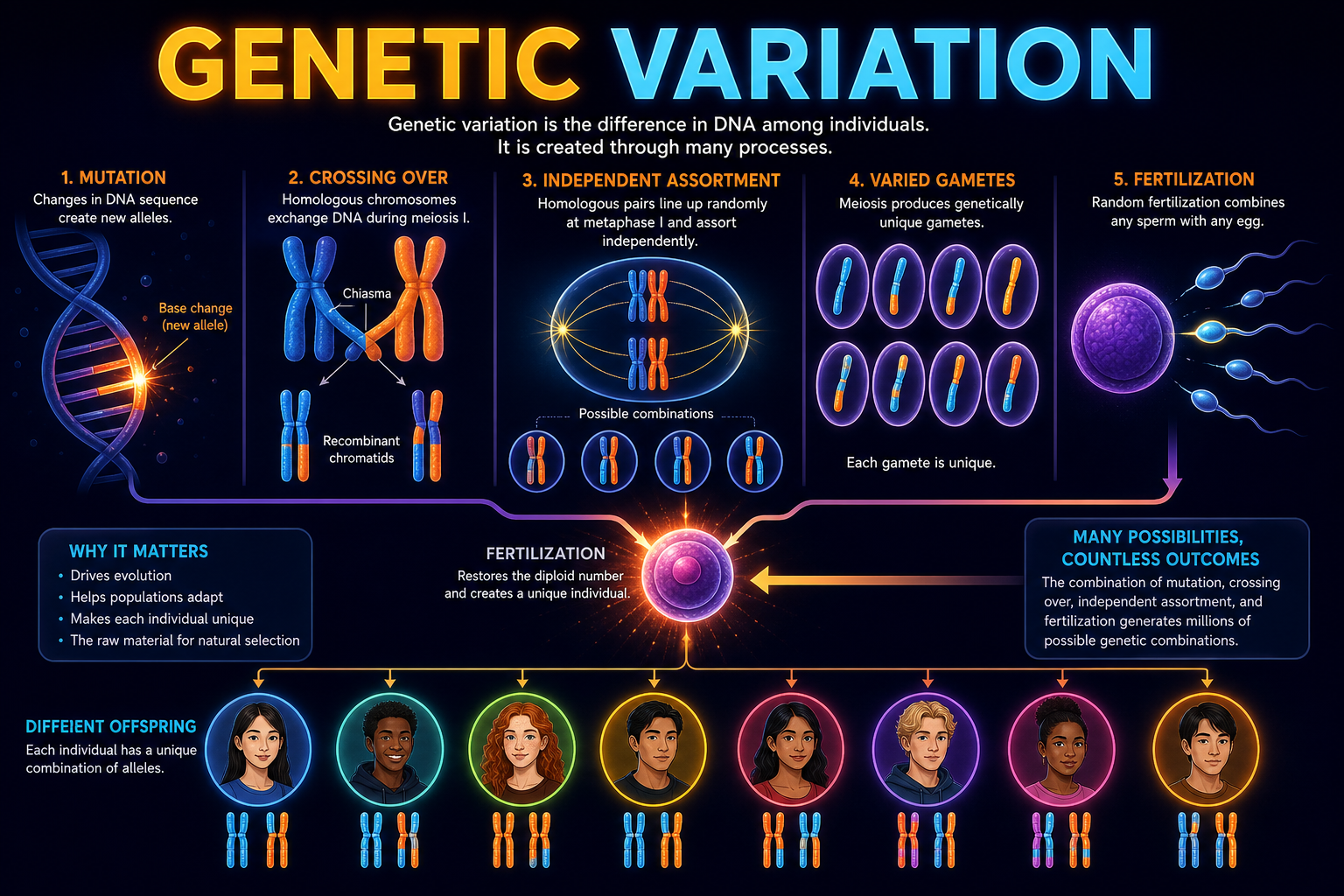
Genetic variation is the difference in DNA, alleles, or traits among individuals. In AP Biology Unit 5, genetic variation is created by crossing over, independent assortment, random fertilization, and mutations. These sources produce new allele combinations, which explain why sexually produced offspring are genetically different.
Genetic variation means offspring receive different allele combinations.
DNA segments are exchanged between non-sister chromatids of homologous chromosomes during prophase I.
Homologous chromosome pairs line up randomly during meiosis I, creating different chromosome combinations in gametes.
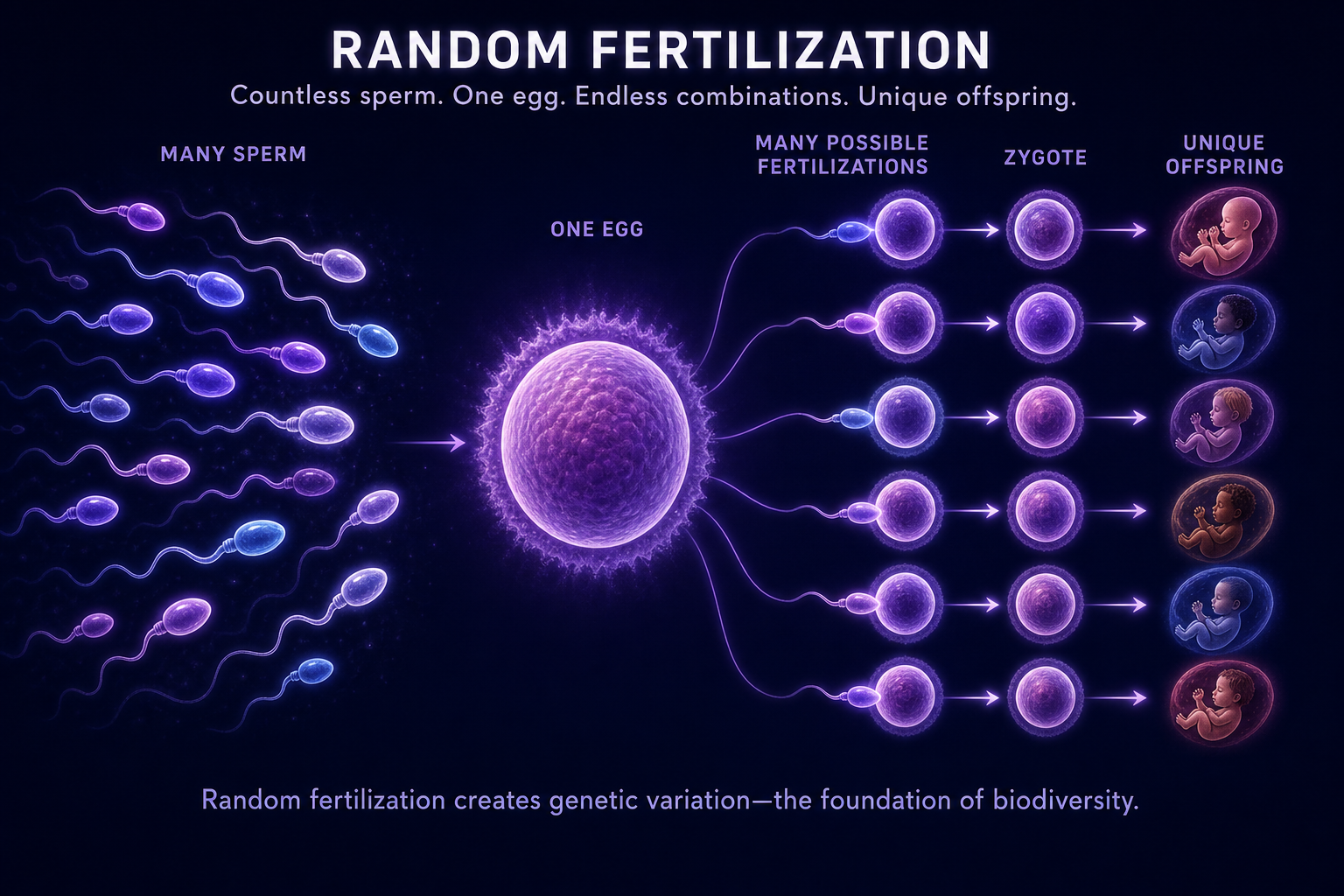
Any sperm can fuse with any egg, combining two random gametes into a genetically unique zygote.
Mutations can create new alleles by changing DNA sequence. Not all mutations affect phenotype, but mutation is the original source of new genetic information.
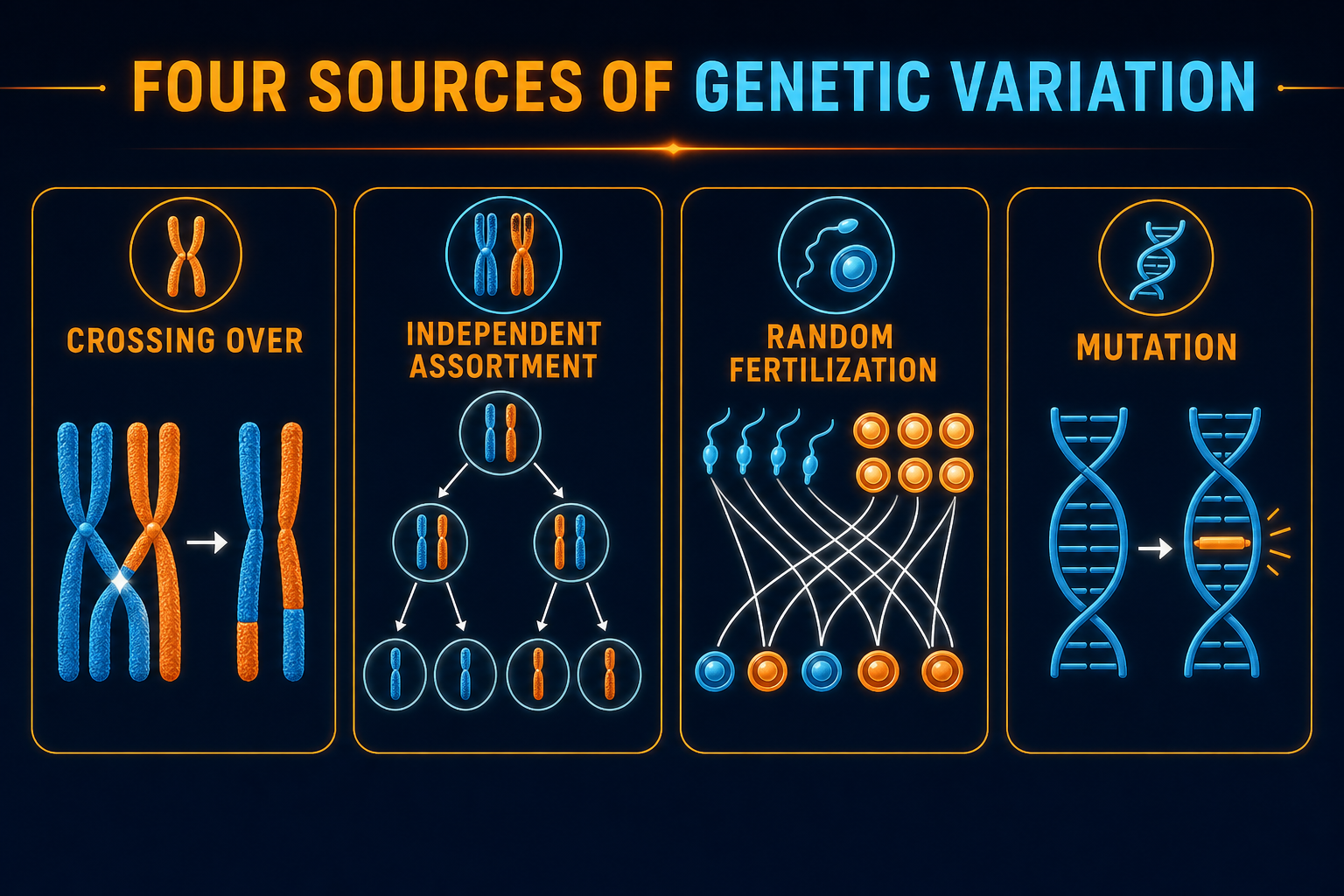
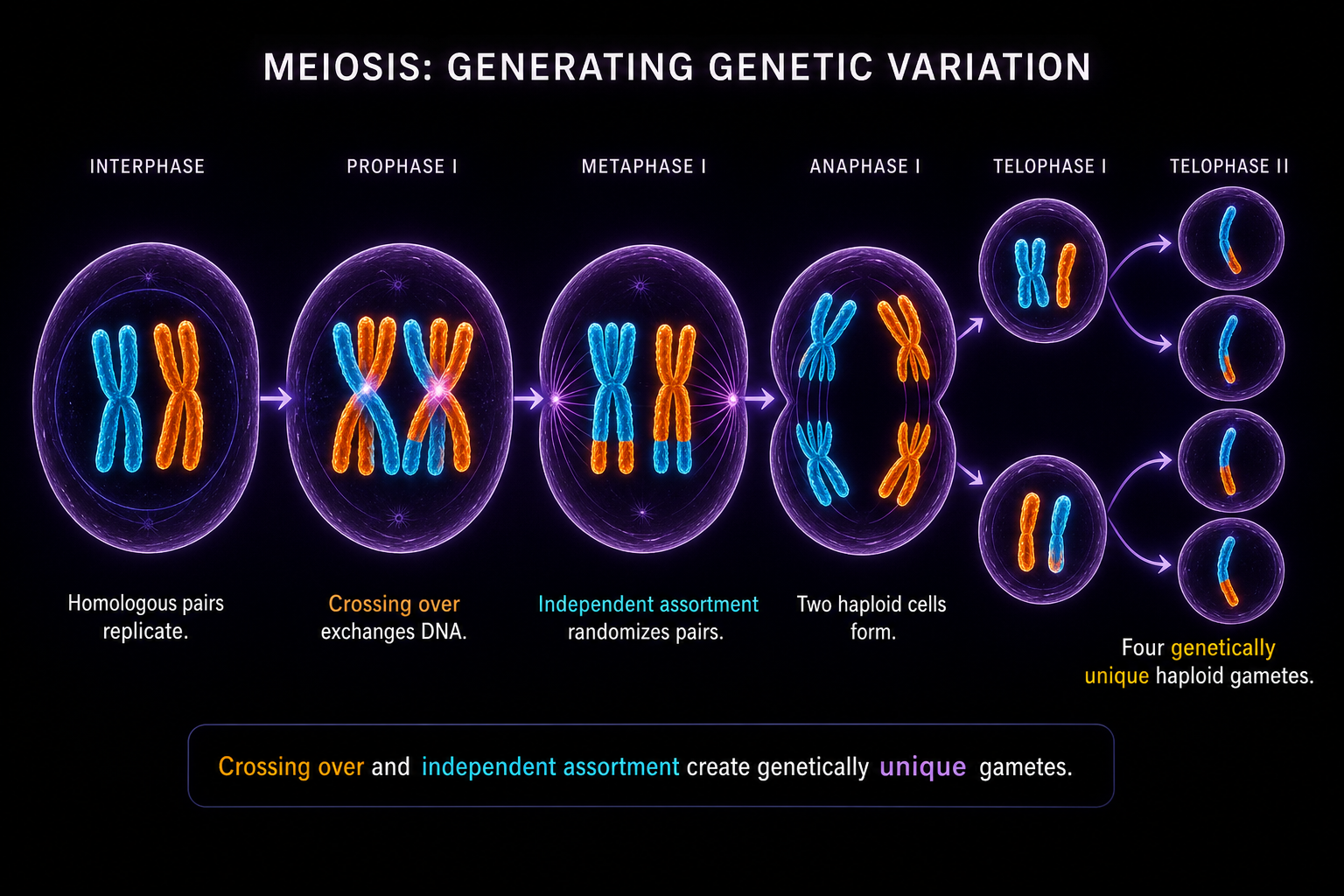
Meiosis creates genetic variation because it does more than reduce chromosome number. It also reshuffles chromosomes and alleles before gametes form. Crossing over changes allele combinations on chromosomes, and independent assortment changes which maternal and paternal chromosomes enter each gamete.
Short contrast: Mitosis creates genetically identical body cells. Meiosis creates genetically different gametes.
Deep dives: Mitosis vs Meiosis and Meiosis.
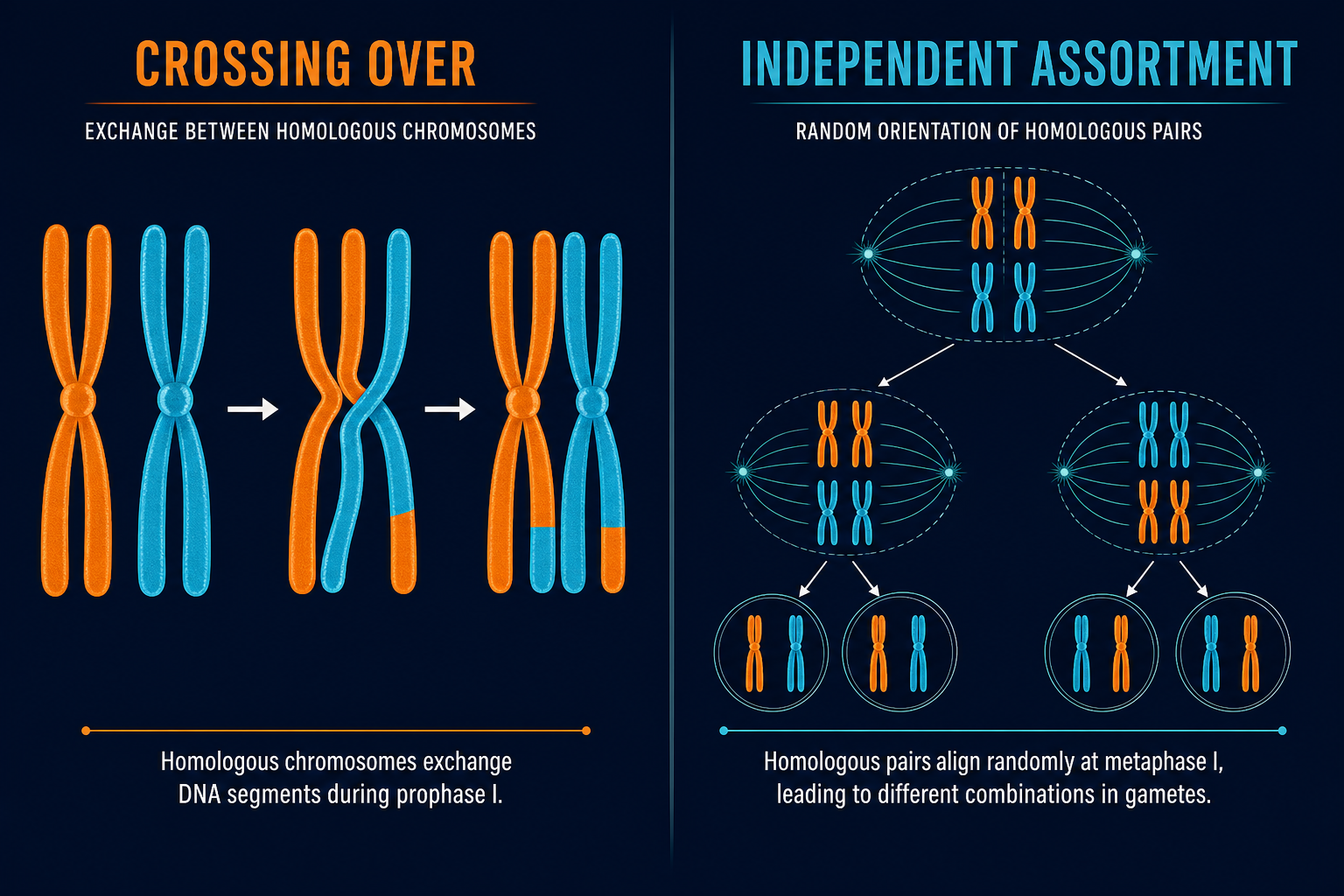
| Feature | Crossing Over | Independent Assortment |
|---|---|---|
| Where it happens | Prophase I | Metaphase I and Anaphase I |
| What changes | DNA combinations on chromosomes | Whole chromosome combinations in gametes |
| Main structure | Homologous chromosomes and non-sister chromatids | Homologous chromosome pairs |
| Variation effect | Creates recombinant chromosomes | Creates different chromosome sets |
| AP clue | “Exchange DNA” | “Random alignment” |
Bottom line: Crossing over reshuffles DNA on chromosomes. Independent assortment reshuffles whole chromosomes into gametes.
Summaries: crossing over guide and independent assortment guide.
Random fertilization increases variation because any genetically unique sperm can fuse with any genetically unique egg. Meiosis creates many different gametes, and fertilization combines them in unpredictable ways.
Example: Even before mutation, two parents can produce many genetically different offspring because each gamete carries a different allele combination.
Crossing over and independent assortment reshuffle existing alleles. Mutation can create new alleles by changing DNA sequence. A mutation may be harmful, neutral, or beneficial depending on how it affects the organism and environment.
Genetic variation comes from differences in DNA or allele combinations. Environmental variation comes from differences in conditions such as nutrition, sunlight, temperature, or experience. Some traits are influenced by both genes and environment.
| Variation Type | Cause | Example |
|---|---|---|
| Genetic | Different alleles | Blood type |
| Environmental | Different conditions | Muscle size from training |
| Both | Genes plus environment | Height |
Genetic variation matters because it gives populations differences that can be acted on by natural selection. In Unit 5, focus on how variation is produced during heredity. In Unit 7, variation becomes important for evolution and adaptation.
Preview: AP Biology Unit 7 natural selection.
→ crossing over
→ independent assortment
→ random fertilization
→ mutation
→ meiosis
→ mitosis, not genetic variation
→ crossing over
→ independent assortment
Fix: Haploid describes chromosome number. Variation comes from allele combinations.
Fix: Crossing over usually reshuffles existing alleles. Mutation can create new alleles.
Fix: Crossing over exchanges DNA. Independent assortment randomly sorts chromosomes.
Fix: Variation continues after meiosis because gametes combine randomly.
Fix: Mitosis usually produces genetically identical daughter cells.
Fix: Genetic variation comes from DNA differences. Environmental variation comes from conditions.
Revealed: 0 of 5 scenarios
Homologous chromosomes exchange DNA during prophase I.
Reveal: Crossing over.
Maternal and paternal chromosome pairs line up randomly during meiosis I.
Reveal: Independent assortment.
One sperm randomly fuses with one egg.
Reveal: Random fertilization.
A DNA base change creates a new allele.
Reveal: Mutation.
A plant grows taller because it receives more sunlight.
Reveal: Environmental variation, not genetic variation.
Answer all eight questions. Choices shuffle on reload.
More drills: Unit 5 practice questions, Mendelian genetics, or Punnett squares.
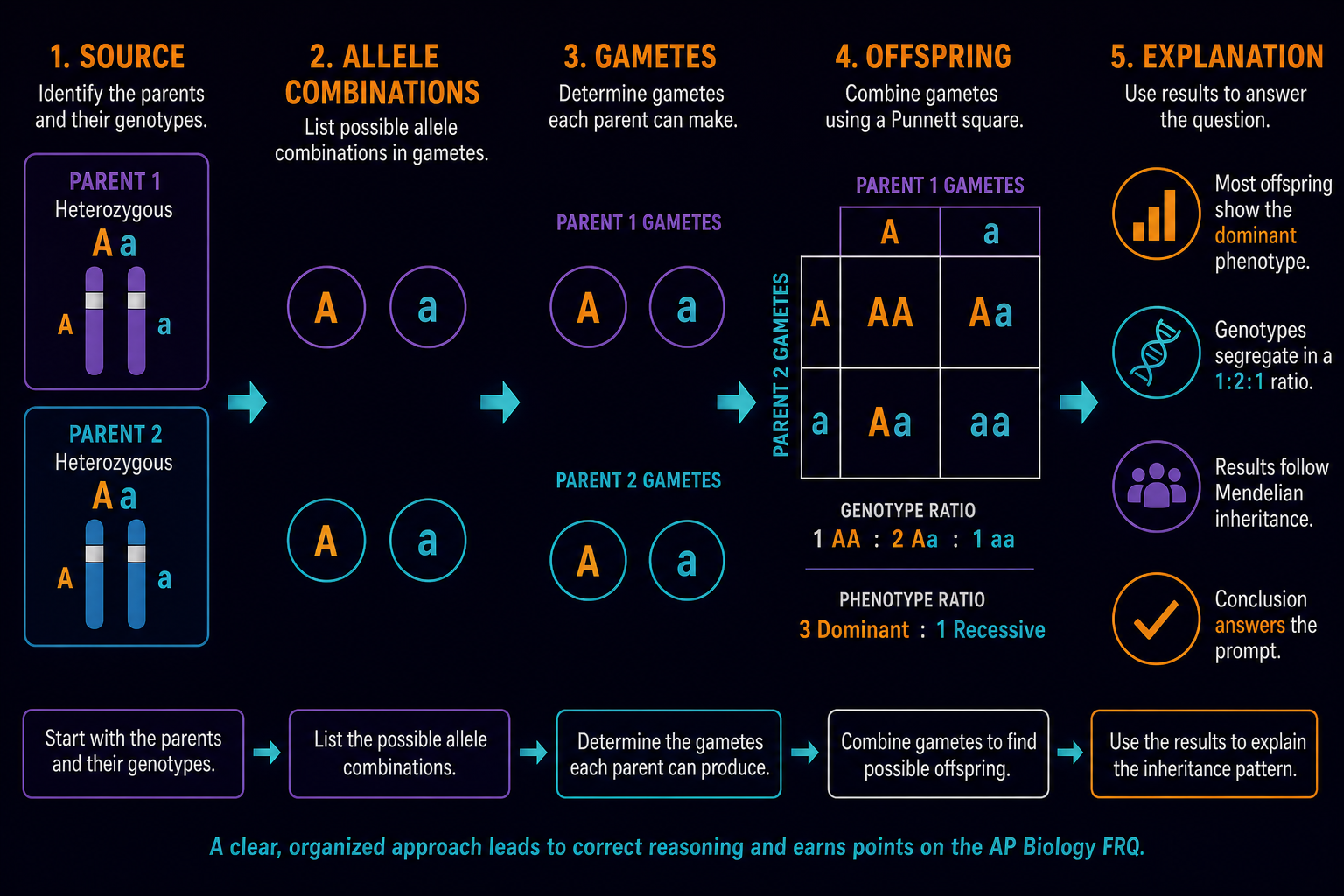
Open each card, draft your response, then reveal the rubric and sample answer.
A student claims that meiosis creates genetic variation only because it produces haploid gametes. Explain why this claim is incomplete.
The claim is incomplete because haploid describes chromosome number, not the full source of variation. Meiosis creates genetic variation through crossing over, which exchanges DNA between homologous chromosomes, and independent assortment, which randomly sorts homologous chromosome pairs into gametes. Random fertilization also increases variation because different sperm and egg combinations can form genetically unique offspring.
Status: Draft your answer first—then open the rubric or sample.
Explain how crossing over, independent assortment, and mutation differ as sources of genetic variation.
Crossing over creates variation by exchanging DNA between homologous chromosomes during prophase I, producing recombinant chromosomes. Independent assortment creates variation by randomly sorting maternal and paternal chromosomes into gametes during meiosis I. Mutation differs because it changes DNA sequence and can create new alleles. Crossing over and independent assortment mainly reshuffle existing alleles, while mutation can introduce new allele versions.
Status: Draft your answer first—then open the rubric or sample.
Genetic variation is the difference in DNA, alleles, or traits among individuals. In AP Biology Unit 5, it is created mainly by crossing over, independent assortment, random fertilization, and mutations.
The main sources are crossing over, independent assortment, random fertilization, and mutation. Crossing over and independent assortment occur during meiosis; random fertilization occurs when gametes fuse.
Meiosis creates variation through crossing over, which exchanges DNA between homologous chromosomes, and independent assortment, which randomly sorts homologous chromosome pairs into gametes.
Crossing over exchanges DNA segments between homologous chromosomes during prophase I. This produces recombinant chromosomes with new allele combinations in gametes.
Independent assortment randomly orients homologous chromosome pairs during meiosis I. Gametes receive different combinations of maternal and paternal chromosomes.
Any genetically unique sperm can fuse with any genetically unique egg. This unpredictably combines allele combinations from two parents into a zygote.
Yes. Mutation can change DNA sequence and create new alleles. Crossing over and independent assortment usually reshuffle existing alleles instead of creating new ones.
No. Genetic variation comes from differences in DNA or allele combinations. Environmental variation comes from differences in conditions such as nutrition, sunlight, or temperature.
Usually not. Mitosis typically produces genetically identical daughter cells for growth and repair. Meiosis and fertilization are the main sources of variation in sexually reproducing organisms.
Variation gives populations genetic differences that natural selection can act on. In Unit 5, focus on how variation is produced during heredity and passed to offspring.
Crossing over exchanges DNA segments between homologous chromosomes. Independent assortment randomly sorts whole homologous chromosome pairs into gametes.
Name the source (crossing over, independent assortment, random fertilization, or mutation), describe what changes at the chromosome or DNA level, and connect the process to different allele combinations in gametes or offspring.