"Unknown dominant phenotype"
→ test cross
AP Biology · Unit 5 Heredity
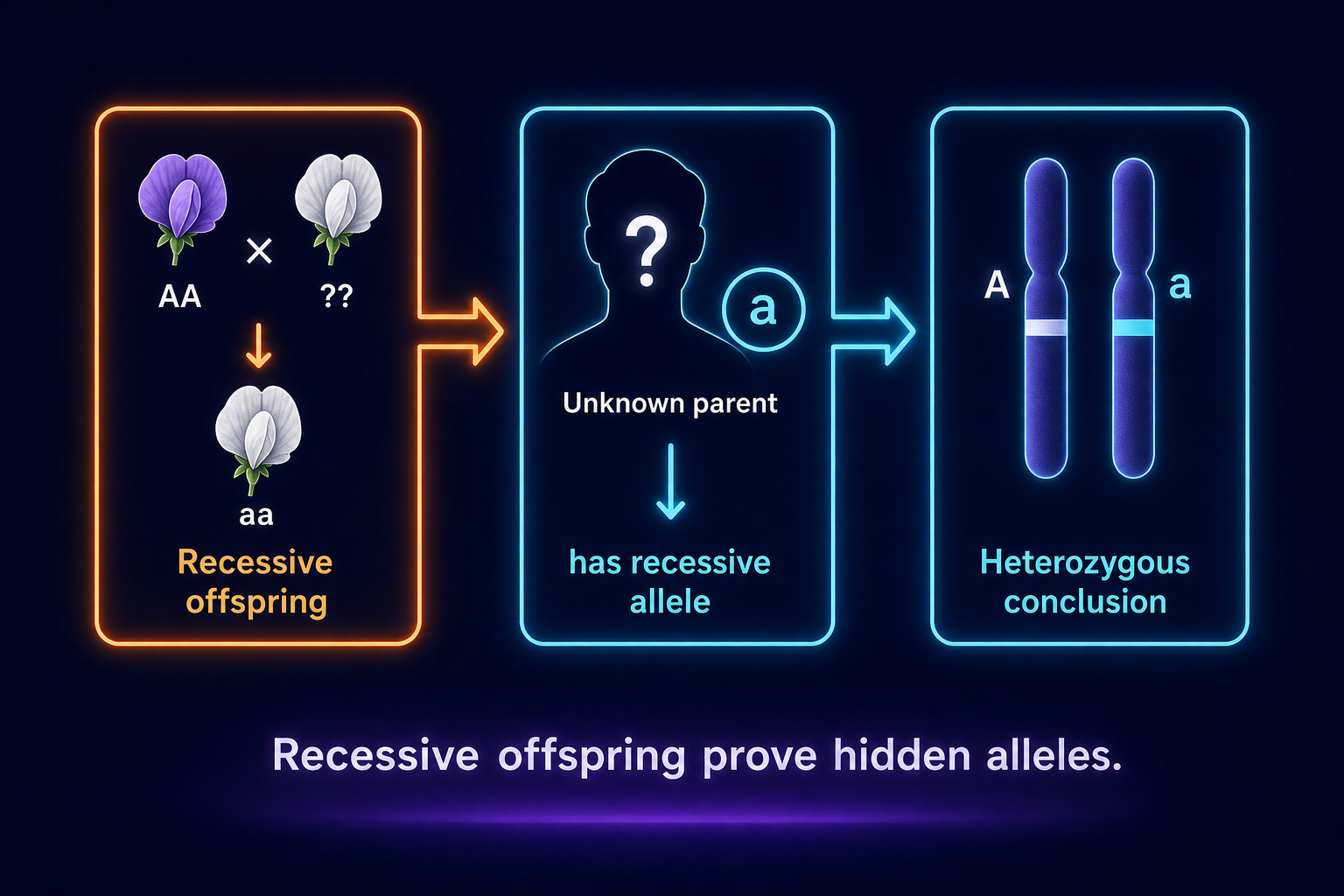
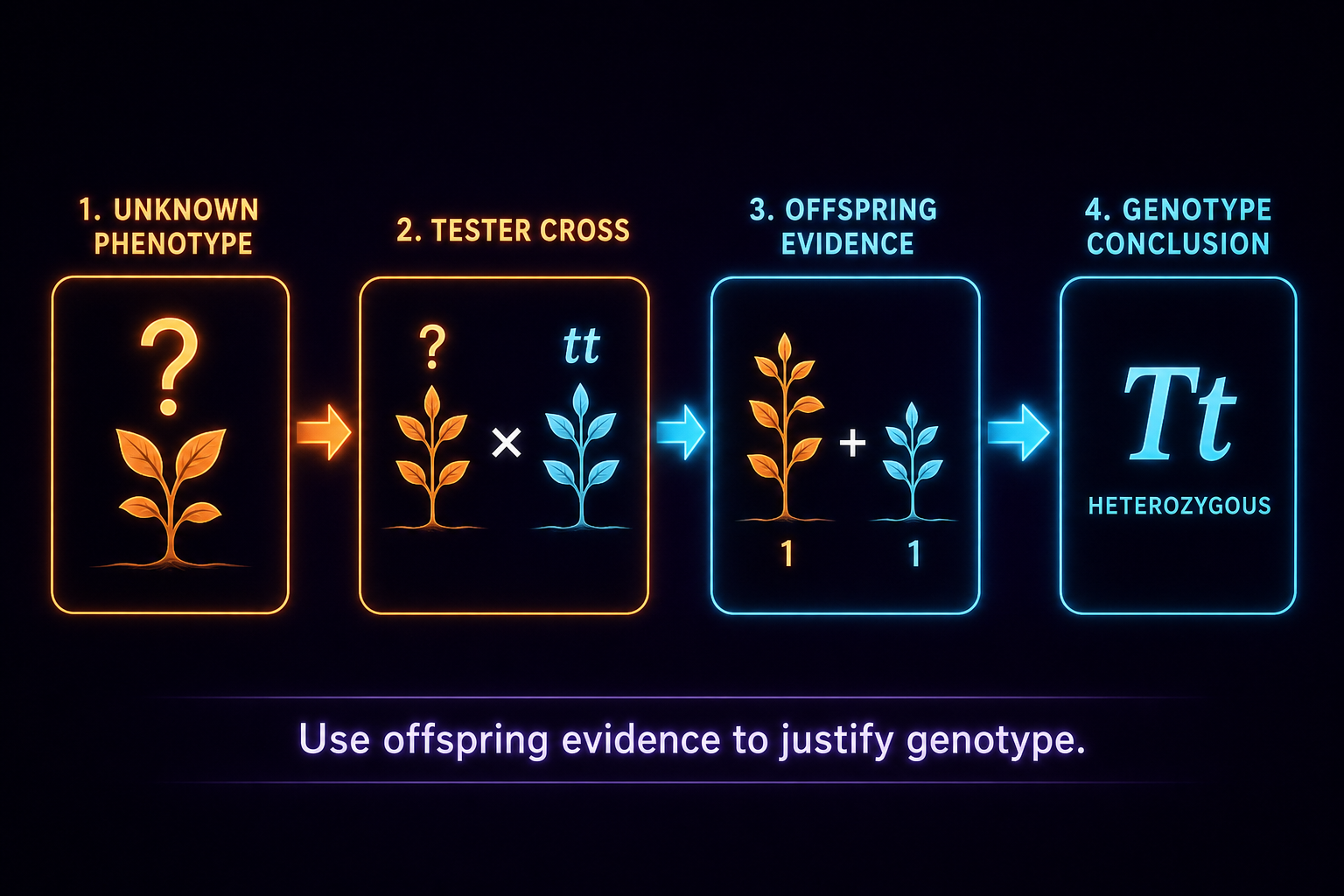
A test cross is used to determine the unknown genotype of an organism with a dominant phenotype. The unknown parent is crossed with a homozygous recessive tester. If recessive offspring appear, the unknown parent must be heterozygous.
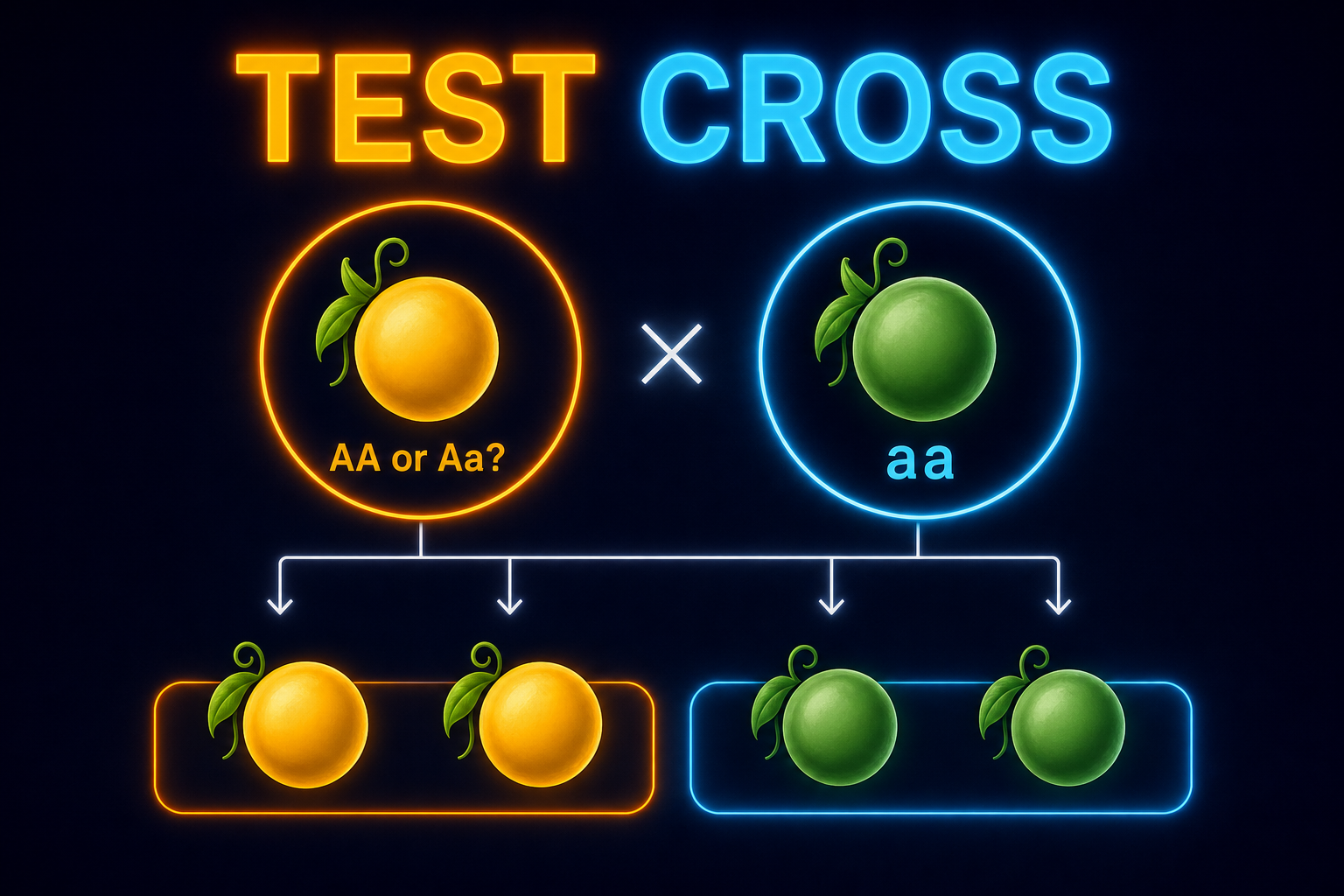
A test cross is a genetics cross used to determine the unknown genotype of an organism showing a dominant phenotype. The organism is crossed with a homozygous recessive tester. If any recessive offspring appear, the unknown parent must be heterozygous.
A test cross reveals whether a dominant-looking parent is AA or Aa.
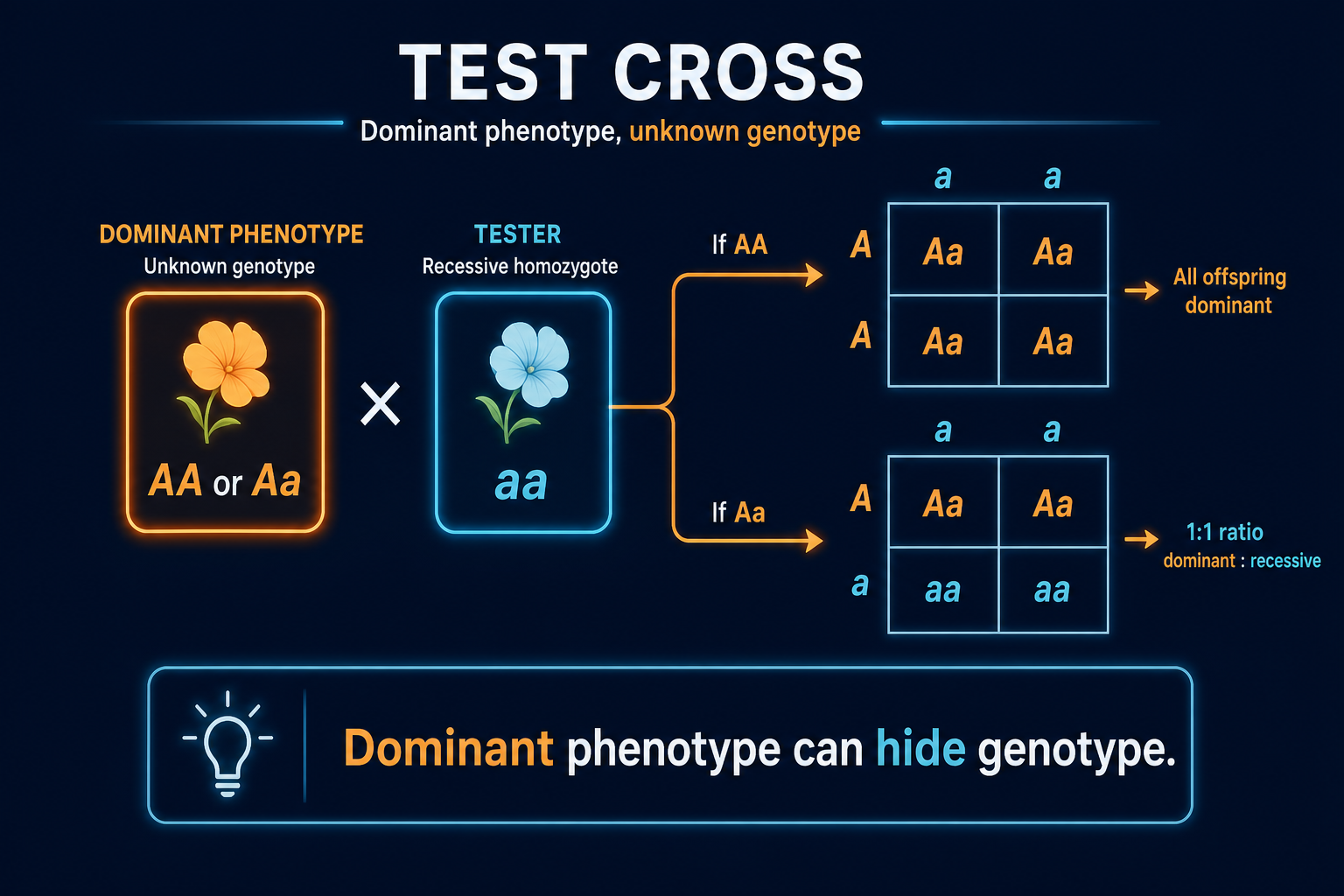
A dominant phenotype does not always reveal genotype. Under complete dominance, AA and Aa can look the same. A test cross uses offspring evidence to determine whether the dominant-looking parent is homozygous dominant or heterozygous.
Review Genotype vs Phenotype · Review Homozygous vs Heterozygous
The tester is homozygous recessive, such as aa, because it can only contribute recessive alleles. If a recessive phenotype appears in offspring, the recessive allele must have come from the unknown parent too.
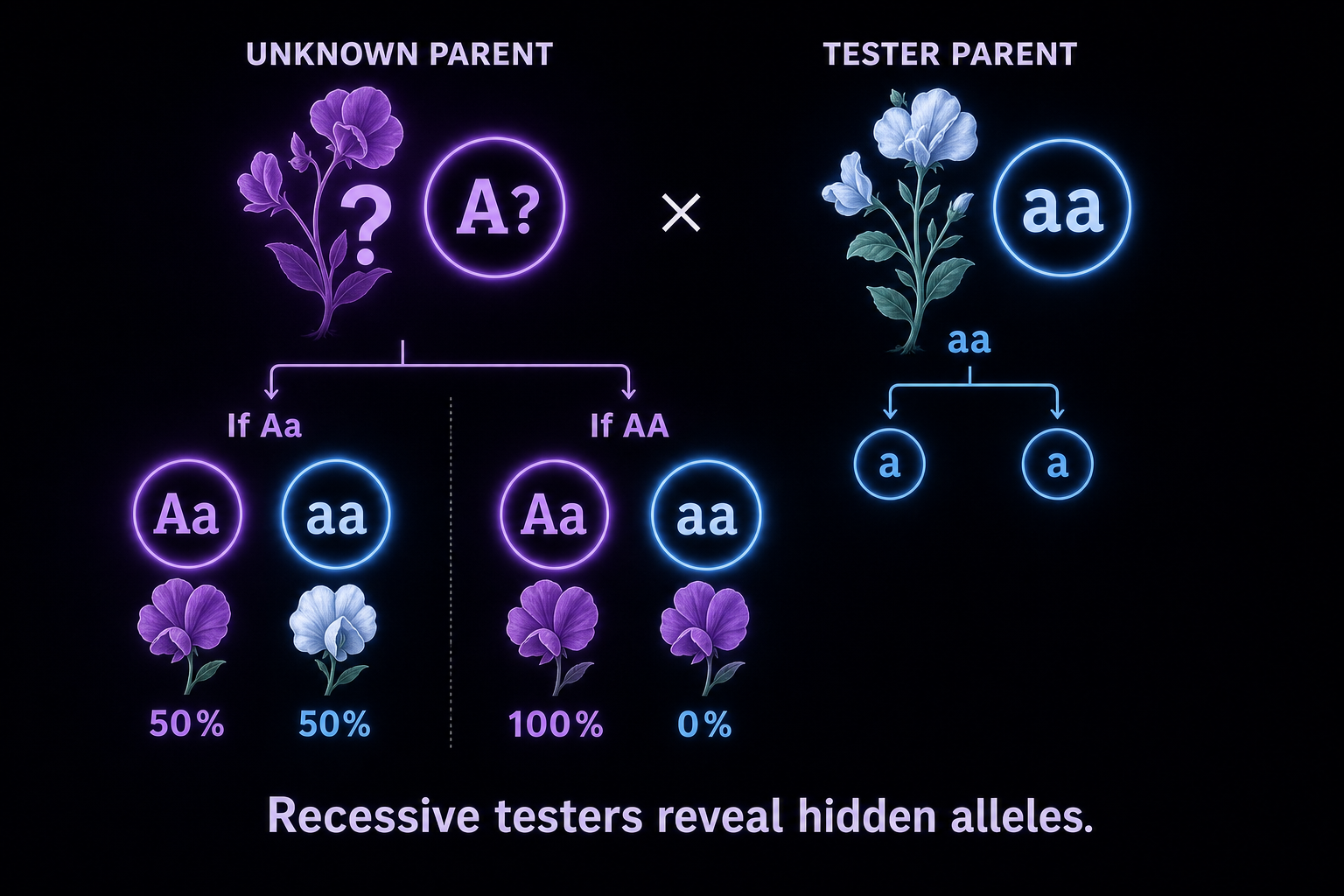
| Unknown Parent | Tester | Offspring Result | Conclusion |
|---|---|---|---|
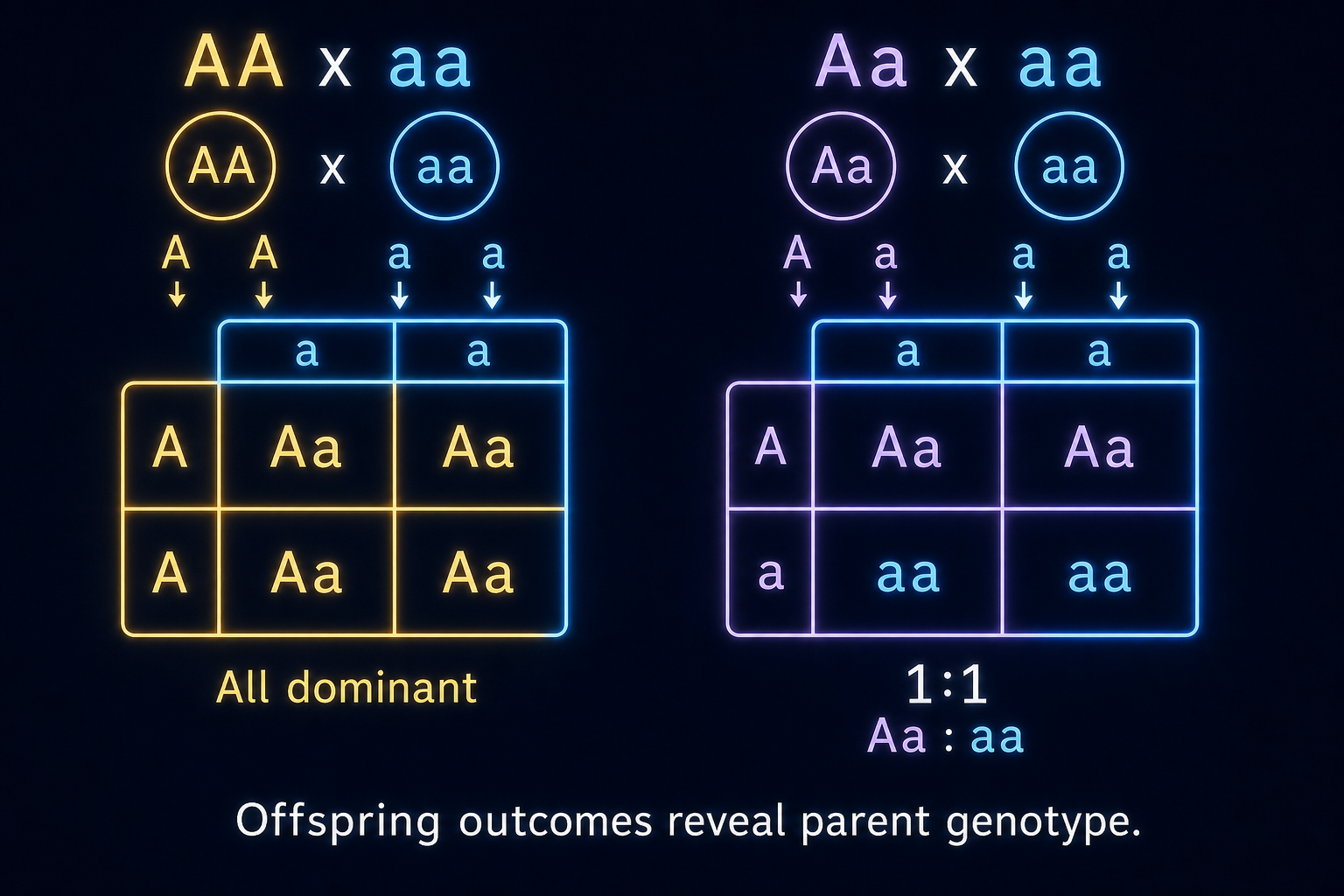
| AA | aa | 100% Aa, all dominant phenotype | Unknown parent likely AA |
| Aa | aa | 1 Aa : 1 aa, dominant and recessive phenotypes | Unknown parent is Aa |
| aa | aa | 100% aa, all recessive phenotype | Not dominant-looking; not the usual test-cross setup |
If recessive offspring appear, the unknown parent cannot be AA because AA cannot contribute a recessive allele.
Enter test-cross offspring counts and let the evidence reveal the likely genotype.
| Cross | Expected Offspring | Meaning |
|---|---|---|
| AA × aa | 100% Aa | Unknown parent likely homozygous dominant |
| Aa × aa | 1 Aa : 1 aa | Unknown parent is heterozygous |
| aa × aa | 100% aa | Both parents recessive |
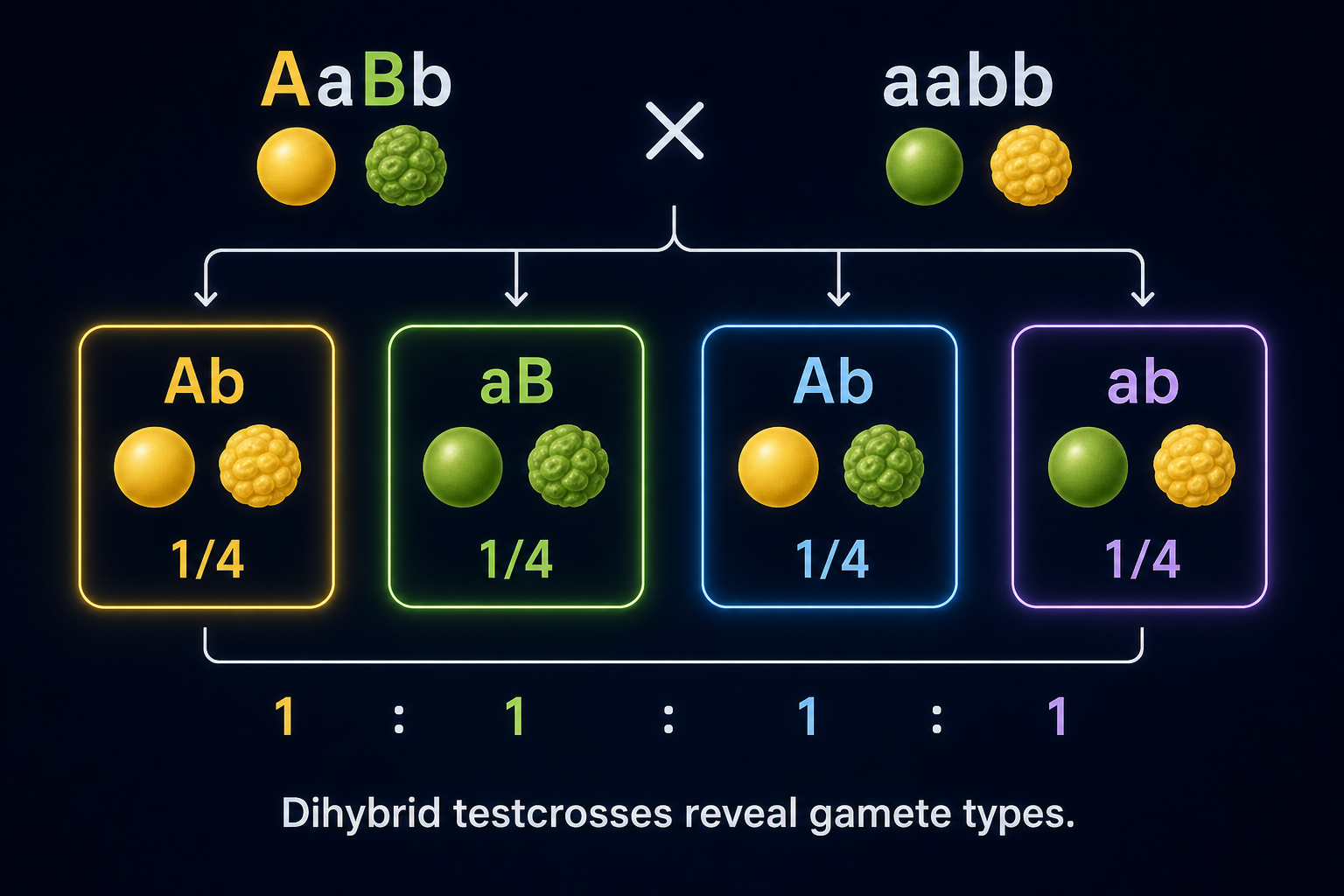
| AaBb × aabb | 1:1:1:1 if independent | Dihybrid testcross extension |
A monohybrid cross tracks one gene. A test cross is a specific kind of cross used to reveal an unknown genotype. Many test crosses are monohybrid, but the purpose is different: the goal is not just prediction, but identification.
| Feature | Monohybrid Cross | Test Cross |
|---|---|---|
| Main purpose | Predict one-gene inheritance | Identify unknown genotype |
| Typical cross | Aa × Aa or Aa × aa | Unknown dominant × aa |
| Key evidence | Genotype and phenotype ratios | Recessive offspring reveal hidden allele |
| AP clue | "one trait" | "unknown dominant genotype" |
A dihybrid testcross can test the gametes produced by an individual with two genes. For example, AaBb × aabb can produce a 1:1:1:1 phenotype pattern if the genes assort independently. If the observed pattern is different, linkage or another exception may be involved.
Review Dihybrid Crosses · Review Linked Genes
If all offspring show the dominant phenotype, the unknown parent is likely homozygous dominant. However, in a very small sample, it is possible by chance to miss recessive offspring. AP Biology answers should use careful wording like “the data support” or “the parent is likely AA” unless the prompt gives enough offspring to be confident.
→ test cross
→ tester
→ unknown parent is heterozygous
→ unknown parent likely homozygous dominant
→ heterozygous unknown in monohybrid test cross
→ dihybrid testcross
→ justify genotype conclusion
→ use careful wording
Fix: Use aa so recessive offspring can reveal hidden alleles.
Fix: Large samples support AA, but small samples require careful wording.
Fix: A dominant phenotype can be AA or Aa.
Fix: Recessive offspring prove the unknown parent contributed a recessive allele.
Fix: A test cross has a specific purpose: identifying an unknown genotype.
Fix: AaBb × aabb can produce 1:1:1:1 if genes assort independently.
Answer all 7 questions. Choices shuffle on reload.
More drills: Unit 5 practice questions · Mendelian genetics.
Open each card, draft your response, then reveal the rubric and sample answer.
A plant with a dominant phenotype is crossed with a homozygous recessive plant. Of 100 offspring, 52 show the dominant phenotype and 48 show the recessive phenotype. Determine the genotype of the dominant-phenotype parent and justify your answer.
This is a test cross because the dominant-phenotype plant is crossed with a homozygous recessive plant. The recessive offspring must be aa, so they received one recessive allele from the tester and one recessive allele from the unknown parent. Therefore, the dominant-phenotype parent must carry a recessive allele and is heterozygous, Aa. The roughly 1:1 ratio of dominant to recessive offspring supports an Aa × aa cross.
Status: Draft your answer first—then open the rubric or sample.
A dominant-phenotype organism is crossed with a homozygous recessive tester. All 80 offspring show the dominant phenotype. Explain what genotype is most likely for the unknown parent and why careful wording matters.
The unknown parent is most likely homozygous dominant, AA. The tester is homozygous recessive and can only contribute recessive alleles. Since all 80 offspring show the dominant phenotype, the data suggest the unknown parent contributed dominant alleles to all offspring. Careful wording matters because genetic crosses are probabilistic, so it is better to say the data support AA or that the parent is likely AA.
Status: Draft your answer first—then open the rubric or sample.
Explain how a monohybrid test cross differs from a dihybrid testcross and what each can reveal.
A monohybrid test cross tracks one gene and is often used to determine whether a dominant-phenotype parent is homozygous dominant or heterozygous. For example, Aa × aa can produce a 1:1 phenotype ratio. A dihybrid testcross tracks two genes, such as AaBb × aabb, and can reveal the gamete types produced by the unknown parent. If the genes assort independently, a 1:1:1:1 phenotype pattern may appear. If the pattern differs strongly, linked genes or another exception may be involved.
Status: Draft your answer first—then open the rubric or sample.
A test cross is a genetics cross used to determine the unknown genotype of an organism showing a dominant phenotype. The organism is crossed with a homozygous recessive tester. If any recessive offspring appear, the unknown parent must be heterozygous.
The tester is homozygous recessive because it can only contribute recessive alleles. If a recessive phenotype appears in offspring, the recessive allele must have come from the unknown parent too.
Recessive offspring in a test cross must receive a recessive allele from both parents. Since the tester is aa, any recessive offspring prove the unknown dominant-looking parent contributed a recessive allele and is heterozygous.
Recessive offspring mean the unknown dominant parent must carry a recessive allele. The unknown parent is heterozygous, such as Aa.
If all offspring show the dominant phenotype, the unknown parent likely contributed only dominant alleles and is likely homozygous dominant, AA. Use careful wording with small sample sizes.
The expected genotype ratio is 1 Aa : 1 aa. Under complete dominance, the phenotype ratio is 1 dominant : 1 recessive.
A monohybrid cross tracks one gene and predicts inheritance ratios. A test cross is a specific cross used to identify an unknown genotype, often by crossing a dominant-phenotype parent with aa.
Yes. A dihybrid testcross such as AaBb × aabb can reveal gamete types produced by the unknown parent. A 1:1:1:1 pattern may appear if genes assort independently.
Genetic crosses are probabilistic. A small sample might miss recessive offspring by chance, so AP Biology answers should use careful wording like likely or the data support unless the sample is large.
Identify the test cross setup, explain what recessive offspring prove about the unknown parent, connect offspring ratios to genotype, and use offspring evidence to justify your conclusion.
A common test cross example is crossing an unknown dominant-phenotype organism with a homozygous recessive tester, such as A_ × aa. If recessive offspring appear, the unknown parent is Aa. If all offspring are dominant in a large sample, the unknown parent is likely AA.