"Two same alleles"
→ homozygous
AP Biology · Unit 5 Heredity
Homozygous and heterozygous describe allele pairs in a genotype. Homozygous means two matching alleles, such as AA or aa. Heterozygous means two different alleles, such as Aa. In AP Biology Unit 5, these terms help you interpret Punnett squares, genotype ratios, phenotype ratios, and inheritance patterns.
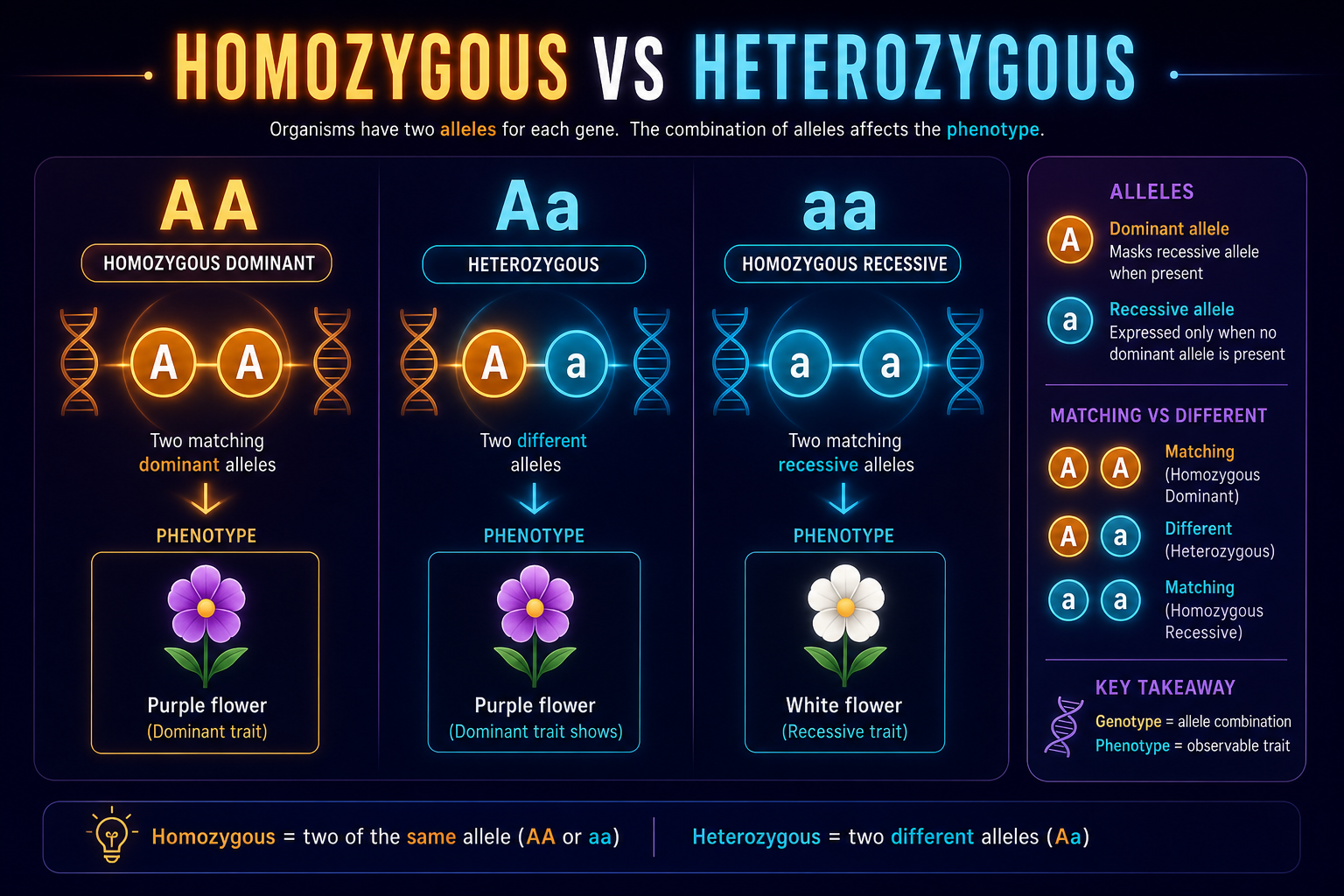
Homozygous means an organism has two identical alleles for a gene, such as AA or aa. Heterozygous means an organism has two different alleles, such as Aa. In complete dominance, AA and Aa can show the dominant phenotype, while aa shows the recessive phenotype.
Homozygous = same alleles. Heterozygous = different alleles.
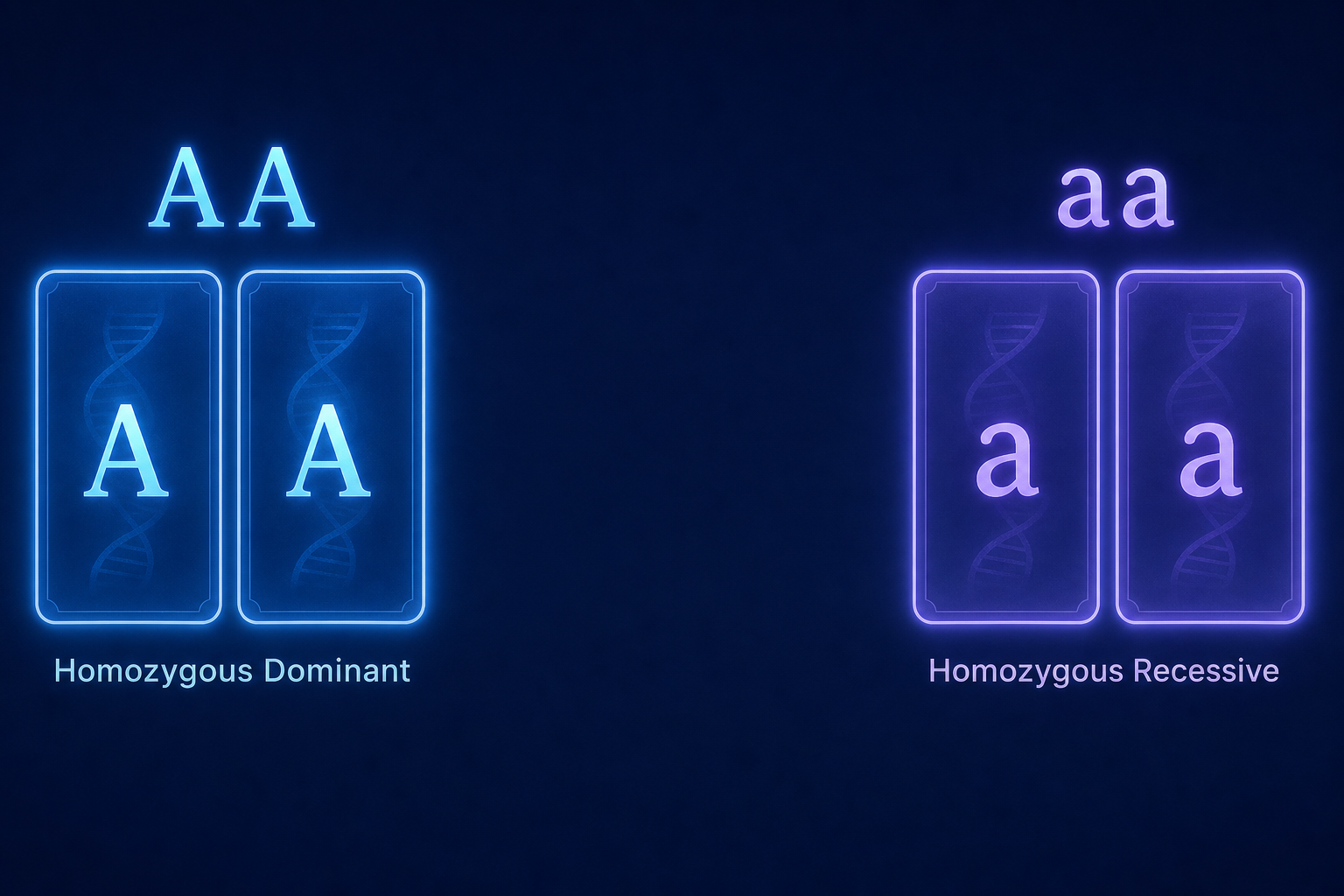
Homozygous means both alleles for a gene are the same. A genotype can be homozygous dominant or homozygous recessive.
For how genotype connects to visible traits, see genotype vs phenotype and Mendelian genetics.
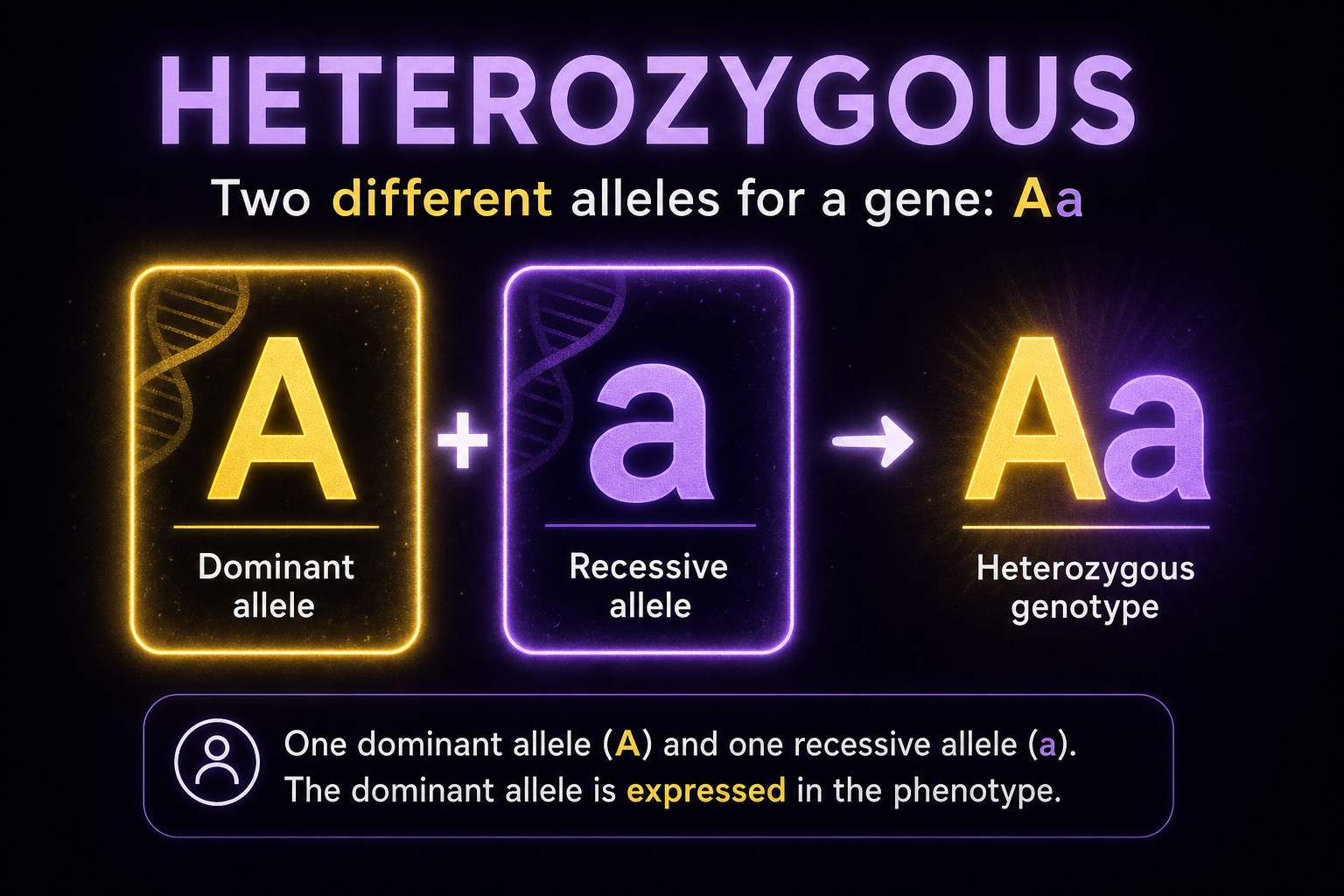
Heterozygous means the two alleles for a gene are different. A heterozygous genotype has one dominant allele and one recessive allele in simple Mendelian notation.
Under complete dominance, the dominant allele is expressed in the heterozygote.
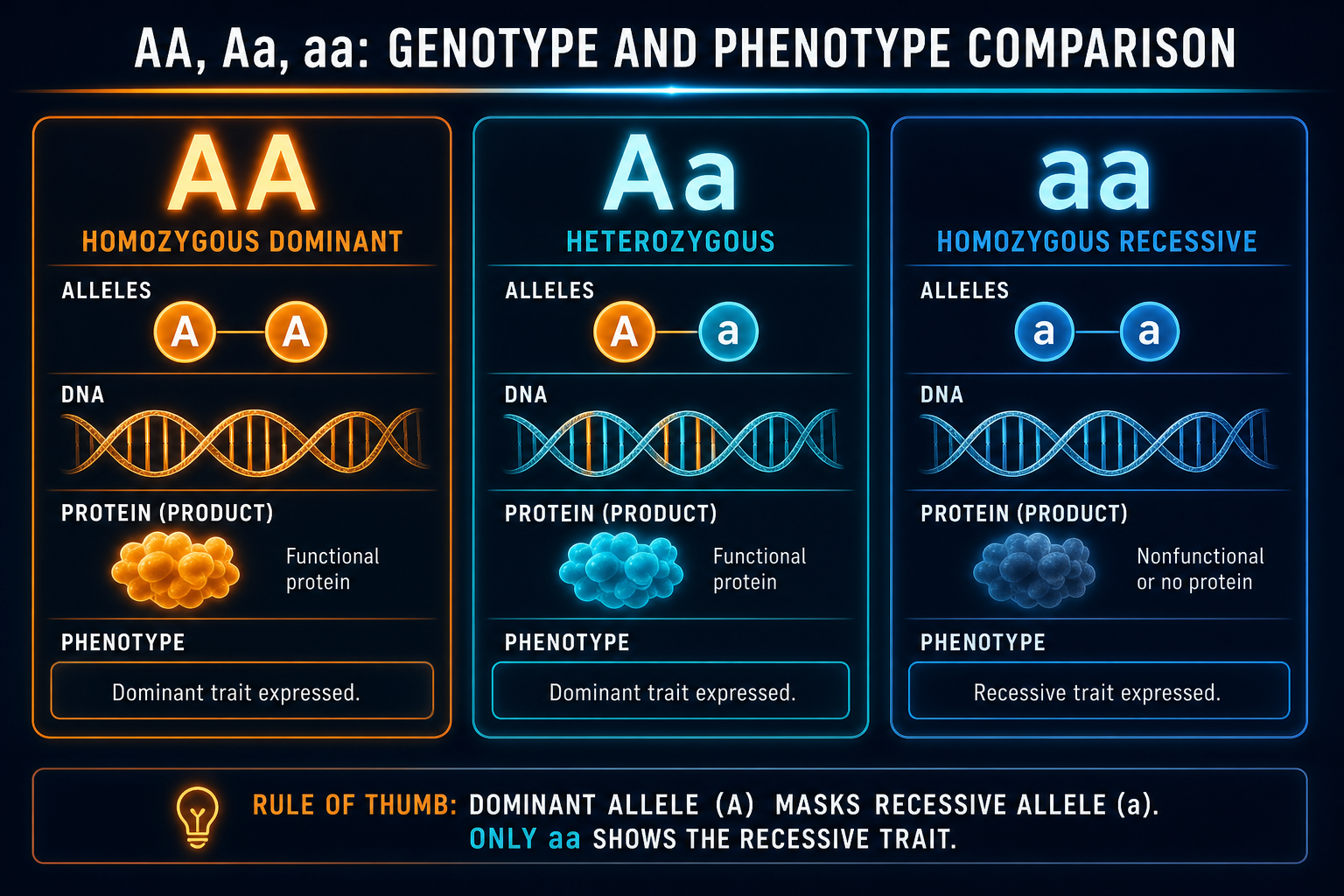
| Genotype | Classification | Alleles | Complete-Dominance Phenotype |
|---|---|---|---|
| AA | Homozygous dominant | Two dominant alleles | Dominant phenotype |
| Aa | Heterozygous | One dominant, one recessive | Dominant phenotype |
| aa | Homozygous recessive | Two recessive alleles | Recessive phenotype |
Choose an allele pair to classify it as homozygous dominant, heterozygous, or homozygous recessive.
Both homozygous dominant and homozygous recessive genotypes have matching alleles. The difference is whether the matching alleles are dominant or recessive.
| Type | Example | Meaning | Phenotype Under Complete Dominance |
|---|---|---|---|
| Homozygous dominant | AA | Two dominant alleles | Dominant phenotype |
| Homozygous recessive | aa | Two recessive alleles | Recessive phenotype |
Punnett squares produce genotype combinations. For Aa × Aa, the offspring genotypes are AA, Aa, Aa, and aa. That means one homozygous dominant, two heterozygous, and one homozygous recessive genotype.
Genotype ratio: 1 homozygous dominant : 2 heterozygous : 1 homozygous recessive
Review Punnett Squares · Review Monohybrid Crosses
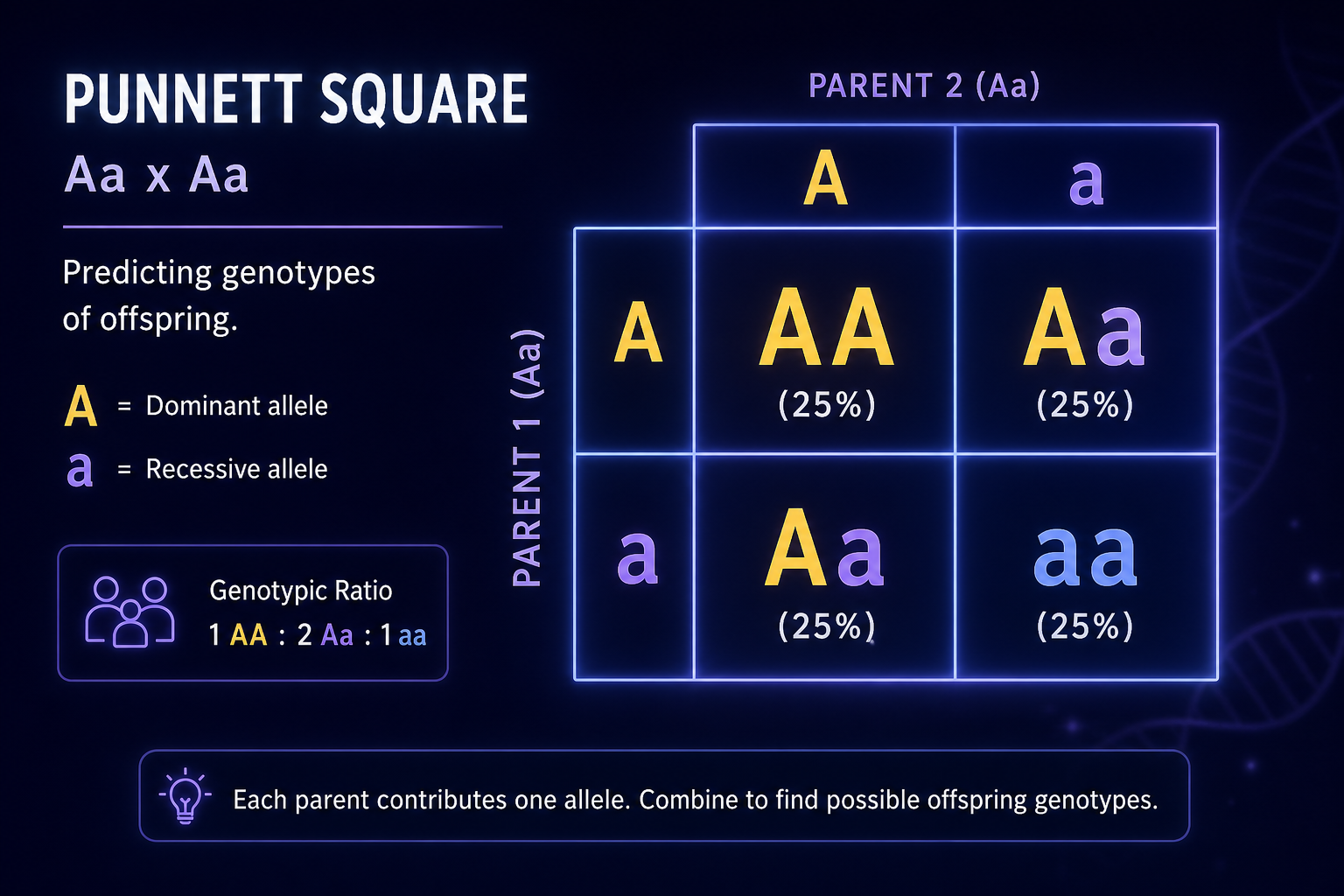
In complete dominance, AA and Aa show the dominant phenotype because one dominant allele is enough for expression. The aa genotype shows the recessive phenotype because it has no dominant allele. In incomplete dominance or codominance, the heterozygous phenotype can look different.
Review Genotype vs Phenotype · Review Non-Mendelian Genetics
A carrier is usually heterozygous for a recessive allele. For an autosomal recessive trait, a carrier might be Aa: one normal dominant allele and one recessive allele. The carrier may not show the recessive phenotype but can pass the recessive allele to offspring.
For X-linked traits, a carrier female may be written as XNXn.
→ homozygous
→ heterozygous
→ homozygous dominant
→ homozygous recessive
→ heterozygous
→ often heterozygous
→ could be AA or Aa
→ usually aa in complete dominance
→ one homozygous dominant, two heterozygous, one homozygous recessive
Fix: Homozygous means matching alleles. It can be AA or aa.
Fix: Heterozygous means different alleles. Under complete dominance, Aa shows the dominant phenotype.
Fix: Homozygous and heterozygous describe genotypes, not directly visible traits.
Fix: They can have the same phenotype under complete dominance, but they are different genotypes.
Fix: A carrier usually has one recessive allele and one dominant allele.
Fix: In incomplete dominance and codominance, heterozygotes can have different phenotypes.
Answer all eight questions. Choices shuffle on reload.
More drills: Unit 5 practice questions.
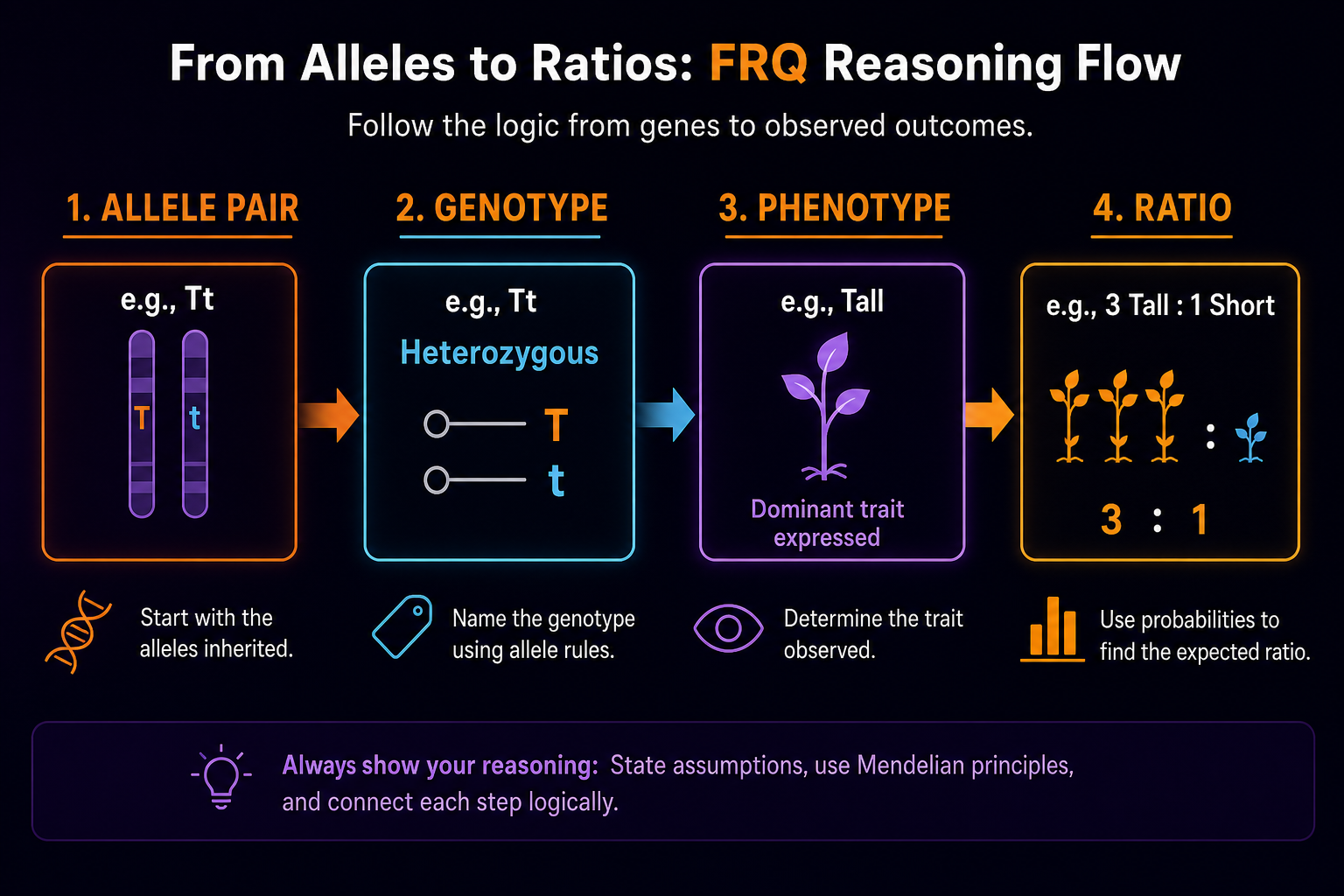
Open each card, draft your response, then reveal the rubric and sample answer.
A student says homozygous means dominant and heterozygous means recessive. Explain why this statement is incorrect using AA, Aa, and aa.
The statement is incorrect because homozygous means two identical alleles, not dominant. AA is homozygous dominant, while aa is homozygous recessive. Heterozygous means two different alleles, such as Aa. Under complete dominance, Aa usually shows the dominant phenotype because one dominant allele masks the recessive allele. Therefore, homozygous and heterozygous describe allele pairs, not simply dominant or recessive appearance.
Status: Draft your answer first—then open the rubric or sample.
In a cross between two heterozygous parents, explain the expected genotype ratio and identify which offspring are homozygous or heterozygous.
The cross is Aa × Aa. Each parent can produce A or a gametes. The offspring genotypes are AA, Aa, Aa, and aa. The genotype ratio is 1 AA : 2 Aa : 1 aa. AA is homozygous dominant, aa is homozygous recessive, and Aa is heterozygous. Under complete dominance, AA and Aa show the dominant phenotype, while aa shows the recessive phenotype.
Status: Draft your answer first—then open the rubric or sample.
Homozygous means an organism has two identical alleles for a gene, such as AA or aa. Heterozygous means an organism has two different alleles, such as Aa. In complete dominance, AA and Aa can show the dominant phenotype, while aa shows the recessive phenotype.
Homozygous means both alleles for a gene are the same. A genotype can be homozygous dominant (AA) or homozygous recessive (aa).
Heterozygous means the two alleles for a gene are different, such as Aa. Under complete dominance, the dominant allele is usually expressed.
AA is homozygous because both alleles are the same. It is homozygous dominant when A is the dominant allele.
Aa is heterozygous because the two alleles are different.
aa is homozygous because both alleles are the same. It is homozygous recessive when a is the recessive allele.
Homozygous dominant means two identical dominant alleles, such as AA. Under complete dominance, this genotype shows the dominant phenotype.
Homozygous recessive means two identical recessive alleles, such as aa. Under complete dominance, this genotype shows the recessive phenotype.
Under complete dominance, one dominant allele is enough to mask the recessive allele in a heterozygote such as Aa.
Yes. Homozygous means matching alleles, not dominant. aa is homozygous recessive.
A carrier is usually heterozygous for a recessive allele, such as Aa for an autosomal recessive trait.
Name allele pairs and genotypes first (homozygous dominant, heterozygous, homozygous recessive), then explain phenotype under the dominance pattern given in the prompt.
Yes. Under complete dominance, AA and Aa can both show the dominant phenotype because one dominant allele is enough to mask the recessive allele. They have the same phenotype but different genotypes.