Identify the parent genotypes.
Example: Aa × Aa
AP Biology · Unit 5 Heredity
A monohybrid cross tracks one gene at a time. In AP Biology Unit 5, monohybrid crosses help you predict genotype ratios, phenotype ratios, and inheritance probabilities from parent genotypes. The classic cross is Aa × Aa, which produces a 1:2:1 genotype ratio and a 3:1 phenotype ratio under complete dominance.
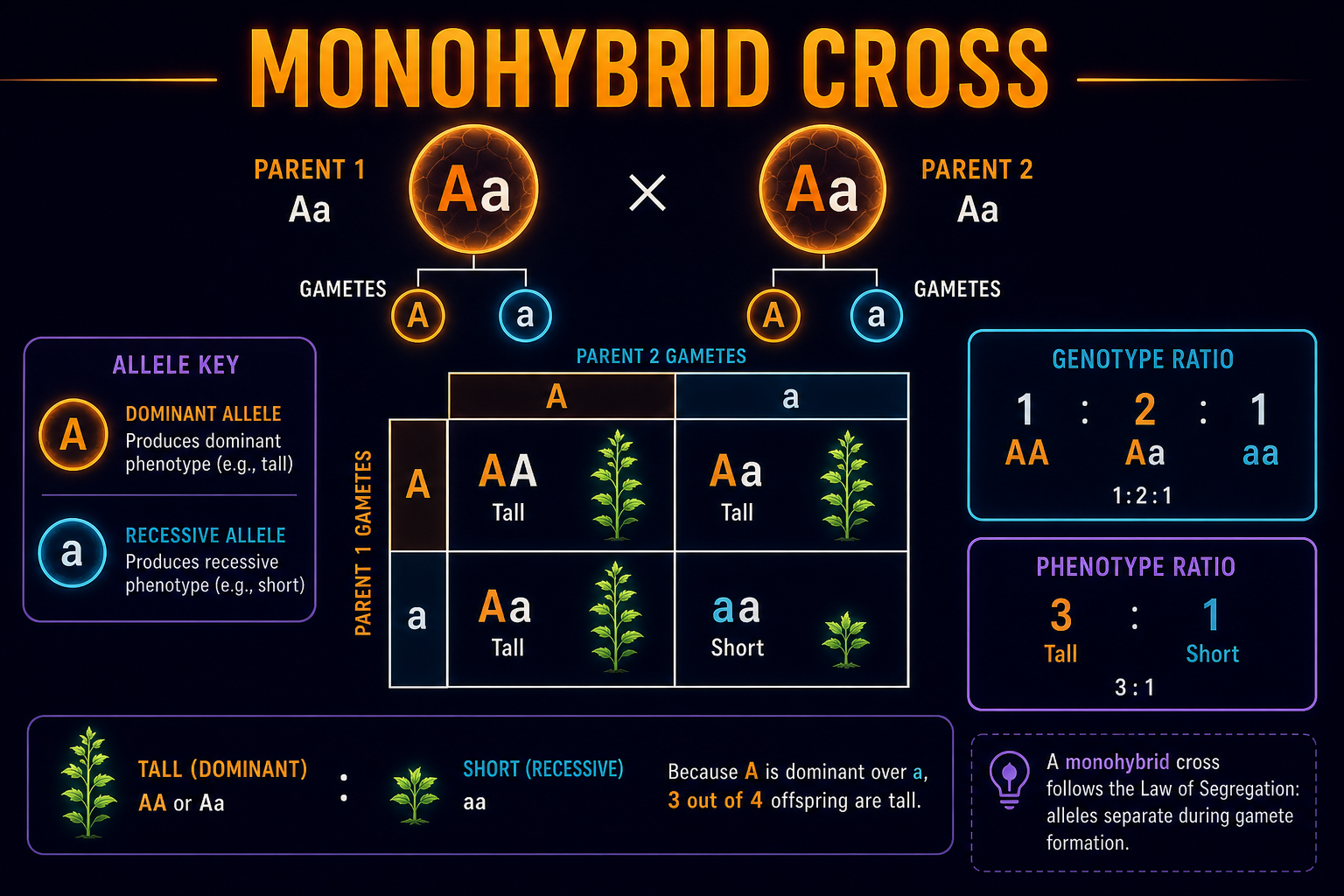
A monohybrid cross is a genetics cross that tracks one gene with two alleles. In a common heterozygous × heterozygous cross, Aa × Aa, the genotype ratio is 1 AA : 2 Aa : 1 aa. If A is completely dominant over a, the phenotype ratio is 3 dominant : 1 recessive.
Monohybrid means one gene, one trait pattern.
A monohybrid cross follows one gene at a time. The gene may have two allele versions, such as A and a. Each gamete receives one allele from each parent, and the offspring genotype depends on which two alleles combine during fertilization. On AP Biology exams, one-trait wording, a 2×2 square, and parent notation like Aa × Aa or Aa × aa are strong signals that you are working with a monohybrid cross rather than a two-gene dihybrid problem.
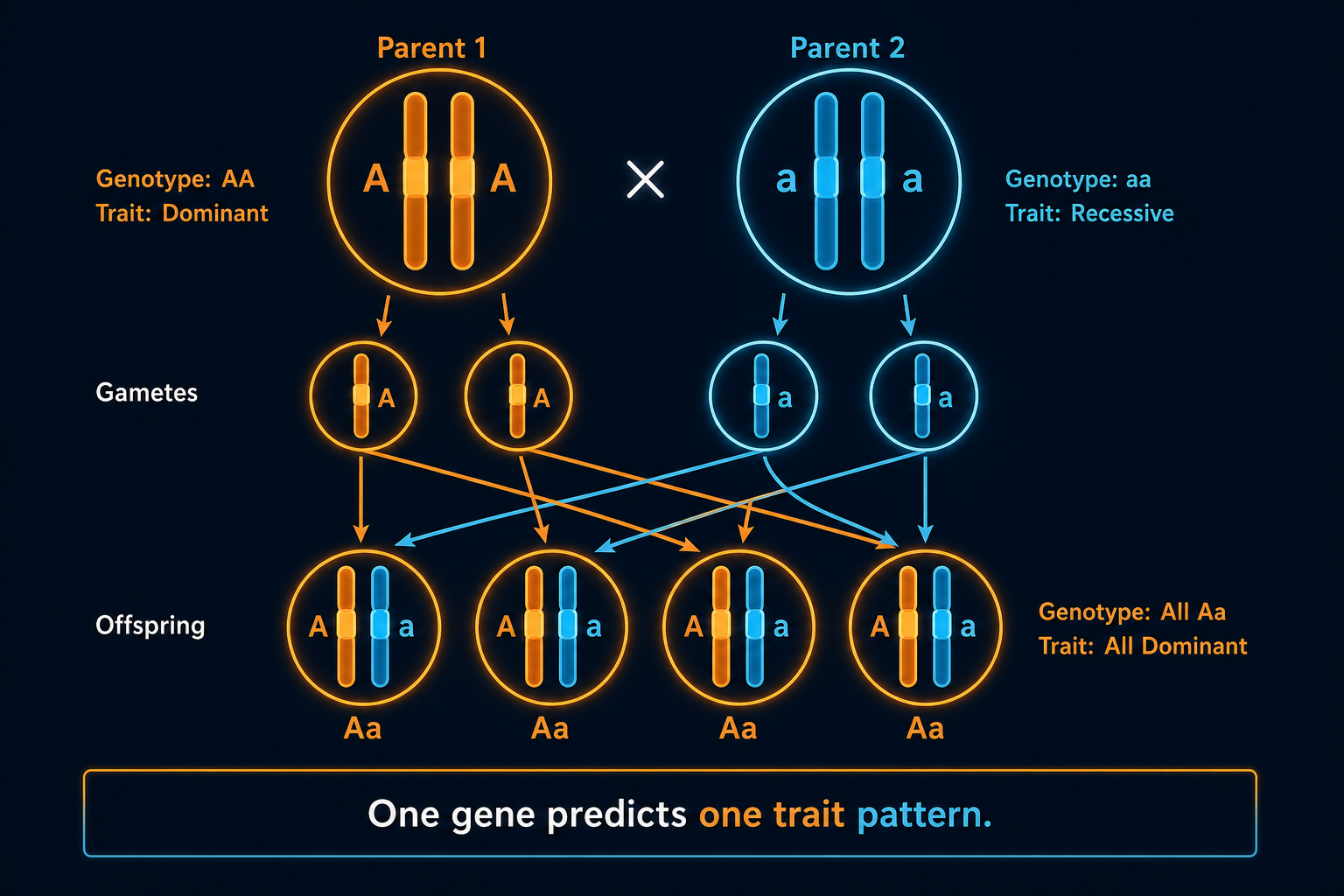
Before building squares, review the general method in Punnett squares and allele basics in Mendelian genetics.
Example: Aa × Aa
Each parent can make A or a gametes.
Put one parent's gametes across the top and the other parent's gametes along the side.
Combine one allele from each parent in every box.
For Aa × Aa, the ratio is 1 AA : 2 Aa : 1 aa.
Under complete dominance, AA and Aa show the dominant phenotype, while aa shows the recessive phenotype.
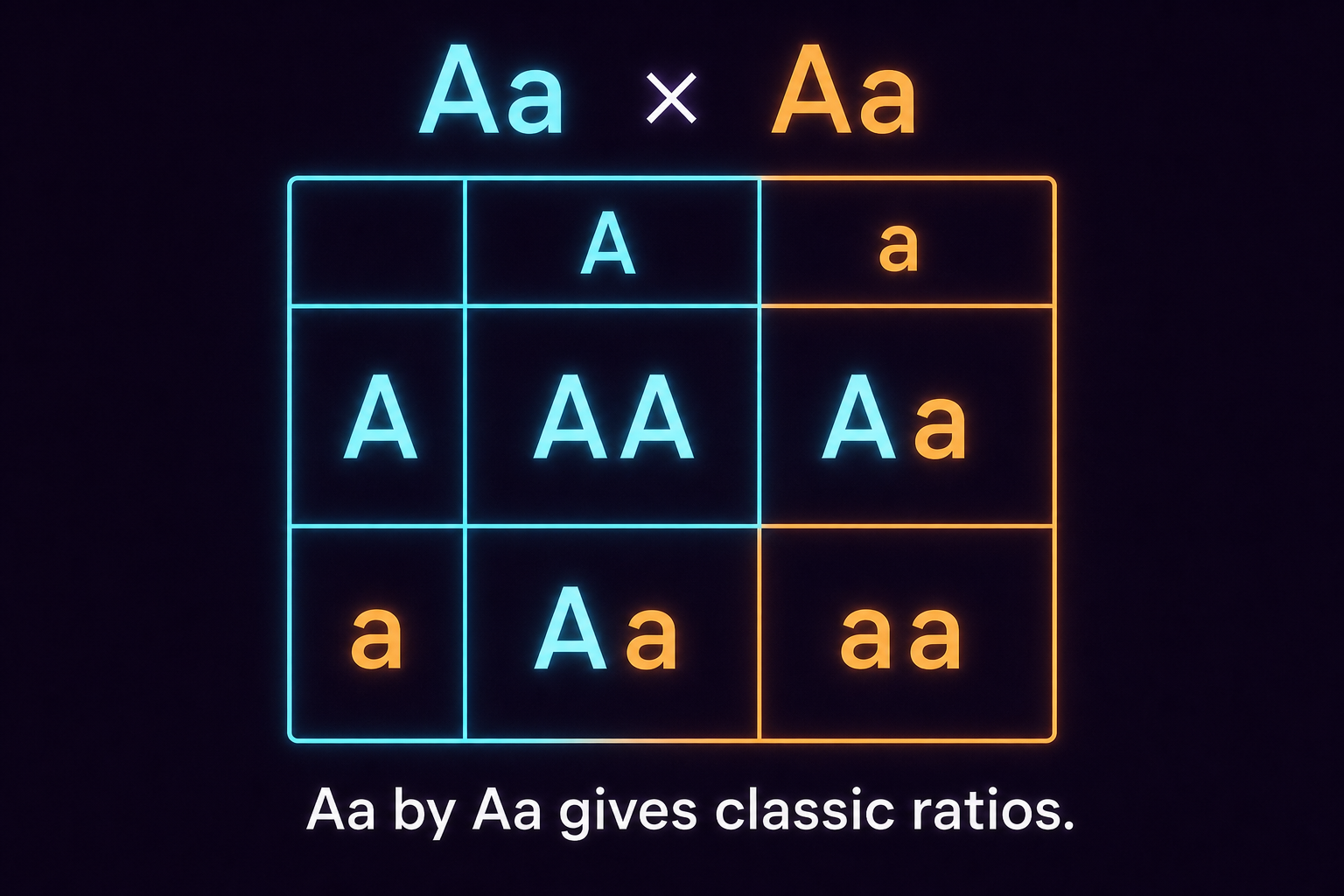
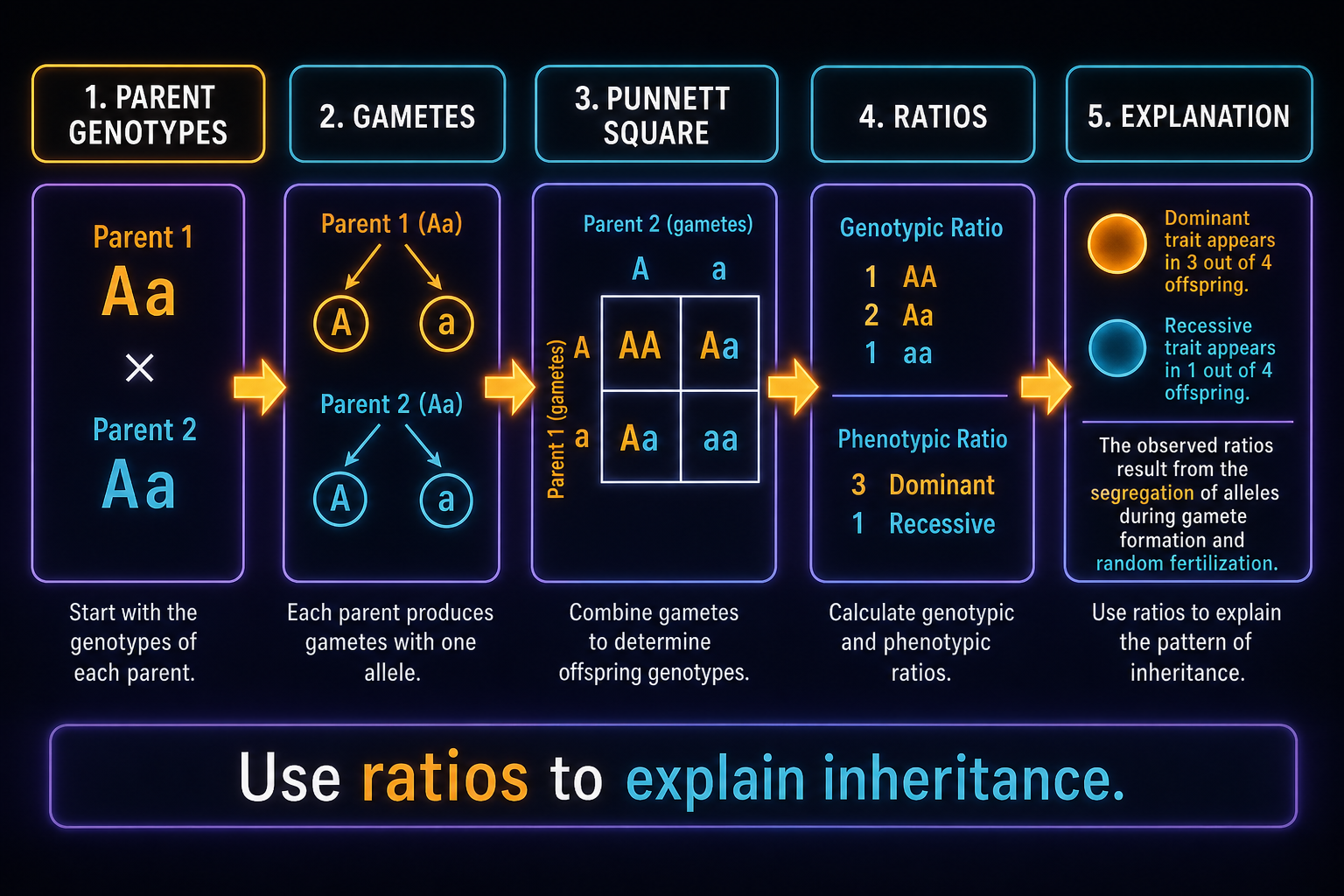
The most common AP Biology monohybrid example is Aa × Aa. Both parents are heterozygous, so each parent can pass either A or a.
| Parent gametes | A | a |
|---|---|---|
| A | AA | Aa |
| a | Aa | aa |
Results:
Genotype ratio: 1 AA : 2 Aa : 1 aa
Phenotype ratio under complete dominance: 3 dominant : 1 recessive
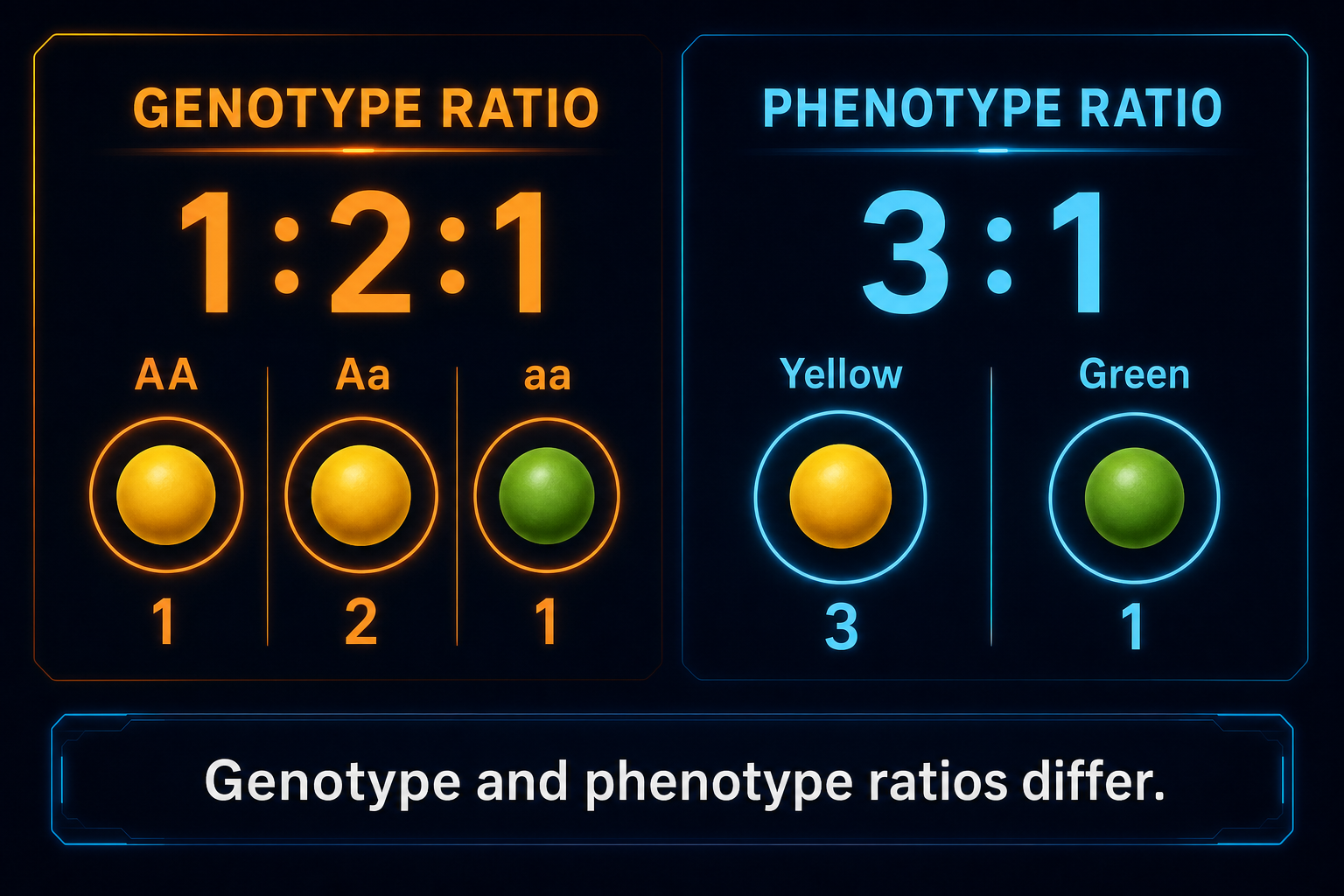
A genotype ratio counts allele combinations. A phenotype ratio counts visible or expressed traits. In complete dominance, AA and Aa usually show the same dominant phenotype, even though they are different genotypes.
| Cross | Genotype Ratio | Phenotype Ratio |
|---|---|---|
| AA × aa | 100% Aa | 100% dominant |
| Aa × Aa | 1 AA : 2 Aa : 1 aa | 3 dominant : 1 recessive |
| Aa × aa | 1 Aa : 1 aa | 1 dominant : 1 recessive |
| aa × aa | 100% aa | 100% recessive |
Not every monohybrid cross is Aa × Aa. AP Biology questions may give homozygous parents, test-cross setups, or ask you to compare expected ratios across different parent pairs. Work through these three common one-gene crosses before practice MCQs.
One parent can only pass A alleles; the other can only pass a alleles. Every offspring receives one A and one a, so all offspring are heterozygous Aa.
Ratios: Genotype ratio: 100% Aa. Phenotype ratio: 100% dominant under complete dominance.
AP clue: AP clue: If a cross produces no recessive offspring and one parent is known homozygous recessive, the other parent must be homozygous dominant.
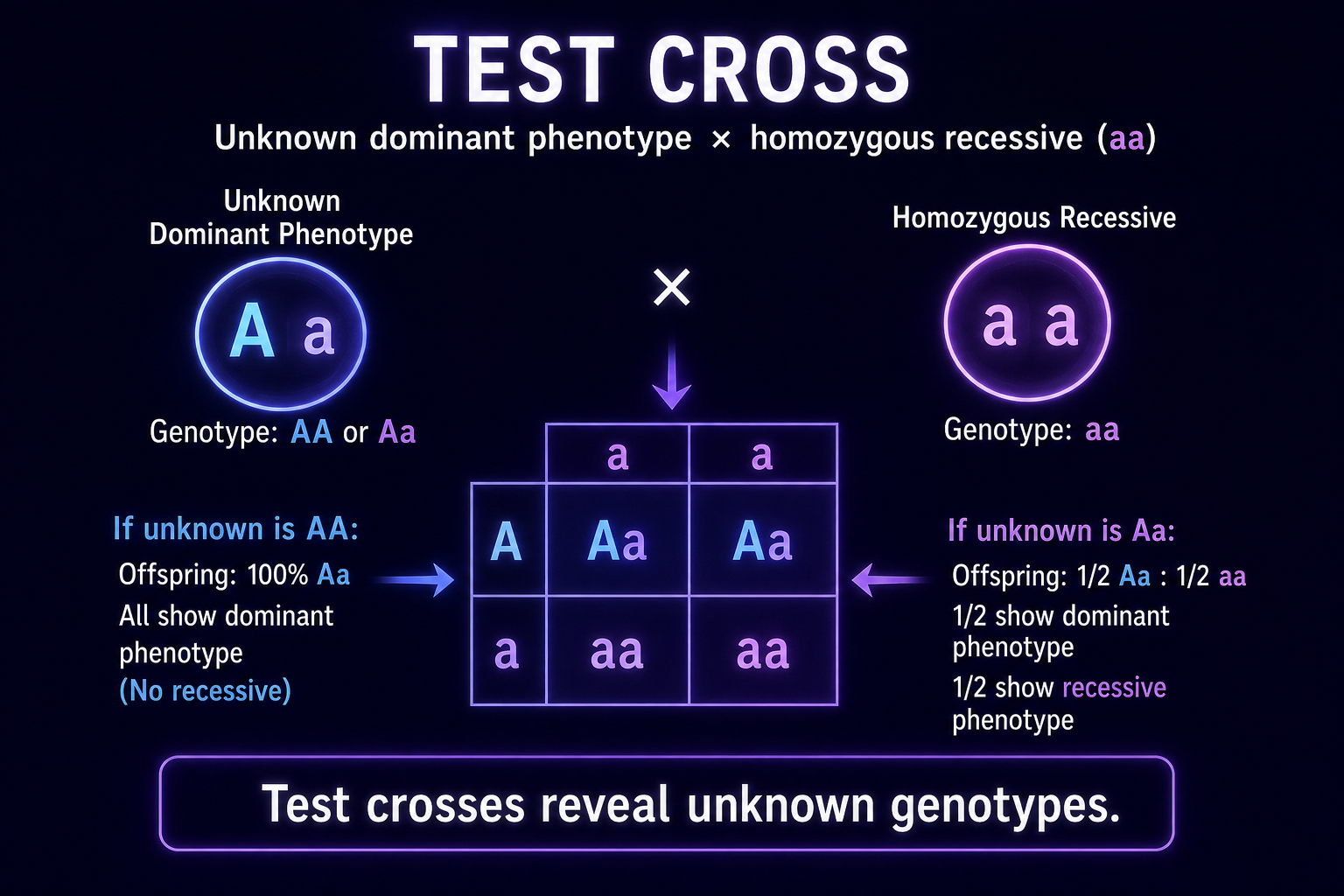
The heterozygous parent makes A and a gametes. The homozygous recessive parent makes only a gametes. Half the offspring are Aa and half are aa.
Ratios: Genotype ratio: 1 Aa : 1 aa. Phenotype ratio: 1 dominant : 1 recessive under complete dominance.
AP clue: AP clue: A 1:1 phenotype ratio often signals Aa × aa, not Aa × Aa. Read the parent genotypes before choosing a ratio.
Both parents pass only a alleles. Every offspring is aa regardless of sample size.
Ratios: Genotype ratio: 100% aa. Phenotype ratio: 100% recessive.
AP clue: AP clue: This cross confirms recessive inheritance but does not reveal dominance by itself—you need a cross that includes at least one dominant allele.
During meiosis, alleles segregate so each gamete carries one allele per gene. That segregation is why parent genotypes determine which gametes appear on the Punnett square edges.
Complete dominance means one allele masks the other allele in a heterozygote. If A is completely dominant over a, both AA and Aa show the dominant phenotype. Only aa shows the recessive phenotype.
Review Mendelian Genetics for Mendel's laws and dominant-recessive allele logic.
A test cross helps determine whether an organism with a dominant phenotype is homozygous dominant or heterozygous. The unknown organism is crossed with a homozygous recessive organism.
Example: Unknown dominant phenotype × aa
A Punnett square predicts possible outcomes and expected ratios. It does not guarantee that a small family will exactly match the ratio. For example, Aa × Aa predicts a 3:1 phenotype ratio, but four actual offspring may not perfectly show three dominant and one recessive.
When observed counts differ from expected ratios, use a chi-square test to test whether the difference is likely due to chance.
The classic 3:1 phenotype ratio assumes complete dominance. If the trait shows incomplete dominance, codominance, multiple alleles, or sex-linked inheritance, the phenotype pattern may change. When a prompt describes blended heterozygotes, both alleles visible, or sex-specific inheritance, switch to non-Mendelian reasoning instead of forcing a 3:1 answer.
Review Non-Mendelian Genetics when ratios do not match classic Mendelian patterns.
→ monohybrid cross
→ 1:2:1 genotype ratio
→ 3:1 phenotype ratio
→ 1:1 phenotype ratio
→ test cross
→ test cross
→ expected, not guaranteed
→ allele combinations
→ expressed traits
Underline the exact wording. Genotype ratio counts AA, Aa, and aa. Phenotype ratio groups visible traits. Many AP Biology errors come from reporting 3:1 when the rubric asks for 1:2:1.
List each parent's possible gametes in the margin. For monohybrid crosses, each gamete carries one allele. If gametes are wrong, every box in the Punnett square will be wrong.
Homozygous means two matching alleles (AA or aa). Heterozygous means two different alleles (Aa). Dominant describes which allele is expressed in a heterozygote, not how common a trait is in a population.
Gamete diversity comes from segregation during meiosis. Each parent contributes one allele per gene at fertilization. Linking meiosis to Punnett square logic earns full reasoning credit on many FRQs.
Fix: Genotype counts allele combinations. Phenotype counts expressed traits.
Fix: For Aa × Aa, 1:2:1 is genotype ratio and 3:1 is phenotype ratio under complete dominance.
Fix: Under complete dominance, Aa shows the dominant phenotype.
Fix: Punnett squares show probability, not exact offspring counts.
Fix: A monohybrid cross usually uses a 2×2 square.
Fix: Use aa to reveal whether the unknown parent carries a recessive allele.
Revealed: 0 of 5 scenarios
The prompt tracks one trait controlled by A and a.
Reveal: Use a monohybrid cross.
The cross is Aa × Aa.
Reveal: Genotype ratio is 1 AA : 2 Aa : 1 aa.
The cross is Aa × aa.
Reveal: Expected genotype ratio is 1 Aa : 1 aa.
A dominant phenotype organism is crossed with aa to find its genotype.
Reveal: This is a test cross.
A student says 3:1 is the genotype ratio for Aa × Aa.
Reveal: Incorrect. 3:1 is the phenotype ratio under complete dominance. The genotype ratio is 1:2:1.
Answer all eight questions. Choices shuffle on reload.
More drills: Unit 5 practice questions or pedigree analysis.
Open each card, draft your response, then reveal the rubric and sample answer.
Two heterozygous pea plants are crossed for a trait showing complete dominance. Predict the genotype and phenotype ratios and explain why the two ratios are different.
The cross is Aa × Aa. Each parent can produce A or a gametes. The offspring genotypes are AA, Aa, Aa, and aa, so the genotype ratio is 1 AA : 2 Aa : 1 aa. Under complete dominance, AA and Aa show the dominant phenotype, while aa shows the recessive phenotype. Therefore, the phenotype ratio is 3 dominant : 1 recessive. The ratios differ because genotype counts allele combinations, while phenotype counts visible traits.
Status: Draft your answer first—then open the rubric or sample.
A plant with a dominant phenotype is crossed with a homozygous recessive plant. Some offspring show the recessive phenotype. Explain what this reveals about the dominant-phenotype parent.
This is a test cross because the dominant-phenotype plant is crossed with a homozygous recessive plant. The recessive parent can only contribute a recessive allele. If some offspring show the recessive phenotype, those offspring must have received a recessive allele from both parents. Therefore, the dominant-phenotype parent must carry a recessive allele and is heterozygous, Aa.
Status: Draft your answer first—then open the rubric or sample.
A monohybrid cross is a genetics cross that tracks one gene with two alleles. In a common heterozygous × heterozygous cross, Aa × Aa, the genotype ratio is 1 AA : 2 Aa : 1 aa. If A is completely dominant over a, the phenotype ratio is 3 dominant : 1 recessive.
Monohybrid means one gene, one trait pattern. A monohybrid cross follows inheritance for a single gene rather than two genes at once.
Identify parent genotypes, list possible gametes, build a 2×2 Punnett square, fill offspring genotypes, count the genotype ratio, and convert to phenotype ratio under complete dominance.
The expected genotype ratio for Aa × Aa is 1 AA : 2 Aa : 1 aa, also written as 1:2:1.
Under complete dominance, Aa × Aa produces a 3 dominant : 1 recessive phenotype ratio because AA and Aa show the dominant phenotype while aa shows the recessive phenotype.
Genotype ratio counts allele combinations (AA, Aa, aa). Phenotype ratio counts expressed traits. Under complete dominance, AA and Aa both show the dominant phenotype, so three of four genotypes look dominant.
A test cross mates an individual with unknown genotype to a homozygous recessive individual (aa). Recessive offspring reveal that the unknown parent carries a recessive allele.
Genotype ratio counts allele combinations such as 1 AA : 2 Aa : 1 aa. Phenotype ratio counts visible or expressed traits such as 3 dominant : 1 recessive.
No. Punnett squares show expected probability, not guaranteed offspring counts. Small samples may not match the predicted ratio exactly.
The 3:1 phenotype ratio applies to a heterozygous × heterozygous monohybrid cross (Aa × Aa) when the trait follows complete dominance.
A monohybrid cross tracks one gene with two alleles. A dihybrid cross tracks two genes at once and uses a larger Punnett square. Monohybrid crosses focus on one-trait inheritance patterns.
State parent genotypes, list gametes, describe offspring genotypes, report genotype and phenotype ratios separately, and explain why the ratios differ under complete dominance.