Refugees, IDPs, and Asylum Seekers in AP Human Geography
Learn how forced migration creates different categories of displaced people, and how border crossing, legal status, and protection claims separate refugees, IDPs, and asylum seekers.
Updated June 12, 2026 · Reviewed by APScore5 Editorial Team
AP Human Geography · Unit 2Forced migration22 flashcards16 AP-style questionsFRQ-ready examples
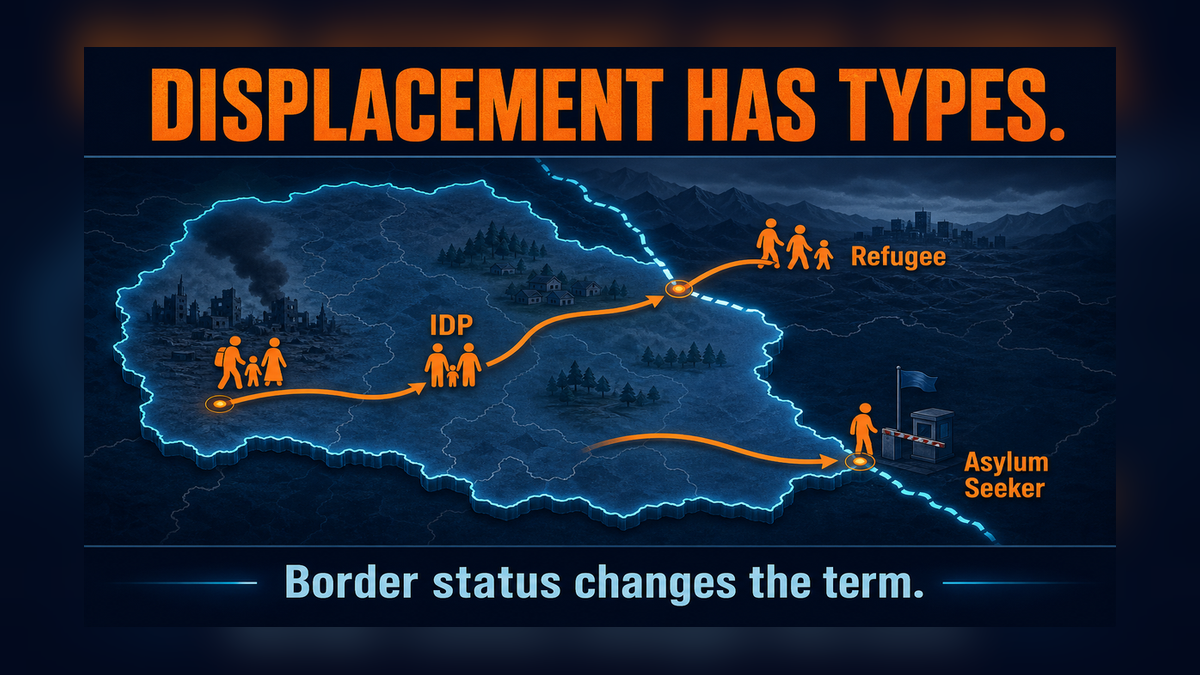
Refugees, IDPs, and asylum seekers are connected to forced migration, but border crossing and legal status change the term.
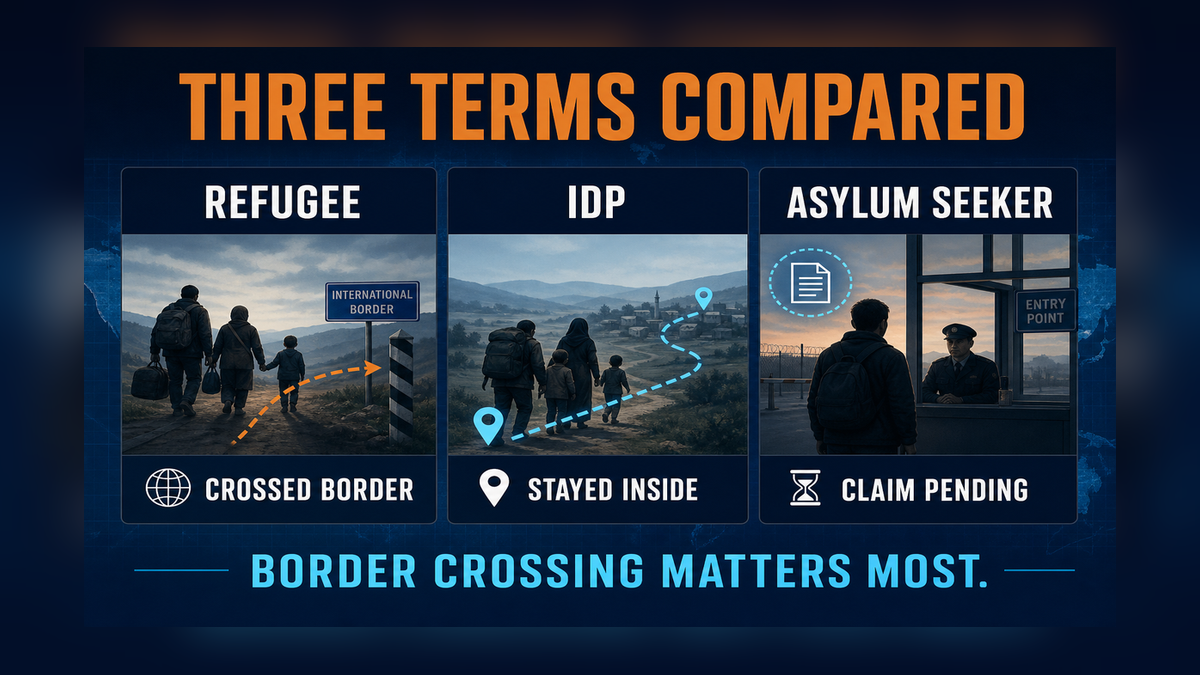
Refugees AP Human Geography questions test forced migration by asking whether displaced people crossed an international border and whether legal protection was granted. Refugees cross borders, IDPs stay inside their country, and asylum seekers request protection while their claim is pending.
Quick answer
What Is the Difference Between Refugees, IDPs, and Asylum Seekers?
Refugees, internally displaced persons, and asylum seekers are all connected to forced migration, but they are different categories. A refugee is forced to leave their country and crosses an international border. An internally displaced person, or IDP, is forced to move but stays within their own country. An asylum seeker is a person who has crossed a border and is requesting legal protection, but their claim has not yet been decided.
Key Takeaways
Refugees cross an international border.
IDPs are displaced within their own country.
Asylum seekers request protection in another country.
All three are connected to forced migration.
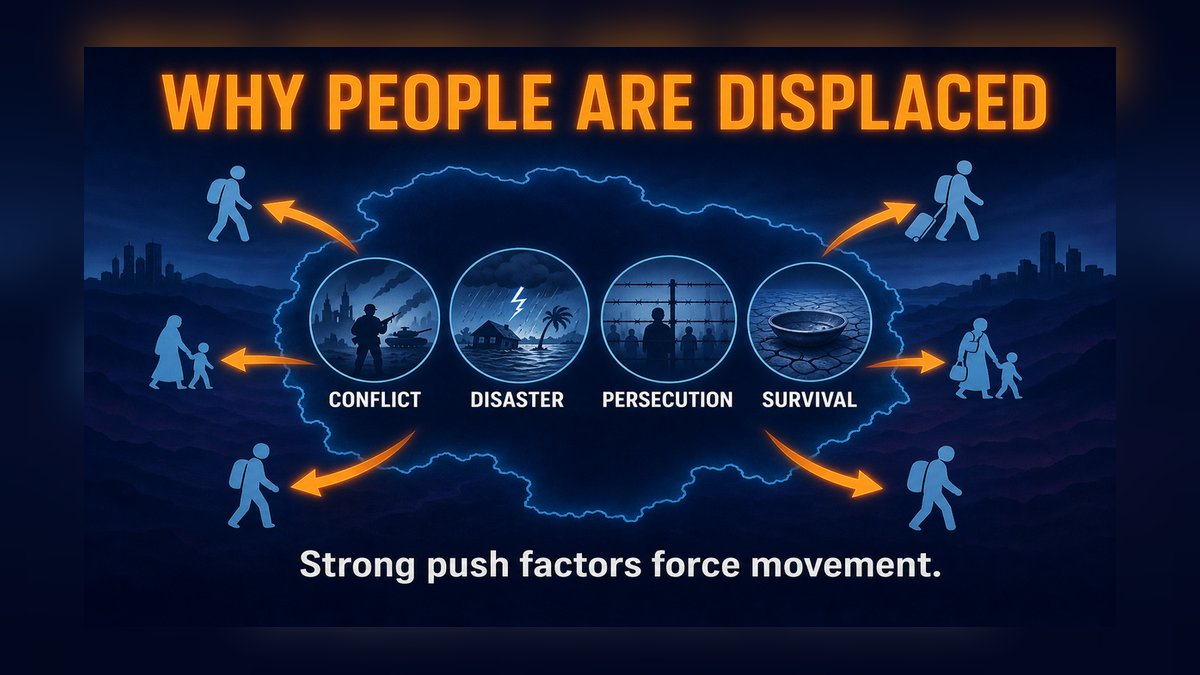
The cause is often war, persecution, disaster, violence, or survival pressure.
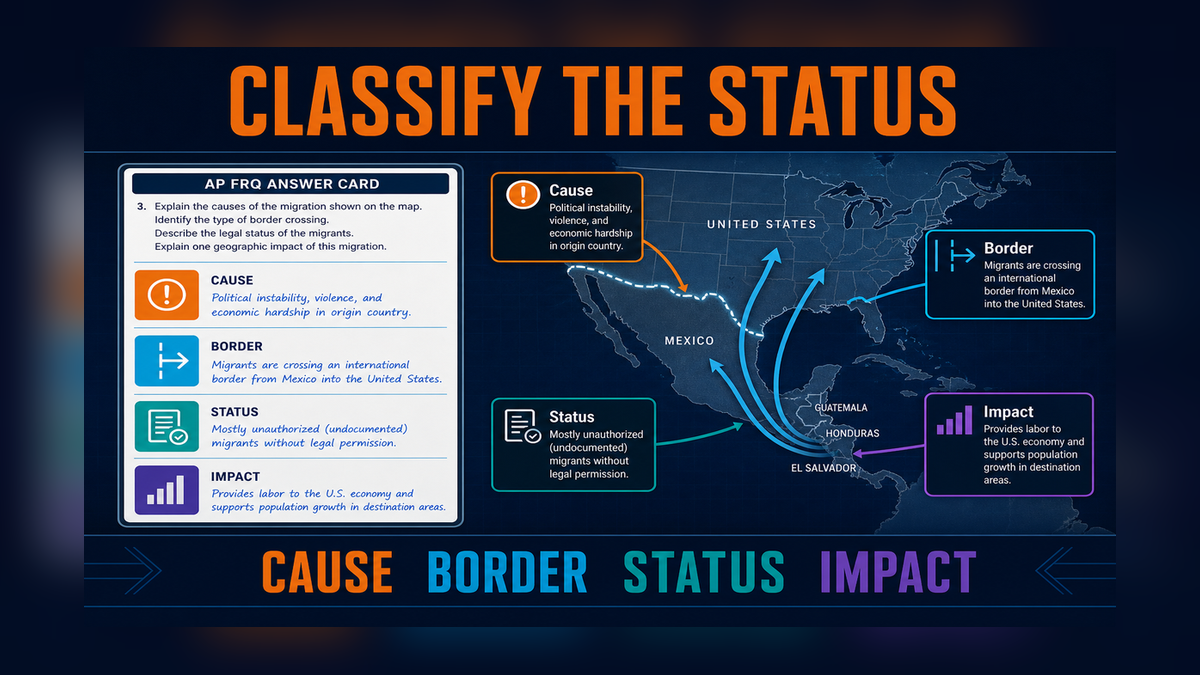
Strong AP answers identify the cause, border crossing, legal status, and geographic impact.
These terms describe different forms of displacement. The main AP exam clue is whether people cross an international border and whether their legal protection status has been granted. For the broader migration path, use the Unit 2 Population and Migration hub.
Refugee
A person forced to leave their country because of war, persecution, violence, or danger.
Internally Displaced Person
A person forced to move within their own country.
Asylum Seeker
A person who requests protection in another country, but whose claim has not yet been legally decided.
Forced Migration
Movement caused by danger, coercion, persecution, conflict, disaster, or survival pressure.
Displacement
Being forced to leave home or usual residence.
Host Country
A country that receives refugees or asylum seekers.
Country of Origin
The country a displaced person leaves.
Border Crossing
The key difference between refugees and internally displaced persons.
When a scenario asks why people move, connect this page to push and pull factors: danger at the origin is a push factor, while safety or asylum access at the destination can be a pull factor.
Cross-border forced migration
What Is a Refugee?
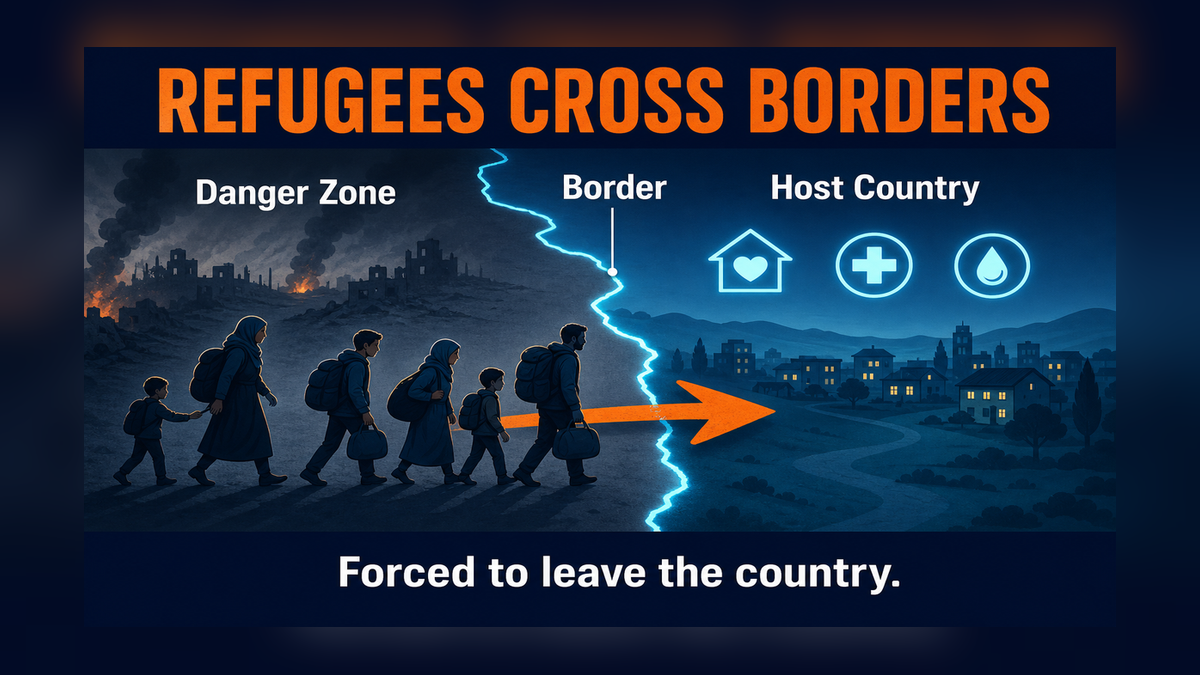
Refugees are people forced to leave their country because of danger such as war, persecution, or violence.
A refugee is a person forced to leave their country because staying is unsafe. Refugees cross an international border and seek safety in another country. In AP Human Geography, refugee flows are examples of forced migration and often connect to political conflict, ethnic violence, persecution, war, or disaster.
Common refugee causes
war
ethnic conflict
religious persecution
political persecution
violence
state collapse
disaster or famine in some contexts
AP exam language
forced to leave country
crosses border
recognized protection need
host country
country of origin
refugee camp
AP Exam Tip: If the person crosses an international border because of danger, think refugee.
Internal forced migration
What Is an Internally Displaced Person?
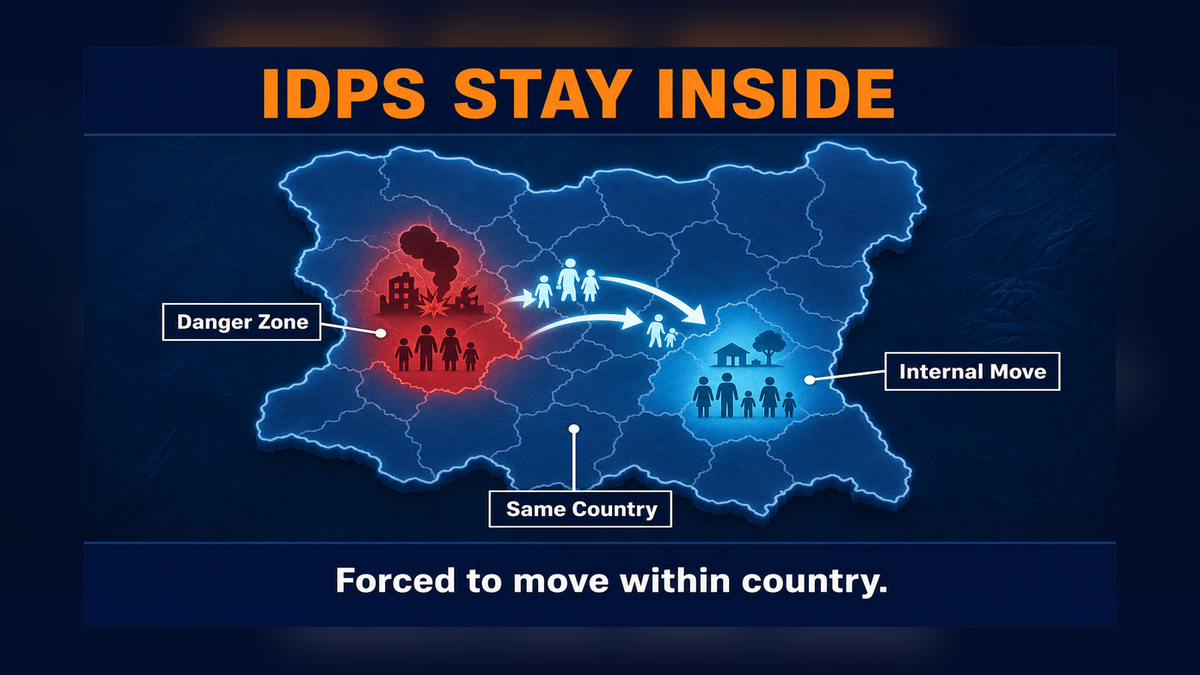
Internally displaced persons are forced to move but remain within their country’s borders.
An internally displaced person, or IDP, is forced to move from home but remains inside the same country. IDPs may move from a conflict zone to a safer region, from a disaster area to another province, or from rural areas to camps or cities inside the same state.
Common IDP causes
civil war
ethnic conflict
natural disaster
development projects
violence
famine
environmental collapse
AP exam language
inside the same country
internal displacement
safer region within state
no international border crossing
domestic camps or cities
national government response
AP Exam Tip: If the person is forced to move but does not cross an international border, think IDP.
Pending protection claim
What Is an Asylum Seeker?
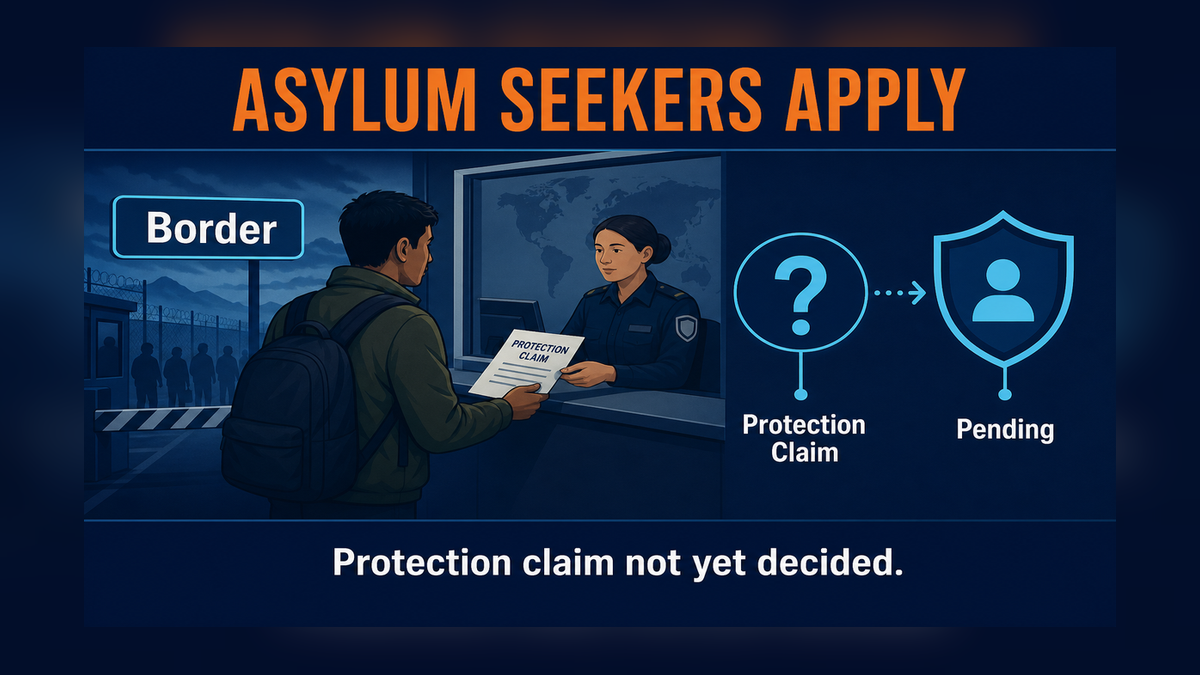
Asylum seekers request protection in another country, but their legal claim has not yet been decided.
An asylum seeker is a person who has crossed into another country and is requesting legal protection. The person may later be recognized as a refugee, but the claim is still being reviewed. In AP Human Geography, asylum seekers show how legal status, borders, sovereignty, and migration policy affect forced migration.
AP Exam Tip: An asylum seeker is not automatically the same as a recognized refugee. The protection claim is still pending.
Compare
Refugee vs IDP vs Asylum Seeker
The key difference is whether the person crosses an international border and whether protection status has been granted.
The three terms are related, but AP exam questions often test the differences. Focus on border crossing and legal status.
Term
Forced to Move?
Crosses International Border?
Legal Status
AP Clue
Refugee
Yes
Yes
Recognized as needing protection
Forced across a border.
IDP
Yes
No
Displaced within own country
Forced but stays inside country.
Asylum Seeker
Usually yes
Yes
Protection claim pending
Has requested asylum.
AP Exam Tip: Border crossing separates refugees from IDPs. Legal recognition separates refugees from asylum seekers.
Push factors
Causes of Refugee and IDP Flows
Forced displacement is commonly caused by conflict, persecution, disaster, famine, and survival pressure.
Refugees, IDPs, and asylum seekers are usually created by strong push factors. These push factors make staying unsafe or impossible. In AP writing, do not list the cause alone; explain how the cause forced movement.
War and Conflict
People flee violence, destruction, and insecurity.
Persecution
People flee because of religion, ethnicity, political opinion, nationality, or social group identity.
Natural Disasters
Floods, earthquakes, hurricanes, droughts, or fires can displace people.
Famine and Food Insecurity
Crop failure and food shortages can force people to move.
State Collapse
Weak governments may fail to provide safety or services.
Development Projects
Dams, roads, mines, or urban redevelopment can displace communities.
Environmental Change
Sea-level rise, desertification, or repeated drought can create long-term displacement.
AP Exam Tip: Always connect the cause to forced movement. Do not just list war or disaster; explain why it made staying unsafe or impossible.
Spatial effects
Geographic Impacts of Refugee and IDP Flows
Forced displacement affects both origin regions and destination regions. AP questions often ask students to explain these spatial impacts, so connect the status term to a specific place-based consequence.
Population Loss at Origin
Conflict or disaster regions may lose young adults, workers, and families.
Refugee Camps
Large camps may form near borders or in host countries.
Pressure on Host Countries
Schools, housing, healthcare, water, and jobs may become strained.
Urban Growth
Many displaced people move to cities, increasing demand for services.
Border Tensions
Large flows can create political pressure between states.
Cultural Change
Migrants may bring languages, religions, traditions, and community networks.
Remittances
Displaced people may send money back to families when possible.
Humanitarian Aid
International organizations may provide food, shelter, medicine, and legal support.
Use scale of analysis when a prompt asks for local camp effects, national policy effects, or regional migration flows.
Forced migration
How Refugees, IDPs, and Asylum Seekers Connect to Forced Migration
Refugees, IDPs, and asylum seekers are all part of forced migration because people move under danger, pressure, or coercion. However, not every displaced person has the same legal status or crosses the same type of boundary.
Migration Category
Main Cause
Border Relationship
Example
Refugee
War or persecution
Crosses international border
Family flees conflict into another country.
IDP
Conflict or disaster
Moves inside country
People relocate to safer region within same state.
Asylum Seeker
Fear of persecution
Requests protection after crossing border
Person applies for asylum in destination country.
AP Exam Tip: A refugee is a type of forced migrant, but not every forced migrant is a refugee. Review the full forced vs voluntary migration guide when a question asks how much choice the migrant had.
FRQ strategy
How to Write About Refugees, IDPs, and Asylum Seekers on the AP Exam
Strong displacement FRQs classify the person’s status, explain the cause, and describe the geographic impact.
Strong AP answers classify the person correctly, explain the cause of displacement, and describe a geographic impact. The highest-value distinction is border crossing.
Cause→Border Crossing→Status→Geographic Impact
Sentence Starters
This person is a refugee because...
This person is an IDP because...
This person is an asylum seeker because...
The cause of displacement is...
A geographic impact on the destination is...
A geographic impact on the origin is...
Strong answer example
The migrants are refugees because they are forced to leave their country due to conflict and cross an international border. The conflict is the push factor. One geographic impact is that the host country may need to provide housing, healthcare, education, and refugee camps near border areas.
Mistakes
Common Refugees, IDPs, and Asylum Seekers Mistakes
Mistake
Fix
Calling every displaced person a refugee.
Refugees cross international borders. IDPs do not.
Confusing asylum seekers and refugees.
Asylum seekers have requested protection, but their claim is still pending.
Ignoring the cause of displacement.
Explain whether war, persecution, disaster, or violence forced movement.
Forgetting geographic impacts.
Mention camps, host-country pressure, border tension, urban growth, or population loss.
Treating forced migration as voluntary.
Displaced people often have limited or no meaningful choice.
Not using scale.
Analyze impacts at local, national, regional, and global scales.
Quick check
Quick Check
A family flees violence but moves to a safer region within the same country. Which term best describes them?
FRQ lab
Refugees, IDPs, and Asylum Seekers FRQ Practice
Draft your response, then reveal the rubric and suggested answer. The goal is to classify each group and connect displacement to cause, border crossing, legal status, and geographic impact.
Prompt
A civil conflict forces thousands of people to leave their homes. Some cross into a neighboring country and are recognized as needing protection. Others move to safer cities within the same country. A third group crosses a border and applies for legal protection, but their cases are still pending.
A. Define refugee.
B. Define internally displaced person.
C. Define asylum seeker.
D. Explain one cause of forced displacement in the scenario.
E. Describe one geographic impact of the migration flow on a destination region.
Tip: Define the status before explaining the impact.
Rubric
A: Must define refugee as forced migrant crossing an international border.
B: Must define IDP as forced migrant remaining within the same country.
C: Must define asylum seeker as a person requesting protection whose claim is pending.
D: Must connect conflict, persecution, disaster, or violence to forced movement.
E: Must describe a geographic impact such as camps, service pressure, border tension, urban growth, population change, or humanitarian aid needs.
Suggested answer
A. A refugee is a person forced to leave their country because of danger such as war, persecution, or violence.
B. An internally displaced person is forced to move but remains within their own country.
C. An asylum seeker is a person who has crossed into another country and requested protection, but whose claim has not yet been legally decided.
D. Civil conflict causes forced displacement because violence makes staying in the origin region unsafe.
E. One geographic impact is that destination cities or host countries may experience pressure on housing, schools, healthcare, water, jobs, or refugee services.
Status: Draft first, then compare your answer with the rubric.
Practice
Refugees, IDPs, and Asylum Seekers Practice Questions
16 AP-style MCQs. Choices shuffle on load. Tap an answer for an explanation and AP clue.
Question 1
Which statement best defines a refugee in AP Human Geography?
AP exam clue: Refugee questions usually include danger plus an international border crossing.
Question 2
Which statement best defines an internally displaced person?
AP exam clue: Same country plus forced movement means IDP.
Question 3
Which statement best defines an asylum seeker?
AP exam clue: Look for applies for asylum, requests protection, or claim pending.
Question 4
A family flees civil war and crosses into a neighboring country where they are recognized as needing protection. Which term best applies?
AP exam clue: Border crossing plus recognized protection points to refugee status.
Question 5
A family leaves a conflict zone and moves to a safer city within the same country. Which term best applies?
AP exam clue: If the border is not crossed, do not call them refugees.
Quick pause: review the explanation before the next set.
Question 6
A person crosses a border and files a protection claim that has not yet been approved. Which term best applies?
AP exam clue: Pending legal status is the key asylum seeker clue.
Question 7
Which clue most strongly separates refugees from internally displaced persons?
AP exam clue: Border crossing matters most for refugee vs IDP questions.
Question 8
Which clue most strongly separates refugees from asylum seekers?
AP exam clue: Legal status separates recognized refugee from pending asylum claim.
Question 9
Which cause most directly creates forced displacement?
AP exam clue: Forced displacement needs danger, coercion, or survival pressure.
Question 10
A hurricane destroys housing and residents relocate to shelters in another province. Which classification is best?
AP exam clue: Disaster plus no border crossing usually points to IDP or internal displacement.
Quick pause: review the explanation before the next set.
Question 11
Which geographic impact is most likely in an origin region after a major refugee flow?
AP exam clue: Origin impacts often involve population loss, age structure change, or labor change.
Question 12
Which geographic impact is most likely in a host country receiving many refugees?
AP exam clue: Destination impacts often involve services, housing, jobs, and infrastructure.
Question 13
Why might refugee flows create pressure on host countries?
AP exam clue: Host-country pressure is a common AP impact of forced migration.
Question 14
Where are refugee camps most likely to form?
AP exam clue: Look for border-adjacent locations and humanitarian aid.
Question 15
A prompt asks students to compare local, national, and regional effects of an IDP flow. Which concept is being tested?
AP exam clue: Scale questions ask what changes when you zoom in or out.
Quick pause: review the explanation before the next set.
Question 16
In an FRQ scenario, some people flee conflict across a border, others move within the same country, and another group applies for protection abroad. What should the student do first?
AP exam clue: FRQ status classification starts with border crossing and legal status.
Flashcards
Refugees, IDPs, and Asylum Seekers Flashcards
Use these 22 cards for terms, definitions, and AP exam clues. Tap the card to flip from term to explanation.
Card 1 of 22Tap card to flip
Quick pause: say the definition aloud before the next card unlocks.
Internal vs International MigrationRavenstein’s Laws of MigrationRemittancesBrain DrainBoundary Disputes
FAQs
FAQs About Refugees, IDPs, and Asylum Seekers in AP Human Geography
What is a refugee in AP Human Geography?
A refugee is a person forced to leave their country because of danger such as war, persecution, violence, or conflict.
What is an internally displaced person?
An internally displaced person, or IDP, is forced to leave home but remains within the same country.
What is an asylum seeker?
An asylum seeker is a person who has crossed into another country and requested legal protection, but whose claim has not yet been decided.
What is the difference between a refugee and an IDP?
A refugee crosses an international border, while an IDP is displaced within their own country.
What is the difference between a refugee and an asylum seeker?
A refugee has been recognized as needing protection, while an asylum seeker has requested protection but is still waiting for a decision.
Are refugees forced migrants?
Yes. Refugees are forced migrants because they leave due to danger, persecution, conflict, or violence.
Are IDPs forced migrants?
Yes. IDPs are forced migrants, but they do not cross an international border.
What causes refugee flows?
Refugee flows are often caused by war, persecution, ethnic conflict, religious violence, political instability, famine, disaster, or state collapse.
What is an example of an IDP?
An example of an IDP is a family that flees a conflict zone but relocates to a safer city within the same country.
Why are refugees important in AP Human Geography?
Refugees are important because they show how forced migration, political boundaries, sovereignty, conflict, population change, and humanitarian systems shape geographic patterns.
How do refugees affect host countries?
Refugees can increase demand for housing, healthcare, schools, water, jobs, transportation, and humanitarian services in host countries.
How should students write about refugees, IDPs, and asylum seekers in an FRQ?
Students should identify the correct status, explain the cause of displacement, mention whether an international border was crossed, and describe a geographic impact.
Final review
Refugees, IDPs, and Asylum Seekers: Final Review
Refugees are forced migrants who cross an international border.
IDPs are forced migrants who remain inside their own country.
Asylum seekers have requested protection, but their claim has not yet been decided.
Forced displacement often begins with war, persecution, disaster, violence, famine, or state collapse.
AP answers should classify status, explain cause, identify border crossing, and describe a geographic impact.