Internal sovereignty
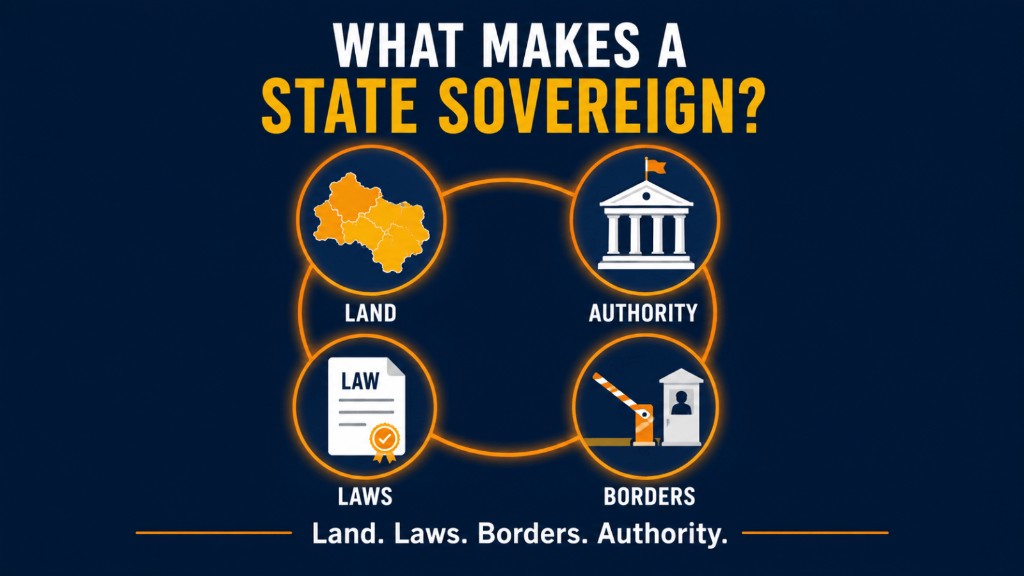
Authority inside the state’s borders—making laws, collecting taxes, policing territory, and running elections.
Example: A national parliament passes a tax law that applies across the country.
Control inside bordersPower over territory · Unit 4
Sovereignty in AP Human Geography means a state has the authority to control its territory, make laws, govern its people, and act independently from outside powers.
Sovereignty is one of the most important ideas in Unit 4 because it explains why states have political power. If a place has land and people but cannot govern itself independently, its sovereignty may be limited or missing. AP questions often connect sovereignty to boundaries, devolution, supranationalism, and conflict.
0% · Sovereignty journey
Sovereignty is the political authority of a state to govern itself, control its territory, create laws, manage borders, and make decisions without being controlled by another state. In AP Human Geography, sovereignty helps explain why states have power and why conflicts happen when that power is challenged.
Tap each idea when you can explain it aloud:
0/4 ideas checked off
Follow this path from a basic state to the forces that can weaken political control.
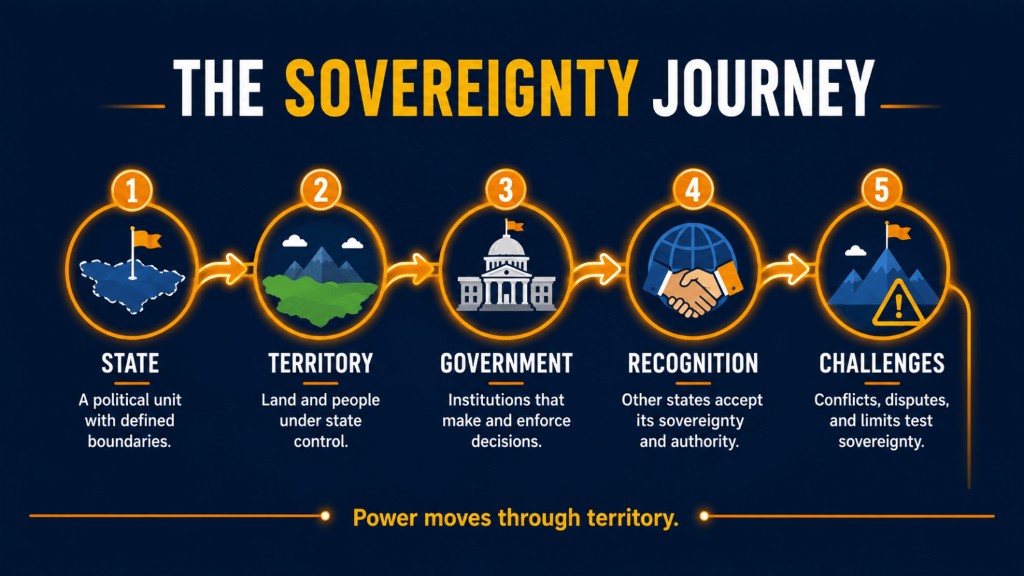
A state needs territory, population, government, and sovereignty.
The state controls a defined area on Earth’s surface.
The state creates and enforces laws inside its borders.
Other states treat it as an independent political unit.
Globalization, supranational organizations, devolution, and conflict can limit or challenge sovereignty.
Once you understand this path, sovereignty becomes easier to spot in AP multiple-choice questions and FRQs.
Sovereignty is the foundation of political geography because it connects power to space. A state is not just a place on a map; it is a political unit that claims authority over people, land, borders, and resources.
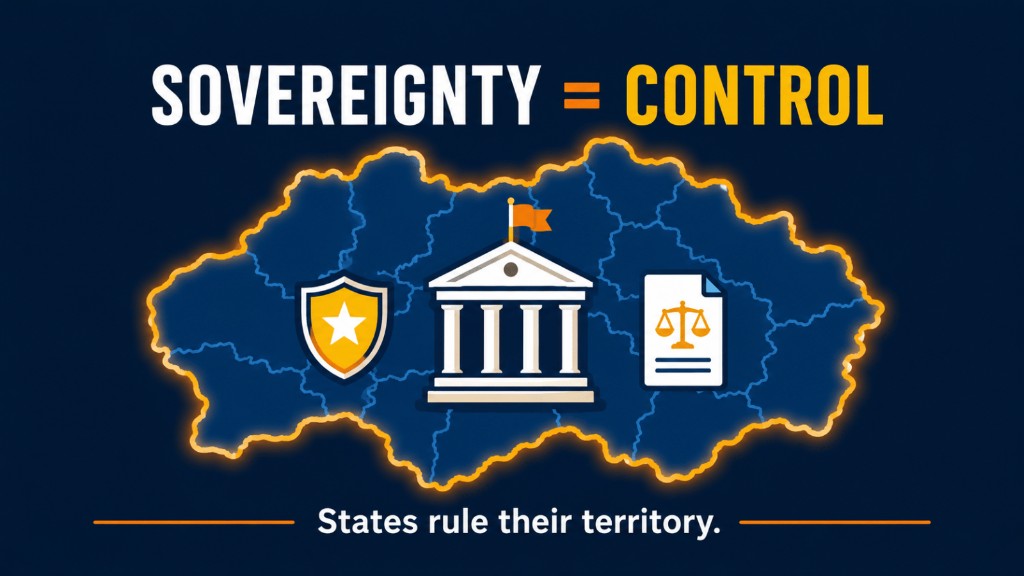
Sovereignty matters because it helps explain:
For AP Human Geography, a sovereign state usually has four core features.
| Feature | What It Means | AP Exam Clue |
|---|---|---|
| Defined territory | The state controls a specific area | Borders appear on a map |
| Permanent population | People live there long-term | Residents are governed by the state |
| Government | Leaders and institutions make laws | Laws, courts, police, agencies |
| Sovereignty | The state has independent authority | Not controlled by another state |
Recognition by other states is also important because international recognition helps confirm that a state is treated as independent in the global political system.
Sovereignty has two useful parts: internal sovereignty and external sovereignty.
| Type | Meaning | Example |
|---|---|---|
| Internal sovereignty | Authority inside the state’s borders | A government making laws and collecting taxes |
| External sovereignty | Independence from outside control | A state signing treaties or joining international organizations |
Tap each example when you can explain how it shows sovereignty.
A state shows sovereignty when its government creates and enforces laws within its territory.
A state shows sovereignty when it manages immigration, trade, and security at its borders.
A state shows external sovereignty when it signs agreements with other states.
A state shows sovereignty when it controls land, water, minerals, or energy resources inside its territory.
A state may voluntarily join a supranational organization, but that decision can also limit some independent control.
Sovereignty can be challenged when a state’s control over territory, people, laws, or decisions becomes limited.
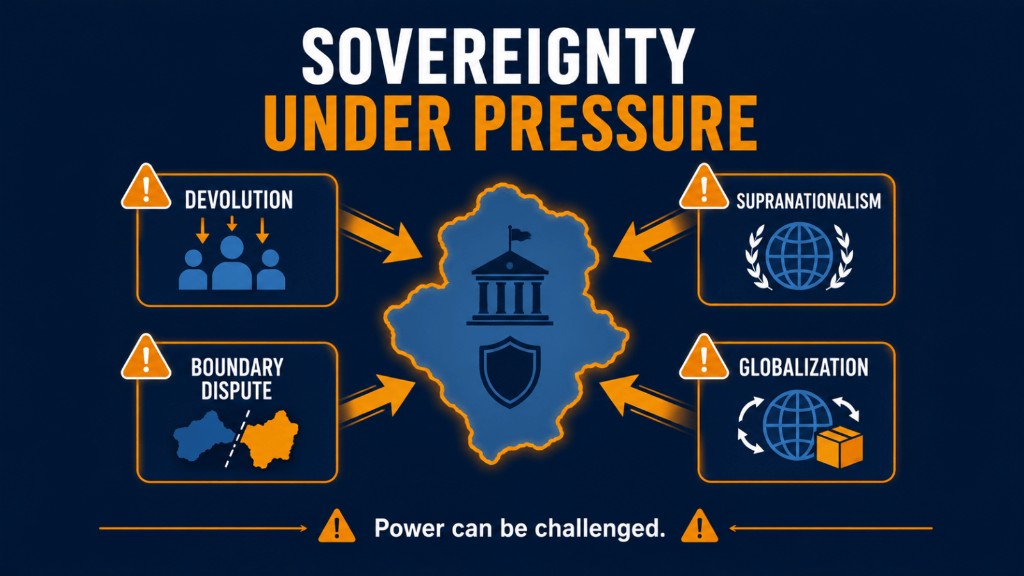
Regional groups demand more power from the central government.
AP example: Scotland, Catalonia, QuebecOn the exam, name the process and tie it to territory or central authority.
States share power with larger organizations above the national level.
AP example: European UnionOn the exam, name the process and tie it to territory or central authority.
Economic forces can reduce full state control over trade and investment.
AP example: Multinational corporations and trade networksOn the exam, name the process and tie it to territory or central authority.
States disagree over who owns land or maritime zones.
AP example: Land or maritime disputesOn the exam, name the process and tie it to territory or central authority.
The government loses control over parts of its territory.
AP example: Civil conflict or separatist movementsOn the exam, name the process and tie it to territory or central authority.
Non-state actors challenge security across borders.
AP example: Cross-border threatsOn the exam, name the process and tie it to territory or central authority.
Explore related guides: devolution, boundary disputes, and supranationalism on the Unit 4 hub.
Sovereignty is legal and political authority over a state. Territoriality is the attempt to control or influence space. They are related, but not the same.
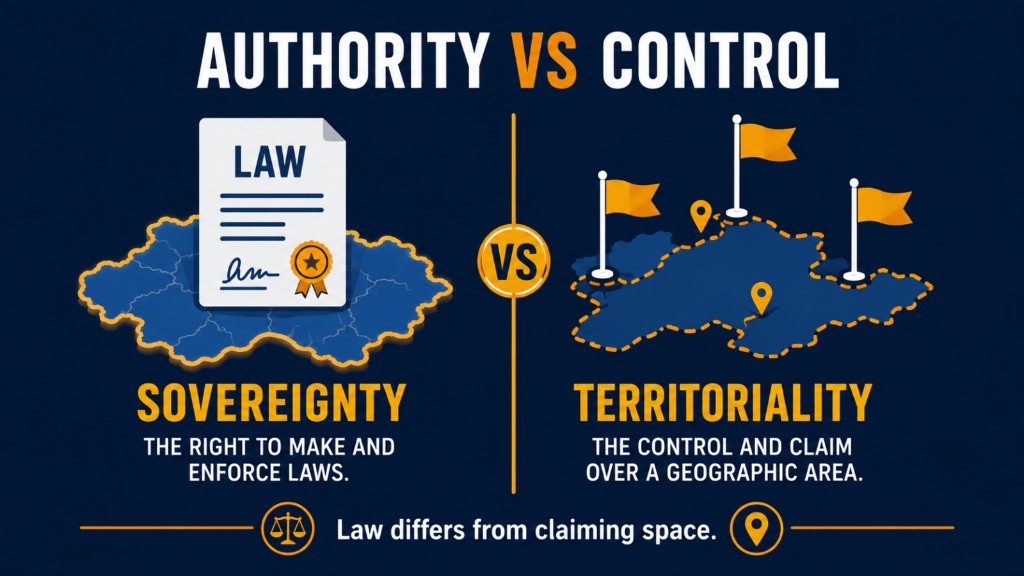
| Concept | Main Idea | Best AP Clue |
|---|---|---|
| Sovereignty | Legal authority of a state | Government, laws, recognition, independence |
| Territoriality | Control or influence over space | Defending, marking, claiming, or organizing territory |
A state uses territoriality when it marks borders, builds checkpoints, or defends territory. It shows sovereignty when it has recognized authority to govern that territory.
Pick a verdict for each scenario, then tap Check my guess. Aim for 6/6 before you finish this section.
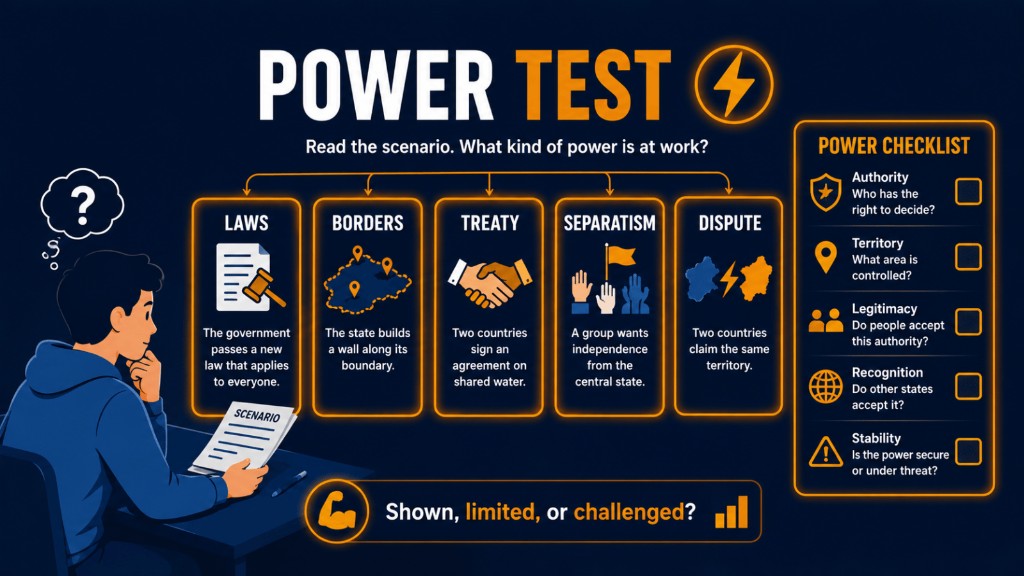
Scenario 1: A government passes national laws that apply across its territory.
Verdict: Sovereignty shown.
Scenario 2: A regional group demands independence from the central government.
Verdict: Sovereignty challenged.
Scenario 3: A state controls who enters through its official border crossings.
Verdict: Sovereignty shown.
Scenario 4: A supranational organization requires member states to follow shared trade rules.
Verdict: Sovereignty partly limited.
Scenario 5: Two states disagree over ownership of an island.
Verdict: Sovereignty disputed.
Scenario 6: A state cannot enforce laws in part of its territory because an armed group controls the area.
Verdict: Sovereignty challenged.
Tap an answer for instant feedback. Choices shuffle on each page load.
Which statement best defines sovereignty in AP Human Geography?
Which situation best shows a challenge to sovereignty?
Which concept is most directly connected to sovereignty?
How can supranationalism affect sovereignty?
Which example best demonstrates external sovereignty?
Prompt
Self-check before you reveal the sample:
0/3 parts ready to compare with the sample
A. Sovereignty is a state’s recognized authority to govern itself and control its territory.
B. Devolution can challenge sovereignty when regional groups seek more power, autonomy, or independence from the central government.
C. A supranational organization can limit sovereignty by requiring member states to follow shared laws, trade rules, currency policies, or political agreements.
Sample A: Sovereignty is the supreme political authority of a state to govern its territory and people without being controlled by another state.
Sample B: Devolution challenges sovereignty when a region like Scotland or Catalonia pushes for more autonomy or independence, weakening the central government’s control.
Sample C: The European Union can limit sovereignty because member states must follow shared regulations on trade, movement, or currency—even when national leaders disagree.
Sovereignty is the recognized authority of a state to govern itself, control its territory, make laws, and act independently from outside control.
Sovereignty is important because it gives a state political authority over its people, territory, laws, borders, and resources.
A state shows sovereignty when it controls its borders, passes laws, signs treaties, or manages resources within its territory.
Sovereignty can be challenged by devolution, separatist movements, boundary disputes, supranational organizations, globalization, terrorism, or internal conflict.
Supranationalism can challenge sovereignty when states agree to follow shared rules made by an organization above the national level, such as the European Union.
Sovereignty is a state’s legal and political authority over territory. Territoriality is the way people or states try to control, mark, defend, or organize space.
Yes. A state does not need to be large to be sovereign. Small states can still have territory, government, recognition, and independent authority.
Continue the Unit 4 journey by reviewing nation-state, stateless nation, and multinational state, or jump into Unit 4 practice questions.
You moved through definitions, challenges, practice, and review. Keep going with nation-state types or full Unit 4 practice.
Finish all sections above, then tap Complete guide in the progress bar—or mark this section finished below.