Recall
Identify the diffusion type from a real-world scenario in under 20 seconds.
AP Human Geography · Unit 3 · Cluster practice
20 AP-style scenarios across relocation, expansion, contagious, hierarchical, and stimulus diffusion. Each question has an answer explanation. Track your score in the ring on the right.
Direct answer
Types of diffusion practice here means twenty mixed AP Human Geography MCQs with instant explanations, common traps, and weak-area links—not just the hub comparison chart. Use it after you can name relocation, expansion, and contagious, hierarchical, and stimulus diffusion from the complete study guide.
Open the diffusion complete study guide first if you still need the five-type chart, comparison table, or hub flashcards.
The diffusion complete study guide teaches definitions, comparison charts, and twenty hub MCQs with flashcards. This page is built for drill mode: one question at a time, immediate explanations, and a live score ring so you see accuracy by diffusion type before exam day.
Use the guide when you need to learn or re-teach the five types from scratch. Return here when you can define each type but still miss mixed scenarios on Unit 3 practice tests. Most students alternate: read the chart once, run this twenty-question set twice, then open the spoke guide for whichever type they missed most.
Identify the diffusion type from a real-world scenario in under 20 seconds.
Apply contagious-vs-hierarchical, relocation-vs-stimulus, and expansion-subtype distinctions.
Avoid the five most common diffusion traps that cost AP points every year.

Use the five clues in the graphic as a mental checklist before you pick a letter: did people move, was there direct contact, did status or cities lead, did the trait change, and how did it spread across space?
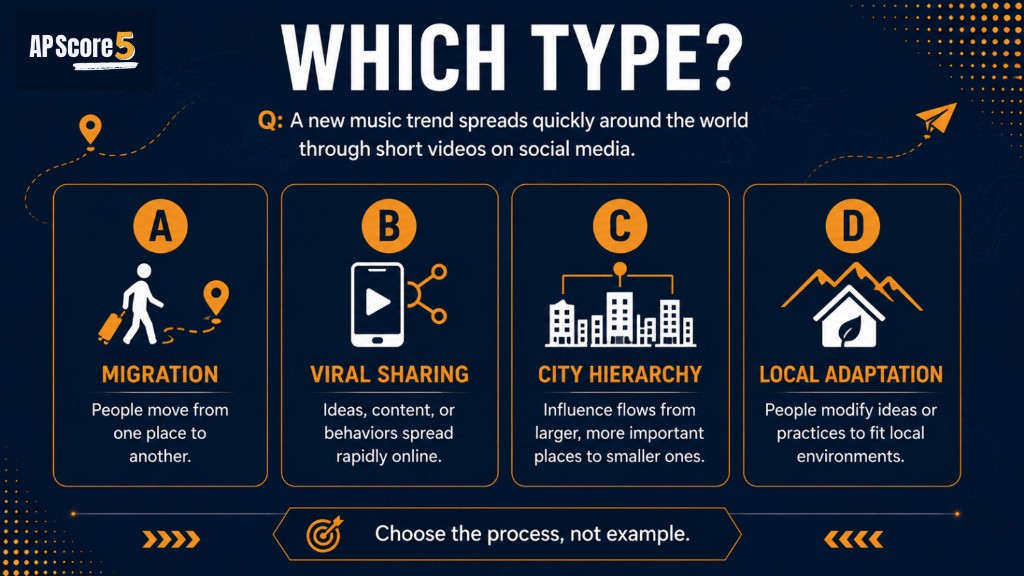
On each item, label the process (relocation, contagious, hierarchical, stimulus, or expansion) — not only the trendy example. Social media speed does not by itself mean contagious if elites or global cities adopted the trait first.
Question 1 of 20
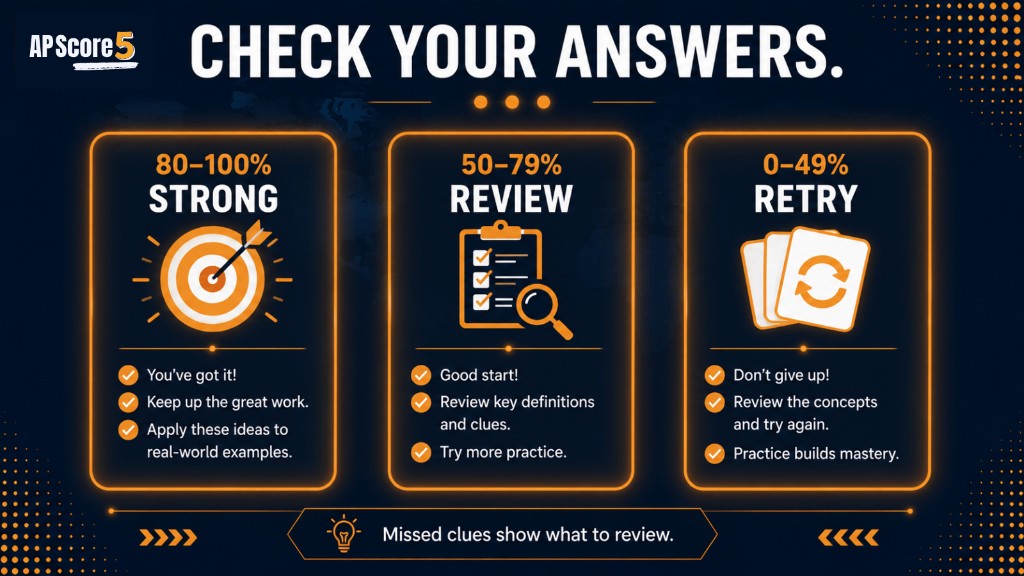
80–100%: keep drilling mixed scenarios. 50–79%: reopen the comparison chart, then retry missed types. Below 50%: read the full study guide once, then run this quiz again.
Run all twenty questions in one sitting the first time so you build pacing for a full MCQ block. On the second pass, filter mentally: only redo items you missed, then read the spoke guide for that type.
After questions five, ten, and fifteen you will see a short sponsored break below the explanation — Next stays available so you can move on immediately or pause to say the correct type out loud once.
Re-read these four comparisons after you finish the quiz — they fix the misses that show up most often on Unit 3 items. Copy one example per card into your notes so you have a personal reference during cumulative review.
Contagious spreads through ordinary peer contact. Hierarchical spreads through celebrities, major cities, capitals, or elite groups. AP items often hide this distinction inside fast-spread scenarios.
Immigrants bringing food = relocation. The food later changing for local taste = stimulus. The same story can include both — name the step the prompt describes.
Local or lower-status culture spreading upward to mainstream or elite groups still uses hierarchical mechanics, just in the opposite direction.
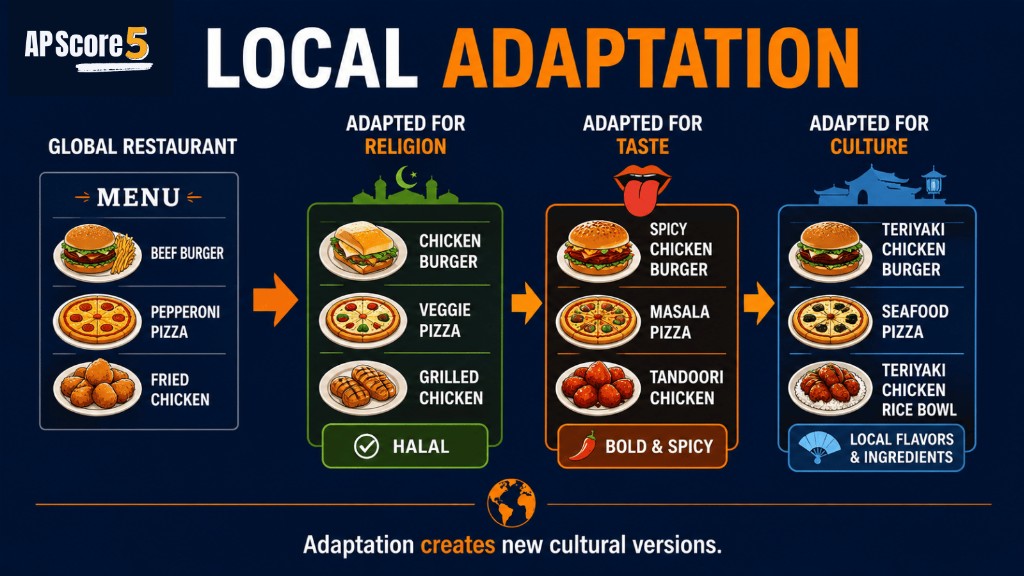
If nothing was adapted, modified, or localized, stimulus is not the best answer. Look for menu changes, blended practices, or modified rules.
Before test day, walk these five traps aloud. They appear in MCQs and partial-credit FRQs more than any other diffusion mistakes. Examiners often write stems that sound like contagious spread because something “went viral,” when the real mechanism is hierarchical because a celebrity, corporation, or capital city adopted the trait first.
Food and religion prompts are another favorite: immigration supplies relocation evidence, while later menu or ritual change supplies stimulus evidence. If you stop after the first mechanism, you leave a point on the table. Name both when the timeline includes arrival and adaptation.
A trend can spread quickly and still be hierarchical if celebrities, influencers, major cities, or elite groups drive the spread.
If immigrants bring a food tradition, that is relocation. If the food is later modified for local tastes, that is stimulus. AP loves two-process scenarios.
Religion spreads by relocation when believers migrate. It spreads by expansion when people convert outward from a hearth. Read the mechanism in the stem.
If the trait spreads but does not change, stimulus is not the best answer.
Hierarchical also covers celebrities, corporations, governments, wealthy groups, universities, and media institutions.
Open each prompt and compare your two-sentence answer to the model. Use Claim → Evidence → Geographic reasoning with a named place or scale when you can. Graders award one point for naming the type and one for tying the type to evidence in the scenario — you do not need a long essay if the mechanism is precise.
When a prompt describes two time stages (immigrants arrive, then locals adapt), write two short sentences with two labels. When a prompt contrasts hierarchical and contagious spread, explain who leads adoption, not how fast the trend feels.
Model answer: Relocation diffusion occurs when immigrants physically bring the food tradition. Stimulus diffusion occurs when restaurants later adapt recipes to local tastes without requiring a new migration wave.
Why it scores: Names both mechanisms and ties each to evidence in the prompt — partial credit pattern AP graders use.
Model answer: The trend spreads through influential nodes — global cities, celebrities, and media — before ordinary towns adopt it. Contagious diffusion would emphasize equal peer-to-peer contact without ranked centers leading first.
Why it scores: Contrasts elite/city-led order with peer wavelike spread — exactly what hierarchical vs contagious items test.
Model answer: Contagious diffusion. The challenge spreads through direct contact and proximity among peers in the same district, like a wave through adjacent social networks.
Why it scores: Labels contagious and grounds the answer in proximity/contact language from the stem.
Model answer: Expansion diffusion (often contagious or hierarchical within the converting region) spreads belief outward from the hearth. Relocation diffusion occurs when migrants carry the religion to distant places.
Why it scores: Separates spread-in-place from movement of people — a common two-point FRQ structure.
Click the diffusion type you missed most. Each link opens the full spoke guide with fifty MCQs, comparison tables, and section-by-section traps. If you missed several types, start with relocation versus expansion on the comparison chart before diving into a single spoke.
Relocation mistakes usually mean you skipped the “did people move?” check. Expansion subtype mistakes usually mean you treated speed as contagious or status as optional for hierarchical labels. Stimulus mistakes usually mean you chose stimulus when nothing in the stem changed form.
Unit 3 Cultural Patterns and Processes covers language, religion, folk and popular culture, globalization, and identity — but diffusion items appear on almost every practice test because culture traits must move somehow. This cluster isolates the five mechanisms so you can label any scenario the College Board throws at you.
Pair this quiz with the Unit 3 review hub for flashcards and fifty unit-wide MCQs, and with Unit 2 migration when a stem mentions refugees, guest workers, or chain migration tied to relocation diffusion.
After you score at least seventy percent here, open one spoke guide for your weakest type, then retake this quiz a week later to see if accuracy holds.
Quick answers about how this quiz maps to the AP Human Geography course outline. Expand any question for the full response.
Questions one through seven build single-type speed, items eight through fourteen mix comparisons such as relocation versus expansion or contagious versus hierarchical, and items fifteen through twenty add two-step stories and NOT-stimulus style traps. Explanations appear after each answer so you can fix one mechanism before advancing.
Eighty percent or higher suggests you can label mixed scenarios under time pressure. Between fifty and seventy-nine percent, open the weak-area links for the types you missed and reread those sections only. Below fifty percent, review the diffusion complete study guide chart once, then retake this quiz without peeking at prior explanations.
The ring shows accuracy across all twenty items, while the sidebar counts answered questions and updates as you work. After you finish, the results block lists performance by diffusion tag so you know whether misses cluster on relocation, hierarchical, or two-step prompts. Screenshot your percent if you retake the set a week later to prove improvement.
Sponsored breaks appear after questions five, ten, and fifteen without locking the Next button, so you control pacing. Use a short pause to say the correct type out loud; hearing the label fixes memory faster than rereading the explanation silently. Hard refresh the page if explanations or choices look stale after we update scripts.
Open the FRQ accordion below the quiz after you complete the run. Compare your two-sentence answers to the model responses and note where you forgot to name evidence from the stem. MCQs train speed; FRQs train partial-credit wording. Doing both on the same visit mirrors how Unit 3 sections alternate formats on the real exam.
Retake here when you want a single mixed score and weak-area URLs tied to this run. Use the hub twenty MCQs when you are still learning definitions beside flashcards. After two solid passes on this page, drill the spoke guide where your tag breakdown shows the most misses, then return for a final mixed check before the unit test.
Return to the diffusion complete study guide for the comparison chart, twenty overview MCQs, and links to all five type guides.